
Recipe: Turkish Red Pepper Paste

If you love Turkish food and crave its flavors at home, you’ll soon find yourself stirring up the Turkish pantry staple, spicy red pepper paste. It’s a basic flavoring ingredient for many dishes in southern Turkish cuisine. There are no tomatoes in the paste; its deep red color comes from slow-cooking red bell peppers and chilies. The ingredients are simple, but the finished paste gives your food spicy complexity.

A typical red pepper paste will be hot. But vary the heat factor to your taste. If it suits you better, make it milder, with fewer chilies or even none at all. Or ratchet the heat up with the hottest chilies you can find. The paste lasts four weeks refrigerated. You can freeze part of it for later.

The first step will be to char the peppers and chilies. The way that yields the best flavor is to place them on a grill over a flame and let them cook, turning them from side to side, until the skins are blackened and the flesh is soft. You may need to do this in two batches. Keep your kitchen window open, as the odor will be strong. You can also char the peppers under the broiler in your oven, but they won’t have that hint of smokiness that you get from charring them on the stovetop (or even better, over charcoal in the open air).

The rest comes easy: pureeing the peppers in a food processor or blender, then cooking them with the rest of the ingredients, stirring every so often.

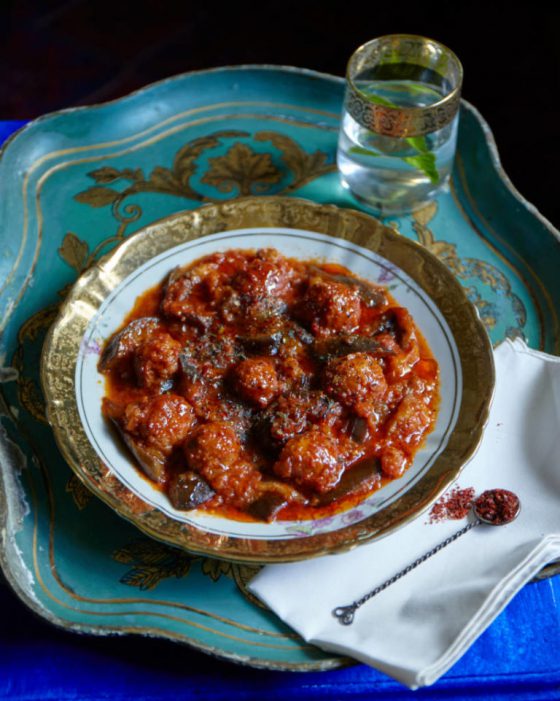
How to use this spicy red gem? First, find some fascinating Turkish recipes like Bulgur Balls in Eggplant and Tomato Sauce. Or just use your culinary imagination. I like to slip a spoonful of red pepper paste into a pot of beans, beat a little into eggs for a spicy omelet, or mix it with za’atar, smear it on open pita halves and pop the bread into a hot oven to toast. Once you taste the finished pepper paste, you’ll know what to do with it.

Turkish Red Pepper Paste

Ingredients:

6 large red bell peppers

6 meaty red chilies

3 teaspoons any variety paprika (sweet, hot, or smoked), according to taste

2 tablespoons lemon juice

2 tablespoons olive oil

1 1/2 teaspoons salt

More olive oil to cover the finished paste

Place the peppers and chilies on a metal grill over an open flame, toasting them and turning them to their uncooked sides every so often. This should take about 10 minutes. The skins should be blackened and the vegetables starting to ooze a little juice.

Place the peppers and chilies in a large bowl and cover them with dish or a re-used plastic bag. The skins will loosen as the vegetables cool down.

Skin the peppers and chilies. Take off the stems and and seeds. You may want to wear gloves when handling the chilies if they’re a really hot variety. Turkish chef Ozlem Warren recommends scraping the flesh off the chilies’ skins with a knife, rather than peeling them.

Process the vegetables in a food processor or blender until smooth.

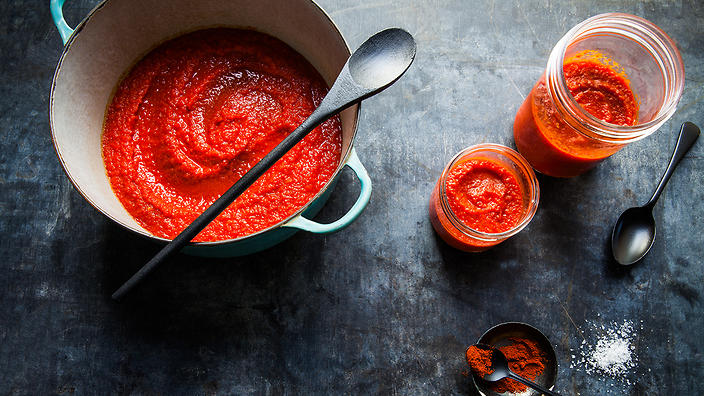
Pour the pureed peppers and chilies into a large pan. Add the paprika, lemon juice, olive oil and salt. Cook over medium heat until the combination simmers, then reduce the heat to low. Stir often. It will take up to 50 minutes for the moisture to evaporate until a thick paste forms. As for jam, test by dragging a spoon over the base of the pan. If you see a trail, the paste is ready.

Once the paste has cooled, spoon it into a very clean, very dry jar. Pour a little additional olive oil over the surface to seal it. Place the lid on the jar and keep the paste refrigerated.

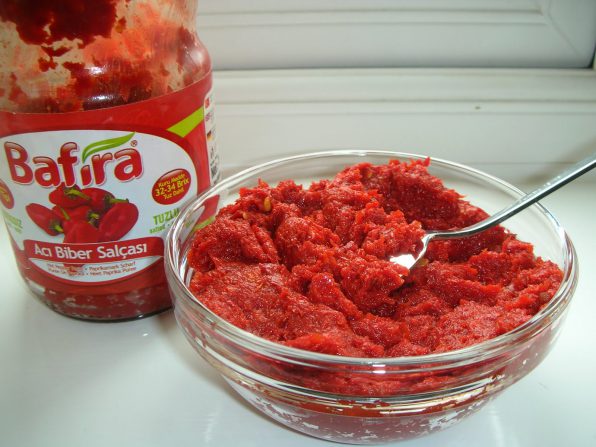
Photo of Turkish red pepper paste via here
Miriam Kresh
Miriam Kreshhttps://www.greenprophet.com/
Miriam Kresh is an American ex-pat living in Israel. Her love of Middle Eastern food evolved from close friendships with enthusiastic Moroccan, Tunisian and Turkish home cooks. She owns too many cookbooks and is always planning the next meal. Miriam can be reached at miriam (at) greenprophet (dot) com.
1 COMMENT

LEAVE A REPLY

Please enter your comment!
Please enter your name here

TRENDING

Farm To Table Israel Connects People To The Land

Farm To Table Israel is transforming the traditional dining experience into a hands-on journey.

Lion’s Mane Mushroom Recipe

Eyeing the mushrooms for sale in the local supermarket,...

Mandi, Fragrant Yemenite Chicken With Golden Rice

This is a luxurious recipe that requires a taste...

Dark chocolate benefits means slowing aging: make Italian hot chocolate with this recipe

Eating dark chocolate can keep you looking young. Make your own healthy hot chocolate mix

Simple Qatayef recipe makes fabulous nut-filled pancakes

Qatayef - also spelled katayif or qatya’if - is traditionally eaten at Ramadan (get our Ramadan vegetarian ideas here), but it’s a treat anytime. In fact, it’s a treat that’s gone through history. A recipe for qatayif appears in a tenth century Arabic cookbook by the writer Ibn Sayyar al-Warraq, who compiled recipes going back to the eighth and ninth centuries. People have been eating qatayif for a very long time.

Qatar’s climate hypocrisy rides the London Underground

Qatar remains a master of doublethink—burning gas by the megaton while selling “sustainability” to a world desperate for clean air. Wake up from your slumber people.

How Quality of Hire Shapes Modern Recruitment

A 2024 survey by Deloitte found that 76% of talent leaders now consider long-term retention and workforce contribution among their most important hiring success metrics—far surpassing time-to-fill or cost-per-hire. As the expectations for new hires deepen, companies must also confront the inherent challenges in redefining and accurately measuring hiring quality.

8 Team-Building Exercises to Start the Week Off 

Team building to change the world! The best renewable energy companies are ones that function.

Thank you, LinkedIn — and what your Jobs on the Rise report means for sustainable careers

While “green jobs” aren’t always labeled as such, many of the fastest-growing roles are directly enabling the energy transition, climate resilience, and lower-carbon systems: Number one on their list is Artificial Intelligence engineers. But what does that mean? Vibe coding Claude? 

Somali pirates steal oil tankers

The pirates often stage their heists out of Somalia, a lawless country, with a weak central government that is grappling with a violent Islamist insurgency. Using speedboats that swarm the targets, the machine-gun-toting pirates take control of merchant ships and then hold the vessels, crew and cargo for ransom.

Leopoldo Alejandro Betancourt López Turned Ocean Plastic Into Profitable Sunglasses

Few fashion accessories carry the environmental burden of sunglasses. Most frames are constructed from petroleum-based plastics and acrylic polymers that linger in landfills for centuries, shedding microplastics into soil and waterways long after they've been discarded. Leopoldo Alejandro Betancourt López, president of the Spanish eyewear brand Hawkers, saw this problem differently than most industry executives.

Why Dr. Tony Jacob Sees Texas Business Egos as Warning Signs

Everything's bigger in Texas. Except business egos.  Dr. Tony Jacob figured...

Israel and America Sign Renewable Energy Cooperation Deal

Other announcements made at the conference include the Timna Renewable Energy Park, which will be a center for R&D, and the AORA Solar Thermal Module at Kibbutz Samar, the world's first commercial hybrid solar gas-turbine power plant that is already nearing completion. Solel Solar Systems announced it was beginning construction of a 50 MW solar field in Lebrija, Spain, and Brightsource Energy made a pre-conference announcement that it had inked the world's largest solar deal to date with Southern California Edison (SCE).

Related Articles

Popular Categories