Throwaway plastics and ignorance are killing our oceans

The growing threat of plastic pollution in the world’s seas and oceans has been a great concern for marine environmentalists and oceanographers. These include Dr. Sylvia Earle, a world famous American oceanographer and marine biologist as well as an undersea explorer. Dr. Earle has spent much of her life conducting research and exploration of the marine environment in the world’s oceans.

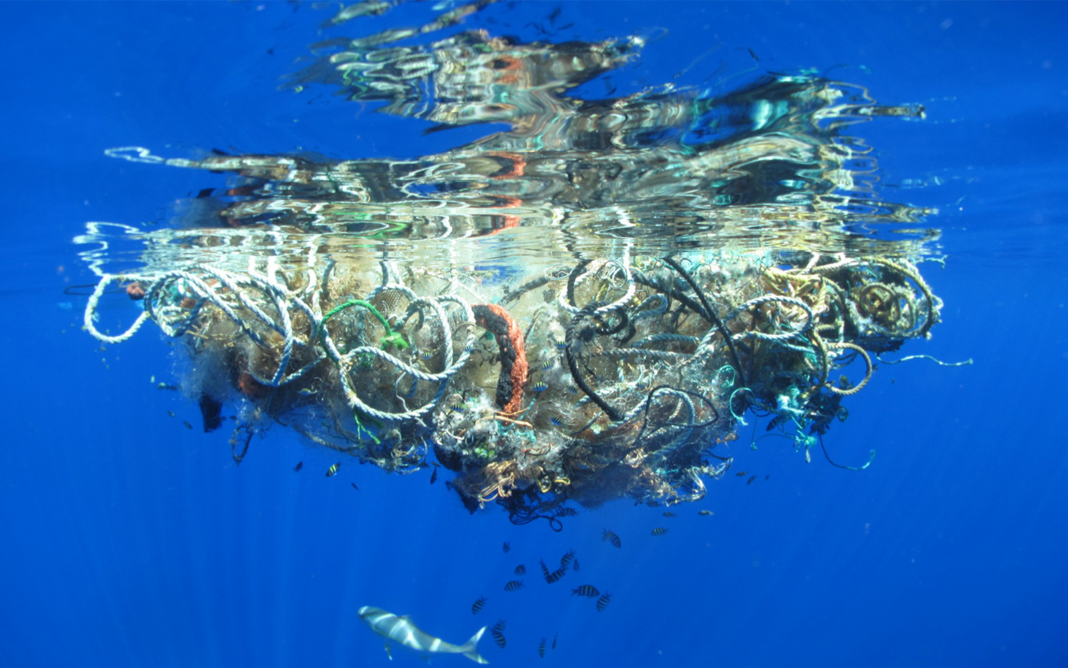
Coinciding with the plastic pollution theme of this year’s Earth Day 2018, Dr. Earle speaks widely about the large amounts of plastic waste material now found in the oceans. Dr. Earle, 82, has devoted more than 65 years studying and photographing ocean marine life. Earle told CNN recently that since 2014, as much as 5 trillion pieces of plastic material, much of it single use “throwaway” plastic bags and bottles are floating in the world’s oceans. She added that as much as 8 million tons of plastic material enters the oceans annually; a large part of it being single use plastic items that are discarded on beaches by people who are simply ignorant of the dangers this material is to marine life.

One of more tragic examples of marine plastic pollution can be seen on the beaches and in the waters surrounding the mid-Pacific Midway Island atoll, home to large numbers of albatross and other sea birds. Stomachs of dead marine birds collected on the beaches of the atoll have been found to contain large amounts of plastic material; including such items as plastic bottle caps, pull-off bottle top rings and other material.

The birds ingest this plastic material, thinking it to be food. Eventually, the birds’ stomachs become full of this material (photo), that dooms them to die. “The oceans are the basis for our life support; and plastic material becomes part of the food chain. Humans are responsible for this plastic epidemic,” says Dr. Earle, adding that single use plastic material, discarded by people,  is a big component.

It takes between 500 and 1,000 years for plastic material to break down organically. This means that such material can literally float around in the oceans for centuries. “Plastics themselves are not the problem – humans are” Earle says. One ray of hope to rid the oceans of such material, deals with a plastic eating enzyme, discovered by scientists, that appears to literally eat plastic bottles and other material. Other ideas include use of giant sieves to trap and scoop up this material in the seas. The giant sieve idea for trapping small plastic particles was conceived by Boyan Slat of the Netherlands in 2013. Slat’s project,  The Ocean Cleanup, won  the Katervera Award, the environmental equivalent of the Nobel Prize for Sustainability in 2016.

There’s still a lot to be done for even making a small dent in cleaning up the massive plastic amounts in the world’s oceans. Even concerted efforts on behalf of world bodies will have a hard time cleaning up the waste material of “floating garbage patches” found in areas like the Great North Pacific Gyre. But a start has to be made, including greater efforts to educate people about the dangers of throwaway plastic bags and bottles that wind up being washed out to sea.

More about the dangers of plastic pollution and other marine environmental issues:

CNN: The sixth mass extinction has arrived

The ocean cleanup wins Katervera – the Nobel prize for sustainability

Why Dolphins have disappeared from Israel’s shores

Photo of ocean plastic pollution: One Green Planet;Photo of plastics found in bird stomach by Jackson Loo/CNN



Maurice Picow
Maurice Picowhttps://www.greenprophet.com/
Maurice Picow grew up in Oklahoma City, U.S.A., where he received a B.S. Degree in Business Administration. Following graduation, Maurice embarked on a career as a real estate broker before making the decision to move to Israel. After arriving in Israel, he came involved in the insurance agency business and later in the moving and international relocation fields. Maurice became interested in writing news and commentary articles in the late 1990’s, and now writes feature articles for the The Jerusalem Post as well as being a regular contributor to Green Prophet. He has also written a non-fiction study on Islam, a two volume adventure novel, and is completing a romance novel about a forbidden love affair. Writing topics of particular interest for Green Prophet are those dealing with global warming and climate change, as well as clean technology - particularly electric cars.

LEAVE A REPLY

Please enter your comment!
Please enter your name here

TRENDING

Microplastics Are Becoming Superbug Highways — New Study Warns Beachgoers to Wear Gloves

Prof. Pennie Lindeque added that microplastics “act as carriers for antimicrobial-resistant bacteria, enhancing their survival and spread… each particle becomes a tiny vehicle capable of transporting pathogens from sewage works to beaches, swimming areas and shellfish-growing sites.”

Scientists Crack the Code for Low-Cost, Low-Carbon Plastic Recycling

While enzymatic recycling offers hope for managing existing plastic waste, scientists and environmental advocates agree it must be paired with the development of bio-based plastics—materials made from renewable biological sources like corn starch, sugarcane, or algae. Unlike conventional plastics derived from fossil fuels, bio-based alternatives can dramatically reduce carbon emissions at the production stage and are often compatible with closed-loop recycling.

Toxins in tiny bodies: American children are carrying invisible chemical burden

Chemical exposures were highest among younger toddlers and racial/ethnic minorities, reflecting systemic environmental injustice. While some older chemicals like triclosan and certain phthalates are decreasing (likely due to public pressure and reformulations), new unregulated substitutes like DINCH and emerging pesticides are on the rise.

Microplastics in Your Food Links Nanoplastics to Liver Damage and Glucose Imbalance

Next time you reach for a plastic-wrapped snack or sip from a disposable cup, remember: the real cost may not show up on the price tag, but in your liver enzymes or your glucose test.

Korea’s New Plastic Eats Itself in the Ocean—Without Losing Its Strength

Nylon’s dirty little secret? It sticks around. From fishing nets to yoga pants, nylon takes decades to degrade—especially in oceans—choking marine life and clogging ecosystems. But a Korean research team has just pulled off a sustainability moonshot: a new polyester-amide (PEA) plastic that acts like nylon, but disappears like magic—breaking down 92% in real ocean water within a year.

Qatar’s climate hypocrisy rides the London Underground

Qatar remains a master of doublethink—burning gas by the megaton while selling “sustainability” to a world desperate for clean air. Wake up from your slumber people.

How Quality of Hire Shapes Modern Recruitment

A 2024 survey by Deloitte found that 76% of talent leaders now consider long-term retention and workforce contribution among their most important hiring success metrics—far surpassing time-to-fill or cost-per-hire. As the expectations for new hires deepen, companies must also confront the inherent challenges in redefining and accurately measuring hiring quality.

8 Team-Building Exercises to Start the Week Off 

Team building to change the world! The best renewable energy companies are ones that function.

Thank you, LinkedIn — and what your Jobs on the Rise report means for sustainable careers

While “green jobs” aren’t always labeled as such, many of the fastest-growing roles are directly enabling the energy transition, climate resilience, and lower-carbon systems: Number one on their list is Artificial Intelligence engineers. But what does that mean? Vibe coding Claude? 

Somali pirates steal oil tankers

The pirates often stage their heists out of Somalia, a lawless country, with a weak central government that is grappling with a violent Islamist insurgency. Using speedboats that swarm the targets, the machine-gun-toting pirates take control of merchant ships and then hold the vessels, crew and cargo for ransom.

Leopoldo Alejandro Betancourt López Turned Ocean Plastic Into Profitable Sunglasses

Few fashion accessories carry the environmental burden of sunglasses. Most frames are constructed from petroleum-based plastics and acrylic polymers that linger in landfills for centuries, shedding microplastics into soil and waterways long after they've been discarded. Leopoldo Alejandro Betancourt López, president of the Spanish eyewear brand Hawkers, saw this problem differently than most industry executives.

Why Dr. Tony Jacob Sees Texas Business Egos as Warning Signs

Everything's bigger in Texas. Except business egos.  Dr. Tony Jacob figured...

Israel and America Sign Renewable Energy Cooperation Deal

Other announcements made at the conference include the Timna Renewable Energy Park, which will be a center for R&D, and the AORA Solar Thermal Module at Kibbutz Samar, the world's first commercial hybrid solar gas-turbine power plant that is already nearing completion. Solel Solar Systems announced it was beginning construction of a 50 MW solar field in Lebrija, Spain, and Brightsource Energy made a pre-conference announcement that it had inked the world's largest solar deal to date with Southern California Edison (SCE).

Related Articles

Popular Categories