

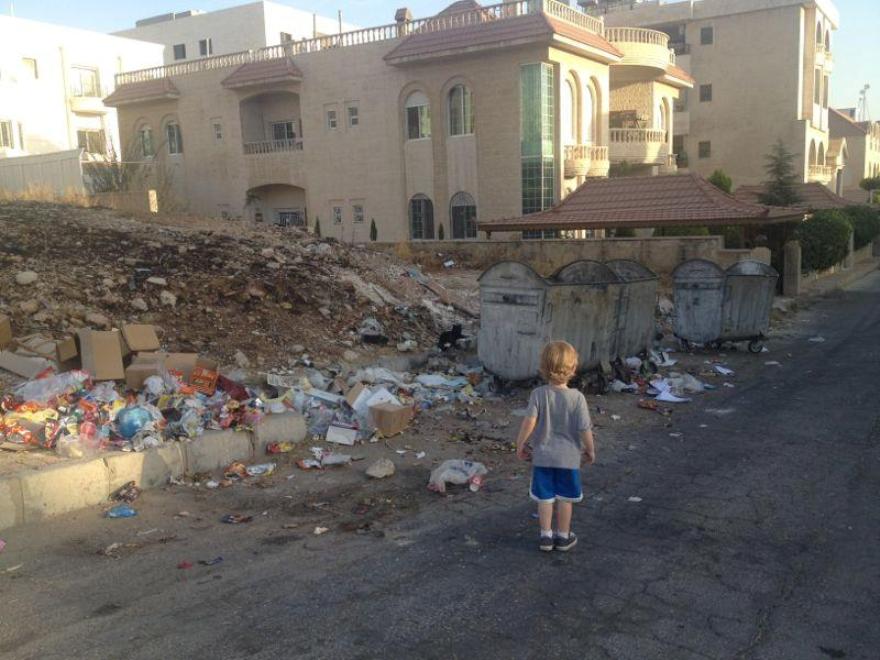
 The city of Amman in Jordan where I live is experiencing a deteriorating level of municipal services, most notably in garbage collection and public space cleaning. The hills of the city are heaped with trash, and the problem extends to other towns and across the countryside. Even Jordan’s natural jewels are tarnished.
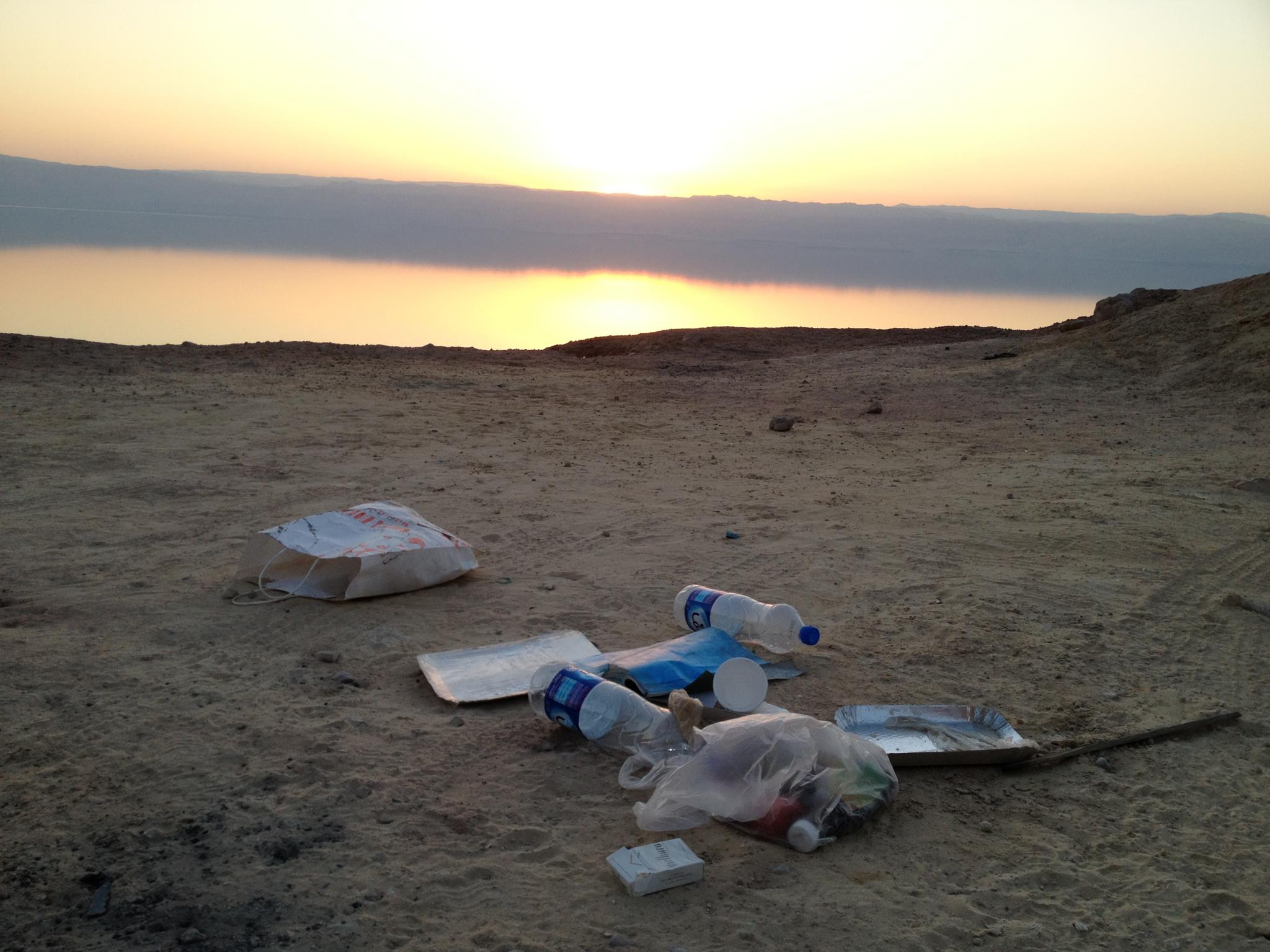
The snapshot below was taken at the Dead Sea.
 It’s not simply a cosmetic catastrophe: the garbage stinks and attracts vermin and flies and armies of feral cats. There’s potential for much more dangerous health impacts.
Clean-up campaigns are floated like half-filled balloons. The government commissions research, but action diminishes once the press conferences are over. The problem is boundless, even the poshest villas are ringed with garbage.
 While the Greater Amman Municipality struggles to find a workable action plan, individuals are taking action, hatching schemes instead of lobbing complaints.
Facebook serves as a conduit to coordinate the like-minded. Stop Dumping on Jordan was established last year: its mission is “to look for solutions to Jordan’s chronic litter problem”. Followers are urged to post their most egregious litter photos and suggestions for positive action.
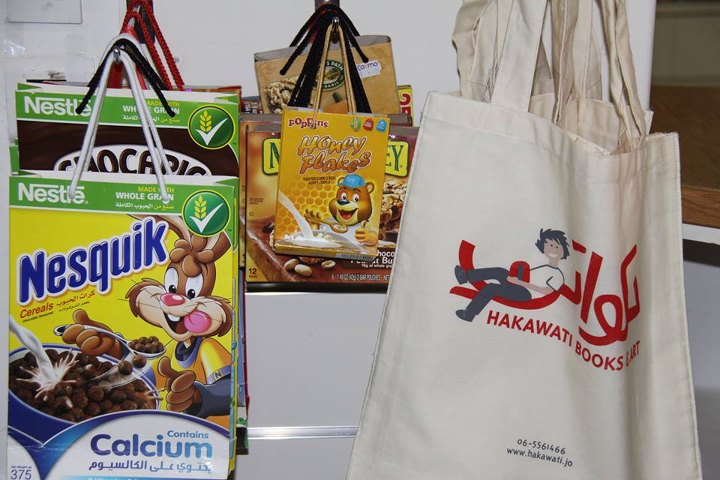
They recently broadcast a recycling initiative by Amman’s Hakawati Book Store whereby customers earn credit on their loyalty cards when they decline a bag or purchase a reusable cloth bag. The shop also makes unique “bags” from empty cereal boxes (shown below).
 Karen and Mohammed Asfour have written three children’s books starring Azeeza, the anti-litter goat, who tackles litter issues and offers suggestions and solutions that , hopefully, young readers will adopt. Like all celebrities, Azeeza has her own Facebook page.
Garbage Free Amman is another FB page which organizes followers for periodic community clean-ups. They post calls for weekly trash-clearings, inviting followers to spend two hours picking up garbage in their immediate area. They state, “To become effective, all of Amman should do it at once. We have to show the difference.”
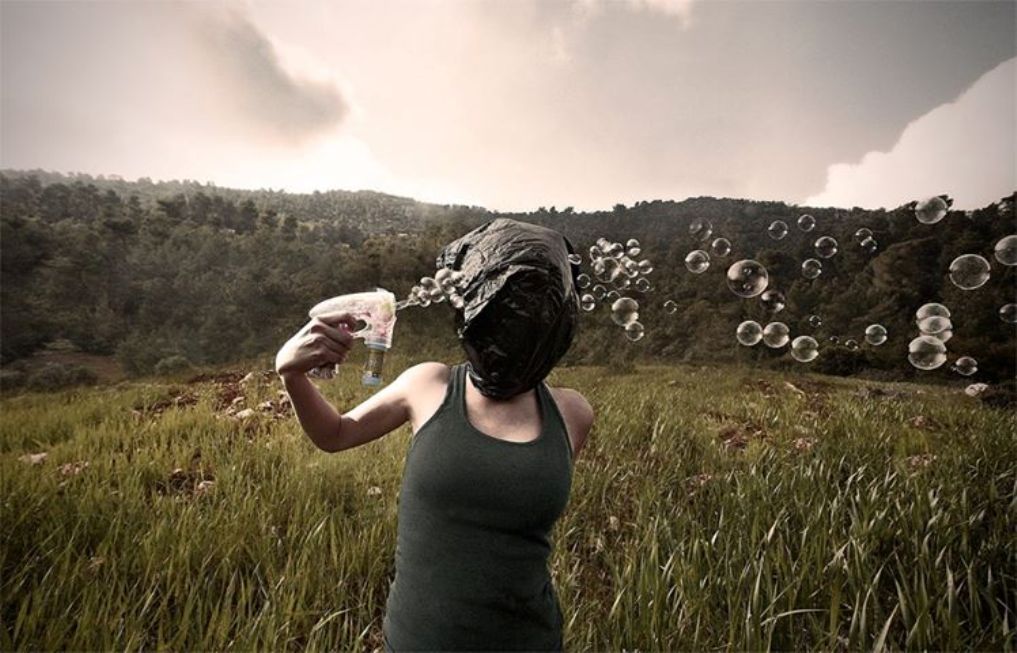
And there’s the mostly-Arabic language page, Balash Kees, which focuses on plastic bag pollution. Balash Kees, which kicked off last year in cooperation with Amman’s UNESCO office, is a polished public relations effort that uses powerful imagery to incite action. The lead photo to this story, entitled Plastic Suicide, was submitted by follower Sabri Hakin.
People are becoming more aware of the problem, if only at a snail’s pace. It’s clear that Jordanians need to revise their views on littering before any real change can occur. As part of a university project, student Liana Rashdan interviewed Amman’s orange-suited day laborers who toil along roadsides with simple brooms and buckets. The clip gives good insight into the local attitude towards trash:
[youtube]http://youtu.be/UNlwu2PfN_k[/youtube]
Sure, Jordan is broke, but community clean-up is not an expensive initiative. Existing waste collection systems need to be better managed and adhere to strict collection schedules. Municipalities need to implement and enforce anti-littering laws, and rev up recycling. Ideally, the government will mobilize to stop pollution at it’s source: ban free-issue of non-biodegradable plastic bags.
We may be years away from Abu Dhabi’s hi-tech trash bins, but there’s a growing mob of Jordanians who are working to change the kingdom’s trashy habits.
Featured image by Sabri Hakin; all others from Stop Dumping on Jordan




Having recently visited Jordan for a month, I was both impressed and depressed by the litter problem I saw. It is obvious that in larger towns and cities there is an effort to reduce or at least hide litter. I did note that behind some hotels where most people don’t see that there is still a lot of clean up work to be done. My biggest heartbreak was seeing the plastic bags and paper that litter highways as we drove out to more remote areas and then appalled by the gross amounts of trash that we encountered as we trekked into a wadi out past the Dead Sea. I think you all are heading in the right direction and compared to some other countries that I have visited have made progress. Keep up the good work and push for a cleaner environment in more remote areas as well.
muddanddough – did you have a link to share for the experiment? sounds intriguing.
please check above blog for a year long experiment not only with reducing “litter” but more fundamentally eliminating domestic trash…Trash is more than meets the eye…our problem is much bigger than what we see on the streets,,,it is the landfills that are a time bomb!
If Jordan is broke they need to gently reduce their population with family planning programs, then plant trees and gardens. Every family should have a vegetable garden and at least one friut tree; and every town and city should be surrounded by carefully tended forest..