
Why You Should Keep Young Children Out of the Middle East Sun (New Research)

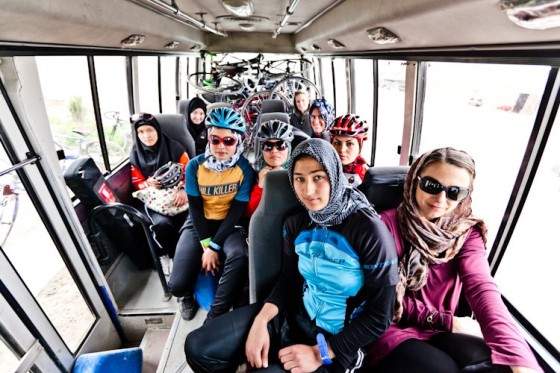
light skinned baby with mom on the beach

Wearing full body clothing might not be the thing for everyone in the Middle East: but cover up the very young – especially those with light skin. Middle East sun exposure in the young leads to higher rates of skin cancer later in life. 

The new study by the Hebrew University in Jerusalem looked at extensive medical records of over one million Israeli adolescents before military service. They reveal how how exposure to the intense Israeli sun of young, light-skinned children increases substantially the risk of cutaneous melanoma – a serious form of skin cancer.

The incidence of cutaneous melanoma is on the rise in all parts of the world where light-skinned people live. Rates have tripled over the last decades in the United States, and the rise was even steeper in Europe.

What about in Israel? What segments of the population are more at risk and at what stage? Dr. Hagai Levine and Prof. Jeremy Kark set out to find the answers, using records of young Jewish males who were examined between 1967 and 2005.

These men were followed up by data linkage for cancer incidence until the end of 2006. Females were not included because their baseline data were available only for a more recent period.

In their study, the researchers found – not surprisingly – a quadrupled higher risk of skin cancer among native-born Israelis of European origin (including the Americas, Australia and South Africa) and those immigrating from those countries over those of North African or Asian origin.

Israel’s subtropical latitude means residents are exposed to more solar radiation than in much of Europe, and therefore the findings implicate childhood sun exposure as a clear, preventable risk factor for melanoma.

But even for those who spent their childhood in Europe, the data showed that those who came to Israel before age 10 had almost double the risk of cutaneous melanoma compared to those who arrived from Europe later in childhood.

The study of melanoma susceptibility according to countries of origin is especially suited to Israel because of the massive immigration that has taken place since the establishment of the state, bringing Jews of varying skin hues from Europe, North Africa and Western Asia.

The study on Israel and cutaneous melanoma was published recently in the International Journal of Cancer. In addition to Levine and Kark, researchers from the Israel Defense Forces Medical Corps, the National Cancer Registry and other institutions participated in the work.

Israel is one of the few western countries where military service is mandatory. All Israeli Jewish adolescents are obligated to present themselves at age 17 for a medical board examination before military service (even if exempted later from service).

Consequently, use of these data provides a generally representative sample of the young Jewish population, particularly of males.

These findings, say the researchers, provide solid support for the importance of stressing the issue of childhood sun exposure, particularly in light skinned people, as a preventable risk factor for cutaneous melanoma and can aid in directing public health and research efforts.

Here at Green Prophet we urge readers to use sunscreen, and if possible that without parabans. You can try your hand at home made organic sunscreen here. And while we are on the issue, read here why sun caught later in the day is more dangerous than early morning rays.

Image of mom and baby via Shutterstock
TRENDING

Eco organization offices destroyed by Iran missile

Tel Aviv's eco organization, the Heschel Center, was impacted by an Iranian missile.

What are AWG air-water generators, and why they aren’t a golden-bullet solution (yet)

Atmospheric water generators (AWGs) sound like magic: machines that can pull drinking water out of air. The idea is mentioned in the Bible, where the elders would pray for water collected as dew on plants and the catch on turning this into a machine is in the physics. To turn invisible vapor into liquid, you must remove heat, especially the latent heat of condensation.

Jordan’s $6 Billion Aqaba–Amman Desalination Project from the Red Sea Moves Forward

In 2025, the Jordanian government signed agreements with a consortium led by Meridiam and SUEZ, alongside VINCI Construction and Orascom Construction. Under a 30-year concession agreement, the consortium will design, build, finance, operate, and maintain the system before transferring it back to the Jordanian government. The total investment is estimated at approximately $6 billion USD.

The Saudi Startup Turning Desalination’s Toxic Waste Into Its Own Disinfectant

For millennia, the Middle East's water crisis seemed an immutable fact of geography — a region defined as much by what it lacked as by what lay beneath its sands. Today, a convergence of plummeting solar costs, advancing membrane technology, and hard-won engineering expertise is rewriting that story.

Earth building with Dead Sea salt bricks

Researchers develop a brick made largely from recycled Dead Sea salt—offering a potential alternative to carbon-intensive cement.

How AI Helps SaaS Companies Reduce Repetitive Customer Support Work

SaaS products are designed for large numbers of users with different levels of experience, and also in renewable energy.

Pulling Water from the Air

Faced with water shortage in Amman, Laurie digs up...

Turning Your Energy Consultancy into an LLC: 4 Legal Steps for Founders in Texas

If you are starting a renewable energy business in Texas, learn how to start an LLC by the books.

Tracking the Impacts of a Hydroelectric Dam Along the Tigris River

For the next two months, I'll be taking a break from my usual Green Prophet posts to report on a transnational environmental issue: the Ilısu Dam currently under construction in Turkey, and the ways it will transform life along the Tigris River.

6 Payment Processors With the Fastest Onboarding for SMBs

Get your SMB up and running fast with these 6 payment processors. Compare the quickest onboarding options to start accepting customer payments without delay.

Qatar’s climate hypocrisy rides the London Underground

Qatar remains a master of doublethink—burning gas by the megaton while selling “sustainability” to a world desperate for clean air. Wake up from your slumber people.

How Quality of Hire Shapes Modern Recruitment

A 2024 survey by Deloitte found that 76% of talent leaders now consider long-term retention and workforce contribution among their most important hiring success metrics—far surpassing time-to-fill or cost-per-hire. As the expectations for new hires deepen, companies must also confront the inherent challenges in redefining and accurately measuring hiring quality.

8 Team-Building Exercises to Start the Week Off 

Team building to change the world! The best renewable energy companies are ones that function.

Related Articles

Popular Categories