


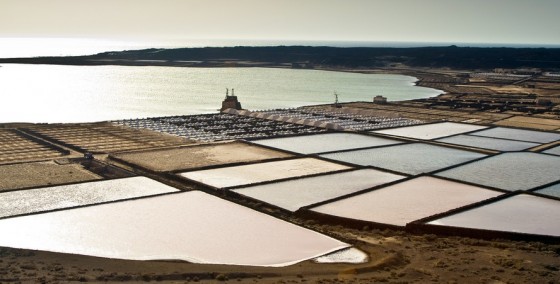
 This new approach uses bacteria to mine sulphur and magnesium from desalination’s polluting brine.
Desalination’s no golden ticket to creating water for the Middle East but it’s an approach that more and more countries are turning to as a last resort. Desalination is energy intensive, and what to do with the toxic waste byproducts? Biomineralogist Damian Palin is turning to biology to mine valuable minerals from desalination brine. “I collaborate with bacteria,” deadpans the young Irishman. Watch him turn desalination on its head.
Palin teams up with metal-munching bacteria to biologically “mine” minerals from seawater: the byproduct of his process is pure, potable water. In this short talk, the TED Fellow describes his idea.
[youtube]http://youtu.be/9Q2hew8759w[/youtube]
Using bacteria to dissolve minerals, releasing the metals locked inside, is called bioleaching. Palin’s developing something different: a biological mining (not melting) process. Because seawater metals are already dissolved, his bacteria simply collect them. “A mining industry that’s in balance with nature,” he says.
 Microorganisms are everywhere, the oldest living things on the planet. As they evolved, they developed numerous adaptations. Think of Napolean Dynamite: each bacterium has its own “skills“.
Bacteria can form minerals from their surrounding environment as a defense mechanism; it’s one of their skills.
Introducing specific bacteria to ocean water can attract particular elements, effectively pulling them out of the water mix. The segregated elements have commercial value, which can be sold to finance the “mining” process. The freshwater that results is just gravy. For resource-poor, water-parched Middle East nations like Jordan, the prospect of mining the seas for high-value minerals – and – producing clean water as a by-product is like winning the Irish Sweepstakes.
“The thought that we take energy to remove the brine and then do nothing productive with that material reminded me of the issue of waste materials factories started to deal with decades ago. Now, I’d be hard pressed to find a company who doesn’t try to make money on intermediate products from their manufacturing processes”, Palin said in a TED interview.
Every megaliter of seawater contains about 1300 kg of magnesium, 900 kg of sulfur, 400 kg each of potassium and calcium, and smaller amounts of virtually every metal on the periodic table of elements. World demand for magnesium (Mg) is growing exponentially: the automotive and construction industries are increasingly Mg dependent.
The car industry is moving towards magnesium/aluminum alloys to make stronger, lighter vehicles: now using these alloys in engine blocks, but looking to expand application if magnesium supplies can be made scalable. In construction, magnesium gypsum board (MGO) is strong, mold and mildew-resistant, durable and non-flammable, all characteristics of a superior building product. Cement containing Mg holds potential to lock up small amounts of atmospheric CO2; new products such as Novacem explore these technologies. The bottom line is that we will probably never have enough Mg.
This technology could also be used to mine land-leached phosphate from the oceans; short-circuiting the predicted “peak phosphorus”crisis, with its devastating implications to world food production. Brine mining also allows nations with no natural resources to enact a lucrative mineral recovery industry.
Palin doesn’t condone massive desalination projects, he stresses that conservation and frugality must be on the agenda before production. The drive behind his work is environmental protection. “Until we’re able to stop polluting our water systems, desalination may provide a stopgap solution. Mining products from brine effluent should reduce the environmental impact of the technology, while also indirectly reducing the cost of the fresh water produced”, he said.
In the future, we may couple traditional filtration processes with biological processes to produce effluent that is essentially fresh drinking water. This would be a boon to water-starved Middle East nations.
Does water chemistry float your boat? Then check out NASA’s site to learn the basics of ocean salinity: a quick read in layman’s terms.
Image of desalination brine from Shutterstock




Comments are closed.