Iran’s Earth Buildings are the Leading Cause of Quake Casualties

earthquakes, earth building, Iran, architecture, AFPWe’ve long extolled the virtues of earth building, but it turns out that Iran’s simple clay and mud brick buildings are a leading cause of casualties during strong earthquakes.

Over the weekend, two earthquakes measuring 6.3 and 6.4 on the richter scale hit the country’s east Azerbaijan province, killing at least 360 people and displacing and injuring thousands more.

Most of these casualties occurred because poorly-constructed buildings made with cheap materials collapsed, according to Kaveh Samiei, principal architect at AAG and a lecturer at Semnan University, crushing their inhabitants.

Leading causes of earthquake casualties

The Iranian authorities have been criticized for their emergency response to the earthquakes over the weekend after search and rescue efforts were called off within less than 24 hours.

But the Foundation of Housing, a branch of the Roads and Urbanism ministry should also be held to account as the development of rural areas falls under their jurisdiction.
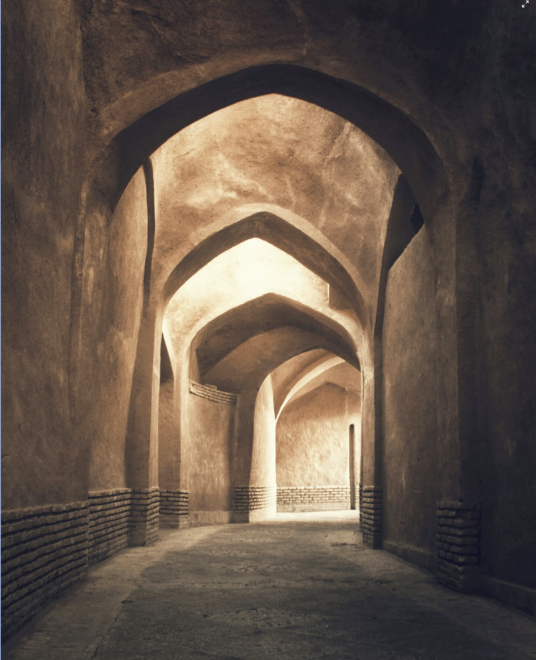
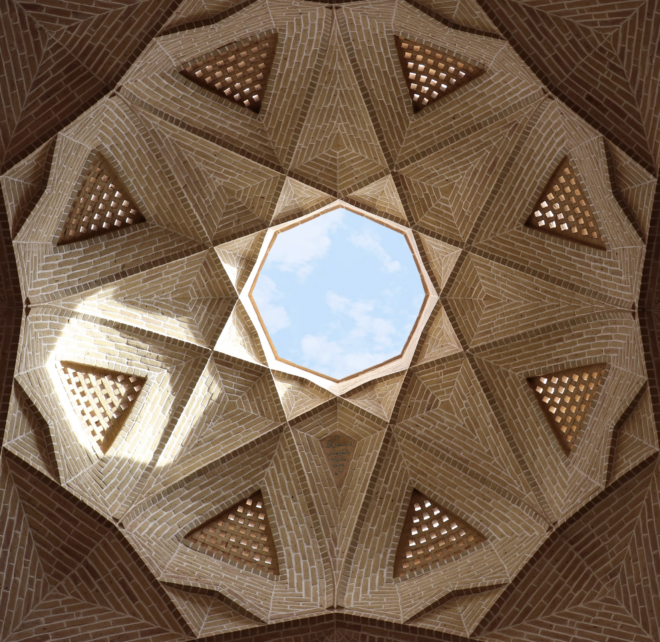
Yakhchal (Meybod), Yazd, Iran

The University of Tulane in the United States sites three main causes of high casualties in areas that are prone to earthquakes: a) population density, b) construction standards, and c) emergency preparedness.

Given that Iran is one of the most seismically-active areas in the world and that 126,000 people have been killed in earthquakes since 1900, the government should map fault lines and establish building codes accordingly.

“We can’t prevent earthquakes from happening,” Samiei told Green Prophet in an email interview, “but at least we can prevent the deaths of hundreds of people that are caused by collapsed buildings.”

Crushed by the earth in Bam, Iran
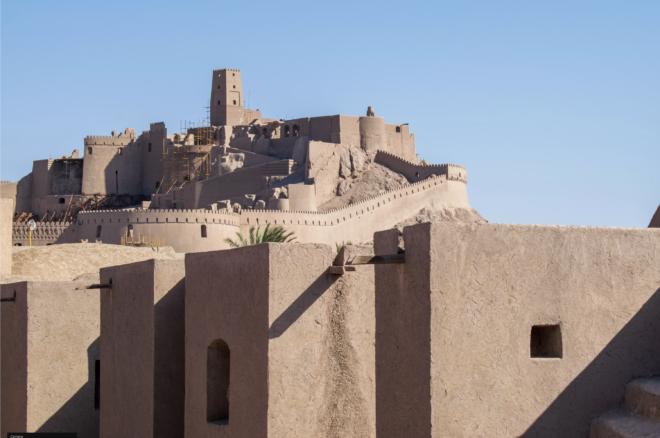
Bam Citadel, Iran

“If we can build safe and resistant structures, then we will decrease the rate of deaths and injuries,” he added.

Samiei explained that most rural Iranians live in buildings that have bulky walls and wooden ceilings that crush residents when large earthquakes strike.

“In the recent earthquake, almost all of the buildings that were damaged were constructed in this way. And exactly the same thing happened in Bam.”

Samiei is referring to the 2003 Bam earthquake in southeastern Iran that killed 150,000 people.

“The experience of some countries like Japan shows that it is possible to construct safer buildings,” the architect continued. He said that the use of “lightweight” construction materials in Japan is a strategic approach that could be implemented in Iran, though he emphasized that technology should be supplemented with appropriate safety education and disaster preparedness.

Earthquake preparedness in earth buildings

The worst earthquake in recorded human history killed 830,000 people in 1556, according to Tulane researchers. Most of the casualties were living in wind-deposited silt and clay caves in Shaaxi, China.

Earth construction may be great for staying cool in hot climates and reducing waste of natural resources, but this kind of construction must be coupled with sophisticated engineering to ensure safety – especially along fault lines.

“In some parts of Iran it will be necessary to deconstruct nearly 100% of the existing buildings and plan a new village,” Samiei warns.

“This will take a lot of time to complete.”
Tafline Laylin
Tafline Laylinhttp://www.greenprophet.com
As a tour leader who led “eco-friendly” camping trips throughout North America, Tafline soon realized that she was instead leaving behind a trail of gas fumes, plastic bottles and Pringles. In fact, wherever she traveled – whether it was Viet Nam or South Africa or England – it became clear how inefficiently the mandate to re-think our consumer culture is reaching the general public. Born in Iran, raised in South Africa and the United States, she currently splits her time between Africa and the Middle East. Tafline can be reached at tafline (at) greenprophet (dot) com.

Hot this week

How Renewable Energy is Revolutionizing the Way We Power Our World

Solar has become the star of the transition thanks to modular hardware and straightforward installation. It fits dense cities and remote towns alike. Many companies are turning to rooftop arrays and carport systems - and exploring commercial solar installation as a practical way to lock in future savings.

How does one start prepping?

Faced with an extreme winter storm this year, Americans wonder how to be prepared for catastrophe. Miriam has lived through wars in the Middle East - so she's prepared on giving you a guide to prepping.

Fishermen sue tire manufacturers on behalf of the salmon

A federal trial in San Francisco has brought US tire manufacturers, fishing groups, and environmental scientists into court over a chemical most drivers have never heard of — but which scientists say may be silently reshaping aquatic ecosystems.

Listening to Water: Tarek Atoui’s Next Work for Tate Modern

Born in Beirut, Lebanon in 1980 and now living in Paris, Atoui has spent years building instruments that don’t sit comfortably in concert halls. Many of them involve water, glass, and ceramics — materials that react to sound instead of simply producing it.

Leading Through a Dual-Energy Transition: Balancing Decarbonisation with Energy Security

Experience in one area of the energy industry isn't enough to guarantee readiness across all the others. That's where a structured program like an MBA in energy can come in. Today's advanced curricula explore energy economics, finance, policy, and strategic management alongside the technical subjects. And when pursuing an energy MBA online, professionals can skill up and retrain without having to step out of the labor market -- an important perk at a time when skilled professionals are already in short supply.

Topics

How Renewable Energy is Revolutionizing the Way We Power Our World

Solar has become the star of the transition thanks to modular hardware and straightforward installation. It fits dense cities and remote towns alike. Many companies are turning to rooftop arrays and carport systems - and exploring commercial solar installation as a practical way to lock in future savings.

How does one start prepping?

Faced with an extreme winter storm this year, Americans wonder how to be prepared for catastrophe. Miriam has lived through wars in the Middle East - so she's prepared on giving you a guide to prepping.

Fishermen sue tire manufacturers on behalf of the salmon

A federal trial in San Francisco has brought US tire manufacturers, fishing groups, and environmental scientists into court over a chemical most drivers have never heard of — but which scientists say may be silently reshaping aquatic ecosystems.

Listening to Water: Tarek Atoui’s Next Work for Tate Modern

Born in Beirut, Lebanon in 1980 and now living in Paris, Atoui has spent years building instruments that don’t sit comfortably in concert halls. Many of them involve water, glass, and ceramics — materials that react to sound instead of simply producing it.

Leading Through a Dual-Energy Transition: Balancing Decarbonisation with Energy Security

Experience in one area of the energy industry isn't enough to guarantee readiness across all the others. That's where a structured program like an MBA in energy can come in. Today's advanced curricula explore energy economics, finance, policy, and strategic management alongside the technical subjects. And when pursuing an energy MBA online, professionals can skill up and retrain without having to step out of the labor market -- an important perk at a time when skilled professionals are already in short supply.

From Green Energy to Healthy Societies: Why old systems thinking is becoming relevant again

Across the Middle East and North Africa, large investments are being made in green hydrogen, renewable energy, water infrastructure and sustainability. Most of these efforts are discussed in the context of climate change, decarbonization and economic diversification. That framing is important, but it may not capture their full value.

We saw peace – an interreligious encounter deep in our eyes

They came from Israel, Palestine, Jordan, Iraq, Yemen, Morocco, Tunisia, Lebanon, Egypt… There are Sunni Muslims, Shiite Muslims, Jews (Orthodox and Reform), Orthodox Christians, Coptic Christians, Protestant Christians, Druze, Baha'is, a Scientologist.

Can biochar reduce ‘Forever Chemicals’ in food if it’s used in farms?

Biochar is produced by heating organic material in a low-oxygen environment so it does not burn. This process, known as pyrolysis, transforms plant matter into a stable, carbon-rich material.

Related Articles

Popular Categories