Human Anti-Bacterial Drug to Help Coral Fight the White Plague

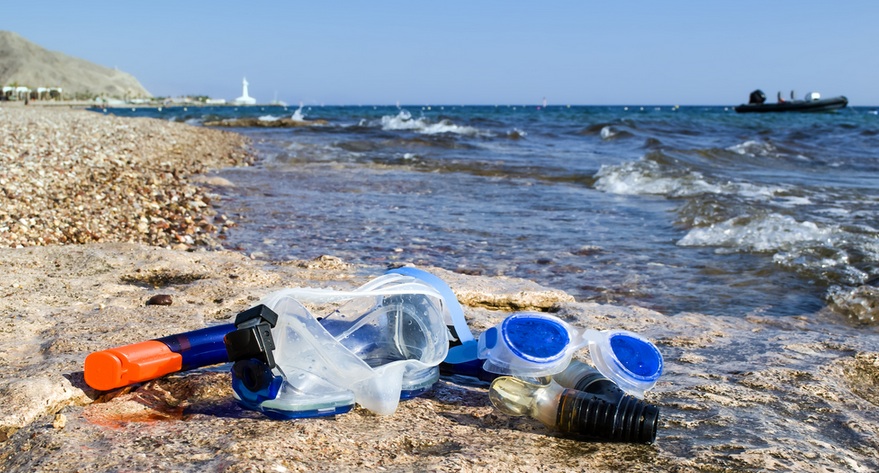
coral reef eilat There is a losing battle in saving coral reefs worldwide, but a drug made for humans might be able to help corals fight the White Plague.

Corals reefs are an invaluable part of the marine ecosystem, fostering biodiversity and protecting coastlines. But coral reefs are increasingly endangered. Pathogenic bacteria, along with pollution, global warming and harmful fishing practices, are one of the biggest threats to the world’s coral populations today.

One of the solutions to the crisis may lie in human medicine. Prof. Eugene Rosenberg of Tel Aviv University has developed a treatment for coral infected by Thalassomonas loyana, otherwise known as White Plague disease. This deadly bacterium infects 9 percent of Favia favus corals on the Eilat coral reef in the Red Sea and readily transmits the disease to nearby healthy corals.

Rosenberg’s treatment uses viruses that infect bacteria by injecting genetic material into the bacteria, a therapy originally developed to treat bacterial infections in humans. In this case, Rosenberg and his team isolated a virus called BA3, one of a category of viruses known as phages. After laboratory experiments showed that BA3 had the ability to kill off White Plague disease, field experiments in the Gulf of Eilat demonstrated that the treatment stopped the progression of the disease in infected corals and prevented the spread of the disease to surrounding healthy corals as well.

These findings were presented at the American Society for Microbiology’s general meeting in June.

Treating bacterial infections in corals is no easy task. Because corals don’t produce antibodies like humans, they can’t be immunized. And pharmaceutical antibiotics are not a viable option because the treatment releases the drugs into the sea, harming the marine environment.

The researchers applied their treatment to two groups of diseased coral, each surrounded by a circle of healthy corals. In the test group, the researchers injected the virus into the area at a concentration of 1000 per milliliter. The control group did not receive the virus.

After 24 hours, the difference in the outcome was highly significant, says Rosenberg. In the test group, the infection of the diseased coral ceased its progression, and the disease did not spread to the surrounding healthy corals. In the control group, however, the White Plague disease progressed rapidly in the original infected coral and spread to seven out of ten of the surrounding healthy corals.

The next step is to develop an effective way to spread the viruses over large areas of an infected coral reef. Sufficient amounts of these viruses can be easily manufactured in the laboratory. After that, it’s a question of technology and funding, Rosenberg adds.

Image of coral reef, Eilat from Shutterstock

Karin Kloosterman
Karin Kloostermanhttp://www.greenprophet.com
Karin Kloosterman is an award-winning journalist, innovation strategist, and founder of Green Prophet, one of the Middle East’s pioneering sustainability platforms. She has ranked in the Top 10 of Verizon innovation competitions, participated in NASA-linked challenges, and spoken worldwide on climate, food security, and future resilience. With an IoT technology patent, features in Canada’s National Post, and leadership inside teams building next-generation agricultural and planetary systems — including Mars-farming concepts — Karin operates at the intersection of storytelling, science, and systems change. She doesn’t report on the future – she helps design it. Reach out directly to [email protected]

LEAVE A REPLY

Please enter your comment!
Please enter your name here

TRENDING

Earth building with Dead Sea salt bricks

Researchers develop a brick made largely from recycled Dead Sea salt—offering a potential alternative to carbon-intensive cement.

Farm To Table Israel Connects People To The Land

Farm To Table Israel is transforming the traditional dining experience into a hands-on journey.

The life of a coral gives clues to the origins of our heartbeat

A joint study by Tel Aviv University (TAU) and the University of Haifa set out to solve a scientific mystery: how a soft coral is able to perform the rhythmic, pulsating movements of its tentacles without a central nervous system. The study’s findings may change the way we understand movement in the animal kingdom in general and particularly in corals.

Remilk makes cloned milk so cows don’t need to suffer and it’s hormone-free

This week, Israel’s precision-fermentation milk from Remilk is finally appearing on supermarket shelves. Staff members have been posting photos in Hebrew, smiling, tasting, and clearly enjoying the moment — not because it’s science fiction, but because it tastes like the real thing.

An Army of Healers Wins the 2025 IIE Goldberg Prize for Peace in the Middle East

In a region more accustomed to headlines of loss than of listening, the Institute of International Education (IIE) has chosen to honor something quietly radical: healing. The 2025 Victor J. Goldberg Prize for Peace in the Middle East has been awarded to Nitsan Joy Gordon and Jawdat Lajon Kasab, the co-founders of the Army of Healers, for building spaces where Israelis and Palestinians — Jews, Muslims, Christians, Druze, and Bedouins — can grieve, speak, and rebuild trust together.

Qatar’s climate hypocrisy rides the London Underground

Qatar remains a master of doublethink—burning gas by the megaton while selling “sustainability” to a world desperate for clean air. Wake up from your slumber people.

How Quality of Hire Shapes Modern Recruitment

A 2024 survey by Deloitte found that 76% of talent leaders now consider long-term retention and workforce contribution among their most important hiring success metrics—far surpassing time-to-fill or cost-per-hire. As the expectations for new hires deepen, companies must also confront the inherent challenges in redefining and accurately measuring hiring quality.

8 Team-Building Exercises to Start the Week Off 

Team building to change the world! The best renewable energy companies are ones that function.

Thank you, LinkedIn — and what your Jobs on the Rise report means for sustainable careers

While “green jobs” aren’t always labeled as such, many of the fastest-growing roles are directly enabling the energy transition, climate resilience, and lower-carbon systems: Number one on their list is Artificial Intelligence engineers. But what does that mean? Vibe coding Claude? 

Somali pirates steal oil tankers

The pirates often stage their heists out of Somalia, a lawless country, with a weak central government that is grappling with a violent Islamist insurgency. Using speedboats that swarm the targets, the machine-gun-toting pirates take control of merchant ships and then hold the vessels, crew and cargo for ransom.

Leopoldo Alejandro Betancourt López Turned Ocean Plastic Into Profitable Sunglasses

Few fashion accessories carry the environmental burden of sunglasses. Most frames are constructed from petroleum-based plastics and acrylic polymers that linger in landfills for centuries, shedding microplastics into soil and waterways long after they've been discarded. Leopoldo Alejandro Betancourt López, president of the Spanish eyewear brand Hawkers, saw this problem differently than most industry executives.

Why Dr. Tony Jacob Sees Texas Business Egos as Warning Signs

Everything's bigger in Texas. Except business egos.  Dr. Tony Jacob figured...

Israel and America Sign Renewable Energy Cooperation Deal

Other announcements made at the conference include the Timna Renewable Energy Park, which will be a center for R&D, and the AORA Solar Thermal Module at Kibbutz Samar, the world's first commercial hybrid solar gas-turbine power plant that is already nearing completion. Solel Solar Systems announced it was beginning construction of a 50 MW solar field in Lebrija, Spain, and Brightsource Energy made a pre-conference announcement that it had inked the world's largest solar deal to date with Southern California Edison (SCE).

Related Articles

Popular Categories