Corporate Organic Food Struggles to Compete in Israeli Markets

shuk market israelIn Israel the organic food market is still comparatively small and underdeveloped.

According to the Israeli newspaper Haaretz organic food only comprises one and half percent of Israel’s agricultural output. A whopping 90% of it is exported abroad, mainly to European markets.

An annual Agriculture Ministry survey in 2011 discovered that 37.4% of the organic produce sold in Israeli stores was mislabeled. The produce may have contained pesticides or in other ways fallen short of the ministry’s organic regulations. This may be part of the problem.

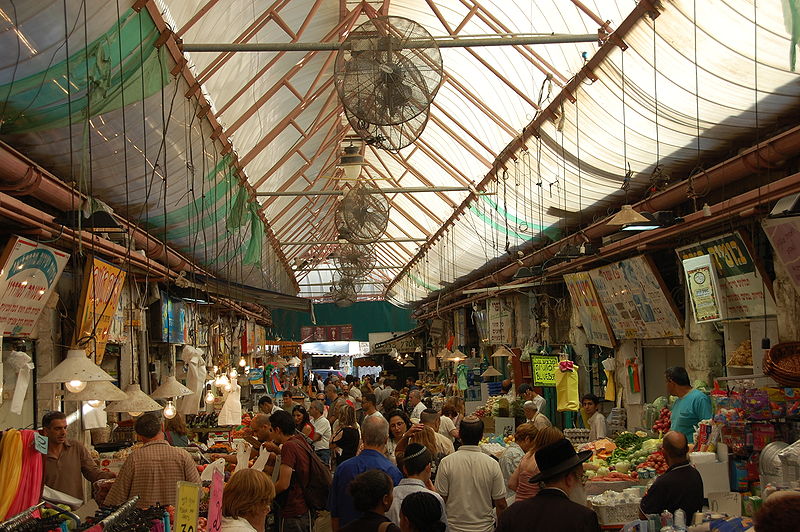
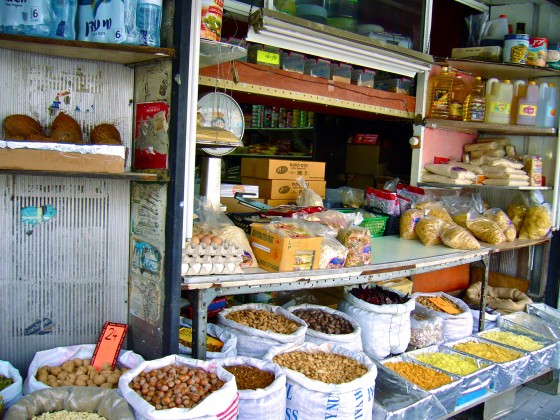
Organic chain supermarkets the paper points out struggle to compete with private farmers and open markets. Shuks [or markets] such as Machane Yehuda in Jerusalem, are cultural symbols and centers in Israel, each brimming with its own traditions.

It’s impossible for a store to replicate the diversity, communal chaos, smells and hustle, the haggling and booming voices of the shuk. Even beyond traditional shuks, through budding programs like Community Supported Agriculture (CSA) Israeli farmers can now take their produce directly to consumers without the hassle of a middleman, which generally provides superior freshness for the customer and higher profits for the farmer.

Despite these difficulties five major Israeli chains specializing in organic food emerged over the past two decades.

The oldest, Nitzat Haduvdevan (The Cherry Bud in English), opened its first branch in 1986. They now have 17 stores throughout Israel. Next came Teva Castel, established in 1999, which now operates five outlets in and around Tel Aviv. These were later joined by Eden Teva Market, with 20 locations including nine branches within mega supermarkets.

There are also the eight venues of Organic Market, which was bought up by Super-Sol in 2011. The fifth and final company is a sub-organization within Super-Sol called “Green.” It is essentially its own section within 15 regular Super-Sol supermarkets.

Prices for organic produce from a store are drastically more expensive than their conventionally grown counterparts or organic produce purchased at a market. As with many industrialized food distributors, the larger companies typically offer the lowest prices. Of the five Israeli chains Super-Sol’s ‘Green’ generally offers the cheapest organic produce. Organic cucumbers that cost merely NIS 6 per kilo at ‘Green’ cost NIS 13 per kilo in Organic Market – a 116% difference.
israeli markets shuk

While offering organic produce in stores and major outlets are a step towards public awareness and general accessibility, CSAs and open markets provide the most sustainable outlet for Israel’s organic market to continue expanding.

In a culture where the shopper’s battle cry is “Ani lo friar!” (I am not a sucker!”), hunting for the best and cheapest from a diverse spectrum of sellers is half the fun.

::Haaretz

Images by Wikimedia Commons and Leigh Cuen

Leigh Cuen
Leigh Cuenhttp://www.greenprophet.com
Leigh Cuen is a freelance journalist currently reporting from Israel. She has written for the Earth Island Journal, the San Francisco Public Press, the Palestinian News Network, J. weekly newspaper and the Women News Network. Follow her @La__Cuen.
1 COMMENT
  1. You know who will be the real friars? Israeli children, who sadly will develop cancer and other chronic illnesses from all the pesticide exposure. Not just the pesticides on the vegetables and fruit they are eating, but from the sprays sent down on them while they play in the wheat fields. 🙁

LEAVE A REPLY

Please enter your comment!
Please enter your name here

TRENDING

Earth building with Dead Sea salt bricks

Researchers develop a brick made largely from recycled Dead Sea salt—offering a potential alternative to carbon-intensive cement.

Farm To Table Israel Connects People To The Land

Farm To Table Israel is transforming the traditional dining experience into a hands-on journey.

Remilk makes cloned milk so cows don’t need to suffer and it’s hormone-free

This week, Israel’s precision-fermentation milk from Remilk is finally appearing on supermarket shelves. Staff members have been posting photos in Hebrew, smiling, tasting, and clearly enjoying the moment — not because it’s science fiction, but because it tastes like the real thing.

An Army of Healers Wins the 2025 IIE Goldberg Prize for Peace in the Middle East

In a region more accustomed to headlines of loss than of listening, the Institute of International Education (IIE) has chosen to honor something quietly radical: healing. The 2025 Victor J. Goldberg Prize for Peace in the Middle East has been awarded to Nitsan Joy Gordon and Jawdat Lajon Kasab, the co-founders of the Army of Healers, for building spaces where Israelis and Palestinians — Jews, Muslims, Christians, Druze, and Bedouins — can grieve, speak, and rebuild trust together.

Slow food market Souk el Tayeb in Lebanon celebrates food and Eid El Barbara

What makes Souk El Tayeb in Lebanon remarkable is not only its insistence on local, seasonal produce, but its belief that dignity and sustainability must go hand in hand. Farmers are paid fairly. Villages are uplifted. Traditional recipes are kept alive not as nostalgia but as knowledge systems: real food is carbon-light, waste-free, and is adapted to the land.

Qatar’s climate hypocrisy rides the London Underground

Qatar remains a master of doublethink—burning gas by the megaton while selling “sustainability” to a world desperate for clean air. Wake up from your slumber people.

How Quality of Hire Shapes Modern Recruitment

A 2024 survey by Deloitte found that 76% of talent leaders now consider long-term retention and workforce contribution among their most important hiring success metrics—far surpassing time-to-fill or cost-per-hire. As the expectations for new hires deepen, companies must also confront the inherent challenges in redefining and accurately measuring hiring quality.

8 Team-Building Exercises to Start the Week Off 

Team building to change the world! The best renewable energy companies are ones that function.

Thank you, LinkedIn — and what your Jobs on the Rise report means for sustainable careers

While “green jobs” aren’t always labeled as such, many of the fastest-growing roles are directly enabling the energy transition, climate resilience, and lower-carbon systems: Number one on their list is Artificial Intelligence engineers. But what does that mean? Vibe coding Claude? 

Somali pirates steal oil tankers

The pirates often stage their heists out of Somalia, a lawless country, with a weak central government that is grappling with a violent Islamist insurgency. Using speedboats that swarm the targets, the machine-gun-toting pirates take control of merchant ships and then hold the vessels, crew and cargo for ransom.

Leopoldo Alejandro Betancourt López Turned Ocean Plastic Into Profitable Sunglasses

Few fashion accessories carry the environmental burden of sunglasses. Most frames are constructed from petroleum-based plastics and acrylic polymers that linger in landfills for centuries, shedding microplastics into soil and waterways long after they've been discarded. Leopoldo Alejandro Betancourt López, president of the Spanish eyewear brand Hawkers, saw this problem differently than most industry executives.

Why Dr. Tony Jacob Sees Texas Business Egos as Warning Signs

Everything's bigger in Texas. Except business egos.  Dr. Tony Jacob figured...

Israel and America Sign Renewable Energy Cooperation Deal

Other announcements made at the conference include the Timna Renewable Energy Park, which will be a center for R&D, and the AORA Solar Thermal Module at Kibbutz Samar, the world's first commercial hybrid solar gas-turbine power plant that is already nearing completion. Solel Solar Systems announced it was beginning construction of a 50 MW solar field in Lebrija, Spain, and Brightsource Energy made a pre-conference announcement that it had inked the world's largest solar deal to date with Southern California Edison (SCE).

Related Articles

Popular Categories