

Iraqis love Valentine’s Day. We don’t love new consumerism

Valentine's Day, Iraq, consumer culture, environment, green issues,

As it turns out, I haven’t received a Valentine’s Day gift since 2006, but even when I wasn’t single and out saving the world, I never encouraged my boyfriends to give me chocolates or flowers. A book? A sweet card? Maybe. But since anyone can go out and buy a box of chocolates at the last minute without putting any real heart into it, having red gifts never appealed to me.

So when I read that Iraqis are celebrating a surge of red-lined shelves this Valentine’s Day after enduring war for so long all kinds of complicated thoughts arose. On the one hand, I rue this wasteful “holiday:” chocolate production and cut flowers are often associated with human rights violations and environmental devastation, but on the other hand, how can I begrudge Iraqis a bit of lighthearted fun?

Valentine’s Day is for everybody

“Valentine’s Day is for everybody — not only for lovers,” an Iraqi school administrator named Lina told the Jordan Times, adding that, “It’s for you and I, for me and my brother, even for someone on the street. It’s not just about me and my fiancé… Iraqis need happy moments to make them forget what they have been through — we have had enough sadness.”

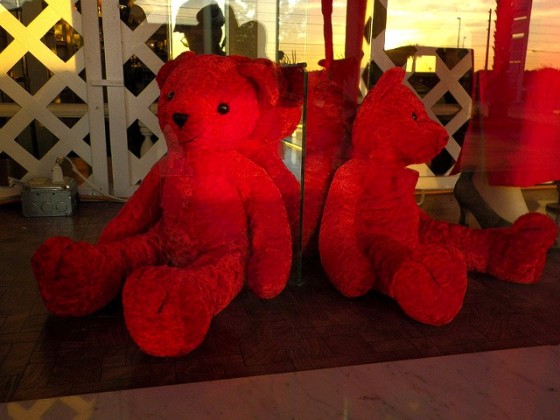
Nina was browsing through stocks of all kinds of red “stuff” – teddy bears, lip-shaped pillows, red scented candles, heart-shaped purses, and even silky nighties. Having access to this suggestive merchandise is a new thing in Iraq, which is a conservative country, and Nina associates it with a new found openness and happiness even as bombs continue to fall in certain neighborhoods.

Conservative Muslims are concerned about this new trend since they fear it will usher in a more casual western attitude toward relationships, but one shopkeeper told the paper that he expects to sell all of his love goods since the holiday is becoming increasingly popular.

This is a huge step in the right direction. Unmarried people can show their affection for one another without fear that the moral police will nab them and a more loving ethos will become increasingly acceptable. But what will it take to dispel the notion that love can be expressed with things? What will it take to de-commercialize the most sacred of all states of being?

Love can’t be expressed with things

The belief that anything about our true nature – our class, our status, our success, our love – can be revealed with material goods is at the root of our environmental and social problems.

In 2010, the Guardian reported that humanity’s cult of consumption and greed are the biggest threats to our planet. These traits are so powerful that they derail even the best laid government plans to mitigate climate change. So the idea that we (wealthy westerners) have spread this unloving quality to the rest of the world fills me with untold regret.

The Institute of HeartMath (IHM) reported that the heart is like a radio station that “broadcasts a pattern of information on a radio wave through its electromagnetic field. That pattern changes based on what we are feeling. The pattern that’s broadcasted through the heart’s electromagnetic field can be detected (measured) in another person’s brainwaves, when two people are touching or in close proximity. In other words, we are always transferring nonverbal emotional information to each other.”

The gift of dyed teddy bears will not make your partner feel special for more than a fleeting second, but touch, good thoughts, and genuine care can last a lifetime. The ancients have always known this. It’s time for us to turn our backs on consumer culture and reclaim our hearts.

:: Jordan Times

image via flickr, dno 1967b

More on Valentine’s Day:

Going Green for Valentine’s Day
Muslim Couples Required to Plant Trees Before Marriage

7 Ways to Green Your Wedding Day

Tafline Laylin
Tafline Laylinhttp://www.greenprophet.com
As a tour leader who led “eco-friendly” camping trips throughout North America, Tafline soon realized that she was instead leaving behind a trail of gas fumes, plastic bottles and Pringles. In fact, wherever she traveled – whether it was Viet Nam or South Africa or England – it became clear how inefficiently the mandate to re-think our consumer culture is reaching the general public. Born in Iran, raised in South Africa and the United States, she currently splits her time between Africa and the Middle East. Tafline can be reached at tafline (at) greenprophet (dot) com.

TRENDING

Huge Fish Nursery Discovered Under Freezing Arctic Seas

In 2019, an underwater robot camera exploring the seabed...

Iran is sinking in sinkholes from overwatering

What's that sinking feeling? In Iran, the very ground under...

Travel by Valentine’s train on 5 romantic itineraries around Norway and Sweden

Slow, romantic train itineraries around Norway for Valentine's Day.

Nullker: A Sustainable Global Community where “ECO” stands for Ecology as much as Economy 

Translated into the language of economy, the revolutionary way lies through uniting the already existing environmental effort and channeling it in a manner that would enrich all the parties involved: business, communities, and nature.

Jaffa’s home-roasted coffee and music curated at Ada Hanina Cafe

This story is about Ada Hanina Cafe in Jaffa and its owner Tomer. Tomer wanted to blend good coffee and music to create the best cafe experience for his community.

Turning Your Energy Consultancy into an LLC: 4 Legal Steps for Founders in Texas

If you are starting a renewable energy business in Texas, learn how to start an LLC by the books.

Tracking the Impacts of a Hydroelectric Dam Along the Tigris River

For the next two months, I'll be taking a break from my usual Green Prophet posts to report on a transnational environmental issue: the Ilısu Dam currently under construction in Turkey, and the ways it will transform life along the Tigris River.

6 Payment Processors With the Fastest Onboarding for SMBs

Get your SMB up and running fast with these 6 payment processors. Compare the quickest onboarding options to start accepting customer payments without delay.

Qatar’s climate hypocrisy rides the London Underground

Qatar remains a master of doublethink—burning gas by the megaton while selling “sustainability” to a world desperate for clean air. Wake up from your slumber people.

How Quality of Hire Shapes Modern Recruitment

A 2024 survey by Deloitte found that 76% of talent leaders now consider long-term retention and workforce contribution among their most important hiring success metrics—far surpassing time-to-fill or cost-per-hire. As the expectations for new hires deepen, companies must also confront the inherent challenges in redefining and accurately measuring hiring quality.

8 Team-Building Exercises to Start the Week Off 

Team building to change the world! The best renewable energy companies are ones that function.

Thank you, LinkedIn — and what your Jobs on the Rise report means for sustainable careers

While “green jobs” aren’t always labeled as such, many of the fastest-growing roles are directly enabling the energy transition, climate resilience, and lower-carbon systems: Number one on their list is Artificial Intelligence engineers. But what does that mean? Vibe coding Claude? 

Somali pirates steal oil tankers

The pirates often stage their heists out of Somalia, a lawless country, with a weak central government that is grappling with a violent Islamist insurgency. Using speedboats that swarm the targets, the machine-gun-toting pirates take control of merchant ships and then hold the vessels, crew and cargo for ransom.

Related Articles

Popular Categories