

 Another year, Hijri, has passed of the Islamic calendar. Over a thousand years since the first eco-mosque, but are Muslims any more greener at the end of it?
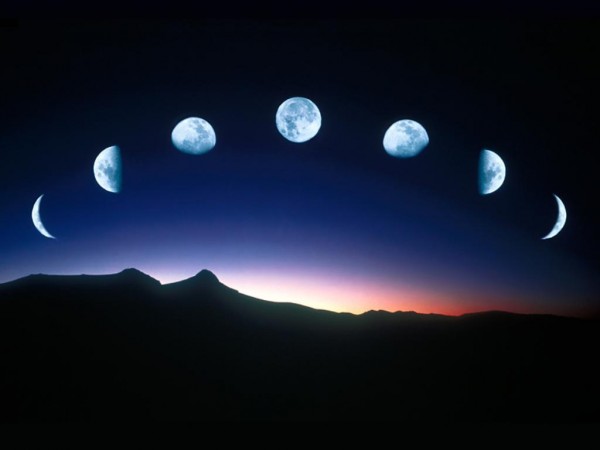
Like the Gregorian year, the Islamic calendar is made up of 12 months, each around 29 to 31 days. Unlike the solar year which follows the sun, the Islamic year is a lunar one (and no we are not talking about moon dwellings!), following the moon in its orbit and creating a more fluctuating time. In this sense a lunar year is more in tune with the natural order of the planet.
Months are not linked to seasons but the value of passing life.
Lunar Vs Solar Calendar in Islam
For our astronomical readers, it is the Earth’s axial tilt that marks the seasons and hours of daylight. The word “month” itself is derived from “moon,” essentially measuring one lunar cycle: the roughly 28.5 days it takes the moon to circle the earth.
Because each day the Earth is in a different position in relation to the moon, the lunar year feels shorter, shifting by about 10 days so that the seasons are never in the same quarter for more than 5 years.
Muslims have a scientific history of environmental pioneers who were resourceful and adept craftsmen. Astronomy was a key area which Greeks and the later Arab Muslims excelled in to measure space, distance and time. Exquisite mechanical clocks were carved to beautify the measuring of time, an area that 1001 Inventions from Islamic history is exhibiting worldwide.
With this need for efficiency and accuracy, the Saudi government is pushing for a standardised Islamic calendar, beginning with its unsightly clock tower. And we also see the never-ending debates over moon sightings to begin the next month.
In 2002 Hajj pilgrimage was performed in March during a warmer climate in Saudi Arabia. Ten years on and it has shifted ‘backwards’ to the beginning of November and come 2020, Hajj will hit during peak heat season in August. The keyword for that year – sunscreen (you can make your own organic sunscreen here).
The Hijri Calendar of Islam
Ten points for guessing when the Islamic calendar began… A clue is in the title!
But what you might not have known is that it wasn’t the demise of the Prophet Muhammad, nor his birth, that was commemorated as Year Number 1.
It was the migration (hijrah) of the first Muslims from Makkah to Medina to begin new life and establish the first Islamic state, which worked alongside Jewish and Christian communities in Madina, 622CE. And it was the convert Muslim Umar, (Omar) who went about to create the dating system some 16 years later (638CE), Wikipedia explains.
Islam, Environment and Hijrah – Then and Now
From the first Islamic state 1433 years ago in Madina to 2011, Muslim communities have proactively demonstrated that the ground upon which Islamic seeds have grown, is ecological. After all, as Green Deen author Ibrahim Abdul Matin believes, “the whole earth is a mosque”.
- ECO MOSQUES
The first mosque (Arabic, masjid), today more noticeable as the gleaming white Masjid al-Quba in Madina, was made from dry stones and built by the hands of Prophet Muhammad and his companions. As a place of cleanliness, Muslims were encouraged to wash at home, walk to the mosque to avoid (animal) congestion and pray on a dust-swept floor. This etiquette continues today while Quba mosque is surrounded by palm groves to remind worshippers of the grand pillar’s greener roots.
Further awarded eco-mosques have risen across the globe from Cambridge’s community garden mosque, the first eco-mosque in Europe, to a mud brick mosque in Mali, and the more recent plans for Qatar’s eco-mosques, fully installed with water savers and solar panelling.
But on the other hand, lavish buildings of worship have overshadowed Islamic sites like the Kabah in Makkah with nothing less than an industrial ugliness. So we have to ask, what happened to Islam’s environmentally friendly architecture?
- WASTE AND FAITH
Islam connected its teachings to controlled consumption and minimal waste. Islam has a relationship with water that outright exclaims if you’re using too much, you’re doing it wrong.
Men who ate too much were told to cut back and restore the hunger equilibrium. Women who threw out food were told to share meals with neighbours. When the ruling for the hijab (headscarf) came into action, poor women resorted to tearing extra fabric from their dresses to makeshift headscarves.
In 2010, an estimated 500 tons of food was wasted during Ramadan. Something’s got to give.
- HIJAB HEADS
When Islam unfolded its message, its laws were passed in stages. The first Muslims prayed facing Jerusalem, they did not wear the hijab and alcohol hadn’t been completely forbidden until the 5 daily prayers were set.
Muslims believe God was telling people to not jump into a renewable lifestyle with eyes shut. Islam wanted to take things the natural human way, sustainable and less fussy.
Fashionable hijabs are all the rage for contemporary Muslim women while the more fashion conscious experiment with eco-hijabs. Again, the message is to simplify and reduce waste.
- TERRORISM
Not always an easy subject to discuss but a real one nonetheless. Eco-terrorism and environmental sabotage has leaked its ways into many religious domains, with most of its media coverage falling on terrorist acts from Muslims. The European campaign Inspired by Muhammad was lead by eco-Muslim Kristiane Backer to expose and deal with this misperception, showing the mainstream and moderate environmental Muslims in action.
What Would Muhammad Do? Build a Green Bank Balance
Celebrations are a Muslim’s weakness. We like to party, we really want to “let our hijabs down” with our girlfriends (and we do), but apart from a sustainable Eid festival, and the remembered anniversary, Muslims do little to green up the new year.
So the Islamic new year is not so much a bang as it is a mellow hurray. We reflect, we pray and the Eco-Muslims amongst us recycle resolutions and plant trees.
There is more of an acknowledgement of the passing of time. We take the time to assess our annual actions as a kind of ‘green bank balance’. Did we meet our resolution(s), did we fund water pumps for third world countries, did we plant those trees as promised?
A quotable quote from the Quran sums up the Islamic new year in an allegory, “A good word is like a good tree, with firmly fixed roots and branches high in the sky” (14:24). So we may not have lived up the prophetic ideal of mud, rocks and astronomical genius, but like the seed that grows with patience and nurturing, Muslims have new time to go back to green.
Clever info:
CE = Common Era, or Christian Era, measuring time since the traditional birth of Christ.
AH = (AH = Anno Hegirae = year of the Hijra).
The Islamic year ended 26th November 2011, with the 27th November being the 1st of Muharram, 1433, the first Islamic month.
*Peace be upon him, a Muslim phrase used to bless historic prophets and figures. In Arabic: `alayhi salaam.
Image:: Thefacebeauty.co.uk
More on celebrating green faith:
Saudi Arabia Goes “Green” To Celebrate National Day
Sukkot, the Jewish Environment Holiday
7 Tips for a Sustainable Eid-ul-Adha Festival
Haifa Christmas Tree Made From Over 5,000 Recycled Plastic Bottles


izin mengambil gmbarnya trimakasih.