Maritime Nuclear Energy May Still Be Worthwhile – To a Point

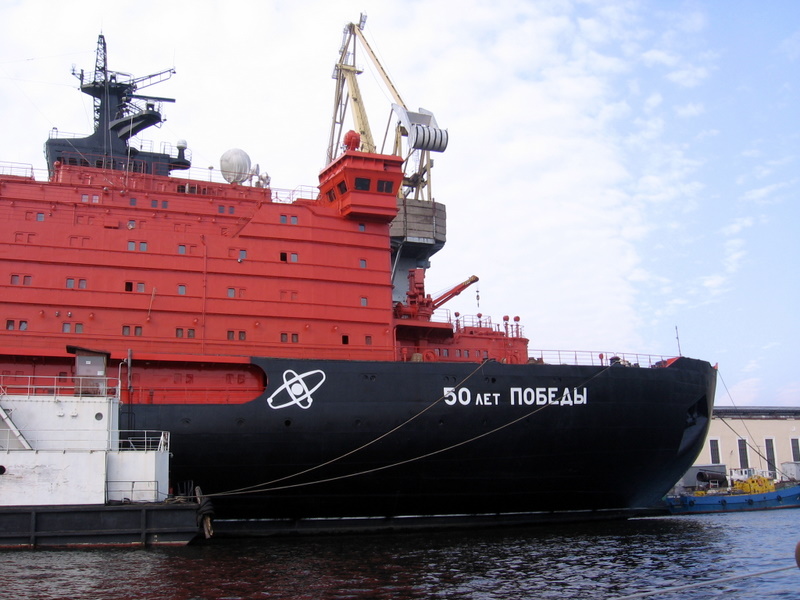
russian nuclear subRussian nuclear icebreaker 50 Years of Victory: Can spend many months at sea

With the nuclear power plant crisis in the Chernobyl reactor in 1986 and now the recent Japanese nuclear crisis at the Fukushima nuclear power plant many people are still wondering if there is any possible good use for nuclear energy , especially when it can create “dead zones” in areas surrounding the damaged reactors, as in case of both Chernobyl and Fukushima, affecting both people and animals as well. Maritime nuclear may circumvent some of the risks.

How a nuclear submarine reactor works

What may not have been taken into account is the maritime success of nuclear energy, and its use in both military and civilian maritime vessels since the first nuclear powered submarine, the USS Nautilus was launched in 1954.

The use of nuclear power has enabled both ships and submarines to travel on the world’s seas and oceans for extended periods of time without the need to refuel. Nuclear power has also been considered as being cleaner and less expensive that the heavy fuel oil needed to power conventionally powered models. Due to the advantages of being able to be at sea for extended periods of time; and in the case of submarines to cruise at depths and in areas not possible in conventional diesel powered models (in the Arctic Ocean for example) nuclear powered military vessels have been the rule since the 1970’s.

Although nuclear energy has not been used much in commercial merchant vessels, it has been used to provide power for ships like large ice breakers which help ensure clear sea lanes for merchant marine vessels sailing in waters above the Arctic Circle.

The Down Side of Nuclear Powered Navy Vessels

Naturally, there is a “down side” to empowering nuclear energy to provide to provide the power for operating large naval vessels. And this is particularly when a nuclear powered vessel, especially a submarine, sinks to the bottom of “Davy Jones’ Locker” with its nuclear reactor and radioactive fuel aboard, as well as possibly a number of nuclear armed missiles.

Since the 1960’s a number of nuclear powered submarines have sunk; two from the USA, including the USS Thresher which sank in April 1963 with 129 crew members and civilian technicians on board. To this day, the remains of this vessel, which broke up into 6 parts, and its nuclear reactor, are still lying in 8,400 feet (2,900 meters of water) in the Atlantic Ocean.
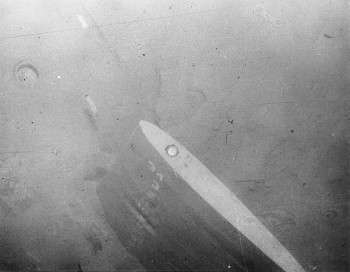
USS Thresher under water

The number of Russian nuclear subs which have sunk is not as well known, although international records indicate that a number of nuclear bombs have been lost at sea from various accidents (US records indicate  at least 11 nuclear bombs from American submarines and aircraft alone).

The last Russian nuclear sub lost at sea was the Kursk, which sank in the Barents Sea in August 2000 with 112 crew members on board.

The cause of the sinking of this vessel was later attributed to it colliding with another unknown submarine and although it was not carrying nuclear weapons at the time of the disaster its nuclear reactors were in operation, although Russian authorities testified that the sub’s reactors were shut down when the accident occurred.

Nuclear powered vessels have not yet been introduced into the Middle East; and although the navies of Israel, Egypt, Iran, and possibly other countries have submarines, none are nuclear powered. This doesn’t mean that this could change in the future, however.

Read more on nuclear radiation issues:

Japan Meltdown Will Seriously Affect World Environment

Nuclear Fears, Myths and Reality

Radiation Exposure and Sperm: What every Man Should Know

Japan’s Nuclear Dead Zone Dogs and Cats

Images via Wikipedia.com


Maurice Picow
Maurice Picowhttps://www.greenprophet.com/
Maurice Picow grew up in Oklahoma City, U.S.A., where he received a B.S. Degree in Business Administration. Following graduation, Maurice embarked on a career as a real estate broker before making the decision to move to Israel. After arriving in Israel, he came involved in the insurance agency business and later in the moving and international relocation fields. Maurice became interested in writing news and commentary articles in the late 1990’s, and now writes feature articles for the The Jerusalem Post as well as being a regular contributor to Green Prophet. He has also written a non-fiction study on Islam, a two volume adventure novel, and is completing a romance novel about a forbidden love affair. Writing topics of particular interest for Green Prophet are those dealing with global warming and climate change, as well as clean technology - particularly electric cars.

TRENDING

Play spogomi the garbage picking sport and win a World Cup

If the future of environmental action looks less like a lecture and more like a pickup game, that might not be a bad thing at all.

Huge Fish Nursery Discovered Under Freezing Arctic Seas

In 2019, an underwater robot camera exploring the seabed...

Egypt building nuclear power

Egypt is building a nuclear energy plant, expected to go online in 2026 when countries like Germany have shut down all its domestic nuclear power. The El Dabaa Nuclear Power Plant is the first nuclear power plant planned for Egypt and will be located at El Dabaa, Matrouh Governorate, Egypt, about 320 kilometers northwest of Cairo. 

Ski Japan and skip the cherry blossoms

apan’s winters reveal a quieter magic far from the cherry blossoms — a landscape of deep snow, mountain silence, and steaming hot springs. From Niseko’s legendary powder in Hokkaido to the Olympic slopes of Hakuba and the ancient baths of Nozawa Onsen, Japan offers some of the world’s most sustainable and culturally rich ski experiences. With efficient bullet-train access, renewable-powered resorts, and geothermal onsens under falling snow, this is how to ski Japan responsibly — where tradition, technology, and climate awareness meet on the same mountain.

How Israel’s Strikes Avert Iran’s Environmental Threat

The strikes on Iran have sparked fierce debate, but from Israel’s perspective, the choice was easy: either accept the risks of a nuclear Iran or act decisively to stop it.

Turning Your Energy Consultancy into an LLC: 4 Legal Steps for Founders in Texas

If you are starting a renewable energy business in Texas, learn how to start an LLC by the books.

Tracking the Impacts of a Hydroelectric Dam Along the Tigris River

For the next two months, I'll be taking a break from my usual Green Prophet posts to report on a transnational environmental issue: the Ilısu Dam currently under construction in Turkey, and the ways it will transform life along the Tigris River.

6 Payment Processors With the Fastest Onboarding for SMBs

Get your SMB up and running fast with these 6 payment processors. Compare the quickest onboarding options to start accepting customer payments without delay.

Qatar’s climate hypocrisy rides the London Underground

Qatar remains a master of doublethink—burning gas by the megaton while selling “sustainability” to a world desperate for clean air. Wake up from your slumber people.

How Quality of Hire Shapes Modern Recruitment

A 2024 survey by Deloitte found that 76% of talent leaders now consider long-term retention and workforce contribution among their most important hiring success metrics—far surpassing time-to-fill or cost-per-hire. As the expectations for new hires deepen, companies must also confront the inherent challenges in redefining and accurately measuring hiring quality.

8 Team-Building Exercises to Start the Week Off 

Team building to change the world! The best renewable energy companies are ones that function.

Thank you, LinkedIn — and what your Jobs on the Rise report means for sustainable careers

While “green jobs” aren’t always labeled as such, many of the fastest-growing roles are directly enabling the energy transition, climate resilience, and lower-carbon systems: Number one on their list is Artificial Intelligence engineers. But what does that mean? Vibe coding Claude? 

Somali pirates steal oil tankers

The pirates often stage their heists out of Somalia, a lawless country, with a weak central government that is grappling with a violent Islamist insurgency. Using speedboats that swarm the targets, the machine-gun-toting pirates take control of merchant ships and then hold the vessels, crew and cargo for ransom.

Related Articles

Popular Categories