Birds in Iran Migrate Between Polluted to Less-polluted Cities

Once part of the urban horizon, crows are leaving Iranian cities.

Since the 1980s scholars have studied the influences of urbanization on the environment, particularly the ecosystem. The rapid growth of the urban population and especially the lifestyle of the urban dwellers have undeniable effects on the life of living species and plants. Birds are of the animals that are completely affected by urbanization. Among several studies that have been done on the effects of the urban life on ecosystem, some are on the influences on the life of urban birds. Such studies show how urbanization modifies the life of avian communities of the cities by influencing food, water, climate, and predators.

During the past years, the lives of urban birds of the Iranian cities have been monitored by activists. This was started when reports of fleeing birds of Tehran were given out. While many believe that the birds of Tehran are really less than before, some say that the birds just move from the regions with higher pollution to the less-polluted parts. So the population of birds in some regions is even more than before.

Example of such studies, which is accessible online is a paper written by Beissinger and Osborne in 1982: “Effects of Urbanization on Avian Community Organization”.

Another online document that is worth reading is “Effects of Urbanization on Bird Populations in the Canadian Central Arctic” written by Richard J. Staniforth.

The story of migration of birds from cities is not limited to Tehran. Recently with the increase of air pollution in Esfahan, new reports about decreasing number of birds have been published. The last kind of birds, which are affected by air pollution, are crows. These birds are more resistant against hard conditions than many other types of birds, but still are escaping from the polluted urban environment of Esfahan. Previously the city was famous for its high number of crows.

Apart from air pollutions some other factors are important in the present condition of the urban birds of cities like Esfahan. The growing urbanization has had bad effects on the habitat of the birds, for example a large number of the trees of Esfahan are in bad conditions because of air pollution. So the birds are forced to move out of the city. Many of them are good food for the birds of prey or other animals of outside the cities. So they are also in danger of extinction.

Years ago “birds in the alleys” was quite a normal and usual picture that every one could imagine of their living space. Now it is obviously necessary to do something to save the urban environment. The question is what?

More articles on the environmental problems of Iran:

High Waste Generation and Low Level Recycling in Iran

NGOs Tell It On the Mountains in Iran (Clean Up!)

Record Hot Summer Ignites Forest Fires in Iran

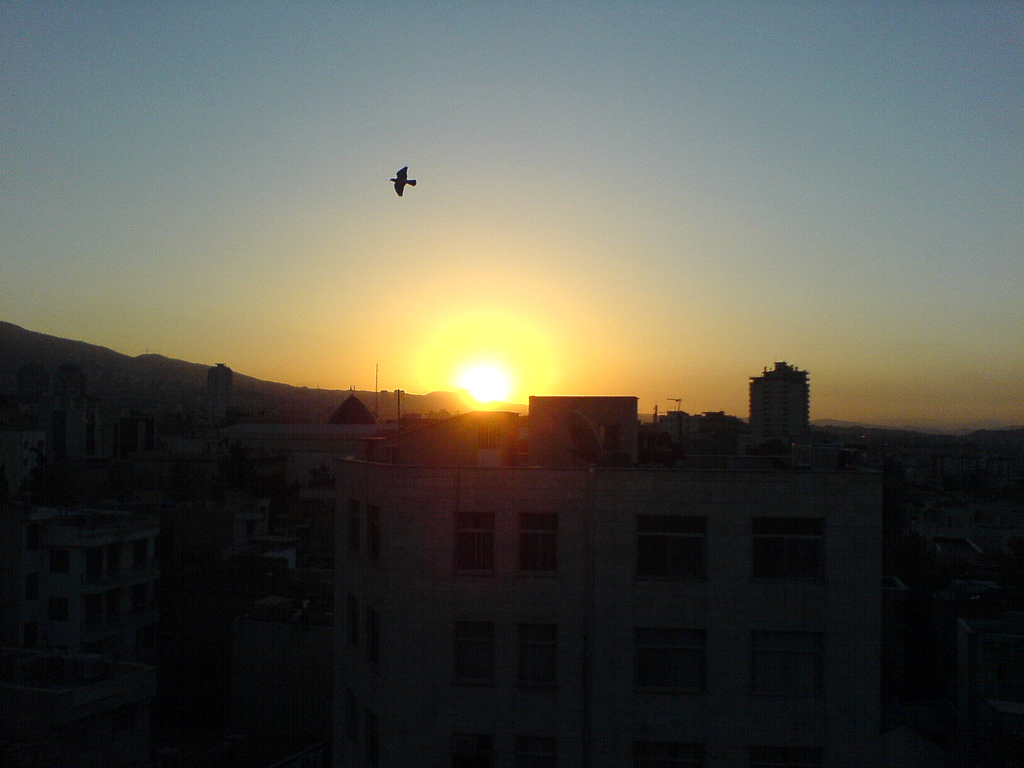
Image by Hamid Reza Mohammadi

Mehrdad Parsipour
Mehrdad Parsipourhttp://www.greenprophet.com
Mehrdad Parsipour is an urban researcher who is based in Germany. He is originally from Iran and is interested in the traditional urbanism and architecture of Iran and Middle East. Mehrdad’s other research interests are western traditional urban development trends, Islamic cities, and sustainable urban forms, and finally the environment. Since 1997 he has been working in the field of civil engineering, and also urban and regional planning.

LEAVE A REPLY

Please enter your comment!
Please enter your name here

TRENDING

Huge Fish Nursery Discovered Under Freezing Arctic Seas

In 2019, an underwater robot camera exploring the seabed...

Zoroastrianism from Iran is the world’s first eco-religion

When Zarathustra started preaching around 1200 BCE in ancient Persia, which is known today as Iran, he wasn't just founding a religion—he was creating the world's first environmental protection movement. Good thoughts, good words, good deeds. But there was a mantra and words to live by: don't pollute the earth, water, or fire. Ever.

UNESCO forest being developed in Iran

Environmental activists in Iran often face significant personal risk when speaking out about illegal land grabs, deforestation, or the destruction of protected areas. In recent years, several high-profile environmentalists have been detained, interrogated, or imprisoned on broad national-security charges, sometimes without transparent legal proceedings.

Microplastics Are Becoming Superbug Highways — New Study Warns Beachgoers to Wear Gloves

Prof. Pennie Lindeque added that microplastics “act as carriers for antimicrobial-resistant bacteria, enhancing their survival and spread… each particle becomes a tiny vehicle capable of transporting pathogens from sewage works to beaches, swimming areas and shellfish-growing sites.”

Iran’s rarest forest is on fire

It's full of rare and endemic species, and it's a UNESCO heritage site. Iran's natural treasure, a 1000-kilometer forest, the Hyrcanian forest has been on fire for several days. It stretches from the Caspian Sea and into neighboring Azerbaijan and is home to more than 3,200 kinds of plants. 

Qatar’s climate hypocrisy rides the London Underground

Qatar remains a master of doublethink—burning gas by the megaton while selling “sustainability” to a world desperate for clean air. Wake up from your slumber people.

How Quality of Hire Shapes Modern Recruitment

A 2024 survey by Deloitte found that 76% of talent leaders now consider long-term retention and workforce contribution among their most important hiring success metrics—far surpassing time-to-fill or cost-per-hire. As the expectations for new hires deepen, companies must also confront the inherent challenges in redefining and accurately measuring hiring quality.

8 Team-Building Exercises to Start the Week Off 

Team building to change the world! The best renewable energy companies are ones that function.

Thank you, LinkedIn — and what your Jobs on the Rise report means for sustainable careers

While “green jobs” aren’t always labeled as such, many of the fastest-growing roles are directly enabling the energy transition, climate resilience, and lower-carbon systems: Number one on their list is Artificial Intelligence engineers. But what does that mean? Vibe coding Claude? 

Somali pirates steal oil tankers

The pirates often stage their heists out of Somalia, a lawless country, with a weak central government that is grappling with a violent Islamist insurgency. Using speedboats that swarm the targets, the machine-gun-toting pirates take control of merchant ships and then hold the vessels, crew and cargo for ransom.

Leopoldo Alejandro Betancourt López Turned Ocean Plastic Into Profitable Sunglasses

Few fashion accessories carry the environmental burden of sunglasses. Most frames are constructed from petroleum-based plastics and acrylic polymers that linger in landfills for centuries, shedding microplastics into soil and waterways long after they've been discarded. Leopoldo Alejandro Betancourt López, president of the Spanish eyewear brand Hawkers, saw this problem differently than most industry executives.

Why Dr. Tony Jacob Sees Texas Business Egos as Warning Signs

Everything's bigger in Texas. Except business egos.  Dr. Tony Jacob figured...

Israel and America Sign Renewable Energy Cooperation Deal

Other announcements made at the conference include the Timna Renewable Energy Park, which will be a center for R&D, and the AORA Solar Thermal Module at Kibbutz Samar, the world's first commercial hybrid solar gas-turbine power plant that is already nearing completion. Solel Solar Systems announced it was beginning construction of a 50 MW solar field in Lebrija, Spain, and Brightsource Energy made a pre-conference announcement that it had inked the world's largest solar deal to date with Southern California Edison (SCE).

Related Articles

Popular Categories