

 Protect the environment by eating the (animal or plant) species trying to invade it. What does a Middle Eastern invasivore look like?
Environmentalists have a lot of crazy eating habits. You’ve got the hardcore vegans who avoid all meat and animal byproducts, the vegetarians who will not eat meat (but eat dairy and eggs), the vegawarians who eat meat but try to consume it sparingly, the strictly organic crowd, and the locavores who will not eat anything that came from outside a particular geographic radius. Just when you thought you had all of your eco-friendly culinary terminology down, there’s a new environmental eating trend out there: invasivores.
As described in the New York Times last week, invasivores choose to eat invasive animal and/or plant species in order to protect the local environment (and eat local at the same time). In the Florida Keys this has meant eating lionfish, and in San Francisco vegetarian invasivore Rachel Kesel has started eating an edible invasive weed – field mustard. But what would a Middle Eastern invasivore diet look like?
Thanks to fellow Green Prophet Karin who foraged in her garden for edible weeds last year, we have some hints.
Middle Eastern invasivores can start by eating the following leafy green “weeds”:
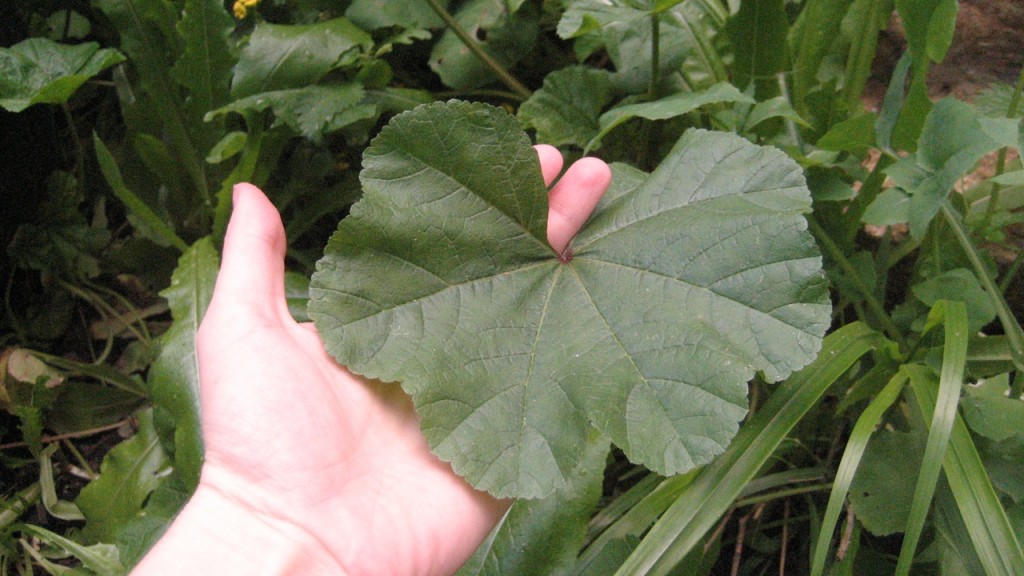
- Hubeisa (pictured above and called mallow in English)
- Ellet (chicory in English)
- Stinging nettle
- Chickweed
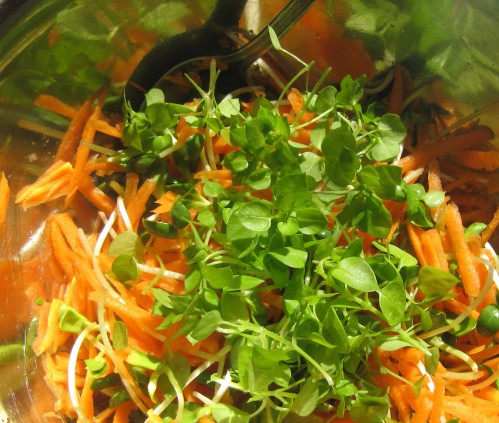 Once you’ve foraged for these wild edibles and prevented their invasion, what next? Stinging nettle (if collected carefully) can be used in soups, and chickweed can be used in salads (check out the delicious looking chickweed salad above).
What are other invasivores and foragers eating out there? Please share in the comments section below.
Read more about eating edible weeds in the Middle East::
Edible Weeds in Your Middle East Garden
The Weeds We Eat – Karin Forages in her Backyard
Foraging the Wild Weeds on Your Windowsill: Grow Chickweed


This too is a funny coincidence! I am an edible weed muncher. I have just walked from my home in Salt, Jordan to my friend’s house to use his internet and have just picked and eaten 6 plantain leaves also called ribwort (not the banana-type plantain). It is the only plant I have found here en route but it is thriving and I hope it will spread else where. See http://en.wikipedia.org/wiki/Plantago for better description and photos. It is very bitter when you first taste it but so good for you that you soon forget the bitterness! Some people are allergic to it so just try a little at first! I love it! It is so good to think that one minute it is growing and the next second it is in my mouth and after chewing it to pulp (Sorry – too much information!) it is in my tummy and providing all sorts of minerals and vitamins contributing to my vigorous health. Bon appetit!
Not off the top of my head – all the edible weeds I can think of are native. But that doesn’t mean there aren’t hostile strangers in Israeli flora – see this article in Ha’aretz:
http://www.haaretz.com/print-edition/news/book-shows-invasive-plants-in-israel-are-a-growing-problem-1.327532
Once a plant is established in a locale, it’s terribly difficult to eradicate. Simply foraging enough to take home for a meal won’t do it. You need lots of people picking and uprooting a plant over several years. It’s been done unintentionally too – that’s why wild flowers are protected in Israel.
I am one of those children myself – I love the sour leaves! Any other alien weeds you can think of?
While I’m 100% in favor of eating the local wild edibles, I’d like to point out that all the ones mentioned above are native to the Middle East. An invasive, “alien” edible weed would be the yellow-flowered “chamzitz” plant, or Cape Sorrel, which arrived in Israel as a decorative plant and escaped to become the delight of children who like to eat the sour leaves and flowers.