Have a Healthy Ramadan: Greening Your Fast

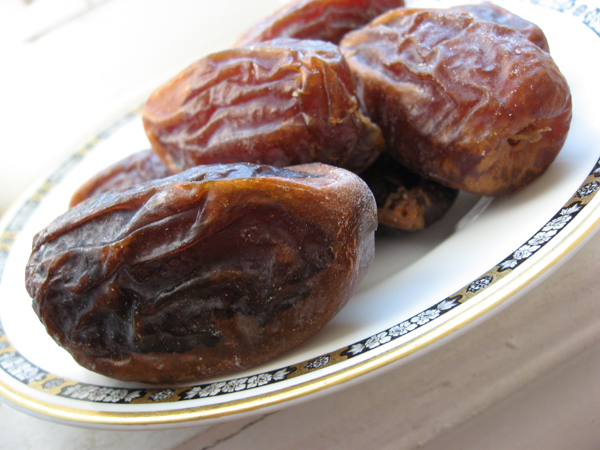
ramadan iftar dried date

We’re now just over a week into Ramadan, and hopefully those of you that are fasting have settled into a comfortable routine.  For any of you that may still be trying to find your way, though, we thought we’d do a bit of research into the best ways to keep your eating healthy and earth-friendly during the month:

  • Make sure to eat a full range of foods, in manageable quantities. Your body will respond best if you eat a regular and varied diet, and avoid gorging – excessive quantities of food can stress your system.
  • Emphasize foods that are slow to digest, and that provide a gradual release of energy during your fasting hours. Complex carbohydrates, lots of fibre, protein, and nutrient-dense foods are your friends. Think whole grains, lentils, fruits and vegetables, dried seeds and nuts…
  • Though it may be tempting to go for fried snacks and sweets when you do eat, try to keep this tendency in check – the resulting sugar crash, and the effects of digesting deep-fried food on an empty stomach, really aren’t worth it. (Not to mention that fast and highly processed foods are more stressful on the planet, too.)
  • Drink plenty of water before and after the fast, to avoid dehydration.
  • Though getting up for Suhoor (the pre-dawn meal) may seem exhausting to contemplate, avoid the temptation to sleep in and skip it. Eating properly in the morning will give you energy throughout the day.
  • To make Suhoor easier on yourself, do what you can to prepare the evening before. Lay out the table, and do as much prep work as possible (wash and cut up fruit, portion out dry goods like cereal, etc.). Make sure your kitchen is well stocked, and that you’ve got a plan for what you’ll make the next morning. Go to bed early.
  • Traditionally, the fast is broken with some dates and a drink of water or juice. This makes good sense for your body – it’ll ease you into eating Iftar (the evening meal), and start restoring your sugar balance quickly.
  • This may well be the most challenging: avoid the temptation to gorge yourself during Iftar. There’s only so much food your body can effectively process at once.
  • In order to faciliate the no-binging policy, prepare only as much food as you *should* eat in the evening, rather than a whole feast every night. Green bonus: you’ll dramatically cut down on the amount of food you end up wasting.

Have other fasting tips? Please share them in the comments…

Hamutal Dotan
Hamutal Dotanhttps://www.greenprophet.com/
Hamutal never planned to become obsessed with food, much less with sustainable food. It crept up on her when she wasn’t looking. At first it was pure self-defense: her parents, though well intentioned, had no idea what to do in a kitchen, and so she had to learn a bit about cooking, sheerly for the sake of her sanity. Chopping things, it turned out, was great for soothing the savage teenager. Skip ahead several years, and she’d figured out that making your own jam from local organic berries was even grander. Love of food led to love cooking, led to love of ingredients, led to love of markets, led to love of farmers, led to love of land. Hamutal is profoundly convinced that sustainability and pleasure are the best of friends, and tries to write about both of these in equal measure. She can be reached at hamutal (at) green prophet (dot) com.
12 COMMENTS
  1. As the body is already taxed during a fast, try to minimize foods that concentrate toxins. Try to avoid high on the food chain fish (like tuna or salmon), factory farmed animals, or non-organic fruits and vegetables that concentrate pesticides–melons and strawberries, for example. To green your Ramadan further and heighten its role in spiritual cleansing, try adding television to the fast. Clearing the mind of ads, sitcoms, violence and celebrity news may be as rewarding as clearing the body of too many calories and unhealthy foods.

Comments are closed.

Hot this week

How Renewable Energy is Revolutionizing the Way We Power Our World

Solar has become the star of the transition thanks to modular hardware and straightforward installation. It fits dense cities and remote towns alike. Many companies are turning to rooftop arrays and carport systems - and exploring commercial solar installation as a practical way to lock in future savings.

How does one start prepping?

Faced with an extreme winter storm this year, Americans wonder how to be prepared for catastrophe. Miriam has lived through wars in the Middle East - so she's prepared on giving you a guide to prepping.

Fishermen sue tire manufacturers on behalf of the salmon

A federal trial in San Francisco has brought US tire manufacturers, fishing groups, and environmental scientists into court over a chemical most drivers have never heard of — but which scientists say may be silently reshaping aquatic ecosystems.

Listening to Water: Tarek Atoui’s Next Work for Tate Modern

Born in Beirut, Lebanon in 1980 and now living in Paris, Atoui has spent years building instruments that don’t sit comfortably in concert halls. Many of them involve water, glass, and ceramics — materials that react to sound instead of simply producing it.

Leading Through a Dual-Energy Transition: Balancing Decarbonisation with Energy Security

Experience in one area of the energy industry isn't enough to guarantee readiness across all the others. That's where a structured program like an MBA in energy can come in. Today's advanced curricula explore energy economics, finance, policy, and strategic management alongside the technical subjects. And when pursuing an energy MBA online, professionals can skill up and retrain without having to step out of the labor market -- an important perk at a time when skilled professionals are already in short supply.

Topics

How Renewable Energy is Revolutionizing the Way We Power Our World

Solar has become the star of the transition thanks to modular hardware and straightforward installation. It fits dense cities and remote towns alike. Many companies are turning to rooftop arrays and carport systems - and exploring commercial solar installation as a practical way to lock in future savings.

How does one start prepping?

Faced with an extreme winter storm this year, Americans wonder how to be prepared for catastrophe. Miriam has lived through wars in the Middle East - so she's prepared on giving you a guide to prepping.

Fishermen sue tire manufacturers on behalf of the salmon

A federal trial in San Francisco has brought US tire manufacturers, fishing groups, and environmental scientists into court over a chemical most drivers have never heard of — but which scientists say may be silently reshaping aquatic ecosystems.

Listening to Water: Tarek Atoui’s Next Work for Tate Modern

Born in Beirut, Lebanon in 1980 and now living in Paris, Atoui has spent years building instruments that don’t sit comfortably in concert halls. Many of them involve water, glass, and ceramics — materials that react to sound instead of simply producing it.

Leading Through a Dual-Energy Transition: Balancing Decarbonisation with Energy Security

Experience in one area of the energy industry isn't enough to guarantee readiness across all the others. That's where a structured program like an MBA in energy can come in. Today's advanced curricula explore energy economics, finance, policy, and strategic management alongside the technical subjects. And when pursuing an energy MBA online, professionals can skill up and retrain without having to step out of the labor market -- an important perk at a time when skilled professionals are already in short supply.

From Green Energy to Healthy Societies: Why old systems thinking is becoming relevant again

Across the Middle East and North Africa, large investments are being made in green hydrogen, renewable energy, water infrastructure and sustainability. Most of these efforts are discussed in the context of climate change, decarbonization and economic diversification. That framing is important, but it may not capture their full value.

We saw peace – an interreligious encounter deep in our eyes

They came from Israel, Palestine, Jordan, Iraq, Yemen, Morocco, Tunisia, Lebanon, Egypt… There are Sunni Muslims, Shiite Muslims, Jews (Orthodox and Reform), Orthodox Christians, Coptic Christians, Protestant Christians, Druze, Baha'is, a Scientologist.

Can biochar reduce ‘Forever Chemicals’ in food if it’s used in farms?

Biochar is produced by heating organic material in a low-oxygen environment so it does not burn. This process, known as pyrolysis, transforms plant matter into a stable, carbon-rich material.

Related Articles

Popular Categories