
H&M Israel's CEO, Andrew Horesh, Speaks About Sustainable Clothing

H&M Israel’s CEO talks about his motive for importing H&M’s sustainable fashion line

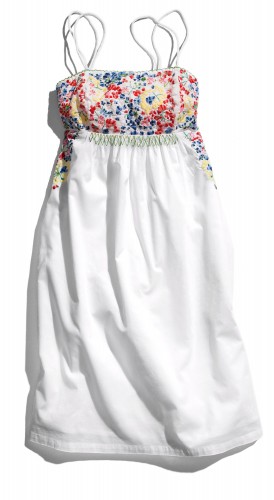
Thousands of Israelis have flocked to the newly opened H&M stores in Tel Aviv, Jerusalem, and Haifa – many of them unaware that they were, in fact, on their way to buying sustainable fashion.  As we mentioned in a previous post, H&M Israel has featured the Garden Collection – H&M’s first collection made entirely of organic cotton and recyclable materials – prominently as a shop-within-a-shop and in the window displays.  Last week we talked to Andrew Horesh, H&M Israel’s CEO, to learn more about the collection as well as about H&M and sustainable clothing.  
What was your motive for bringing the Garden Collection to Israel?

Fashion is global, so is H&M! Bringing the Garden Collection to Israel was an excellent way to show that H&M wants to invest in a better environment and that fashion made with organic and recyclable materials can be exciting, fashionable and fun.

How has the Israeli public or Israeli consumer responded to the Garden Collection? Has it been as successful as the other H&M collections?

So far the reception as been terrific, above and beyond our expectations. I believe our customers appreciate the fact that we offer garments made from organic cotton within an affordable price range. It’s now H&M’s goal to increase the amount of organic cotton used by 50% a year until 2013.

Is the Garden Collection offered in all three H&M locations in Israel? Are there any stores where it is more successful?

Yes, the collection was shown in a shop in shop at all three stores in Israel. Flowers are one H&M’s major trends for spring/summer so it’s great to offer these styles in sustainable materials like recycled polyester, organic cotton, organic linen and tencel. Our customers are fashion conscious and I couldn’t say if it’s done better in any of the cities it’s launched in.

How do you feel H&M’s Garden Collection compares with other local sustainable clothing designers, such as Cotton, Bagir, and Zendegi, to name a few.

We think that the customer benefits from diversity. It’s excellent to see that other designers are thinking like H&M – that respect for the environment is important for their customers and business.

What will H&M’s next sustainable collection look like, and will there always be a sustainable clothing “shop within a shop” at H&M?

H&M has been working with organic cotton since 2004. In 2009 H&M used approximately 3,000 tons of organic cotton and the aim is to increase that amount by fifty percent per year for the next couple of years.

I cannot predict what the next collection will look like, but if the past is anything to go by it will be exciting, affordable and fashionable!

Why is the Garden Collection only geared at women, and will there be similar sustainable collections for men and children in the future?

Actually, we use organic cotton and recyclable materials in chosen men’s garments as well and I would say that a full men’s collection in environmentally adapted materials in the future is not something to rule out. There is also an organic cotton collection, Organic Cotton, in the children’s department.

Read more about H&M and other Middle Eastern sustainable fashion::

H&M Israel Brings Sustainable Fashion to the (Overwhelming) Masses

Lebanese Designer Ziad Ghanem Creates Recycled Couture

Bagir’s Recycled Plastic Bottle Suit Gives New Meaning to Euro-Trash

Karen Chernick
Karen Chernickhttps://www.greenprophet.com/
Much to the disappointment of her Moroccan grandmother, Karen became a vegetarian at the age of seven because of a heartfelt respect for other forms of life. She also began her journey to understand her surroundings and her impact on the environment. She even starting an elementary school Ecology Club and an environmental newsletter in the 3rd grade. (The proceeds of the newsletter went to non-profit environmental organizations, of course.) She now studies in New York. Karen can be reached at karen (at) greenprophet (dot) com.

TRENDING

Eco organization offices destroyed by Iran missile

Tel Aviv's eco organization, the Heschel Center, was impacted by an Iranian missile.

What are AWG air-water generators, and why they aren’t a golden-bullet solution (yet)

Atmospheric water generators (AWGs) sound like magic: machines that can pull drinking water out of air. The idea is mentioned in the Bible, where the elders would pray for water collected as dew on plants and the catch on turning this into a machine is in the physics. To turn invisible vapor into liquid, you must remove heat, especially the latent heat of condensation.

Jordan’s $6 Billion Aqaba–Amman Desalination Project from the Red Sea Moves Forward

In 2025, the Jordanian government signed agreements with a consortium led by Meridiam and SUEZ, alongside VINCI Construction and Orascom Construction. Under a 30-year concession agreement, the consortium will design, build, finance, operate, and maintain the system before transferring it back to the Jordanian government. The total investment is estimated at approximately $6 billion USD.

The Saudi Startup Turning Desalination’s Toxic Waste Into Its Own Disinfectant

For millennia, the Middle East's water crisis seemed an immutable fact of geography — a region defined as much by what it lacked as by what lay beneath its sands. Today, a convergence of plummeting solar costs, advancing membrane technology, and hard-won engineering expertise is rewriting that story.

Earth building with Dead Sea salt bricks

Researchers develop a brick made largely from recycled Dead Sea salt—offering a potential alternative to carbon-intensive cement.

Should You Invest in the Private Market?

startustartup Unlike public stock exchanges, which offer daily trading, strict...

How to build a 100-year-company

Kongō Gumi is a Japanese construction company, purportedly founded in 578 A.D., making it the world's oldest documented company. What can we learn about building sustainable businesses from them?

From Pilot Plant to Global Stage: How Aduro Clean Technologies’ 2026 Expansion Signals a Turning Point for Chemical Recycling Investors Like Yazan Al Homsi

The company's Next Generation Process (NGP) Pilot Plant in London, Ontario, has officially moved into initial operating campaigns, generating the kind of structured, repeatable data that separates laboratory promise from commercial viability.

How AI Helps SaaS Companies Reduce Repetitive Customer Support Work

SaaS products are designed for large numbers of users with different levels of experience, and also in renewable energy.

Pulling Water from the Air

Faced with water shortage in Amman, Laurie digs up...

Turning Your Energy Consultancy into an LLC: 4 Legal Steps for Founders in Texas

If you are starting a renewable energy business in Texas, learn how to start an LLC by the books.

Tracking the Impacts of a Hydroelectric Dam Along the Tigris River

For the next two months, I'll be taking a break from my usual Green Prophet posts to report on a transnational environmental issue: the Ilısu Dam currently under construction in Turkey, and the ways it will transform life along the Tigris River.

6 Payment Processors With the Fastest Onboarding for SMBs

Get your SMB up and running fast with these 6 payment processors. Compare the quickest onboarding options to start accepting customer payments without delay.

Related Articles

Popular Categories