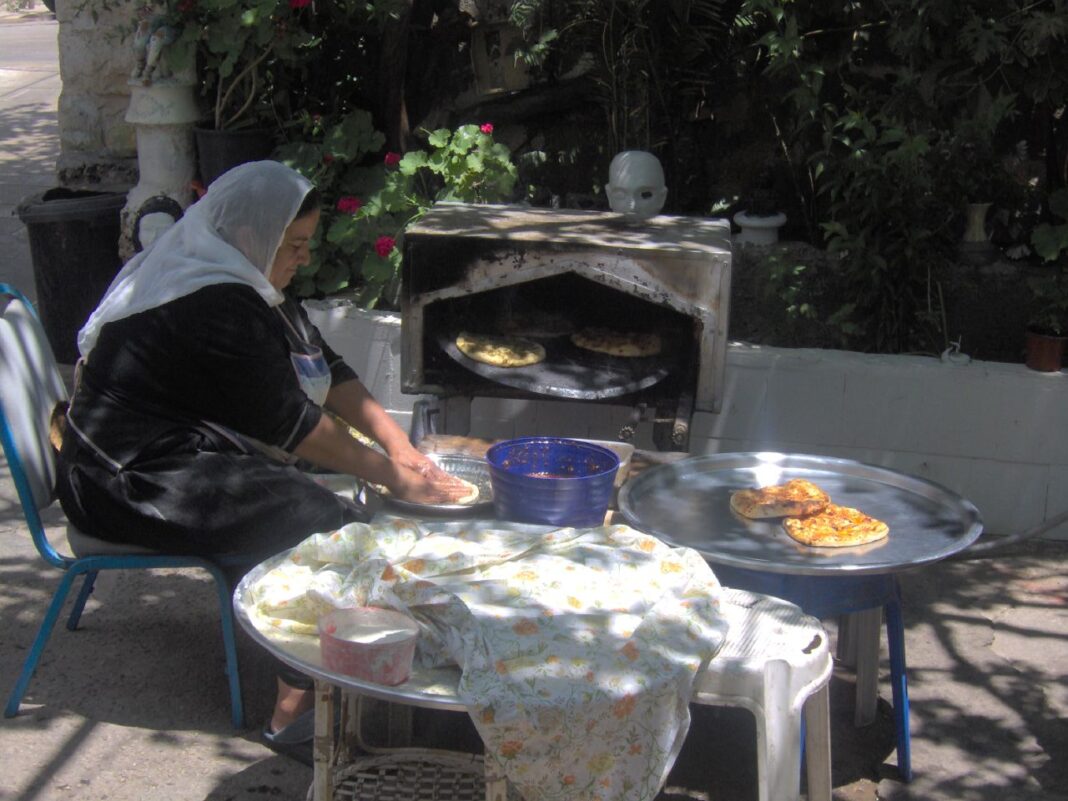

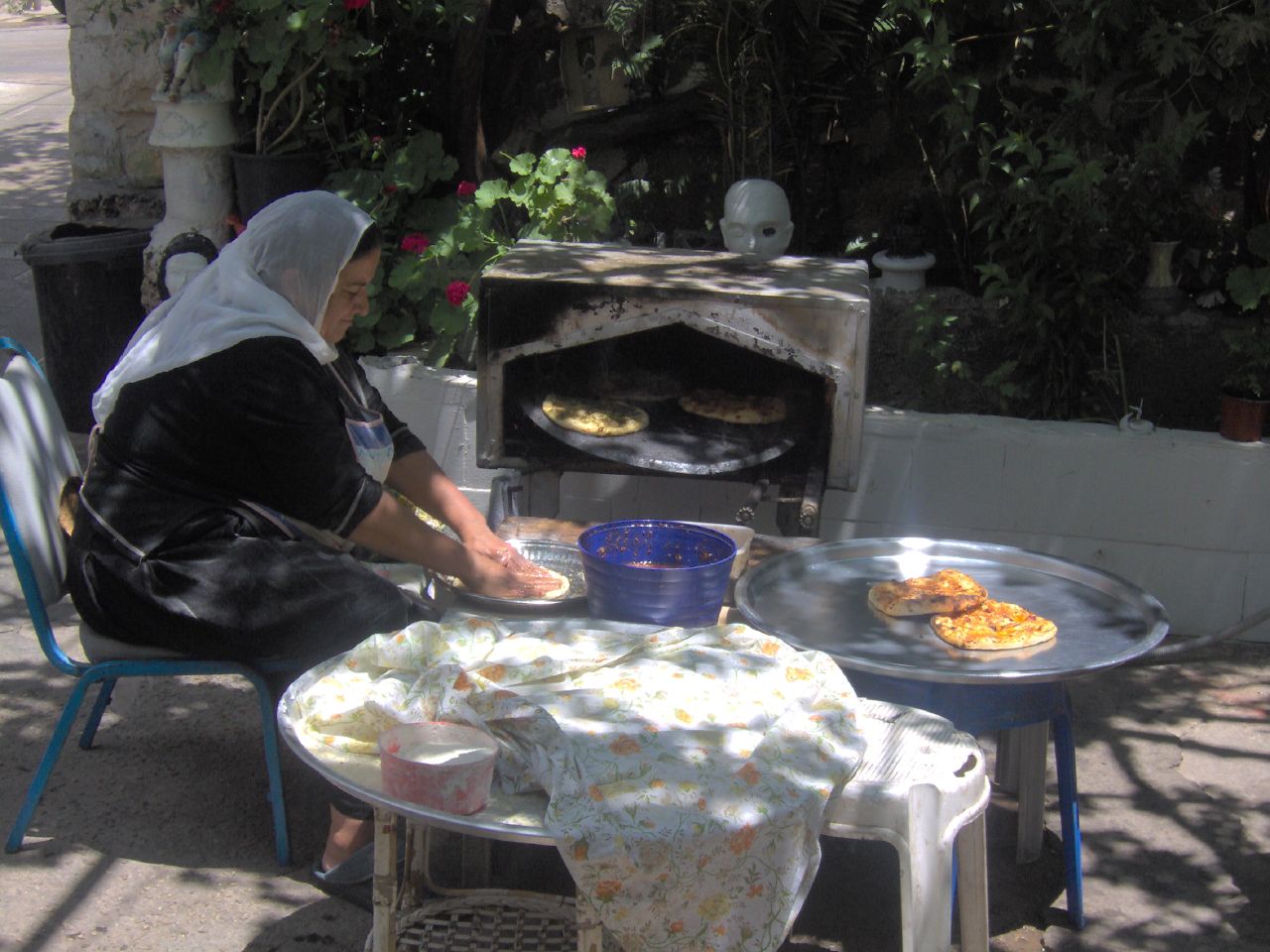
 Druze woman making bread in the Carmel region, a new UNESCO Bioreserve. Image via Joshua Paquin.
It may measure only 77 square miles, but it contains a unique forest of Aleppo pine found nowhere else on earth. That’s one of the reasons why The United Nations Educational, Scientific and Cultural Organization (UNESCO) declared the Carmel Mountain range on the outskirts of Haifa, Israel, an international bioreserve (like the other UNESCO Bioreserves we’ve mentioned on Green Prophet).To protect and preserve the rare forest and wildlife in the Carmel Mountain region, known biblically as the place of refuge for the Prophet Elijah, and in ancient history as an archeological hotspot for human settlement, the University of Haifa has set up the Center for the Study of the Carmel in cooperation with the Israel Nature and Parks Authority.
More than 20 researchers from the disciplines of biology, ecology, political science, archeology and law will be using the center’s state-of-the-art research facilities and laboratories to supervise educational and preservation projects related to the unique topography, rock distribution and flora and fauna of the bioreserve, 10 percent of which is inhabited by people, mainly from the indigenous Druze population.
The site is an important one for animals and plants, agrees Prof. Ido Izhaki who heads the newly inaugurated center, but he says that he will make human education a focal point for protecting the reserve.
“UNESCO declared more than 10 years ago that the region will be a bioreserve,” Izhaki, a biologist and ecologist, tells Green Prophet. “In Israel there is only one, from about 500 bioreserves around the world. They recommended that there be a research institute to investigate and research this biosphere. And ours is now the only example in the world where you have a university inside the reserve itself.”
The University of Haifa is located in the reserve, but on the outskirts of Haifa, Israel’s third-largest city, which is technically not part of the UNESCO designation. “All these reserves found all around the world are meant to protect biodiversity,” explains Izhaki. “There are many problems and solutions as to how to do this. The big question is how to keep sustainable development, nature, and the wild plants and animals.”
The bioreserve is an excellent place for exploring archeology, biblical heritage, cultural diversity in Israel, and of course, plants and wildlife. According to Izhaki, it has three major distinctions: First, it’s the only bioreserve in the eastern Mediterranean to contain a woodland pine forest of Aleppo pine. You won’t find a whole stand of trees like it anywhere in the world, he says, and the main stand of this Aleppo pine is on Mount Carmel.
However, Izhaki remarks that, “It’s not only trees and wildlife that are important. There are also significant archeological findings there from ancient human settlements and of course, the local people who are there today.”
Izhaki believes that it is imperative to protect the biosphere, along with the Druze people who live within it. According to the terms set forth by UNESCO, communities living within a biosphere reserve must be committed to the limitations and norms that preserve the natural surroundings.
Living in a biosphere reserve
The Druze people in Israel, whose religion is said to have begun as an offshoot of Islam, live more or less in harmony with the rest of society. One of their major population centers is inside and borders the unique Carmel bioreserve. There are some problems related to encroaching on protected land for farming and some people even come to the forest to chop down old oaks for firewood, Izhaki relates.
“There is some conflict on Mount Carmel,” he says. “There are Druze villages inside the reserve. The conflict exists because they want to protect themselves against conservation efforts, and keep on managing their agriculture. One of the aims of the new center,” he adds, “is to try and find solutions to this conflict – ways for the local people to understand that the bioreserve can be for their own benefit and ways to help them make money.”
As part of the center’s programming, “We are going to develop an education system where we will go to high schools and elementary schools to teach the young people about it,” he says.
“Working with the local people is an opportunity for us to manage the bioreserve with them,” says Izhaki. This can start close to home at the university, where about 25% of the student body comes from minority groups, including Israeli Arabs and Israeli Druze.
Teaching pride in location
“Many of the Druze are at the university and through them we can make a change. They feel bad about their situation in Israel and feel as though they are second or third class citizens. Even though they serve in the Israeli army, they don’t feel they have equal rights,” says Izhaki.
He is hoping to help to educate the Druze in the bioreserve to be proud of their location and to be part of the effort to protect it, along with their unique cultural heritage. He hopes the two will go hand in hand.
Meanwhile, while as yet there are no opportunities for tourists or others to volunteer with the center and its activities, Izhaki says it’s a great place to come for a hike, as the many Israelis who enjoy the area on weekends and holidays have clearly discovered. Just don’t forget to pick up your litter.