
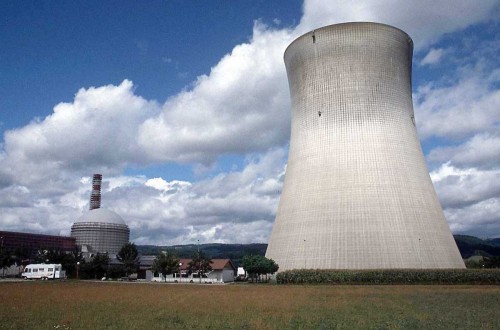

 Cleaner Than Coal? We Doubt it. But Israel mulls nuclear power.
It’s not just Abu Dhabi looking to build a nuclear power plant for generating electricity. According to the business newspaper Globes, Israel is considering building a nuclear power plant of its own in the Negev desert region.
Instead of looking to cleaner energy sources, the Israel Electric Company (IEC) says it is mulling the idea of building a nuclear fuel power station as an option instead of a coal fueled one.
According to IEC’s deputy CEO and VP of production and transport, Moshe Bachar, the transition to environmentally friendly energy sources was essential, and that higher electricity rates were inevitable.
“The era of cheap electricity is over,” he said.
Israel is currently considering a new power plant fueled by “clean coal” that burns this fossil fuel by a process known as Integrated Gasification Combined Cycle, or IGCC for short.
This process uses a combined cycle format with a gas turbine driven by the combusted “syngas,” while the exhaust gases are heat exchanged with water/steam to generate superheated steam to drive a steam turbine. Using IGCC, more of the power comes from the gas turbine.
The process, which is used in countries like the UK, supposedly creates less sulfur gas due to it being “cleaned” by burning the gasses with either oxygen or air. While the process is said to be better for the environment than ordinary coal or fuel oil plants, it still results in creating gasses that contribute to global warming.
The nuclear fuel option came up again after Jordan’s announcement that it plans to build a nuclear power plant near its port city of Aqaba, Bachar noted.
According to the Globes article, the only two commercial supplier possibilities for building such nuclear power plants are France’s Areva SA and America’sWestinghouse Electric Company LLC.
If Israel does build such a commercial plant, it will then required to become a signature to the international Nuclear Nonproliferation Treaty, which could result in its two experimental nuclear facilities, at Dimona and Soreq, being required to be inspected by IAEA officials. And imagine the new security risks?
The light at the end of this nuclear energy tunnel deals with additional plans by the IEC to build a 1,000-megawatt solar power array plant, using current technology that is in plentiful supply by Israeli solar energy companies, such as Sunday Energy, AORA, and BrightSource. This size a plant would need 20,000 dunams (5,000 acres) of land and would cost $4 billion to build.
For a number of reasons, as we’ve discussed at length in the past, the solar energy plans make much better sense than building either a “clean coal” fired or nuclear power plant. Maybe Globes should print more articles dealing with solar energy, and perhaps the IEC, and Israeli government will take heed from them.
More articles on nuclear power in the Middle East:
Iran Going Nuclear in Joint Power Plant Plan with Neighbors
Jordan Explores the Nuclear Option
Greenpeace, Israel, Chernobyl, and Thoughts on Nuclear Power
::Globes




[…] article at that time coincided with rumors that Israel may be “ready to come out of the nuclear closet” by considering the building of at least one nuclear power […]
[…] And, of course, there is Iran’s current nuclear program, with its newly completed nuclear facility at Bushehr, and Israel’s two “scientific reactors” at Dimona and Sorek. […]
The link that I had provided in my earlier comment(see above) was missing some parameters. Here is the right place for the subject link.
http://www.turkishforum.com.tr/en/content/2009/11/17/iran-drops-russia-for-turkey/
[…] Is Israel Coming Out of the Nuclear Closet? […]
India, Israel, and Pakistan are the three countries that have never signed the Nuclear Non-Proliferation Treaty. A couple years ago, the U.S. and India signed a bilateral nuclear cooperation pact that allows India to buy American nuclear technology for its civilian nuclear energy program while remaining outside the NPT. Won't the Israelis just ask the U.S. for the same deal that India got? It seems fair enough to me.I doubt Israel would even consider commerical nuclear power as a viable option if it necessarily required joining the NPT. As the poster noted, accession to the NPT would oblige Israel to shut down the Dimona nuclear weapons plant and open it up for IAEA inspections. (The poster was mistaken about the Nahal Soreq research reactor, which the IAEA already monitors under a site-specific agreement with the Israeli government.) More importantly, Israel would have to dismantle its existing nuclear arsenal in which it has invested tens of billions of dollars over the last half-century. All of Israel's mainstream political parties are united on the issue of the country's nuclear deterrent. There are no foreseeable circumstances in the near future under which Israel would give it up–certainly not for the sake of nuclear energy when there are other available alternatives.
I've recommended the same topic earlier as another comment on the Iran's nuclear developments as well as Russians increased influence in the region. Here is the article and comment to it.http://www.turkishforum.com.tr/en/content/2009/…