

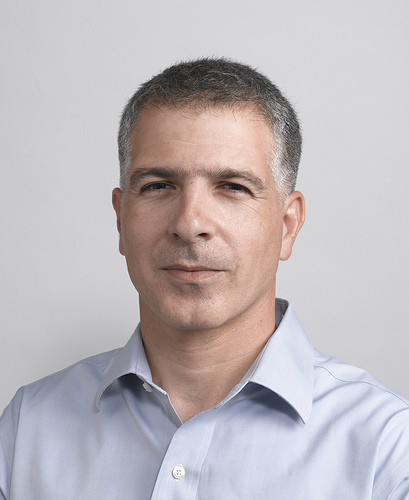
 If the Swiss do business with them, they must be doing something right, reasons Eran Tagor, CEO of PowerSines. Founded in 1980 it’s doing more than impressing the discriminating Swiss.
With a staff of 55, the company supplies two main products to municipalities and businesses across the globe: the LEC (Lighting Efficient Controller) for retail and street lighting, and the SinuMEC (Sinusoidal Motor Efficiency Controller) that reduces the operating and electrical costs for electric motors in machines and technology.
FedEx, Macy’s, Pepperidge Farms and TimBar are just a few US clients who have adopted PowerSines’ energy saving solutions for lighting and for machines.To go green, a company doesn’t have to invest $100 million in the new green standard LED lights. Instead, it can spend $10 million on the PowerSines solution, one-tenth the cost of LED lights, to achieve a similar effect, Tagor tells ISRAEL21c.
Paying for itself in just two years, the company’s LEC lighting solution helps companies and cities reduce their carbon footprint without a major overhaul of existing infrastructure, he declares.
Same performance with less power
According to the former Wall Street executive who now co-chairs the company, one can save 20 to 30 percent electricity with the LEC system.
“PowerSines has been around for some time, and constantly reinvents itself,” Tagor explains. (The company for instance just changed its name this week from Power Electronics Systems to PowerSines.) “For the past eight or nine years we have been totally focused on energy efficiency – through a platform called the RIGHTVoltage technology.”
Acquired by a group of “green” and savvy local private investors in 2007, including the Housing and Construction Holding Co., a subsidiary of the Arison Group, the company has since made leaps and bounds in supplying its energy efficiency devices to the world.
Tagor says that his company figured out how to optimize the voltage to its target application. Given that the basic parameter of electricity is voltage, he continues, “the utility companies supply us with power, but cannot guarantee the level of voltage. For that reason, there are boundaries, or a range called the ‘legal voltage.’ What our technology does is optimize the voltage to the application.”
And the solution doesn’t compromise the performance of the equipment, he adds.
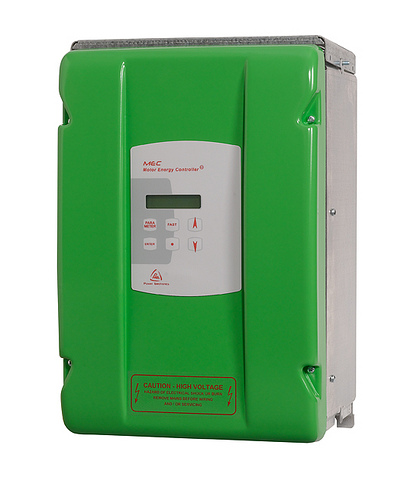 “The utility company brings a certain amount of voltage to the building, but can’t differentiate between the power needed for air conditioning or for lighting. But voltage fluctuates. What we do is provide the right voltage to motors and to lighting systems. By providing the right voltage we achieve savings. This is not our idea, but our technology is the means to achieve that,” Tagor explains.
Reducing carbon footprints
Using a system that is light, small and efficient, the PowerSines’ RIGHTVoltage boxes are also an economic solution, he adds. With clients in the businesses of lighting, health care, retail and manufacturing, and in municipalities in Europe, “ours is the most cost effective, even in comparison to LED lighting,” claims Tagor.
In business for almost 30 years, until a few years ago PowerSines focused on manufacturing soft starters. These are designed to reduce the starting voltage for machines such as elevators, conveyors, air conditioning systems, pumps. The natural progression to providing exactly the right amount of voltage to motor and lighting systems was put in place in the last two years.
Saving energy isn’t only about money. Less energy consumed means a smaller carbon footprint, something that Americans are looking to achieve, with a new Cap & Trade system endorsed by the Obama Administration.
In 2008 alone, PowerSines estimates its annual reduction of customers’ CO2 emissions equals 20,830 tons of CO2. “With tens of thousands of units already installed in corporate clients around the world, our products are proven effective for energy efficiency and financial savings, while implementing a green strategy,” the company announced.
Designed, developed and manufactured in Israel, PowerSines keeps a North American sales office in Boynton Beach, Florida. The core of the company’s energy saving device is the RIGHTVoltage, a system that regulates the voltage powering machines and lighting.
Company products take the bulk utility provided to the facility, and apply the right energy, or the right voltage, and deliver it to the right application. As a result, the company says, only the right amount of energy required to maximize efficiency is delivered to controlled devices.
Direct energy savings of up to 35%
Companies using the LEC products see immediate business benefits via direct electricity savings of up to 35 percent, reports the company. Clients include IBM office buildings, FedEx warehouses, McDonald’s restaurants and parking lots, CocaCola plants and warehouses, and Carrefour retail stores.
Customers buying the SinuMEC see energy efficiency throughout their networks, and companies using it include Unilever, Italcementi, Cemex and Stork. “Our technology is available – and proven,” says Tagor. “Our sophisticated and large client [base means we] cannot be wrong.”
In the near future, company executives would like to expand in the US, especially in the areas of road and municipal lighting. They are also preparing a SinuMEC for motors in escalators, conveyors and other industrial applications.
PowerSines’ foray into the energy-savings business is in line with a global trend that traditional Israeli businesses have joined. Like others, including the newer lighting and energy-savings company Metrolight, the Israeli solutions appear to strike a match with large American companies looking for immediate and reliable solutions.
Want to know about greening your lights? Read Green Prophet’s guide to greening your home lighting.
(This story first appeared on ISRAEL21c – http://www.israel21c.org)



Interesting piece, keep up the good work guys
.@greenprophet PowerSines Saves On Industrial-Scale Lighting Costs and Greenhouse Gas Emissions. If the Swiss do business http://j.mp/NWBVN
.@greenprophet PowerSines Saves On Industrial-Scale Lighting Costs http://bit.ly/1stcfJ
PowerSines Saves On Industrial-Scale Lighting Costs and Greenhouse Gas Emissions http://ow.ly/15Sscl
New Story:: PowerSines Saves On Industrial-Scale Lighting Costs and Greenhouse Gas Emissions http://bit.ly/SDoQC