

What’s left of Iraq’s “Garden of Eden” Marshes
The Middle Eastern winter has never been more pleasant, bringing us day after day of perfect blue skies, comfortable temperatures, light winds and crisp, clear views.
“What more could you ask for?” must think the residents of Western Europe and North America, who are being pounded by the flooding, snow and ice storms of General Winter. Well, some real winter would be welcome here, especially some much needed rain – this January in Israel was the driest and one of the hottest in 60 years, since the state was founded.
With less than 2 months of winter left, the region has received only 6% – 50% of the annual average rainfall, with the desert areas getting 30% or less.
Global climate change has delayed winter and reduced precipitation. At the same time, regional weather patterns with depressions over Europe have kept rainfall away from the Eastern Mediterranean region. Drought conditions across the Middle East have been exacerbated by increasing water consumption for domestic, industrial and agricultural uses, and the damming (or should say damning) of water sources, and have led to a shortage of water across the region. And where there are water shortages, disagreements, conflicts and security problems are never far behind.
Iraq’s ancient marshes, once vast expanses of reeds that were home to fish, water buffalo and migratory birds, have been reduced to stalks, stubs and caked mud. Reuters Mohammed Abbas reports that the marshes, thought to be the biblical Garden of Eden, covered 9,000 square km in the 1970s, but had shrunk to just 760 square km by 2002.
Despite a recovery of 40 percent of the original area by 2005, the water coverage has dropped from 70% last year to less then 45% this year. The Marsh Arabs who live in this area are being driven out by the harsh conditions, and the vast , remote region bordering on Iran is becoming “an excellent route for drugs and arms smuggling, receiving stolen goods and keeping hostages for ransom.” Iraq eventually plans to recover 6,000 square kilometers, by building dams to keep the water in the marshes. Abdulkadhum Yassir, of the Center for Restoration of Iraqi Marshlands, said the country is fighting back. “In 2009 and 2010, we hope to achieve maximum water coverage with minimal resources. In the wet years we get a lot of water, but it is not properly harnessed.”
Lebanon’s beautiful Bekaa valley, is no stranger to strife. IRIN news service reports that an historic feud there over irrigation is being slowly re-ignited, illustrating how increased water scarcity is triggering social conflict in Lebanon. A 40 year feud between two clans over the use of springwater was settled in 1991, but today, rising temperatures, spiraling population growth and inefficient irrigation are severely straining resources and threatening renewed economic and social breakdown.
Despite having the highest rainfall in the region, 827 mm per year, demand for water in Lebanon will have increased by more than 80 percent by 2025, and average summer temperatures in the country are predicted to increase by 1.2 degrees centigrade. This, in turn, could boost demand for irrigation in the Bekaa’s rich agricultural farmlands by as much as 18 percent, according to Randa Massad, an irrigation expert at the Lebanese Agricultural Research Institute. “Water shortage is not a new phenomenon in the Bekaa region,” said Massad. “What is new is that it is occurring in an increasingly changed environment and this makes it more serious and long-lasting.”
In 2007, the Energy and Water Ministry said Lebanon could have a water deficit by 2010. The ministry is implementing and developing a 10-year water strategy designed to promote integrated water-resource management, including controlling unlicensed wells, updating antiquated distribution mechanisms – such as exposed canals that lose water to evaporation – and addressing the lack of wastewater treatment facilities for water reuse.
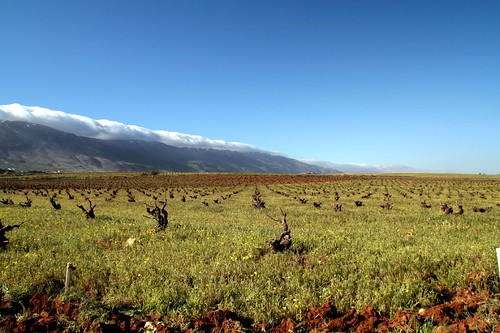
Lebanon’s Bekaa Valley
Jordan is rain-poor in the best of years, but the driest winter since 1995 is causing concern and leading to a reevaluation of water resource management. The country’s northern region has received only 28 per cent of its annual average of rain, while the central and southern areas have been harder hit, receiving 21 per cent and 10-12 per cent respectively. The Jordanian Ministry of Water and Irrigation is planning the digging of new wells, new irrigation pipelines, the banning of water-intensive summer crops and desalinating water from saline wells. Jordan’s field crops, grains, and forestry that make up the country’s meager 1 per cent green cover all depend on rain, as does the effort to combat desertification. The water shortage will also cause pressure to increase the amount of water that Israel is required to transfer to Jordan under the water sharing agreement in the peace treaty between the two countries.

Jordan Desert
Palestinian water resources are also being severely affected, increasing the strain on the already contentious relationship with Israel. The unusually dry winter means that the aquifers have not been replenished, and Palestine could face the worst drought in years. According to the Palestine Water Authority, the country received only 144 mm of rain by the end of January, or only 30% of the average rainfall for that period (434 millimeters).
The head of the Palestine Water Authority, Shadad Al-Atili, warned that the country is facing a “dangerous situation” with regard to water in the coming months, since the lack of rain has “a great impact of the level of water that reaches the aquifers.” Al-Atili said that the PWA is gearing up to face a water crisis this coming summer by practicing good water management. However, the Authority faces enormous challenges, as it only has control over part of the water resources in the West Bank and Gaza, with the rest controlled by Israel and its national water company, Mekorot.
Although Israel itself is facing it’s own water crisis, Al-Atili said that part of the PWA’s emergency plan is to ask Israel not to reduce the amount of water it allows the PWA to use. The Authority is also planning to improve the performance of existing water sources, repair wells, increase the use of treated water, and impose guidelines for appropriate water use.
Israel is a world leader in advanced water technologies, and Israeli developments include such widely accepted practices as drip irrigation, as well as reclamation and reuse of wastewater for agriculture and aquifer recharge. These advances can and should be used to help the entire region cope with the looming specter of long term droughts and water shortages.
::Reuters, Jordan Times, Lebanon Daily Star, Ma’an News Agency.
Hat tip:: MIDEASTENVIRONET listserv
Photo::Reuters/Mohammed Ameen, FlickrJunkie, Carlesmari


What can be done for Lebanon…Very soon ,Ski season will be wishful thinking,an era to remember…Conflicts over water will arise..New WAteR lords will emerge and very well known green lebanon will turn into an afghany landscape…Dry mountains of desertic look.How can we help. This will need each available caring hand and mind.If something can be done please write to me on this mail: [email protected]
Reading: How we are losing the real-life Garden of Eden in Iraq
http://tinyurl.com/bj6zc2