


Thomas Friedman's Energy Strategy is Perfect for Israel (As Seen on The Daily Show)

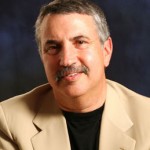
The New York Time’s columnist Thomas Friedman presented his energy policy on The Daily Show yesterday, November 11, while promoting his book “Hot, Flat and Crowded: why we need a green revolution“:

Watch the video:

Tom Friedman: [. . .] A world where . . . energy technology – clean water, clean power – is going to be the next great global industry.  And I believe the country that owns ET (Energy Technology) will have . . . the most energy security, national security, competitive industries, and global respect. That country has to be the United States of America.  Because that’s going to be the next big thing.

Energy security?  National security? Industries?  and get this: GLOBAL  R. E. S. P. E. C. T.!  Why leave all those things for the US of A?  These are things that Israel could desperately use.  And we already have a head start: decades of leadership in clean water technology, renewable energy & efficiency technologies, solar power, water reclamation, efficient agriculture, and more – much of them covered by our prophets.

What else did Tom Friedman have to say?

Tom Friedman: The truth is, Jon, without a . . . carbon tax or gasoline tax . . . we’re not going to get what we need.  Not a Manhattan Project, which is 12 people going off to Los Alamos to try to solve this problem, but what we need is a market signal that will get 100,000 people in 100,000 garages trying 100,000 things . . . 2 of which are going to be the next green Google and green Microsoft.

Jon Stewart: . . . why aren’t there guys in garages doing this now?

Tom Friedman: That’s really actually a very important question.

Jon Stewart: It is?!?   you know what?   let me take it back.

Tom Friedman: The reason is . . . that the problem with clean energy technology is that it’s always competing with an existing cheap dirty alternative.  . . . If you don’t have the government leveling the playing field . . . it’s going to take a very long time to make that transition.

Stealing . . .  well, um. . .  recycling a page from Friedman’s book, Israel needs to develop an energy policy that will level the playing field, and make it more expensive to use fossil fuels.  A carbon tax (and here) is one of the most widely accepted ideas.  As explained in the New York Times,

The idea is that polluters should pay for the environmental damage they cause. Slap a tax on carbon, the theory goes, and you will get fewer carbon emissions, more revenue for government and energy independence, all at the same time. No wonder people from both sides of the political divide have come out in support of it.

The challenge is, explains Friedman, that the politics interfere with creating a policy.  The strong lobby groups are the oil, power, refinery and agriculture lobbies – in Israel as in the US – so the policies tend to reflect their interests rather than a way to promote alternatives.  There are some hopeful signs, like the subsidy given by Israel ministry of infrastructure to solar photovoltaic energy.  But overall, Israel has neither a climate change policy, nor an energy policy, so we can expect a continuing challenge to develop new cleantech and implement it in Israel.

However, according to Friedman, the payoffs can be great enough to earn us an Aretha Franklin hit,
R. E. S. P. E. C. T.!

Links:
Thomas Friedman interviews on the Daily Show
Successful carbon tax in Denmark

View Daniel Pedersen, PhD's profile on LinkedIn

Daniel Pedersen
Daniel Pedersenhttp://www.greenprophet.com
Having spent my Jerusalem childhood ear-deep in science fiction stories, I’m still waiting for clean and abundant fusion power. On the way, I dabbled in solar-powered desalination and alternative building technologies at Swarthmore College, and studied the chemistry and mutagenic effects of particulate air pollution at MIT for a PhD in environmental engineering. Since returning to Jerusalem in 2002, I’ve directed air quality research campaigns from Rosh Hanikrah to Eilat & Aqaba for Hebrew University. I’ve led cooperative regional projects, wrote a successful proposal for the largest air-quality study in the history of the Middle East, and established the first monitoring network in Palestinian cities. Last year I edited a weekly TV environmental spot on Channel 2 and wrote a companion blog. At Hadassah College I train the next generation of environmental science professionals, audit Israel’s chemical and environmental laboratories for the Israel Laboratory Accreditation Authority, and provide environmental consulting services to diverse clients. Daniel can be reached at daniel (at) greenprophet.com.

LEAVE A REPLY

Please enter your comment!
Please enter your name here

TRENDING

Earth building with Dead Sea salt bricks

Researchers develop a brick made largely from recycled Dead Sea salt—offering a potential alternative to carbon-intensive cement.

Farm To Table Israel Connects People To The Land

Farm To Table Israel is transforming the traditional dining experience into a hands-on journey.

Huge Fish Nursery Discovered Under Freezing Arctic Seas

In 2019, an underwater robot camera exploring the seabed...

Remilk makes cloned milk so cows don’t need to suffer and it’s hormone-free

This week, Israel’s precision-fermentation milk from Remilk is finally appearing on supermarket shelves. Staff members have been posting photos in Hebrew, smiling, tasting, and clearly enjoying the moment — not because it’s science fiction, but because it tastes like the real thing.

An Army of Healers Wins the 2025 IIE Goldberg Prize for Peace in the Middle East

In a region more accustomed to headlines of loss than of listening, the Institute of International Education (IIE) has chosen to honor something quietly radical: healing. The 2025 Victor J. Goldberg Prize for Peace in the Middle East has been awarded to Nitsan Joy Gordon and Jawdat Lajon Kasab, the co-founders of the Army of Healers, for building spaces where Israelis and Palestinians — Jews, Muslims, Christians, Druze, and Bedouins — can grieve, speak, and rebuild trust together.

6 Payment Processors With the Fastest Onboarding for SMBs

Get your SMB up and running fast with these 6 payment processors. Compare the quickest onboarding options to start accepting customer payments without delay.

Qatar’s climate hypocrisy rides the London Underground

Qatar remains a master of doublethink—burning gas by the megaton while selling “sustainability” to a world desperate for clean air. Wake up from your slumber people.

How Quality of Hire Shapes Modern Recruitment

A 2024 survey by Deloitte found that 76% of talent leaders now consider long-term retention and workforce contribution among their most important hiring success metrics—far surpassing time-to-fill or cost-per-hire. As the expectations for new hires deepen, companies must also confront the inherent challenges in redefining and accurately measuring hiring quality.

8 Team-Building Exercises to Start the Week Off 

Team building to change the world! The best renewable energy companies are ones that function.

Thank you, LinkedIn — and what your Jobs on the Rise report means for sustainable careers

While “green jobs” aren’t always labeled as such, many of the fastest-growing roles are directly enabling the energy transition, climate resilience, and lower-carbon systems: Number one on their list is Artificial Intelligence engineers. But what does that mean? Vibe coding Claude? 

Somali pirates steal oil tankers

The pirates often stage their heists out of Somalia, a lawless country, with a weak central government that is grappling with a violent Islamist insurgency. Using speedboats that swarm the targets, the machine-gun-toting pirates take control of merchant ships and then hold the vessels, crew and cargo for ransom.

Leopoldo Alejandro Betancourt López Turned Ocean Plastic Into Profitable Sunglasses

Few fashion accessories carry the environmental burden of sunglasses. Most frames are constructed from petroleum-based plastics and acrylic polymers that linger in landfills for centuries, shedding microplastics into soil and waterways long after they've been discarded. Leopoldo Alejandro Betancourt López, president of the Spanish eyewear brand Hawkers, saw this problem differently than most industry executives.

Why Dr. Tony Jacob Sees Texas Business Egos as Warning Signs

Everything's bigger in Texas. Except business egos.  Dr. Tony Jacob figured...

Related Articles

Popular Categories