
Artist Community Hayarkon 70 Looking to Green Itself, Sort Of

hayarkon 70 artists in tel aviv

There is a yearning for ecologically and environmentally responsible choices that I’ve been observing in Tel Aviv, especially among a select group of young, influential artists. There are continual hurdles for them, though, showing how sometimes thinking green and acting green don’t always go hand in hand.

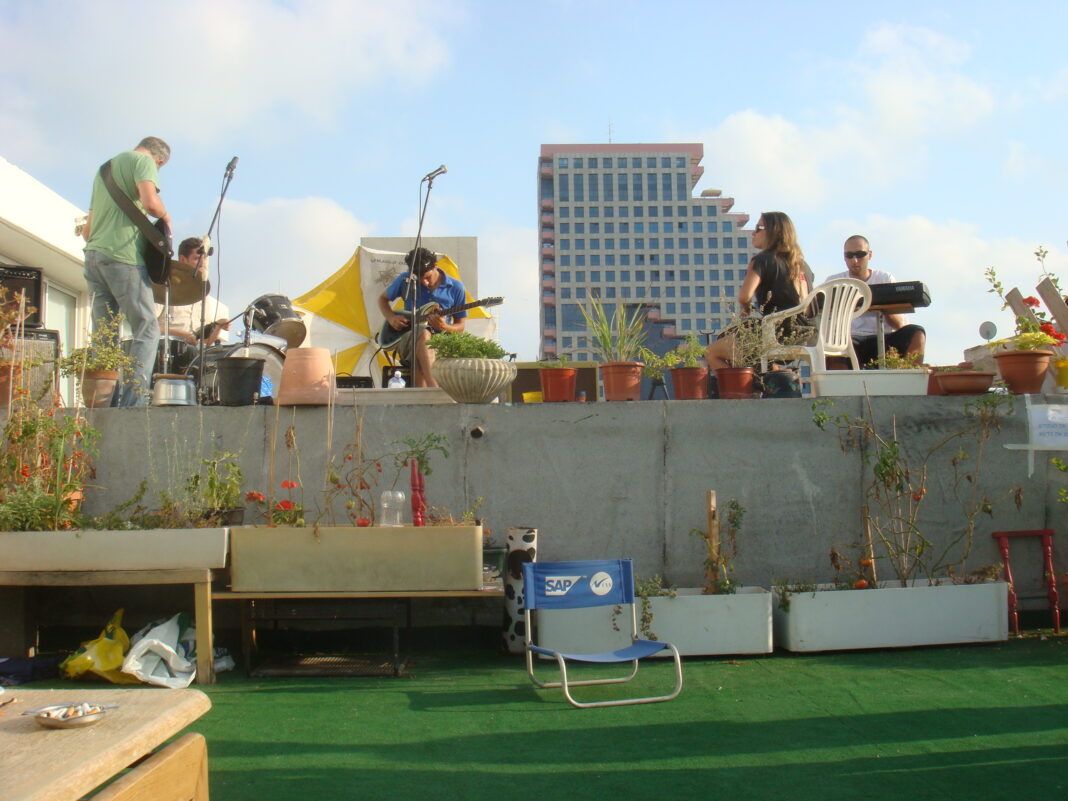
Hayarkon 70 is a disparate group of artists in Tel Aviv that meets a few times a week in an old run-down apartment. The group also runs and operates an artist gallery that also houses studios and offices for a number of young artists. They host many parties and gallery openings and rooftop concerts and add a unique culture to Tel Aviv. I see this community as representative of the general desire many Israelis have to improve their ways, reflecting the demand there is for green technology and services that are practical, easy and affordable.

My first interaction with this community came as members were discussing whether or not to make a full switch to Ecover dish soap at a weekly meeting, and for a brief while there was Ecover in the kitchen because someone met a supplier and got a good deal. After the Ecover meeting most people are aware that Ecover is better than regular dish soap (or maybe not?) but in the shared kitchen of artist studios, when dish soap runs out, some artist who needed to clean dishes and either missed the meeting or didn’t want to spend the extra money goes and buys the green fairy junk and then everybody is stuck finishing off the conventional soap.

The community also boasts a community battery recycling and paper recycling receptacle. When I’ve brought up using Compact Fluorescent Light Bulbs, though, I received a lot of hostility from everyone, mostly because it represented part of their own contradiction. “But the light is so ugly,” a bunch of people told me, mostly either serious visual artists or appreciators of aesthetics. Lighting really does matter and a resurrected chandelier from the 1950s has been discovered and will soon be using more energy than less.

Which brings us to the roof. I’ve actually had meetings with the group’s architect (and a friend) about green roofing and there is serious interest. They’ve been approached by companies who wanted to build such a roof at cost, but the cost is still more than painters and film editors can muster together. Thus explains the astroturf green roof that now adorns the rooftop.

City Tree, a Green Prophet favorite, was also in talks with the community in planning an Organic Waste Party on the roof during which all the artists would separate their organic waste from their trash and bring both to the rooftop to weigh how many kilos were being rescued. The organic waste would inaugurate the compost bin that City Tree would build for the purposes. Somehow talks fell through and since then one member brought in dozens of plants and trees and began rooftop gardening, and as I’ve written about in earlier posts, I’ve helped him along and have since started a rooftop worm compost on a small scale with a few members.

Just last Tuesday was a panel discussion and magazine launch on the roof for a new magazine about urban planning whose first issue deals with how to effectively handle the forthcoming rapid urbanization and what we can learn (or not learn) from China’s example (see online discussion). The community’s gallery is itself a reclamation of dead urban space and has revitalized a certain part of Tel Aviv.

Given the funds and the proper nudging this community/meeting point for many Tel Aviv artists and thinkers can be harnessed to further influence more Israelis. It now just comes down to who will give them the money and who will provide the organizational nudge.

Jeffery Yoskowitz
Jeffery Yoskowitz
Jeff is a writer in Brooklyn, not far from his suburban childhood home where he first began his sustainable living crusade. As a child he collected his father’s discarded letterhead paper and used it in the printer. He has since accumulated various organic (as well as industrial) agricultural experiences, and is obsessed with the belief that how we eat affects our world as much as our bodies. Though he has moved from Tel Aviv, he still looks eastward in his writing and coverage of environmental and sustainable food issues. When he’s not writing he makes lacto-fermented foods and arts & crafts projects using recycled materials. Jeff can be reached at jeff (at) greenprophet (dot) com.

TRENDING

Eco organization offices destroyed by Iran missile

Tel Aviv's eco organization, the Heschel Center, was impacted by an Iranian missile.

What are AWG air-water generators, and why they aren’t a golden-bullet solution (yet)

Atmospheric water generators (AWGs) sound like magic: machines that can pull drinking water out of air. The idea is mentioned in the Bible, where the elders would pray for water collected as dew on plants and the catch on turning this into a machine is in the physics. To turn invisible vapor into liquid, you must remove heat, especially the latent heat of condensation.

Jordan’s $6 Billion Aqaba–Amman Desalination Project from the Red Sea Moves Forward

In 2025, the Jordanian government signed agreements with a consortium led by Meridiam and SUEZ, alongside VINCI Construction and Orascom Construction. Under a 30-year concession agreement, the consortium will design, build, finance, operate, and maintain the system before transferring it back to the Jordanian government. The total investment is estimated at approximately $6 billion USD.

The Saudi Startup Turning Desalination’s Toxic Waste Into Its Own Disinfectant

For millennia, the Middle East's water crisis seemed an immutable fact of geography — a region defined as much by what it lacked as by what lay beneath its sands. Today, a convergence of plummeting solar costs, advancing membrane technology, and hard-won engineering expertise is rewriting that story.

Earth building with Dead Sea salt bricks

Researchers develop a brick made largely from recycled Dead Sea salt—offering a potential alternative to carbon-intensive cement.

Should You Invest in the Private Market?

startustartup Unlike public stock exchanges, which offer daily trading, strict...

How to build a 100-year-company

Kongō Gumi is a Japanese construction company, purportedly founded in 578 A.D., making it the world's oldest documented company. What can we learn about building sustainable businesses from them?

From Pilot Plant to Global Stage: How Aduro Clean Technologies’ 2026 Expansion Signals a Turning Point for Chemical Recycling Investors Like Yazan Al Homsi

The company's Next Generation Process (NGP) Pilot Plant in London, Ontario, has officially moved into initial operating campaigns, generating the kind of structured, repeatable data that separates laboratory promise from commercial viability.

How AI Helps SaaS Companies Reduce Repetitive Customer Support Work

SaaS products are designed for large numbers of users with different levels of experience, and also in renewable energy.

Pulling Water from the Air

Faced with water shortage in Amman, Laurie digs up...

Turning Your Energy Consultancy into an LLC: 4 Legal Steps for Founders in Texas

If you are starting a renewable energy business in Texas, learn how to start an LLC by the books.

Tracking the Impacts of a Hydroelectric Dam Along the Tigris River

For the next two months, I'll be taking a break from my usual Green Prophet posts to report on a transnational environmental issue: the Ilısu Dam currently under construction in Turkey, and the ways it will transform life along the Tigris River.

6 Payment Processors With the Fastest Onboarding for SMBs

Get your SMB up and running fast with these 6 payment processors. Compare the quickest onboarding options to start accepting customer payments without delay.

Related Articles

Popular Categories