Why green potatoes are toxic

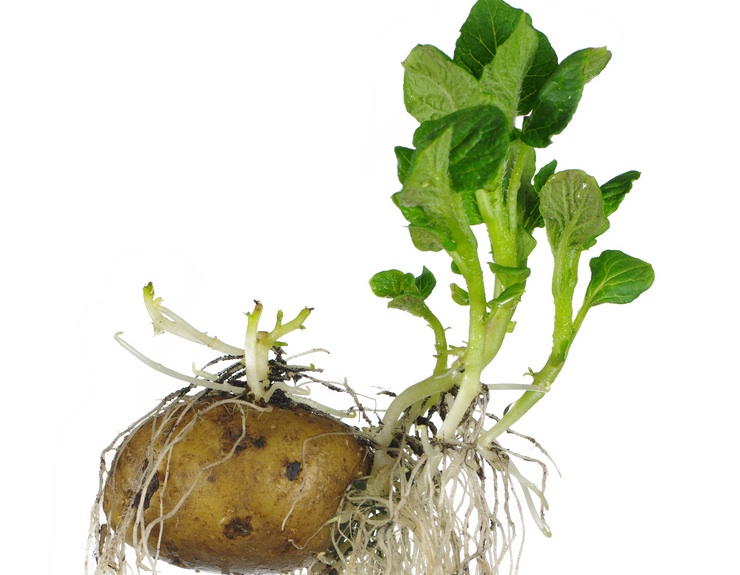
How potatoes turn green
I love potatoes (especially in Moroccan cooking like mafroum) and coming from an immigrant family from Holland and Scotland, eating potatoes was basically a part of every meal, like bread and butter.

But my mother was always afraid of potato “eyes” and the green bits and she and my dad would prune the unwanted bits away. In a time when we want to eat and forage all food scraps, the green parts of the potatoes are definitely something we need to leave for the compost bin. And maybe not even feed the animals.

It turns out green potatoes are so toxic they can kill.

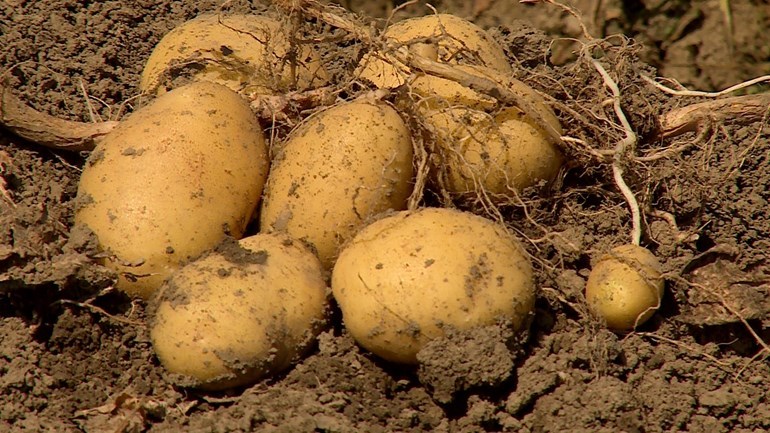
In 1924, Science magazine reported on a fatal case of potato poisoning: James B. Matheney of Vandalia, Illinois, had gathered about one and a half bushels of tubers, which had turned green due to sunlight exposure.

Two days after eating the potatoes, most of his family – wife, two daughters and four sons – showed symptoms of poisoning; the only exceptions were James himself, who didn’t eat the potatoes, and a breast-fed baby boy. His wife, aged 45, died a week later, followed by their 16-year-old daughter. The other five members of the family recovered.

Although such fatalities are rare among human beings, farm animals often get sick or die after eating green potatoes. Symptoms include damage to the digestive system as well as loss of sensation, hallucinations and other neurological disturbances. Death can be caused by a disruption of the heartbeat.
solynta

The culprits are the toxic substances solanine and chaconine; their concentration rises sharply with exposure to light or during sprouting, and they protect the tubers from insects and disease.

Solanine and chaconine belong to the large family of glycoalkaloids, which includes thousands of toxins found in small amounts in other edible plants, including tomatoes and eggplant. These substances have been known for over 200 years, but only recently has Prof. Asaph Aharoni of the Plant Sciences Department at the Weizmann Institute in Israel begun to unravel how they are produced in plants.

He and his team have mapped out the biochemical pathway responsible for manufacturing glycoalkaloids from cholesterol. Their findings will facilitate the breeding of toxin-free crops and the development of new crop varieties from wild strains that contain such large amounts of glycoalkaloids that are currently considered inedible.

Several years ago, in research reported in The Plant Cell, the scientists identified the first gene in the chain of reactions that leads to the production of glycoalkaloids.

In a more recent study published recently in Science, they managed to identify nine other genes in the chain by using the original gene as a marker and comparing gene expression patterns in different parts of tomatoes and potatoes.

Disrupting the activity of one of these genes, they found, prevented the accumulation of glycoalkaloids in potato tubers and tomatoes. The team then revealed the function of each of the genes and outlined the entire pathway, consisting of ten stages, in which cholesterol molecules turn into glycoalkaloids.

Could this mean a future of potatoes that never turn green and which can be stored longer to feed more people efficiently? A story we wrote in 2018 points to this direction. But we aren’t really sure genetic alteration is the key. Genetic selection is okay.

An analysis of the findings produced an intriguing insight: Most of the genes involved are grouped on chromosome 7 of the potato and tomato genome. Such grouping apparently prevents the plants from passing on to their offspring an incomplete glycoalkaloid pathway, which can result in the manufacture of chemicals harmful to the plants.

Now pass the ketchup. Naturally fermented of course.

Karin Kloosterman
Karin Kloostermanhttp://www.greenprophet.com
Karin Kloosterman is an award-winning journalist, innovation strategist, and founder of Green Prophet, one of the Middle East’s pioneering sustainability platforms. She has ranked in the Top 10 of Verizon innovation competitions, participated in NASA-linked challenges, and spoken worldwide on climate, food security, and future resilience. With an IoT technology patent, features in Canada’s National Post, and leadership inside teams building next-generation agricultural and planetary systems — including Mars-farming concepts — Karin operates at the intersection of storytelling, science, and systems change. She doesn’t report on the future – she helps design it. Reach out directly to [email protected]

TRENDING

Eco organization offices destroyed by Iran missile

Tel Aviv's eco organization, the Heschel Center, was impacted by an Iranian missile.

What are AWG air-water generators, and why they aren’t a golden-bullet solution (yet)

Atmospheric water generators (AWGs) sound like magic: machines that can pull drinking water out of air. The idea is mentioned in the Bible, where the elders would pray for water collected as dew on plants and the catch on turning this into a machine is in the physics. To turn invisible vapor into liquid, you must remove heat, especially the latent heat of condensation.

Jordan’s $6 Billion Aqaba–Amman Desalination Project from the Red Sea Moves Forward

In 2025, the Jordanian government signed agreements with a consortium led by Meridiam and SUEZ, alongside VINCI Construction and Orascom Construction. Under a 30-year concession agreement, the consortium will design, build, finance, operate, and maintain the system before transferring it back to the Jordanian government. The total investment is estimated at approximately $6 billion USD.

The Saudi Startup Turning Desalination’s Toxic Waste Into Its Own Disinfectant

For millennia, the Middle East's water crisis seemed an immutable fact of geography — a region defined as much by what it lacked as by what lay beneath its sands. Today, a convergence of plummeting solar costs, advancing membrane technology, and hard-won engineering expertise is rewriting that story.

Earth building with Dead Sea salt bricks

Researchers develop a brick made largely from recycled Dead Sea salt—offering a potential alternative to carbon-intensive cement.

Pulling Water from the Air

Faced with water shortage in Amman, Laurie digs up...

Turning Your Energy Consultancy into an LLC: 4 Legal Steps for Founders in Texas

If you are starting a renewable energy business in Texas, learn how to start an LLC by the books.

Tracking the Impacts of a Hydroelectric Dam Along the Tigris River

For the next two months, I'll be taking a break from my usual Green Prophet posts to report on a transnational environmental issue: the Ilısu Dam currently under construction in Turkey, and the ways it will transform life along the Tigris River.

6 Payment Processors With the Fastest Onboarding for SMBs

Get your SMB up and running fast with these 6 payment processors. Compare the quickest onboarding options to start accepting customer payments without delay.

Qatar’s climate hypocrisy rides the London Underground

Qatar remains a master of doublethink—burning gas by the megaton while selling “sustainability” to a world desperate for clean air. Wake up from your slumber people.

How Quality of Hire Shapes Modern Recruitment

A 2024 survey by Deloitte found that 76% of talent leaders now consider long-term retention and workforce contribution among their most important hiring success metrics—far surpassing time-to-fill or cost-per-hire. As the expectations for new hires deepen, companies must also confront the inherent challenges in redefining and accurately measuring hiring quality.

8 Team-Building Exercises to Start the Week Off 

Team building to change the world! The best renewable energy companies are ones that function.

Thank you, LinkedIn — and what your Jobs on the Rise report means for sustainable careers

While “green jobs” aren’t always labeled as such, many of the fastest-growing roles are directly enabling the energy transition, climate resilience, and lower-carbon systems: Number one on their list is Artificial Intelligence engineers. But what does that mean? Vibe coding Claude? 

Related Articles

Popular Categories