
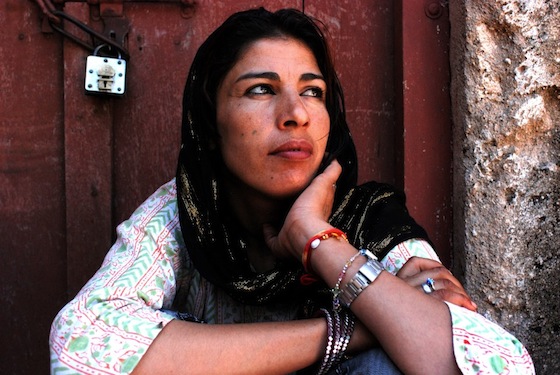

They can’t read or write but a couple of brave Bedouin women from Jordan travelled far and wide to help their villages become solar powered. The biggest struggle yet may be with their husbands: We’ve covered this hopeful story of Solar Mamas, Bedouin women from Jordan who went to Barefoot College to learn how to solar power their villages. We’ve interviewed the women from solar mamas, and have reviewed the film Solar Mamas, a documentary movie about their journey.
We’ve even covered their plight as these women face pressures in their village from this “wild idea.”
Not long ago Green Prophet was invited to a Skoll Foundation Conference in the UK. Our resident blogger and documentary filmmaker James met the director of Solar Mamas, the film, and was compelled to review the film for us once again.
Here’s his take on the movie Solar Mamas, and why you should watch it:
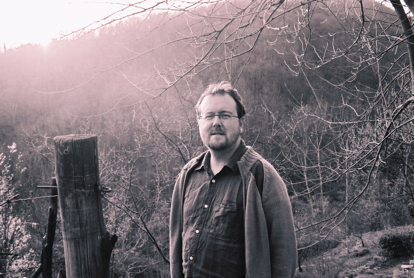
As readers of Green Prophet know, I’ve spent a fair amount of time amongst the Bedouin population of the Negev Desert in Israel, exploring various cultural and sociological issues that affect their society, and watching various solar initiatives either developed from within, or as Bedouin-Israeli co-operation projects.
I filmed this story in the Negev Bedouin village of Um Batin where the gift of solar technology has enabled a father to have medical equipment that will greatly enhance the life of a very sick child:
[youtube width=”660″ height=”453″]http://youtu.be/4guNBWOvnRw[/youtube]
I was excited to hear about a new documentary film about a solar initiative with the Jordanian Bedouin population, and met the director, Egyptian-American Mona Eldaief in Oxford recently at the Skoll Foundation Conference.
The Skoll Foundation, a leading social entrepreneurs network, work in partnership with the American Sundance Institute, supporting their ‘Stories for Change’ programme, which films inspiring social change happening around the world. The organization also funds great social programs like those done by Friends of the Earth Middle East in Israel, Jordan and Palestine.
Mona’s film, ‘Solar Mamas’ follows such a project and its many trials and tribulations within the Jordanian Bedouin village of Rawat Bandan, and focuses upon Rafea, the solar mama of the title, and her family.

It is fair to say that much of the film focuses on tension between Rafea and her husband, which represent the wider issues prevalent within the Bedouin community, both in Jordan and in the Negev; the clash between traditional male power within the home and community, and a growing sense of women’s empowerment, through education and employment. Having the husband and wife as antagonist and protagonist at the core of the documentary make for an absorbing film.
Somewhat in the middle of this is the Government, and the film’s ‘fixer’ character is Raouf Dabbas from the Environment Ministry, who seems to be in a constant state of exasperation, negotiating between husbands and wives and broking power deals within family units, as well as arranging the contact with the Indian school, and bringing its founder, Bunker Roy, to Jordan. In early scenes, we see some of the pioneering work Roy has done around the world within rural communities, which gives context to the project being initiated in Jordan.
From my studies in the Negev Desert, given that the Bedouin are such a traditional culture, these changes are happening so fast the sparks flare up time and time again, as the older male custodians find their authority eroded and both women and the younger generations embrace the opportunities that the new values that a modern lifestyle will bring, like cars instead of camels, solar panels instead of firewood and gas.
The first shot of the film shows Rafea emerge from the family tent, then clearing scrub wood in the desert for fire. It is a really powerful scene, with her saying in voiceover: “my life is the same routine.”
We see her devotion to her children, her rootedness in her place and her culture, but also that she has a yearning for something else – change, travel, education, greater wealth etc, and a Government Initiative brings the head of the Barefoot College to her village to talk about the education and training offered at the School in India.
This is where Rafea and others from the village do eventually go and study, and learn how to put together the components for solar energy and create a simple set-up, but for Rafea the journey, and subsequent journeys backwards and forwards between her village and the college in India bring up so many inter-personal struggles for her, she becomes a martyr for struggle and change within her community.
A key scene shows Rafea in her tent discussing her feelings with other women, as the call of the Muezzin sounds outside: “I want to explore the world and I want to learn,” Rafea says, to be met with the response: “we understand but the situation is hopeless.”
Rafea’s husband is the key sticking point in all of this. He feels her place is in the home, with the children and the routine of the household. He is shown numerous times lying down, it is implied he is lazy and his role as provider is questioned, and when Raouf Dabbas visits and calls he smiles and says he does understand the situation and wants there to be change – but at his stubborn pace!
Like many relationships across many cultures, how one person is able to fulfil their own urge for change, travel and advancement, within the bounds of their own personal circumstances, is a key tension, and as most of us will experience this – with all the pain of break-ups and disagreements, it is fascinating to watch and experience it (within the manipulated structure shown to us through the edit process of this film) here.
I felt while watching that the story of bringing solar technology to a small and remote desert village, is almost peripheral – the actual catalyst of change could actually be anything. The shots of the women in India in the classroom learning the technology and passing their exams are great to watch and funny too, providing relief and inspiration in contrast to the trauma that Rafea is going through. Then finally when the shipment of equipment actually arrives, is assembled and there is the final “let there be light, Hamidullah (praise be to God)” moment, brings the arc of the story to completion. There is a final twist with Rafae’s husband, which I won’t reveal here.
‘Solar Mamas” is an important film that takes the viewer right to the heart of a remote Bedouin village and the central issues of tradition and change faced by one family.
I resonated deeply with the story as I’ve experienced it first hand in the Negev, and as a Western anthropologist coming in to study and experience the life of Bedouin culture, know that the weight of expectation placed upon the Bedouin to embrace alien opportunities and technologies is huge (read the story about Arava Power and the Bedouin here). Managing expectation and change is key. However, you don’t need to have been to these communities to get a lot from the film. It deals with very real human emotions, and takes the viewer on a journey of discovery and inspiration, with very real benefits to a society without many amenities that we take for granted. It charts a very real solar harnessing and transformation project in the deep desert.
WATCH SOLAR MAMAS BY CLICKING BELOW
[youtube width=”660″ height=”490″]http://www.youtube.com/watch?v=ON_NQ1HnRYs[/youtube]
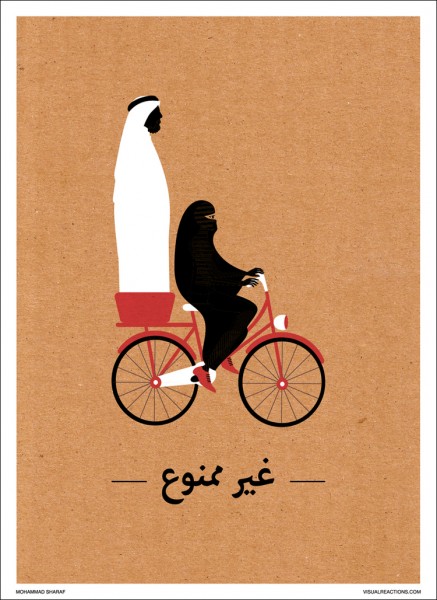


Our planet can be saved and women are leading the way.
Great story and thanks for sharing the link to the film.