
Israel’s IDE Uses Waste Heat in China for “Greener” Desalinated Water

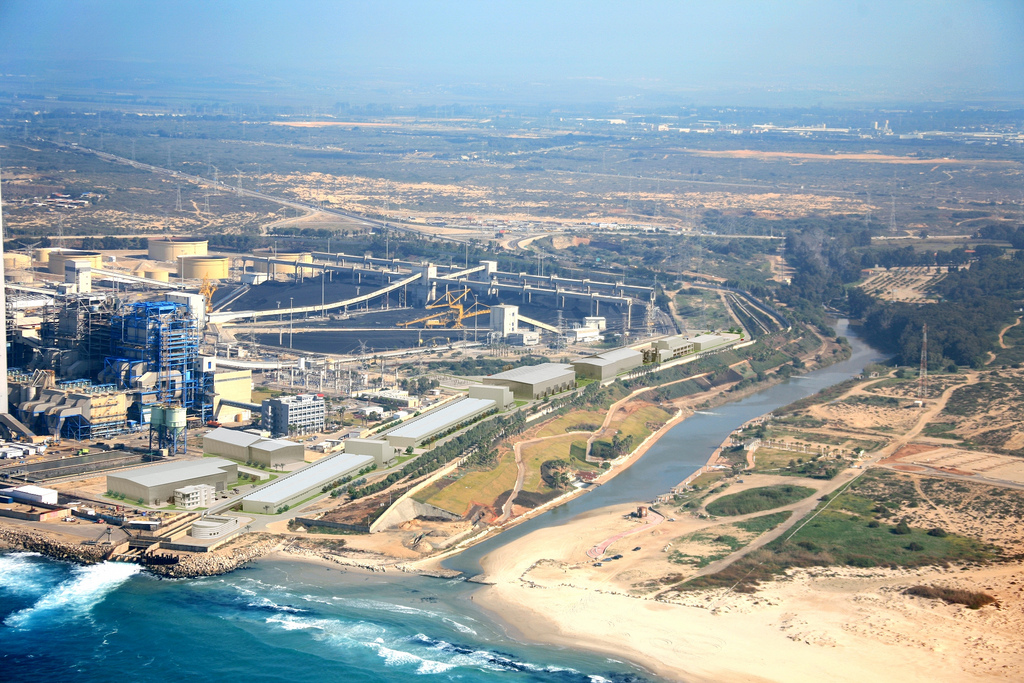
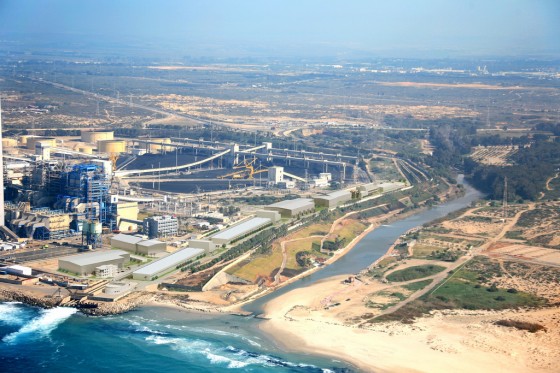
ide plant israel aerial view photoIDE’s new desalination plant in China is powered by excess heat from power plant nearby.

Israel has been a world leader in desalination technology and projects by through companies like Tahal and IDE Technologies. IDE has already constructed more than 400 desalination plants in 40 countries, including at least 3 in Israel – the world’s largest reverse osmosis plants. Now IDE is expanding its foreign operations even more by signing a deal with China’s large Tianjin SDIC electricity company to build four additional Multi-Effect Distillation (MED) desalination units, each with a production capacity of 25,000 cubic meters of distilled water per day. The idea is to power the plants using wasted heat from other sources.

The four new Chinese plants which will convert processed steam into fresh water, will together with previously constructed desalination plants,  result in a total daily capacity of 200,000 cubic meters per day making it China’s largest desalination plant complex. The desalinated water will be used both by the power plant to generate electricity as well as for drinking by residents of Tianjin, a city of more than 12 million people.
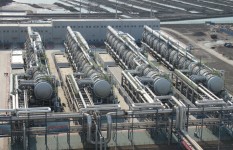
Tianjin steam process desalination plant

IDE likes to pride itself in finding environmental friendly methods of producing fresh water from the sea. The company has completed plants like one in Hadera to meet Israel’s increasing needs for fresh water while looking for greener ways to produce it.

Avahalom Felber, IDE’s CEO, said recently in regards to their desalination projects in China and other parts of Asia:

“We are proud to have been selected once again by one of the world’s most advanced power plants to provide a state-of-the-art desalination solution. This ambitious project strengthens our position in the strategic China market, and in the Asia Pacific region as a whole, which has been a focus of our activities for more than two decades.”

Instead of producing fresh water via reverse osmosis processes, which many desalination plants are now doing in countries like Saudi Arabia, IDE’s Multi Effect Desalination (MED) claims to be the industry’s most cost-efficient solution for producing high-quality water by use of low cost steam.

By using advanced technologies and know-how developed over the past 45 years, the underlying MED concept involves vaporizing seawater, followed by multiple usages of energy-efficient evaporation and condensation processes.

IDE is 50 percent owned by Yitzhak Tshuva’s Delek Group; which is now heavily involved in offshore natural gas wells in the Eastern Mediterranean. Natural gas from these wells will eventually provide the energy required to produce electricity for not only IDE’s Israeli desalination plants, but for the country’s national power grid as well. Natural gas can enable Israel to become a leader in energy production as well as desalination.

Some environmentalists argue that Israel doesn’t need desalination, but steeper rates on water used in agriculture, and more water efficient behavior at the tap.

More about desalination:
New Hadera Desalination Plant May Help Restore Water to Lower Jordan River
Israel Sends Wrong Message About Desalination
Saudi Arabia’s Desalination Market is a $50 Billion Opportunity

Maurice Picow
Maurice Picowhttps://www.greenprophet.com/
Maurice Picow grew up in Oklahoma City, U.S.A., where he received a B.S. Degree in Business Administration. Following graduation, Maurice embarked on a career as a real estate broker before making the decision to move to Israel. After arriving in Israel, he came involved in the insurance agency business and later in the moving and international relocation fields. Maurice became interested in writing news and commentary articles in the late 1990’s, and now writes feature articles for the The Jerusalem Post as well as being a regular contributor to Green Prophet. He has also written a non-fiction study on Islam, a two volume adventure novel, and is completing a romance novel about a forbidden love affair. Writing topics of particular interest for Green Prophet are those dealing with global warming and climate change, as well as clean technology - particularly electric cars.
1 COMMENT
  1. Dear Sir/Madam,
    Please advise, we have a project plan splitting seawater into salt and water in southern Sumatra in collaboration with local government to produce salt from sea water and water for daily living needs.
    What technology we use and the capacity of water to one million people per day.
    About whether this salt can be categorized for food and pharmaceuticals.
    Please the information with the hope that this cooperation can be sanctified.
    regards

Comments are closed.

TRENDING

Ancient Chinese medicine might heal spinal cord injuries

In the study, the scientists didn’t just test one plant compound at a time. They tested two traditional Chinese medicine compounds together — luteolin (from flowers like honeysuckle and chrysanthemum) and astragaloside IV (from astragalus root, Huang Qi). These plants have been combined in Chinese herbal formulas for centuries to help the body recover from injury and inflammation.

Earth building with Dead Sea salt bricks

Researchers develop a brick made largely from recycled Dead Sea salt—offering a potential alternative to carbon-intensive cement.

Farm To Table Israel Connects People To The Land

Farm To Table Israel is transforming the traditional dining experience into a hands-on journey.

Huge Fish Nursery Discovered Under Freezing Arctic Seas

In 2019, an underwater robot camera exploring the seabed...

Remilk makes cloned milk so cows don’t need to suffer and it’s hormone-free

This week, Israel’s precision-fermentation milk from Remilk is finally appearing on supermarket shelves. Staff members have been posting photos in Hebrew, smiling, tasting, and clearly enjoying the moment — not because it’s science fiction, but because it tastes like the real thing.

Turning Your Energy Consultancy into an LLC: 4 Legal Steps for Founders in Texas

If you are starting a renewable energy business in Texas, learn how to start an LLC by the books.

Tracking the Impacts of a Hydroelectric Dam Along the Tigris River

For the next two months, I'll be taking a break from my usual Green Prophet posts to report on a transnational environmental issue: the Ilısu Dam currently under construction in Turkey, and the ways it will transform life along the Tigris River.

6 Payment Processors With the Fastest Onboarding for SMBs

Get your SMB up and running fast with these 6 payment processors. Compare the quickest onboarding options to start accepting customer payments without delay.

Qatar’s climate hypocrisy rides the London Underground

Qatar remains a master of doublethink—burning gas by the megaton while selling “sustainability” to a world desperate for clean air. Wake up from your slumber people.

How Quality of Hire Shapes Modern Recruitment

A 2024 survey by Deloitte found that 76% of talent leaders now consider long-term retention and workforce contribution among their most important hiring success metrics—far surpassing time-to-fill or cost-per-hire. As the expectations for new hires deepen, companies must also confront the inherent challenges in redefining and accurately measuring hiring quality.

8 Team-Building Exercises to Start the Week Off 

Team building to change the world! The best renewable energy companies are ones that function.

Thank you, LinkedIn — and what your Jobs on the Rise report means for sustainable careers

While “green jobs” aren’t always labeled as such, many of the fastest-growing roles are directly enabling the energy transition, climate resilience, and lower-carbon systems: Number one on their list is Artificial Intelligence engineers. But what does that mean? Vibe coding Claude? 

Somali pirates steal oil tankers

The pirates often stage their heists out of Somalia, a lawless country, with a weak central government that is grappling with a violent Islamist insurgency. Using speedboats that swarm the targets, the machine-gun-toting pirates take control of merchant ships and then hold the vessels, crew and cargo for ransom.

Related Articles

Popular Categories