
Israel Offers a Too-Low Rate For Wind Feed-in Tariff

wind energy israelIsrael fails the “Goldilocks test” for feed-in tariffs with a rate that is too low to hit the sweet spot for wind farm proliferation

Israel’s Public Utility Authority posted on Monday for public comment its revised proposal for feed-in tariff rates that the government will pay for the output of small wind turbines up to 50 KW. It will pay between NIS 0.44 (US $0.10) and NIS 0.54 (US $0.12) per kilowatt hour, a mere quarter of what was floated in 2009 as a possible payment rate.

A feed-in tariff policy was originally decided upon in June, 2008, with the PUA agreeing to purchase the electricity from small domestic and commercial wind turbines.

Then in 2009 it proposed rates that would have been much higher than today’s, according to PUA documents (PDF) posted by feed-in tariff expert Paul Gipe at wind-works (PDF).

In 2009, for turbines smaller than 10 KW the PUA floated a payment rate of NIS 1.60 per kilowatt/hour (PDF) ($0.40), and for up to 50 KW turbines, NIS 1.25 ($0.30) per kilowatt/hour. The total quota was for 30 megawatts through 2016.

These rates were to have been stepped down by 2% a year, giving investors the certainty needed for calculating payback, to prevent the problems of instability such as Spain experienced with its overly generous fixed rate feed-in tariff, that then had to be sharply curtailed as it became oversubscribed.

Typically, feed in tariffs work well enough when they are set at about double the retail rate paid for electricity.

And “well enough” is actually what an ideal feed in tariff aims for, a Goldilocks-like “just right”. Too generous, and they bankrupt a country as renewable energy skyrockets through paying unnecessarily high rates. But too feeble, and no action is spurred, leaving only dirty energy in place.

The average retail cost of electricity in Israel is about NIS 0.50, about the same as the rate being offered to consumers to become small wind developers. This revised rate is probably not enough in itself to spur action by consumers, because it is not double.

However, it would offset the cost to add wind power at home for those homeowners who are committed to going green. The agreements would be in place for seven years.

However, the policy push for more wind power at the utility-scale will remain in effect, since Israel has just ruled that 5% of its energy must come from wind power by 2012, so utilities will have to buy the utility-scale power generated by wind farms.

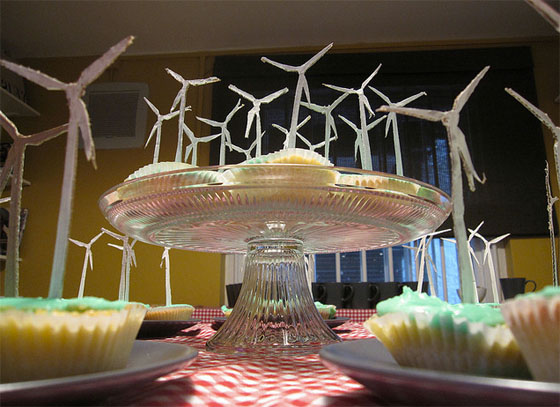
Image: Ed Gillespie

More on the effect of renewable policy on wind development in Israel:
Can Israel’s Wind Power Sector Compete with Solar?
Israel’s First Wind Energy Developer Mey Eden (Eden Springs), Gets Windier on the Golan
Israelis and Investors to Benefit from Feed-in Electricity Tariffs


3 COMMENTS
  1. I advise you to read the proposed regulation more carefully. it does not replace the existing tariff for small turbines (up to 50 Kw) but adds another regulation for bigger wind farms with over all capacity of over 100 KW. the purpose is to give incentives to erect farms with installed capacity of 7 MW (that connect to the distribution network) and 50 MW (which connect to the transmission network). please reevaluate this post according to the right information.

Comments are closed.

TRENDING

EU startup aiming to generate energy on moon villages

Stepping up to democratize the moon is an EU-funded company, Deep Space Energy, which has just raised more than $1 million USD as a seed fund to help it create energy generators on the moon.

Fix Cash Flow Issues in Wind Energy Biz

Wind energy is a business that looks ahead 35 years. How to keep financing stable?

Astro uses AI to help procure land for renewable energy

For oil-rich, environmentally vigilant Gulf states, Astro isn’t just another startup story. It is a blueprint for accelerating an energy transition that is now existential, not optional.

Leading Through a Dual-Energy Transition: Balancing Decarbonisation with Energy Security

Experience in one area of the energy industry isn't enough to guarantee readiness across all the others. That's where a structured program like an MBA in energy can come in. Today's advanced curricula explore energy economics, finance, policy, and strategic management alongside the technical subjects. And when pursuing an energy MBA online, professionals can skill up and retrain without having to step out of the labor market -- an important perk at a time when skilled professionals are already in short supply.

M2PV Capital Targets the American Southwest as Its Launchpad for Off-Grid EV Growth

In the American Southwest, electric vehicles face extreme heat, long travel distances, and limited grid access that expose the real infrastructure gaps behind the EV transition. M2PV Capital is building off-grid charging and power systems designed to operate independently in the region’s most demanding conditions.

Turning Your Energy Consultancy into an LLC: 4 Legal Steps for Founders in Texas

If you are starting a renewable energy business in Texas, learn how to start an LLC by the books.

Tracking the Impacts of a Hydroelectric Dam Along the Tigris River

For the next two months, I'll be taking a break from my usual Green Prophet posts to report on a transnational environmental issue: the Ilısu Dam currently under construction in Turkey, and the ways it will transform life along the Tigris River.

6 Payment Processors With the Fastest Onboarding for SMBs

Get your SMB up and running fast with these 6 payment processors. Compare the quickest onboarding options to start accepting customer payments without delay.

Qatar’s climate hypocrisy rides the London Underground

Qatar remains a master of doublethink—burning gas by the megaton while selling “sustainability” to a world desperate for clean air. Wake up from your slumber people.

How Quality of Hire Shapes Modern Recruitment

A 2024 survey by Deloitte found that 76% of talent leaders now consider long-term retention and workforce contribution among their most important hiring success metrics—far surpassing time-to-fill or cost-per-hire. As the expectations for new hires deepen, companies must also confront the inherent challenges in redefining and accurately measuring hiring quality.

8 Team-Building Exercises to Start the Week Off 

Team building to change the world! The best renewable energy companies are ones that function.

Thank you, LinkedIn — and what your Jobs on the Rise report means for sustainable careers

While “green jobs” aren’t always labeled as such, many of the fastest-growing roles are directly enabling the energy transition, climate resilience, and lower-carbon systems: Number one on their list is Artificial Intelligence engineers. But what does that mean? Vibe coding Claude? 

Somali pirates steal oil tankers

The pirates often stage their heists out of Somalia, a lawless country, with a weak central government that is grappling with a violent Islamist insurgency. Using speedboats that swarm the targets, the machine-gun-toting pirates take control of merchant ships and then hold the vessels, crew and cargo for ransom.

Related Articles

Popular Categories