
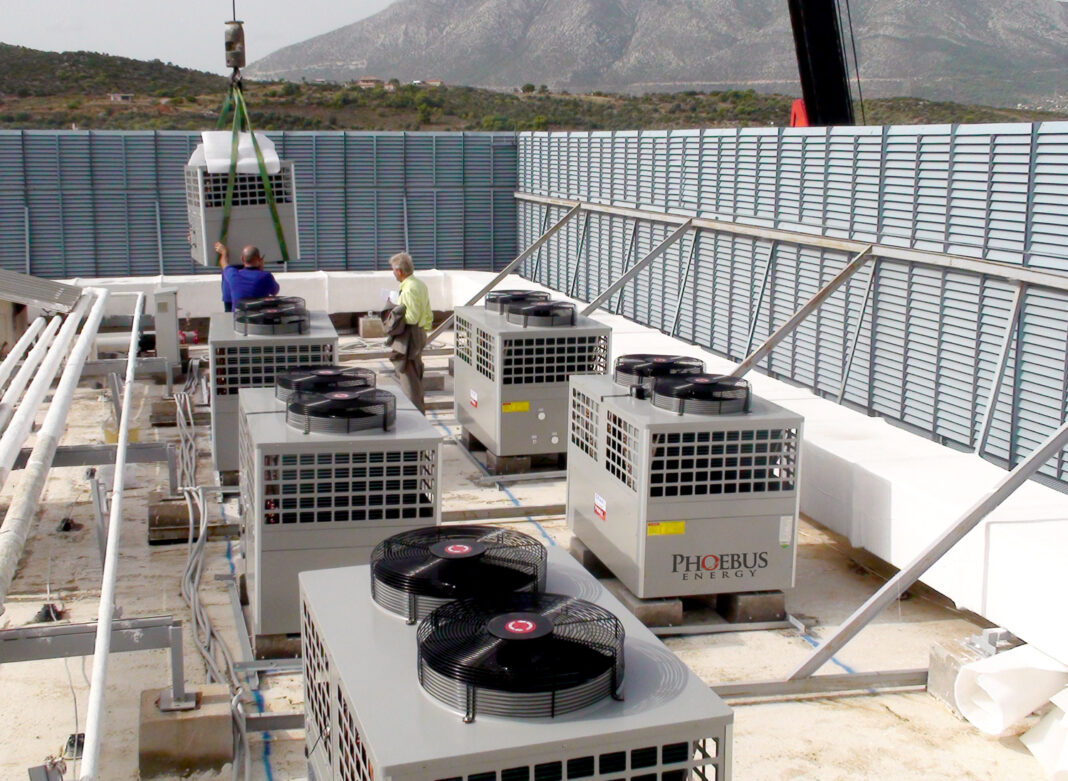

 Using heat pumps and expert data analysis, Phoebus is installing their energy saving solution at the Inbal Hotel in Jerusalem. They promise to offer energy savings, an ROI after 2 to 3 years.
Some of the highest energy costs for large facilities today, especially in the hotel hospitality and health care industries, stem from their extensive heating systems. Not only is the continuous operation of these systems expensive, but since many facilities are heated by fossil fuel-powered central boilers, their fuel consumption and carbon emissions are significant.
Unfortunately, traditional solar power systems don’t seem to be able to provide these industries with the energy performance they need. Phoebus-Energy develops and markets an innovative hybrid water heating system which saves 40-70% of annual fuel consumption and drastically reduces carbon emissions.
Utilizing indirect solar thermal energy and complex data analysis, Phoebus could be a game changer for the industry. Green Prophet sat down with Phoebus-Energy CEO Yoav Ben Yaacov to learn some more about this innovative system.
Green Prophet:1) Hotels and hospitals are two of your primary targets. Why should hotels, in the Middle East in particular, consider your hybrid energy system?
Yoav Ben Yaacov: In the warmer-climate regions of the world, such as the Middle East, our hybrid energy system is able to reduce a facility’s heating costs by 40-70%. But the benefits of the system are not limited to warm climates. In fact, the hybrid energy system can make a very significant financial difference for facilities found in regions colder than the Middle East, such as southern and central Europe, where the need for space heating energy could result in bigger savings.
This is a general solution for nearly every country in the world, with the exception of very cold regions far from the equator that have low levels of hot ambient air. Any facility using a central boiler powered by fossil fuels in the Middle East, the Mediterranean, Central and South America, and Asia can reduce its annual heating cost in a dramatic way.
In addition, Phoebus-Energy’s solution not only minimizes annual heating costs, but also reduces urban pollution by 70-90%, which is a tremendous advantage from a health-care point of view.
2) Tell us a bit about how the Phoebus Energy system works and what needs it meets?
Phoebus has invented a hybrid heating system – a unique technical solution, which saves a substantial amount of the annual fuel expenses of any existing commercial boiler.
The system combines three major components:
1. A proprietary and self-designed heat pump water heater: This device pumps free thermal energy from the ambient air to heat water.
2. An advanced control system: The control system monitors and collects more than 20 data parameters from the site, every 60 seconds. The collected data is processed by the central computer and then sent to the third component; the hybrid software.
3. The hybrid software: the heart of the system. The software is based on an advanced self-learning model of performance and behavior predictions. Every five minutes, it precisely defines what would be the best combination of heat production on site for the next five minutes. Thus, on-site energy production is always cost-effective.
A web-based interface gives the customer real-time access to the energy control system. The system provides a number of useful reports showing the real-time cost savings of the system and allowing for even better control of the entire water-heating process.
3) What stage of development is the company in? Who’s funded you so far? Is the company raising another round of financing now that you have several proof points that the solution works and the payback is quick?
An intensive and fruitful three years of development and more than 20 successful installations in Israel have shown that our solution is reliable, stable and precise. Still, we have chosen to invest a considerable part of our current and future income to continuously optimize the system and increase the savings to the customer.
Phoebus has raised capital from the following funds:
1. Terra Venture Partners (a leading cleantech Israeli VC that was the seed investor and is the majority shareholder).
2. Galilaea LTD (Italian-Israeli investment group).
3. Chesapeake Advisory Group (US-based investment group).
Phoebus is currently seeking to cooperate with strategic partners and investors in order to accelerate the marketing and execution process around the globe.
4) How does the Phoebus Energy Hybrid heating system compare with alternative solutions?
We are all great fans of the solar concept, but you must understand that from an energy, ecological and financial point of view, no solar solution can compete with the performance of our Hybrid Heating System. The ROI of our system is much faster.
We are also about to launch within eight weeks a ‘tribrid’ solution, which combines solar panels as well. The tribrid system would reduce the heating costs of facilities that have an existing solar power system, primarily during the winter months when there is a lack of sun radiation to heat water through solar collectors
5) Would you consider the Phoebus Energy solution a solar technology? How do you define it?
This is solar energy at its best. The sun heats the air during the day, and we exploit this unlimited supply of thermal energy, day and night, summer and winter. There is no need for real estate allocation for thermal collectors or solar panels, which is a big issue for the world’s busiest and densest cities.
6) What type of upfront investment would be necessary to build a Phoebus System for a typical 250-room hotel in the Middle East?
For a 250-room hotel, the typical ROI is 2-3 years.
Thanks to our on-line achieved savings report, most of our customers prefer to finance their project using the shared savings model, paying us 50-70% of their achieved savings every month, instead of buying the system outright.
7) It appears as though your company has numerous installations in Israel. Is there a reason you have focused on the Middle East as opposed to other regions, like so many other Israeli-based cleantech companies?
Israel, for us, has been the best place for the pilot tests and first commercial installations. However, all of our efforts are now focused on worldwide expansion and the creation of distributors and partnerships abroad. The market is unlimited, and the monetary savings – as well as pollution reduction – are a huge value proposition.
8) Dubai currently has some 50,000 hotel rooms. Have you considered targeting the Dubai market for the Phoebus Energy System?
This is one of the most interesting markets we have defined. Alternative energy and environmental awareness is very impressive in Dubai. As an Israeli company and peace seeker, the idea of exporting our technology to an Arab country has a great appeal.



Comments are closed.