Home Blog Page 746

On the Way to Sulha: Where Religion and Ecology Meet

sulha for jewish muslims and christians to meet and discuss ecology photoSulha, meaning reconciliation in Arabic, is an annual grassroots event held in Israel, bringing people from all religions, faiths and none, to be together for 3 days, in an atmosphere of respect and mutual understanding.

Started by Gabriel Meyer and Elias Jabbour 8 years ago, the site of the annual Sulha gathering has changed over the years, but last year and currently (it ends tonight) it takes over the beautiful olive groves of Latrun monastery halfway between Jerusalem & Tel Aviv.

In keeping with the peaceful and constructive aims of the organisation and the process of coming together in reconciliation and respect, the Sulha is an environmentally-friendly event, and I was very impressed to be asked to bring my own plate and cutlery as a sign of this.

Other green ways of supporting the event included car-sharing and facebook invitations. Experiential lectures and workshops on making and using bio-fuel, and input from the good people at the NGO Bustan on bedouin and ecology complemented the programme, with many sharing & listening circles, voice & dance sessions, etc. Late night performances from Berry Sakhorov, Yair Dalal, and chilling out around a bonfire to the sounds of the friars chanting in the monastery ‘up the track’ rounded out the event.

Take Care of Your Clothing

0

clothing in closetOnce you buy clothing if you have chosen well you are going to want to keep them for a while. Nothing wrong with wearing a shirt more than once… Even if your job depends of fashion.

Take care of your clothing and it will mean less waste, and more money in your pockets. Green living is about awareness. Don’t change a tire in your good attire (keep an apron in your car under the spare). After a dinner party, change before you wash the dinner dishes. A little bit of awareness goes a long way!

Looking for new clothing?

Have a tip to share?

Automatic-flush toilets are wasting water

8

don't panic in the toilet when paper runs out

Among other things, I’m a usability expert. Usability is the level of friendliness and ease of use of products and interfaces. Products should be easy to use, designed clearly, and fit the user’s needs.

Often companies design products without considering usability, and the product ends up sitting on the shelf or having users utilize only 5% of the features available to them. For example, think of a person who isn’t tech savvy trying to use an AppleTV remote control.

I’m usually very excited to come across a new product or interface that offers enhanced usability. But ever since I became more of an environmentalist I pay more attention to products that are not environment friendly.

There are green products that for the sake of being environmentally friendly lose out on some of their usability. On the other hand, there are products that are very user friendly but then lose out on the environmental aspects.

How many of you remember the old pull-tab that beverage cans used to have? You needed to pull and detach it completely out of the can in order to drink from it. The small tab was very harmful to the environment for the simple reason that the person drinking from the can had to find a way to get rid of the tab after pulling it out, so it usually ended up being thrown aside somewhere.

A later patent introduced the push-tab that we are familiar with today, keeping the tab attached to the inner side of the can and allowing the user to drink while also keeping the environment clean.

This example has the product work effectively both in favor of the user and in favor of the environment.

Auto Flush Toilets, Great Example of Waste

Another example of a product that is useful but not very green is the auto-flush toilet.

I must confess that I didn’t know these existed until the first mall in Modi’in, Israel (a city close to Jerusalem) was built. The auto-flush toilets there have special sensors so that when you’re finished and you rise from the seat it automatically flushes the toilet.

The first time I saw this I thought “Wow, What a clever solution!” This frees the user from needing to figure out how to flush the toilet (you would think that’s an easy job but I have horror stories to share about different hostile toilets around the country). It also makes sure the toilets are clean since you don’t “forget” to flush them. Not to mention the great hygiene advantage of not needing to touch any mechanism to cause an action.

But the next time I happened to use this mechanism I thought what a waste of water – just like the water that comes out of your air conditioning unit.

It surprised me that a new mall in this green day and age would install such a mechanism, not allowing flushing only half the amount when possible. Not to mention the wasted energy of keeping the electric sensor always on. It happens that you engage the sensor incorrectly and it flushes at the wrong time as well.

Foot pedals for half flush and a full flush would make more sense.

Strive for Balance in Product Design

This product is a perfect example of where people’s needs conflict with the environment, but then again it’s the balance that’s important. Sometimes it’s okay to not go all the way to meet people’s needs and put more thought into meeting some of the needs of the environment instead.

Come to think of it, that just might be what’s wrong with my last statement. Many times we don’t consider the environment’s needs to be equal to people’s needs, and we give the environment’s needs a low priority or don’t even consider them while designing a product.

Lea Aharonovitch works with UPA Israel (Usability Professionals Association) as Management Member and Director of Events. Lea writes about green products and businesses and also about green usability.

Israel to Start Drilling for Oil in a Nature Reserve

1

israel drills for oil to the ire of environmentalists
(Illustration of how the drill would look: SPNI)

You’d think with all the oil in the Middle East region, Israel would have at least a few million barrels of its own. An Evangelical Christian John Brown following clues in the Old Testament has been hunting for it for years. Taking John McCain’s lead: now YNet reports, Israel’s Nature and National Parks Protection Authority approved last Tuesday that experimental oil drilling in a nature reserve located in the Judean Desert could begin. Two drilling companies Ginko and Delek Energy Systems have been granted six months to try and strike it rich. Those involved stipulated terms and restrictions to counter possible environmental damage.

And if oil is discovered at the site, it will be pumped diagonally to minimize the damage done to the plants and wildlife. Well, as you can imagine, this doesn’t sit well with Israel’s environmentalists.

“The drilling and extraction of oil could harm whole populations of rare species,” the specialists wrote in their objecting statement. “We believe that the foreseen production does not justify the permit to severely and permanently harm plants and wildlife, as well as the landscape and tourists in an official nature reserve.”

Meanwhile the drilling companies (lo and behold!) believe that there is plenty of oil to be found at the site, and with the rising cost of oil say the enterprise could be extremely profitable. Still dependent on oil from other countries (such as Russia), they claimed drilling for oil was a strategic move.

Carbon Neutral Car Rentals with Avis Israel

Israel’s tourism industry has made some serious changes recently.  The Ministry of Tourism announced a few months ago that it was going ‘green’ for 2009, stating that it had a plan that included “environment-sensitive planning and development; preservation of the cultural and social heritage; developing tourism and new jobs in agricultural areas and the periphery while improving the quality of life for the residents and educating and raising awareness among residents and tourists about the importance of developing sustainable tourism.”

Smart Shopping

0

clothing

For some there is nothing more rewarding than a new item of clothing. Nothing wrong with that. Right?! You’re thinking: “those greenies won’t let me have any fun!” It’s true, being green can seem oppresive. But it’s really about attitude.

Nothing wrong with a nice shiny new article of clothing, but if it sits forever in your closet and is only worn once. Then you have a problem.

Greening is about being smart, in this case – smart shopping.

Are you buying on impulse? Will this REALLY match your wardrobe? There is nothing more rewarding than a smart buy, when it all fits together. It adds so much to the experience when youget to SHOW OFF your shiny new clothing… Isn’t it?

Waste less, enjoy more! That’s the green motto!

and for sustainable design

Green Prophet in Focus: Michael Green

0

Michael Green Green Prophet

This week, our Green Prophet in Focus series gets up close and personal with resident Prophet Michael Green.

Once a music journalist (he stands true to vinyl) and environmental activist in Bristol, UK, Michael has since brought his green wisdom to Israel. In addition to his position here as Prophet-in-residence, Michael is a journalist for various publications and keeps a blog, Swords to Ploughshares.

Read more about Michael’s passion for organic food, his thoughts on vegetarianism, and the UK environmental activism scene after the jump:

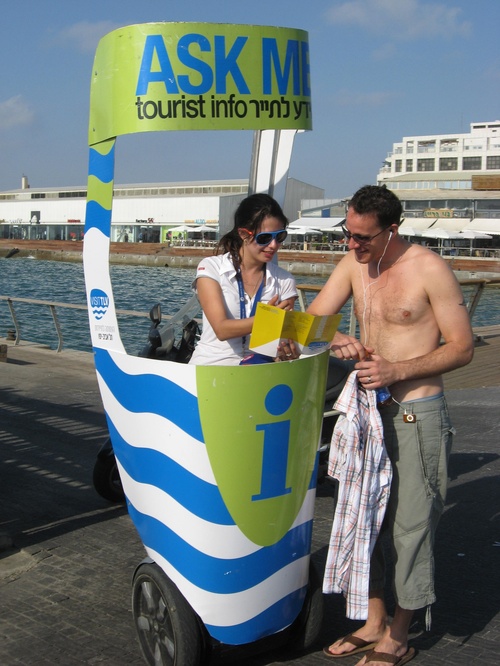
Segway Mobile Tourism Information Points Hit Tel Aviv and Jaffa

3

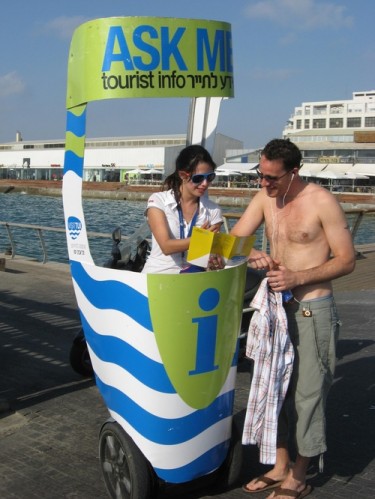
As part of its overall activities to improve service for tourists visiting the city this summer, the Association for Tourism Tel Aviv-Jaffa has introduced Segway mobile information points onto the city streets.

The unique, colorful Segways can be found on the streets of Tel Aviv seven days a week from 13:00 – 19:00, particularly in areas of concentrated tourist traffic such as the Tel Aviv Port, the boardwalk or tayelet along the seashore, Jaffa, the Neveh Tzedek neighborhood and Rothschild Boulevard. The stewards on the Segways offer tourists general information and details about events and special happenings in the city, and distribute maps, flyers and promotional material that will help the tourist make the most out of his time in the city.

Etty Gargir, Director of the Association for Tourism Tel Aviv-Jaffa: 2007 was a record year for tourism in Tel Aviv, registering an increase of 23% in the numbers of tourists visiting the city over the previous year. During 2007, income from tourist overnights in the city exceeded 2 billion shekel.

Sustainable Reading: Offset Your Books With Eco-Libris

8

With September rolling around and the back to school shopping in full swing, books are more prominent than ever.  It’s officially book season.  And whether you’re an elementary schooler, a senior in high school, a university student, a parent, or a loving aunt/uncle/grandparent… books will probably be on your radar in the coming weeks.

So assuming you know that books are going to be on your shopping list in the near future and assuming that you know that making books requires chopping down a lot of trees, how do you resolve this dilemma?

Eco-Libris, a company founded by Israelis, is in the business of greening your books.  While other companies help offset carbon emissions, Eco-Libris helps readers offset their literary carbon emissions.  For every book that you’d like to offset, the company will get one of their partners in a developing area to plant trees (thus essentially replacing the trees that were chopped down to produce the book you’re reading).

Eco-Mum on Greening Your Back to School Shopping

7

green back to school shoppingSo it’s the last week of the holidays and everybody is out shopping for the new school year. But do you really know what you are buying for your kids? Cheap and cheerful may be your number one priority but what about green and healthy?

Do you understand the hidden problems with those bright shiny, plastic lunchboxes or those every so plastic back packs, and really have you looked at all your money saving options before rushing out to buy new?

Here’s a green way at looking at those Back to School shopping trips.

Buy Local

2

garden produceFor the most part it’s usually better to buy local. This cuts out the emissions created as a result of shipping, getting the product to your door.
This is an important question: Is it better to buy biodegradable garbage bags that are manufactured in China? Or go with the one’s made a block away, that aren’t shipped around the world?
Keep this in mind when buying local; but for the most part, it’s best to cut out as much transportation as possible. Visit a farmer’s market nearby. Ask the vendors where they get their produce from. Another good source for finding locals is your neighborhood health-food store. Often you can find the inside scoop on where to get what.

IQWind Gears Up For Energy Efficiency

4

wind-turbineWind power is a good energy alternative to free America from its oil dependence, but it could be made a lot more efficient. The wind as we know, can blow in gusts and spurts, it can tickle your ears or rip out trees – but the massive blades of today’s wind turbines can’t match the wind’s temperament: the rotors are fixed to spin at an even speed, maintaining a constant RPM (rounds per minute).

The result is that a large amount of wasted energy just dissipates with the wind. A new Israeli company IQWind, exemplifying the spirit of the strong Israeli clean technology movement, proposes a new solution. The company founded in 2007, and recently voted a Top 100 Tech Startup by Red Herring business magazine, has designed a new gearbox that promises to squeeze the most energy from both new and existing wind turbines.

“IQWind has solved a painful problem in wind turbines, and allows them to work in an efficient way while significantly reducing the costs. Because when you add our gears in, other components become redundant, and can reduce the price of building a wind turbine by 25 percent,” IQwind founder and CEO Gideon Ziegelman, tells ISRAEL21c.

Astorre Modena, a general partner at Jerusalem-based Terra Venture Partners, a major investor in IQWind, adds that the technology is “an elegant, smooth and solid gearbox that allows you to change gears without disconnecting the transmission,” he says, noting that “there is much more meat,” to the technology’s innovation that he can’t disclose.

It might not take long to get a sneak peak of IQWind’s gears in action: Modena says that the company expects to have a beta test site in Israel – possibly outdoors, or in a lab – within the next six months. It will take another two years before the gearbox goes into production.

Putting wind in the market’s sails

The $30 billion dollar wind turbine market is growing, putting IQWind and other wind power enabling technology in a lucrative position. There is currently a 12 to 24 month waiting list to buy a wind turbine and have it installed, and as the windiest spots of land are developed, Europeans and Americans will need to make existing operations more efficient.

Modena sees a future where wind energy technology will become more differentiated, especially in Europe where installing new turbine projects is limited: “There will be more play in efficiency and that’s where the value is gong to come in,” he says, citing IQWind’s and Israel’s special position.

Israeli clean tech on the horizon

Israel has strong expertise in solar thermal and water technology, owing its success in clean technology to the massive influx of Russian immigrants, says Modena who remarks that in general, clean technology is a difficult field, requiring cooperation between multiple disciplines: “Israelis are good that,” he says, noting that Terra has plans to invest in a new clean technology company every quarter.

The company doesn’t have to be Israeli, says Modena, but it should be willing to establish an R&D center in Israel, if there is no other connection. Terra is looking to invest in energy efficiency solutions, like IQWind, as well as solar energy technology.

IQWind, founded by Gideon Ziegelman, a graduate from the Technion – Israel Institute of Technology, is based outside of Raanana, Israel, where it employs about 10 people.

(This article was first published on ISRAEL21c www.israel21c.org)

Trio Energy Invents a Greener, More Energy Efficient Greenhouse

1

greenhouse made more efficient by trio energy in israel photo
(Image credit: Corbis)

It’s bad for the environment, but you know you want it.  You want those strawberries in the dead of winter.  You know you should be eating local produce year round to avoid all of the carbon emissions associated with flying in food from distant places or using energy guzzling greenhouses to grow produce that is out of season… but we’re spoiled modern folk and sometimes you just want those strawberries in January.

Thanks to 2 year old Israeli company, Trio Energy Systems, we may be able to satisfy those cravings with a little less guilt.  Having taken into account that the reason most greenhouses waste energy is because a lot of energy is required in order to keep them warm during colder weather and much of the heat dissipates, they’ve come up with a solution that minimizes energy consumption in the greenhouse.

Artist Community Hayarkon 70 Looking to Green Itself, Sort Of

0

hayarkon 70 artists in tel aviv

There is a yearning for ecologically and environmentally responsible choices that I’ve been observing in Tel Aviv, especially among a select group of young, influential artists. There are continual hurdles for them, though, showing how sometimes thinking green and acting green don’t always go hand in hand.

Hayarkon 70 is a disparate group of artists in Tel Aviv that meets a few times a week in an old run-down apartment. The group also runs and operates an artist gallery that also houses studios and offices for a number of young artists. They host many parties and gallery openings and rooftop concerts and add a unique culture to Tel Aviv. I see this community as representative of the general desire many Israelis have to improve their ways, reflecting the demand there is for green technology and services that are practical, easy and affordable.

My first interaction with this community came as members were discussing whether or not to make a full switch to Ecover dish soap at a weekly meeting, and for a brief while there was Ecover in the kitchen because someone met a supplier and got a good deal. After the Ecover meeting most people are aware that Ecover is better than regular dish soap (or maybe not?) but in the shared kitchen of artist studios, when dish soap runs out, some artist who needed to clean dishes and either missed the meeting or didn’t want to spend the extra money goes and buys the green fairy junk and then everybody is stuck finishing off the conventional soap.

AES Takes Steam Energy Out Of GNRY's Waste Wood Chips

3

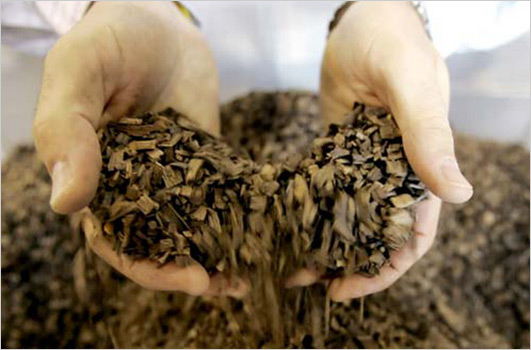
wood chip biomass creates alternative steam energy for AES and GNRY photo
(image credit: NYTimes blogs)

Man, alternative energy solutions can’t come fast enough. The world is teetering on the verge of runaway climate change (some predictors say there’s less than 100 months), and gas prices are killing us not only at the gas station, but are affecting everything we buy from food to clothes to you name it. Racing to get an edge in the market is America’s AES, who’s obviously got a serious interest and investment in Israeli clean technology.

Green Prophet reported a massive wind energy deal AES was in with Mey Golan (estimated $500 million), and now we read, the company is keen on investing in Israeli biofuel through GNRY. According to Globes (who we are not going to link to because they archive after 1 week), AES Corporation is in negotiations to invest in the Israeli alternative energy company GNRY Ltd to the tune of a deal worth NIS 25-27 million ($8 million).