Somehow vegetables with short seasons excite the imagination and appetite more sharply than produce that’s available all year around. Good Middle Eastern cooks have many recipes for delicate fava beans, and this turmeric-fragrant soup is one.
Somehow vegetables with short seasons excite the imagination and appetite more sharply than produce that’s available all year around. Good Middle Eastern cooks have many recipes for delicate fava beans, and this turmeric-fragrant soup is one.
Somehow vegetables with short seasons excite the imagination and appetite more sharply than produce that’s available all year around. Good Middle Eastern cooks have many recipes for delicate fava beans, and this turmeric-fragrant soup is one.
Somehow vegetables with short seasons excite the imagination and appetite more sharply than produce that’s available all year around. Good Middle Eastern cooks have many recipes for delicate fava beans, and this turmeric-fragrant soup is one.
Somehow vegetables with short seasons excite the imagination and appetite more sharply than produce that’s available all year around. Good Middle Eastern cooks have many recipes for delicate fava beans, and this turmeric-fragrant soup is one.
Somehow vegetables with short seasons excite the imagination and appetite more sharply than produce that’s available all year around. Good Middle Eastern cooks have many recipes for delicate fava beans, and this turmeric-fragrant soup is one.
Somehow vegetables with short seasons excite the imagination and appetite more sharply than produce that’s available all year around. Good Middle Eastern cooks have many recipes for delicate fava beans, and this turmeric-fragrant soup is one.
Somehow vegetables with short seasons excite the imagination and appetite more sharply than produce that’s available all year around. Good Middle Eastern cooks have many recipes for delicate fava beans, and this turmeric-fragrant soup is one.
In the leadup to this week’s municipal elections in Israel, Tzafrir Rinat, the respected environmental correspondent of the daily newspaper Haaretz, discussed the local environmental political parties in his article “The Green Party – mostly bluster“. Since the other player in the field, “the Israel Green Movement” is brand new, Rinat evaluated the 10 year old “Green Party“:
But in Israel, experience shows that the green parties’ environmentalism is sheer pretension, especially if compared to the green parties in Europe, which have become significant social and political factors with broad worldviews on many issues. [. . .]
The two main characteristics, in recent years, of the green parties in Europe are their democratic institutionalism and their broad political platforms. However, the local Green Party is totally different.
Go to the park! Sounds cliched? Think again it’s totally the new mauve (which is the new white, which was the new pink which was the new black)!
With the Middle Eastern winters you don’t need a sweater, but even when it’s colder there’s nothing like a warm drink when bundled up. Bring a thermos along and enjoy the pink cheeks!
Westerners don’t breath enough. Rushing 24/7 we don’t take the time to enjoy the littler green our cities have to offer. And what a better way then with someone you care about! Once there, take a deep breath and enjoy the birds.
Looking to green your life? Find out more! Have a green-living tip to SHARE?
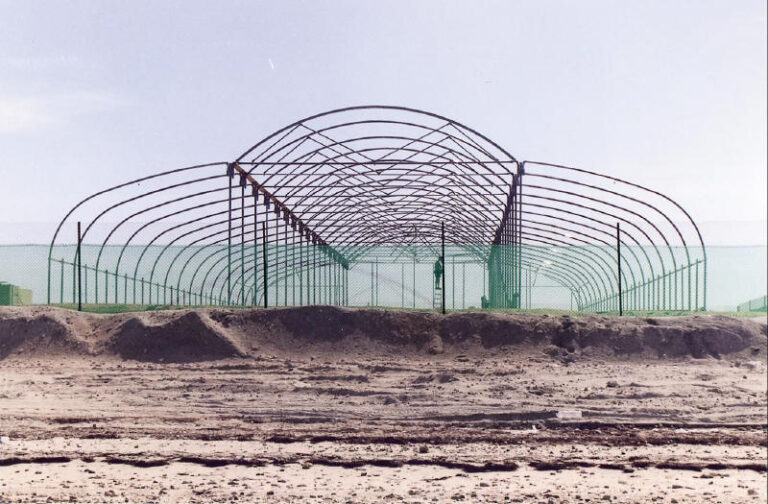
Green Prophet loves to find potential everywhere – so how about desert seawater greenhouse construction in Qatar? They are also doing this in Abu Dhabi.
What exactly is a desert seawater greenhouse, you might ask?
According to the Seawater Greenhouse website: “Seawater Greenhouse is a unique concept which combines natural processes, simple construction techniques and mathematical computer modeling to provide a low-cost solution to one of the world’s greatest needs – fresh water.
“The Seawater Greenhouse is a new development that offers sustainable solutions to the problem of providing water for agriculture in arid, coastal regions.”
How the seawater greenhouse works.
In layman’s terms, the seawater greenhouses use seawater to humidify the air in the greenhouse while sunlight distills the fresh water out of the seawater. This is a unique solution for desert areas where fresh water is scarce. It is especially great for Middle Eastern countries, many of which have access to saltwater and have large areas of desert land. But it sort of also feels like a country in the west is borrowing ideas long ago practiced in the Middle East and calling it “new.”
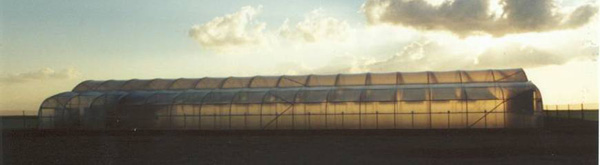
Seawater greenhouse Powered by the Sun
But beyond being practical, the use of desert seawater greenhouses is greener than the alternatives for a couple of reasons. Firstly, traditional desalination projects are energy intensive and consume lots of fossil fuels.
Once constructed, desert seawater greenhouses are solar powered. Secondly, in enabling more desert areas to be used for agriculture, local agriculture is encouraged and fewer food products may be imported from far away (thus reducing a nation’s food carbon footprint).
View of the Abu Dhabi seawater greenhouse
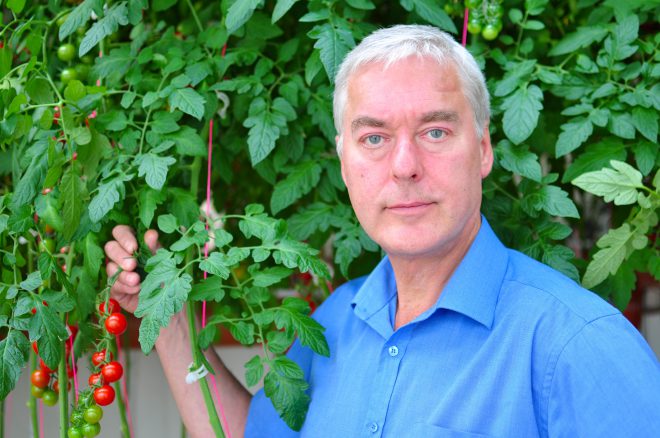
According to Charlie Paton, the inventor of Seawater Greenhouse technology, “UAE, Bahrain, Oman, Abu Dhabi and Kuwait are other countries in the region which are planning to turn its vast areas of arid lands into arable through the unique method.”
Charlie Paton, inventor of the seawater greenhouse
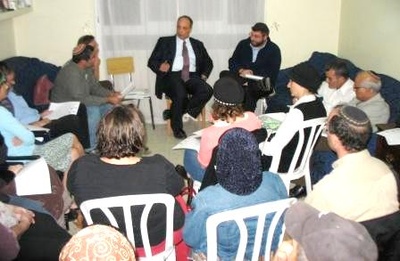
On Tuesday, many Israeli cities will be holding Municipal Elections. In the run up to the Beit Shemesh elections, Sviva Israel was asked by Life & Environment, running the national Green Now campaign, to place the environment high on the agenda of all the Mayoral candidates.
Working together with local environmental groups Shemesh Yehuda and Be’er Hatikva, Sviva Israel organized an Environmental Watch Group which prepared an environmental policy paper for the city and invited all three mayoral candidates – Shalom Lerner (B’yachad), Moshe Aboutbul (Shas) and Daniel Vaknin (Likud) – to respond to it in a public forum.
With its lavish six-star hotels and glitterati reputation, Dubai has quickly risen to fame as a tourist paradise. But now that fame might be heading towards infamy, as sewage including excrement and the contents of septic tanks has been pouring onto Dubai’s tourist-filled beaches.
Doctors are warning bathers that they run the risk of contracting typhoid and hepatitis, The Jordan Times reports.
How did such a glamourous place come to have such a filthy underbelly?
Biotech companies in Israel are announcing layoffs. Global financial woes will no doubt filter through to the clean tech industry as well.
Atlantium, when I covered the company for ISRAEL21c last year they seemed so hopeful about the future… has also announced layoffs recently. Fifteen people were let go.
CEO Ilan Wilf said in Globes, “The company continues to march forward and has made significant achievements, but it must adapt to the challenges of the times so that we can deal with the business environment.”
Where’s the cleantech market headed and how with this affect development in Israel and the Middle East?
Maybe it’s just time to scale-down, separate the wheat from the chaff, and invest in and push forward companies with a clear and advanced business model.
According to event organizer CleanIsrael, which offers a 15% discount to members of the group (free to join), the conference will feature multi-national cleantech companies, including GE’s EcoMagination, Plug Power, BP Alternative Energy, Virgin Green Fund and the Cleantech Group as well as local cleantech investment leaders Israel Cleantech Ventures, Terra Venture Partners, AquAgro and others.
This prelude on carbon, comes to introduce the latest story on carbon footprints and offsetting. And it’s one of my favorite companies. One from childhood. The Jaffa orange, the sweet shamouti orange, coming into season as we speak (I just ate a few orange smiles), is getting a carbon label. Read all about it in a story that first appeared in ISRAEL21c, thanks to Green Prophet’s James:
Some of the most delicious oranges eaten around the world are produced in Israel. A famous grower of the Jaffa orange, also known as the Shamouti orange, the sweet, near seedless variety is easy to peel, and a favorite in Europe and North America. People often remember eating Jaffa oranges while growing up.
Taking its name from the city of Jaffa, where the oranges were first cultivated and exported in the late 1800s, modern growers today have a new plan for the old treat. Usually oranges turn from green to orange while on the tree. But when ripe, Jaffa oranges – thanks to a new initiative by the grower and supplier Mehadrin – will soon turn “green.”
Ever since returning from Italy, Ilana and I have fallen in love with Pesto! Pesto has many wonderful heath benefits. Basil, the main ingredient, contains flavonoids that protect cells from radiation and oxidative damage. It also contains potent volatile oils that are anti-bacterial and effective at warding off unwanted bacteria, as well as containing anti-inflammatory properties. Basil is also a good source of iron, calcium and vitamin A.
But to avoid the unhealthy elements of bought food, preservatives and such, it’s much better to make your own. It’s also lots of fun! Pesto is fantastic to have in your fridge to spread on some crackers for a quick snack, make a toast sandwich, or add to your soups and sauces. It makes everything taste better and look classy!
Reduce – Moving to a new place is a great time to rethink how you do things. Just because it was done at home doesn’t mean that waste is justified. Think how you can cut back what you use, and how. Cutting back is also a much cheaper way to live, an attractive incentive to one living on a student’s budget.
Make a bed with shipping crates for your new college dorm
Reuse – While there are many pimped out dorm-rooms out there it doesn’t mean that it has to be newly bought. Have in mind that you’ll be out of that room in a year or two. You’re not settling down. Nothing wrong with a borrowed or second hand couch or bed. I find that the mix-match look is funky and can help shape your new student image.
Recycle – You’ll find that you are using much more paper than you did before. Just remember that when you are done, recycle it!
Now that Barack Obama is on his way to the White House and the US seems poised for a “New Green Deal”, could things start heading in that direction in Israel as well?
In August, Dov Khenin announced his candidacy for Mayor of Tel Aviv with A City for All (Ir Licoolanu), and since then has been very busy spreading the word in the city.
Khenin is proposing alternatives to current policies in a number of areas, including transportation, urban planning and affordable housing. In this video interview, Khenin discusses his vision for the city, his political worldview and the differences between himself and his opponent Mayor Ron Huldai.
Besides the wonderful team of people I get to work with, one of the best aspects of working with the newservice ISRAEL21c is that they le” me report on environment news and breakthroughs. Their support of the environment started about 5 years ago, when not a single paper in Israel was covering the beat. One of the most exciting stories I’ve got to cover lately is that of EWA.
A Green Prophet writer dug up the story (reporting on their solar air conditioning project), and by the time I’d contacted them the business had changed focus. Here is their story on a water collecting solution that promises to democratize the uneven distribution of the world’s fresh water resources:
For Dr. Etan Bar, CEO of EWA, it was a question of priorities. His company, which focuses both on solar energy and clean water extraction from the air, had already developed a new solar energy air conditioner that was sparking interest in the industry, but Bar realized that clean water was a far more pressing need.
He put aside the air conditioner and began working on a new technology that could collect humidity naturally present in the air and turn it into clean water.
It sounds like a far-fetched idea, but it’s actually thousands of years old. It was mentioned in the Bible and in ancient Jewish prayers, and archaeologists still find the stones Israelite farmers used thousands of years ago to collect dew for watering their crops.
The leader of the Atid Yarok (“green future”) environmental group in the Merkaz Hamagshimim community center in Jerusalem is leaving. Now Atid Yarok must have a new leader, or the group will fade away.
The initiatives of Atid Yarok have included the Jerusalem of Green project, which James reported on last February; and perhaps the biggest achievement of the group is that it was instrumental in convincing the Jerusalem municipality to put recycling bins all over Jerusalem in the course of a two-year campaign.
The Holy City is rich with history, but it is poor in environmental advances. Jerusalem is a place where an activist with brains and heart can truly make a difference. To apply for the leadership position, contact finkelwoman at yahoo dot com.
I love the rain. It cleanses the city. Everything looks and smells clean and fresh. My biggest problem, though, with the rain is that so much of it goes to waste. With Israel’s future rain forcasts in question waiting for rain can be nerve-wracking. And when it finally comes, so much of it goes to waste. It’s sad.
If there were a way to collect all of that rain and make sure that it goes where it needs to go… Now we’re talking! If we could collect all of the water that falls in the streets and rooftops of a city during a rainy season, could we live off of that for the coming year?
Not much different from political views or soccer favorite, people are very conservative when it comes to their laundry, or at least on how to dry it.
Those who favor laundry lines claim that the tumbling electric dryer damages the clothes, (the residues left in the filter prove that), consumes electricity, which is bad for the carbon dioxide footprint (global warming) and unfriendly to the wallet too.
The other group says that hanging the laundry in the sun causes the colors to fade and exposes the laundry to the mercy of birds and to dust; one cannot hang clothes when it rains and it simply is unaesthetic to display all your underwear for people to see. Plus it takes a lot longer and there is no softener so clothes come out a little rough.
An Israeli company, Aytec Avnim, offers a compromise in the form of a solar clothes dryer.
The dryer, made of lightweight materials looks like a bright box from the outside; the laundry is hanged within and therefore invisible and is not subject to direct sun light which fades colors. It is also protected from dirt and weather. There is no tumbling and therefore no wear. The construction inside the box enables the utilization of the sun’s heat for drying the clothes within a time period which resembles that of the electric dryer, and electric backup enables drying at night and even when it rains.
The dryer comes in two configurations; Foldable and mobile, for easy storage and for putting out of the way while in use. This format is for the DIY market. The other option is more rigid and involves adding the dryer to the building construction itself either as a laundry drying balcony-rail or as substitute for the building’s laundry cover, which is actually often used as air-conditioner cover and not for hanging laundry because it blocks the sun and not always installed facing it.
According to the company, the electric backup can be replaced by the use of the apartment’s hot water tubing and thus reduce heat energy loss when nobody uses the hot water in the house.
Hanging laundry out from a window in Sicily to dry
All in all it is a green gem which reduces the use of electricity even when using it for backup. And therefore the Green Prophets expect it to have a bright green future.
College students don’t usually need a justifiable reason for studying abroad. And study abroad in Israel? There’s the sun, the beach, the good food, the beautiful people… all very educational, of course. But for those students who are looking for a justifiable reason (at least one they can tell their undergraduate advisors or parents), how about a study abroad program with a conscience?
Living Routes, a program that coordinates study abroad in eco-villages all over the world, has a wonderful program in Israel based out of Kibbutz Lotan. The program is titled “Peace, Justice, and the Environment” and focuses not only on various aspects of environmentally friendly living and farming practices, but upon non violent communication and cooperation between Palestinian-Arab, Bedouin, and Jewish Israeli communities. Essentially, the program focuses on sustainability in Israel on a very broad scale.

 In the leadup to this week’s municipal elections in Israel, Tzafrir Rinat, the respected environmental correspondent of the daily newspaper Haaretz, discussed the local environmental political parties in his article “The Green Party – mostly bluster“. Since the other player in the field, “the Israel Green Movement” is brand new, Rinat evaluated the 10 year old “Green Party“:









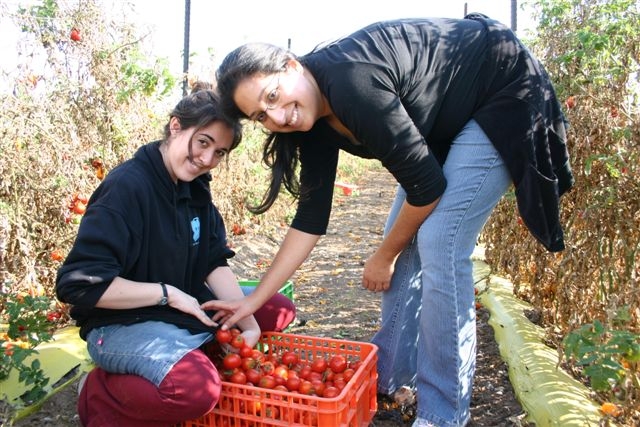



 College students don’t usually need a justifiable reason for studying abroad. And study abroad in Israel? There’s the sun, the beach, the good food, the beautiful people… all very educational, of course. But for those students who are looking for a justifiable reason (at least one they can tell their undergraduate advisors or parents), how about a study abroad program with a conscience?