Home Blog Page 722

Israel's Elections: Platforms on Sustainable Development

5

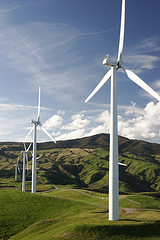
sustainable-buildingIn preparation for Israeli election day, we present a series of posts with a summary of the environmental positions of the parties running for the Knesset on the following topics: Open Areas and BeachesGreen EnergyRadiation and Global WarmingSustainable DevelopmentRecyclingWater, and  Air & Industrial Pollution and Enforcement.

SUSTAINABLE DEVELOPMENT

A Hybrid of Environmentalism and Politics in Online Honda Ad

3

[youtube]http://www.youtube.com/watch?v=IL4y51MzRDA&eurl=http://darrylwolkpolitics.blogspot.com/2008/06/why-i-will-buy-hybridhonda-anti.html&feature=player_embedded[/youtube]

We recently came across this alleged Honda commercial online, which fuses environmental activism with political opinion. It speaks for itself, so take a quick look:

It is unclear and very unlikely that Honda actually sponsored this ad.  It’s more probable that somebody cut and pasted a news clip together with the taglines of another Honda commercial.  Whomever that person is will probably remain anonymous.  It is still an interesting phenomenon, though and we’ll leave it up to you to decide whether the makers of the clip are dangerous carborexic types or legitimate activists of the first degree.

The clip has caused quite some interest in the blogosphere.  Here are some excerpts of the online dialogue that the clip has generated:

Israel's Elections: Platforms on Radiation & Global Warming

1

radiation

In preparation for Israeli election day, we present a series of posts with a summary of the environmental positions of the parties running for the Knesset on the following topics: Open Areas and BeachesGreen EnergyRadiation and Global WarmingSustainable DevelopmentRecyclingWater, and  Air & Industrial Pollution and Enforcement.

RADIATION AND GLOBAL WARMING


Israel's Elections: Platforms on Green Energy

2

green-energyIn preparation for Israeli election day, we present a series of posts with a summary of the environmental positions of the parties running for the Knesset on the following topics: Open Areas and BeachesGreen EnergyRadiation and Global WarmingSustainable DevelopmentRecyclingWater, and  Air & Industrial Pollution and Enforcement.

GREEN ENERGY

Israel Elections – Open Areas & Beaches

0

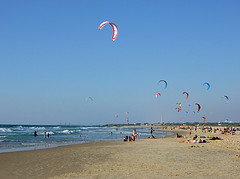
israel-beachIn preparation for Israeli election day, we present a series of posts with a summary of the environmental positions of the parties running for the Knesset on the following topics: Open Areas and BeachesGreen EnergyRadiation and Global WarmingSustainable DevelopmentRecyclingWater, and  Air & Industrial Pollution and Enforcement.

OPEN AREAS AND BEACHES

Environmental Platforms for Israel's Elections

4

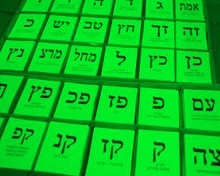
israel-election-slipsThis Monday in Israel, we celebrate Tu Bishvat, the New Year for the Trees.  Traditionally a day for planting trees, in recent years it has become more and more a day for environmental awareness, turning form Israel’s Arbor Day into an Earth Day.

Tu Bishvat is also the birthday of the Knesset, the Israeli Parliament in 1950, and so it seems appropriate that on February 10, the day following that anniversary, is when Israeli citizens go out to select the representatives in our national parliament.

In preparation for Israeli election day, we present a series of posts with a summary of the environmental positions of the parties running for the Knesset on the following topics: Open Areas and BeachesGreen EnergyRadiation and Global WarmingSustainable Development, Recycling, Water, and  Air & Industrial Pollution and Enforcement .

Amulet Gifts Bring Your Loved Ones Local, Handmade Love and Protection

2

Okay boys, let’s go over our Valentine’s Day list.  Organic homemade candy – check.  Potted flower plant – check.  Local handmade jewelry – ?  Don’t tell us you’re still scrambling?  The overly commercialized holiday of love is just around the corner!  Don’t worry, though.  We’ve got a jewelry tip that’s just right for your green, eco-friendly, local-and-handmade-loving sweetheart.

AmuletGifts.com is an online store that is dedicated to offering a selection of unique handmade amulets, talisman, and charm jewelry.  Not only is the jewelry available on their website very unique, but it has a spiritual element as well and as they describe on their own website, “the amulets, talisman and charms presented here are all geared towards a basic wish we all have to live happy, peaceful and safe lives.  These items inspire, possess a unique quality and are believed to fulfill that wish for thousands of years.”

What gift could be better?  (And as an added bonus, they’re featuring some Valentine’s Day sales…)

Does Israel Really Need the INFINITI Luxury Car?

6

infiniti car israel photo
Attention being given by TV and other advertising media regarding a new line of luxury sport vehicles being introduced into Israel makes one wonder if people are really aware of the economic and environmental crises that both Israel and the world are presently in. Luxury cars are nothing new to Israel; and cars like BMW, Mercedes Benz, and even Jaguar have been around for years. But taking everything into account, why do automobile importers want to introduce another high-profile type of car here, when the emphasis should be on promoting smaller and more economical as well as environmentally friendly cars?

Toyota and Nissan’s top of the line LEXUS and INFINITI models have been sold in most major Western countries for years, but were not present in Israel, until recently when Toyota’s LEXUS line finally began to began to be imported into the country under its own brand name. Now Nissan, Japan’s number two automobile manufacturer is bringing in its luxury models to satisfy those wealthy Israelis who want to be the first in their neighborhood to own one.

Kibbeh Recipe Recipe

18

kibbecooked

Kibbeh is one of the stalwarts of Levantine cooking, and comes in as many versions as there are towns or people who make it.

Loosely, kibbeh refers to a mix of burghul (bulgur), ground lamb, and spices. It can be served raw (kibbeh nayye), spread flat and baked (kibbeh bis-sayniyyeh), or formed into small ovals and fried (kibbeh mekliyeh). Both the baked and fried varieties consist of two components: the bulgur and meat mixture, which forms an outer shell, and an inner layer of stuffing, comprised of more ground meat, fried onions, and various flavourings.

What on earth, you may be wondering, might a recipe calling for this much meat be doing here? Well, it’s actually less than you’d think, for starters – 300 grams for 4 people. And while we’re big advocates of cutting back on resource-intensive meat consumption, we’re not convinced that it needs to be cut out entirely.

Echoing the sentiments of the fabulous Mark Bittman, who we were recently lucky enough to hear in person, “It would be better if our animal consumption went down to 10%, but that last 10% doesn’t make much difference.” Once in a while a bit of meat is just fine, and there are few better ways to indulge than this.

As with all the classic recipes we’ve been featuring lately, this one is meant as an introduction – a starting point to serve as the basis for experimentation. Play around with spice combinations, add in a bit of pomegranate molasses, or toss in some chopped herbs if you’re so inclined.

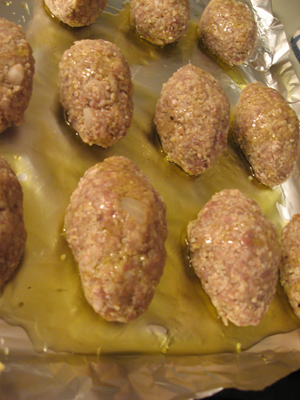
We’re going in for the most familiar version of kibbeh – the stuffed, oval-shaped meatballs most often found on restaurant menus. Our one major change is to broil the kibbeh rather than deep-fry it. It won’t be quite the same, admittedly, as the more decadent original, but deep-frying involves more waste than we’re really comfortable with. If you crank your oven up high enough, and rub the kibbeh with a bit of oil, you’ll still get the essential crispy crust.

Kibbeh Mekliyeh

kibberawFor the kibbeh (outer shell):

  • 1/2 cup fine bulgur
  • 225 grams ground lamb
  • 1 1/2 medium onions, coarsely chopped
  • 1 tsp salt
  • 1/2 tsp ground allspice
  • 1/2 tsp cumin
  • pinch of cinnamon
  • pinch of cayenne pepper
  • 2 tbsp olive oil

For the filling:

  • 1 tsp olive oil
  • 2 tbsp pine nuts
  • half an onion, minced
  • 75 grams ground lamb
  • 1 tsp sumac
  • 1/2 tsp ground allspice
  • pinch of cumin
  • pinch of cinnamon
  • salt and pepper to taste
    1. First off, prepare the bulgur: rinse it in several changes of water, then leave to soak in fresh water for 20 minutes.
    2. Meanwhile, make the filling: Put a small frying pan over medium heat to warm, then toast the pine nuts in the dry pan until golden and fragrant. Transfer pine nuts to a small mixing bowl, return pan to the stove and heat the olive oil. Gently sauté the onion until softened, then add the lamb and continue sautéing until the meat is just cooked through. Pour the meat and onions into the bowl with the pine nuts, then add in the remaining ingredients and stir to blend. Taste, adjust seasonings as necessary, and set aside.
    3. Drain the bulgur through a fine mesh sieve, then get out as much excess water as you can by pressing down on it or by squeezing it in handfuls.
    4. To make the outer shell, pulse the onions in a food processor (this is essential to the texture – it’s nigh impossible to get it right by hand) until finely chopped. Add in the spices and pulse again to distribute. Pour the onions into a large mixing bowl, then add in the bulgur and ground lamb. Knead by hand until the mixture comes together and all the ingredients are evenly distributed. Refrigerate for about 20 minutes to let the mixture chill through.
    5. Preheat your broiler to 200°C, and generously oil a cookie sheet.
    6. To form the kibbeh, take a handful of the outer shell and press between your hands to get it to cohere, turning it over a few times to make an oval shape. (It’s a bit like packing a snowball, if that’s an experience you’ve ever had.) Gently press your index finger in to create a pocket for the filling, and then spoon in a small amount of the fried stuffing. Pinch the top closed to seal, and turn a couple more times in your hand to ensure the kibbeh will hold together. Lay on the greased cookie sheet.

kibbecomponents

Once all the kibbeh are formed, drizzle them with the olive oil and turn gently to coat. Broil until crisp and browned on top, about 8 minutes, then turn and broil another 6 minutes or so.

To serve, drizzle kibbeh with either a yogurt dipping sauce (stir a pinch of salt and some finely chopped cilantro, parsley or mint into plain yogurt) or a tehini dipping sauce (mix some lemon juice, salt, and a clove of minced garlic into a bowl of well-stirred tehini.

'Acme Climate Action' – The Trainspotting of Environmental Action Books

0

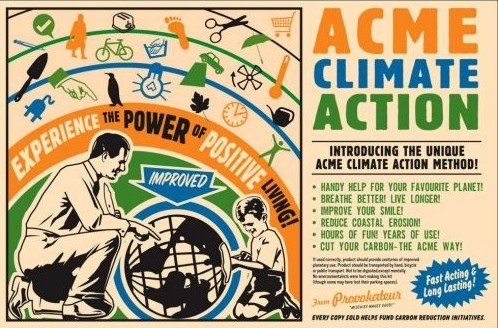
acme-climate-action

“The Old Testament tells the story of a seriously miffed God flooding the world, and Noah building a wooden monohull to save each species. This time around it won’t be an act of God but a pickle of our own making, and the planet is the only ark we have. It’s time to find that hammer, fetch those blueprints, and get busy.”

This is an environmental book with a difference. Rather than pages and pages of written text interspersed with depressing images, here is the ultimate practical action kit. ‘Acme Climate Action’ isn’t actually a book in the way we know books, but a rip apart able, physical experience of an action pack: you should peel off the stickers (8 pages of them), pull out the postcards and mail them to everyone you know (all 10 of them), put the 2 posters up (at home and at work), fold and display the handy climate change ‘niggler’ cards (so-called as to niggle you into action when you see them displayed), do the home carbon audit, send off the antagonistic ‘letter to murky politicians’ (particularly as we here in Israel are in election week), make the notebook, wrap the bottle, and carry the climate change trivia cards!

Phew…I’m exhausted just looking through the pack, and there are at least 46 activities to do in there! (as well as 8 handcrafted manifesto commitments…)

Eco-Rabbi: Parshat Beshalach – Water of Life

2

water

Each week Orthodox Jews read one segment of the Five Books of Moses so that they can complete the entire Five Books within the course of a year. In last week’s Eco-Rabbi post we discussed the power of symbols. This week continues with discussing of water and life.

Pharaoh finally agrees to let the Jewish people leave from Egypt. However, after six days of not having his slaves anymore, Pharaoh had a change of heart. He sent out his army and chased the Jews to the Reed Sea. With nowhere to go, the Jewish people, literally between a rock and a hard place, turn to God.

The Bible describes how over night a great wind blew and created a dry pathway through the sea. “And the waters were a great wall surrounding them on their left and on their right.” But when they were all through, and the Egyptians followed, the walls came tumbling down and destroyed the strongest ancient empire in one fell swoop.

Growing An African Garden Market in Niger

1

african gardening

The continent of Africa evokes emotion: on one hand there is the impressive landscape, African tribal cultures attached to their roots, and the massive land mammals that still roam wild.

But there is another side of Africa, which is much less romantic, brought to the world’s attention through Live Aid and Sally Struthers’ commercials: its people are some of the poorest on the planet, and lack even the basics, such as water, to survive.
niger-agriculture-pasernak-dov

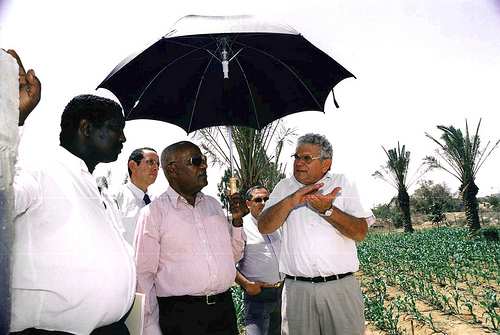
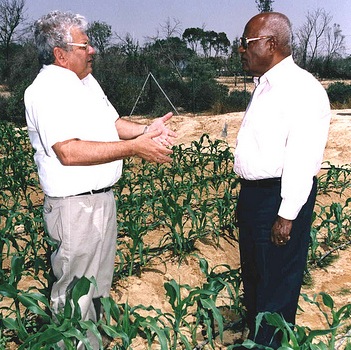
While not all of Africa is dry, one of the biggest battles for the continent is combating desertification and poverty, two issues that go hand in hand. Looking the problem straight in the eye and providing practical solutions to people in Africa today is Israeli drip irrigation pioneer Prof. Dov Pasternak.

Originally from Ben Gurion University in Israel, Pasternak has transplanted his life in Israel to Niger. Working for IPALAC (the International Program for Arid Land Crops), an Israeli initiative designed to share relevant aspects of the Israeli experience in combating desertification, Pasternak has developed a pilot project in Africa which uses his expertise on arid land agriculture and the Israeli invention — the low pressure drip irrigation systems (LPDI) — to help farmers grow crops.
niger-irrigation-pasternak

In Africa, Pasternak has also joined the International Crops Research Institute for the Semi-Arid Tropics (ICRISAT), where he leads an international program.

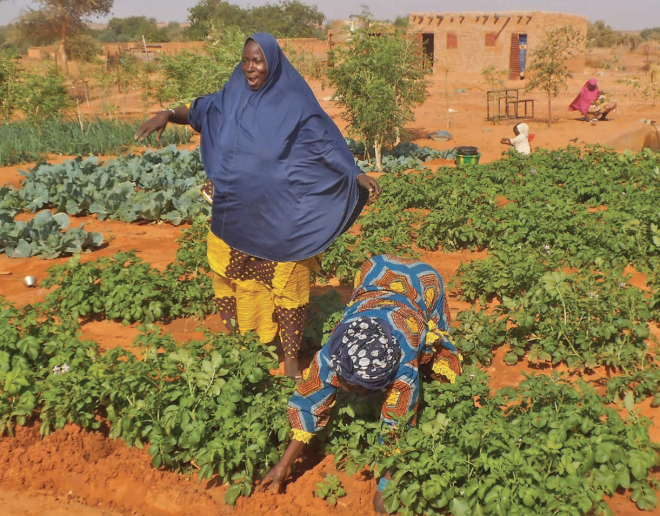
“I am showing that an African family can make a relatively good living from a 500 square meter drip irrigated vegetable field,” he says.

From irrigation to solar greenhouses

Among Pasternak’s achievements, he has pioneered the practice of using saline water for irrigation, has developed novel “solar” greenhouses and systems that produce crops without chemical sprays, and co-developed a system that allows farmers to supervise agricultural operations remotely. His work follows a theme: research and systems that help farmers reclaim degraded land.

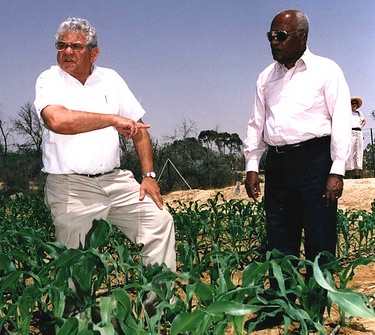
“UNESCO was the first donor for IPALAC. They told us to concentrate in Africa. Which we did,” he says. “After a while, the work in Africa became so intensive that I decided to resign my position as the director of the Institute of Agriculture and Applied Biology at Ben Gurion University and move to Africa to be able to better conduct and supervise IPALAC activities.

Since 2001, Pasternak is working as a principal scientist in an international agriculture research institute called ICRISAT. “This institute has a research station in Niger where I am working. I started [it] by myself,” he says. “Today the IPALAC group has eight scientists; some full time other part time. I am heading this group.”
niger-agriculture-pasternak

His work has made such an impact in Africa that the Israel Ministry of Foreign Affairs international development organization — MASHAV — has recently appointed Pasternak as the Israeli representative for Western Africa. Much of his time will be focusing on the new MASHAV appointment.

Farmers of the future

“This new ‘division of labor’ will allow me to implement on a large scale the crops, technologies and systems that I have developed,” Pasternak says.

For example: Pasternak has created a product called the African Market Garden, which is a low-pressure drip irrigation system that brings to the poor farmers of Africa all the advantages of drip irrigation at a fraction of the cost. The team has installed about 2,500 units in eight African countries.

Another project is based on an ingenious land use combining trees, annual crops and other “service providing plants.” Pasternak explains the concept: “I am also introducing fruit trees from all over the world [through IPALAC] and selecting the most promising ones. We have now in our fruit trees collection about 150 varieties. I am continuously selecting better vegetable varieties for the region and better varieties of field crops such as Roselle, cowpeas etc.”

In addition to the technologies and research Pasternak is giving to Africa, he is currently developing a new education program for village primary schools that he calls ‘Farmers of the Future.’ This way, the future generations will not only have technologies, they will know how to use them too.

Update, 2017, Dov receives lifetime achievement award

This year (2017) Dov was honored with a Lifetime Achievement Award from the Society for International Development, a global association of professionals dedicated to sustainable economic, social and political development.  Dov received the award for his outstanding contributions to agriculture in Africa.

The term “outstanding contributions” can be tossed around pretty loosely.   In Dov’s case his contributions are real and truly impressive.  Here’s a summary:

He identified and helped commercialize dozens of new varieties of fruit trees and vegetables ideal for Africa’s soil and climate conditions, then trained thousands of farmers to grow them.  Many of these crops are highly nutritious, like:

  • Moringa:  considered by many to be the most nutritious vegetable in the world and spreading rapidly throughout Africa.
  • Cowpea:  Niger’s second most important crop and a rich source of protein for humans and animal feed for livestock
  • Introduced “Pomme du Sahel” (apple of the Sahel) in West Africa.  The fruit is now grown on over 20,000 acres in Niger, Burkina Faso, Mali and Senegal and produces over 100 million pounds of nutritious fruit a year.
  • Developed technologies to grow crops on infertile land.  He named the approach BDL (Bio-reclamation of Degraded Land) and introduced it to 30,000 families in Niger and Senegal.
  • Reverse engineered drip irrigation (which he helped develop in Israel 30 years before) for rural farmers in Africa. Paired with training in production of high value vegetables, he introduced it as the “Africa Market Garden” to farmers in Niger, Benin, Burkina Faso, Mali and Senegal.

Finally, Dov created Farmers of the Future.  Dov describes FOF as the pinnacle of his career.  By teaching women and children to approach farming as a business, Farmers of the Future has the potential to lift millions out of poverty.  At a time when African farmers are struggling to survive and thousands are migrating in search of better opportunities, Farmers of the Future enables people to survive and prosper (at least in relative terms) without leaving home.  It’s a powerful concept and the need for it grows daily.

Syria Suffers Water Shortage – More News on Middle Eastern Drought

5

water middle east drought photoYesterday Daniel wrote a sobering report on the increasingly serious drought conditions throughout the entire region.  Israel, Jordan, the Palestinian Territories, Lebanon and Iraq have all reported water shortages that are sure to affect both the environment and international security.

Sadly, Syria can also join this unfortunately long list.

Syria has been suffering from a drought for the past five years.   Like other Middle Eastern countries, Syria’s demand for water in the industrial and agricultural sectors, which comprise 90 percent of its entire water consumption, has increased over the past few years.  The severe lack of rain this winter exacerbates the problem.

Damascus already felt the impacts of the drought this summer, when the taps ran dry in many neighborhoods and residents of the capital city were forced to buy water on the black market.

National Greentech Exhibition in Israel Coming Up This February

4

green tech israel logoAs we’ve been telling you on Green Prophet, Israel is a hot spot of clean and green technologies.  But you don’t have to take our word for it.  In a couple weeks you can see for yourself.

Thanks to the first national professional exhibition of green and smart technologies for structures, devices, and factories to be held in Tel Aviv from February 17-19, many of these innovative eco solutions will be concentrated and on view in one place.

Various Israeli companies that develop these technologies will be exhibiting their products and inventions.  Exhibited technologies will include alternative energy systems, eco-friendly construction materials, green cleaning materials, environmentally friendly waste management, wind turbines, lead free technologies, water preservation systems, air filtration, green transportation, and more.

Rainless Winter Worsens Middle-East Strife, Garden of Eden Hardest Hit

2

iraq marsh drought photo

What’s left of Iraq’s “Garden of Eden” Marshes

The Middle Eastern winter has never been more pleasant, bringing us day after day of perfect blue skies, comfortable temperatures, light winds and crisp, clear views. 

“What more could you ask for?” must think the residents of Western Europe and North America, who are being pounded by the flooding, snow and ice storms of General Winter.  Well, some real winter would be welcome here, especially some much needed rain – this January in Israel was the driest and one of the hottest in 60 years, since the state was founded. 

With less than 2 months of winter left, the region has received only 6% – 50% of the annual average rainfall, with the desert areas getting 30% or less.

Global climate change has delayed winter and reduced precipitation. At the same time, regional weather patterns with depressions over Europe have kept rainfall away from the Eastern Mediterranean region.  Drought conditions across the Middle East have been exacerbated by increasing water consumption for domestic, industrial and agricultural uses, and the damming (or should say damning) of water sources, and have led to a shortage of water across the region.  And where there are water shortages, disagreements, conflicts and security problems are never far behind.  

Iraq’s ancient marshes, once vast expanses of reeds that were home to fish, water buffalo and migratory birds, have been reduced to stalks, stubs and caked mud.  Reuters Mohammed Abbas reports that the marshes, thought to be the biblical Garden of Eden, covered 9,000 square km in the 1970s, but had shrunk to just 760 square km by 2002.