Now Globes reports, that the $800 billion US stimulus package launched by President Barack Obama will affect both domestic and foreign industries.
Including funds for renewable energy projects, the stimulus plan is good news for Israeli venture capital and technology companies in this field. It’s a dramatic change, the newspaper reports, because the US renewable energy market hitherto was quite difficult to penetrate for foreign entrepreneurs, compared with, for example, the Spanish market.
Last week, Israeli company Netafim, a pioneer in drip irrigation technology, signed a $22 million deal to supply irrigation for a large-scale sugar cane project in Peru.
In conjunction with Maple Energy, a Peruvian company that produces energy for industrial clients, the project will cultivate 20,000 acres of sugar cane for the creation of ethanol, an alternative energy fuel.
This project concerns me for a few reasons.
Drip irrigation, the water-saving technology that Netafim and other Israeli companies pioneered, increases water efficiency, but not necessarily sustainability. Indeed, a study that came out in November found that, contrary to its reputation, drip irrigation actually increases the total amount of water consumed. In an era when countries all over the world are facing worsening drought conditions, I’m not sure it’s prudent to encourage such large-scale, thirsty agricultural projects, especially in developing nations (like Peru) that are more economically and environmentally vulnerable.
Iran Khodro, a Peugeot partner for producing its line of 405 and 206D sedans, announced the production of what it claims is the world’s most powerful natural gas engine at 150 hp. The engine runs on compressed natural gas (CNG), and is supposed to comply with the EURO 4 emission standards. It will first be installed in the Samand Soren ELX, a 1700cc turbocharged gasoline bi-fuel four-door sedan, shown above at an auto show under supervision of the Ayatollah (much less dramatic photo here).
According to autoevolution.com, Iranians have converted over a quarter million cars to run on Compressed Natural Gas until now. In Tehran, one of the most polluted cities in the world, all buses run on CNG, while almost all of the city’s taxi drivers have been forced into converting their cars. CNG vehicles are far less polluting than gasoline or diesel cars, because CNG is a much simpler fuel and gives higher energy output for the same carbon content.
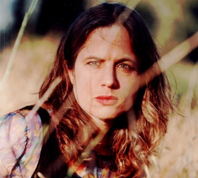
Shai Zakai: Self portrait 4X2 m. photograph on canvas purchased by the Ministry of Environment.
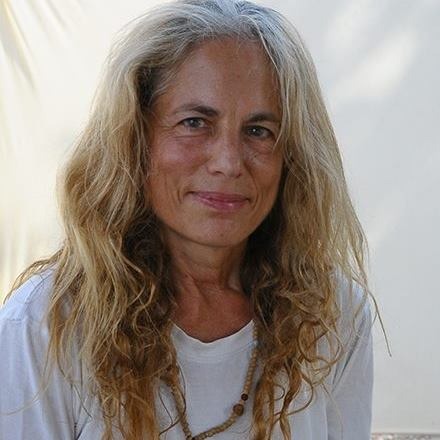
Since nature can’t speak for itself, Israeli environment artist Shai Zakai has appointed herself as the human moderator. For more than a decade she’s been working as an ecological artist, to communicate and record humankind’s impact on our fragile world.
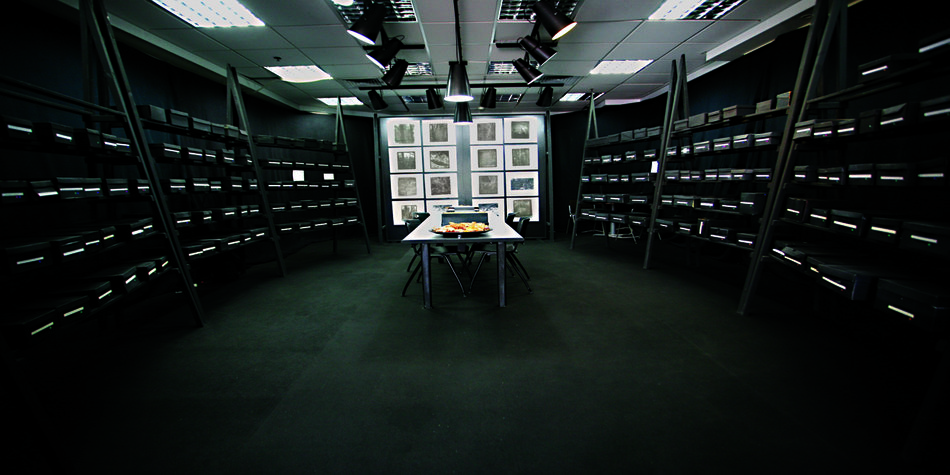
Her most recent installation, Forest Tunes-The Library: A Visual Alarm, travelled to Philadelphia last October, as Zakai took part in an international exhibition with 15 other artists, each with a unique specialty that leans in the environment’s favor.
Called “Global Warming at the Icebox,” the event intended to showcase hot artists who are working in the context of climate change. Devoting more than a decade to the subject — and even founding her own center and national forum — Zakai as a photographer, poet, writer, sculptor, installation artist and educator, was a natural choice.
Her contribution, Forest Tunes, is a catalog of Zakai’s journey to 19 different countries, where she’s collected leaves, seeds, stories, images and surprises. There are 167 different little black boxes, she says, for the curious to explore.
Despite her large body of work, most of all Zakai sees herself as a social worker, and a steward for the environment.
The journey began when Zakai first moved to the Ellah Valley, Israel’s last stretch of natural greenery wedged between Jerusalem and Tel Aviv. Meaning Valley of the Goddess from the Hebrew, she says, Ellah Valley is home to great biblical stories, such as King David and Goliath.
Revered for its rolling hills, natural greenery and wildlife, Zakai saw environmental tragedies unfold left and right: “When we moved there, I saw a pristine area that is so amazing and felt like wilderness. Then I saw the lack of awareness of people here,” she says.
People were throwing construction waste into the forest and neglecting the land, calling on Zakai to create a new discipline in Israel for ecological art. “There is a difference between environmental and ecological art,” she points out.
Ecological versus environmental art
“Ecological art investigates and responds to ecological issues through various media and the power and beauty of it, and artists can come from all kinds of media: Poets, photographers or sculptors. Whereas, environmental art uses the environment as a background,” she says. Sometimes this approach is in harmony with sound environmental practices, but sometimes it actually harms the environment more, she explains.
Usually ecological artists have a background in ecology, Zakai says, and react to the environmental damage they are investigating: “Some see themselves as social workers on behalf of the environment. It’s much different than doing their own art in the studio.”
Founding the Israel Forum for Ecological Art, Zakai also connects to like-minded groups around the world. She sees ecological art as a language that crosses borders, to stimulate and instill wonder in the observer.
While people are normally presented scary and threatening information about global warming, Zakai hopes to educate in a softer way: “The art in my multi-media installation is inviting people to a experience… they enter a different world – a feature film they are invited to be in. If one digs deep enough, they will come out with a new curiosity for environmental issues.”
Artist holding conferences in the forest
When she’s not on the road, or creating her art, Zakai is leading workshops in the artist community Lion Srigim where she lives, inside the studio and outside. Her conference room, she says, is in a special place in the forest.
Americans met this remarkable woman when she presented her work: “It’s a kind of mosaic of the world’s indifference towards the world’s damages inflicted daily,” she says.
Zakai also showed 20 photographs taken in one forest over 14 years. She’s attempting to “daylight,” she says, the hidden knowledge that no one sees.
The olive tree in this photo is reputed to be 2000 years old – give or take a century or so.
It’s growing in a grove just above the village of Deir Hanna, in the North of Israel, one of five there that have attained record-breaking ages.
I was a part of a group of ecology-minded people from Gezer, my kibbutz, and some friends who visited these trees on a trip to the nearby city of Sakhnin last summer.
We went there to see new and traditional methods of building and water treatment. After we all stuffed ourselves silly on hummus and salads in downtown Sakhnin, our guide and friend Jan, a permaculture instructor and writer, led us up a winding hillside road to see these forgotten leafy treasures.
Touching any living thing that’s so inconceivably old is awe-inspiring. But unlike the other ancient trees I’ve walked around – giant old-growth redwoods, whose looming trunks John Muir aptly described as “cathedrals,” reminding you of your petty insignificance – these trees connect one directly to human history. They’re recognizably agriculture, planted by humans in familiar patterns.
Rather than growing tall and stately, their trunks have spread outward, becoming ever more twisted and gnarled with time – sometimes even splitting into separate trunks – as though they’re hunkering down to withstand the ravages of eons.
Some people will drink until there is no tomorrow (until you have no idea of how drunk you really are).
A lot of people forget that there are to-do mitzvahs associated with the Purim holiday. Green Prophet decided to put together a small resource guide to give you some greener ideas for your Purim celebrations.
Let’s start with the basic mitzvahs.
They are:
1. The Reading of the Megillah (Mikra Megillah)
2. The Festive Purim Meal (Seudat Purim)
3. Sending Gifts (Mishloach Manot)
4. Gifts to the poor (Matanot l’Evyonim)
Megillah Reading
It’s permitted to work and drive on Purim, but how about you go to your friend’s house or synagogue by foot to read the Megillah? There is also the bus.
Also, we suggest if you are going to buy your own Book of Esther, consider buying one at a second-hand shop. I have one from the early 1900s, and it is simply a pleasure to read, because it looks and feels like it is from an ancient time, like the story of Queen Esther.
Festive Meal
Organic and fair trade food is a plenty over here in Israel. Consider a pot luck with some of your friends, or vegewarianism, proposed by Green Prophet’s Daniella. And while plastic dishes seem like the way too convenient way to go, please try and use real dishes that you can wash.
Getting Drunk:
While the getting drunk aspect of Purim is a custom and not obligatory, if you’re going to drink, you might as well do it in a sustainable manner. How about buying beer from the Dancing Camel brewery in Tel Aviv?
How about organic wine? Because after all, wine is supposed to be best.
Sending Gifts
Reusable baskets, but not the cheap plastic kind that everybody throws out, are a good vehicle for sending your gifts, traditionally ready-to-eat foodstuffs. Now is your chance to practice baking some of the recipes that Hamutal has provided for us. (It’s recommended to give 2 food items to at least 2 different people.)
Gifts to the poor:
This basic mitzvah is sustainable by design. You can give money to a local food charity, to your synagogue or directly to a person in need. It’s advised to give to 2 or more people before Purim.
A couple of weeks ago I was in New Orleans with my parents at the annual craziness known as Fat Tuesday during Mardi Gras. Besides the excess of everything I saw there including waste, and the nasty black eye I sustained from a large set of beads being thrown on my head off a Bourbon Street balcony (my friend warned that the beads always come with strings attached), I saw sections of the city that have not yet been rebuilt since Hurricane Katrina.
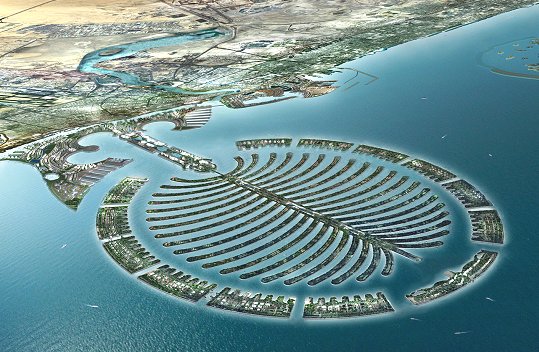
Like New Orleans which is built below sea level, the Dutch have been fighting nature for centuries, as have the Venetians. According to a new study by an Indian scientist, the mega-urban development projects (like the one pictured above) being established in the Middle East (United Arab Emirates (UAE), Qatar and Bahrain) are just setting people up to be victims of natural disasters. Things will look even worse once the effects of global warming become more pronounced, warn experts.
Apparently no environmental assessment of these developed regions was done before towns and cities were constructed in these unusual settings.
Artificial islands and offshore luxury townships coming up in the Persian Gulf are potentially vulnerable to natural hazards like earthquakes and tsunamis, cautions Arun Kumar, a professor at King Fahd University of Petroleum and Minerals in Dhahran, Saudi Arabia.
Although they are futuristic and novel, “there are serious issues of long-term sustainability of these townships,” he says in The Hindu.
A new book titled, ‘Pearl in the Gulf’ was recently published by the oil and gas production company The Abu Dhabi Marine Operating Company (ADMA-OPCO). It features comprehensive data and information on the United Arab Emirates traditional marine lifestyle prior to the discovery of oil, thus shedding extensive light on the inseparability of the UAE people and sea life.
It’s an interesting take on how serious environmental polluters are trying to clean up their act in the public eye.
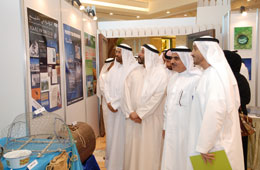
The book, produced by the public relations division of ADMA-OPCO, was launched on Wednesday March 4th during the opening ceremony of an environment exhibition organised by the company at its headquarters to mark the 12th UAE National Environment Day.
Covering almost all aspects of marine life in the UAE, the book comprises 11 chapters with Chapter 1 providing a general introduction to marine life.
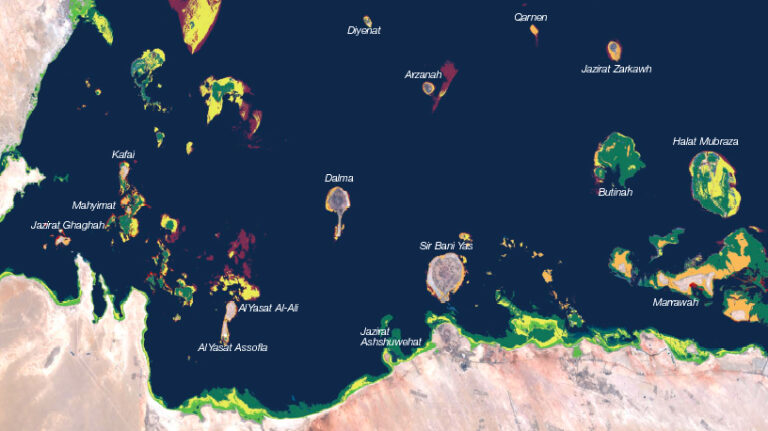
(Snapshot of the WWF coral map of Qatar and UAE coral reefs).
With worrying reports of coral death globally, with global warming to blame, it’s heartening to hear that Arab nations, who are more known for causing global warming, are now working to protect coral reefs. Mapping the reefs to know where to install underwater natural gas pipelines is one of the reasons for their concern:
According to a Qatar newspaper, The Peninsula, Qatar’s Ministry of the Environment and the Environment Agency of Abu Dhabi have jointly installed 16 permanent coral monitoring stations in their marine waters. Four are in Qatar in the regions of Halul, Al Ghabi and Halt Dalma.
Reports say that the first-ever mapping of the coral reef and associated habitats in the Qatari-UAE marine waters showed that the Persian Gulf reefs suffered the strongest disturbances in 1996, 1998 and 2002.
Each week Orthodox Jews read one segment of the Five Books of Moses so that they can complete the entire Five Books within the course of a year. In last week’s Eco-Rabbi post I discussed how to create room for God to live within us. This week I discuss giving thanks to God for the energy he has given us.
This week’s segment opens with God commanding Moshe on how to prepare the ner tamid for the tabernacle. The ner tamid is an eternal flame, that would burn in the menorah. What is the purpose of an eternal flame?
Fire distinguished man from animal. Fire made meat possible to eat without getting parasites. Without fire we could not make complicated tools. Many of our building techniques rely on fire. With fire to keep man warm, life expectancy grew and many medical procedures developed. Fire led to longer days with the ability to study by the candlelight. Knowledge grew and of course technology.
Fire also represents man’s soul. It is connected by a wisp to matter, but cannot be held. It barely holds onto reality, and reaches up to the heavens. Fire warms us, like our souls, but if you try to touch it it can burn you. And if you hold onto it too tightly, it goes out. With a single breath it goes out, yet it needs air to continue. Man’s elusive soul mirrors the flame.
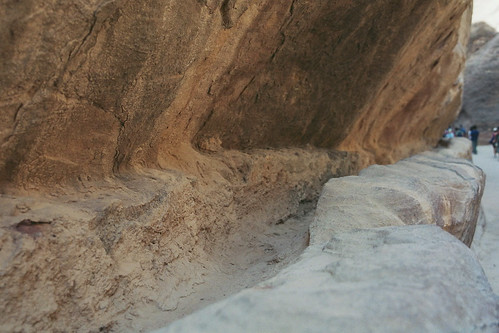
An aquaduct in Petra – A Jordanian water conveyance system that is much less controversial!
A major study published last week found levels of radioactive isotopes in Jordan’s Disi aquifer that far exceed international drinking water standards.The study, which was conducted by a team of Israeli, Palestinian, and Jordanian scientists and led by Duke University’s Dr. Avner Vengosh, has stirred up loads of controversy in Jordan.
Some officials questioned the credibility of the study based on its timing.The report was released just weeks before the final financial closure of the Disi Water Conveyance Project, a $600 million dollar water project that will channel drinking water from the southern Disi aquifer to Amman to help alleviate acute water shortages.
Meanwhile, authorities from multiple ministries and committees have scrambled to insist Jordanian drinking water is acceptable for human consumption.Water and Irrigation Minister Raed Abu Saud told reporters the “drinking water pumped to Jordanians…is 100 percent safe.”
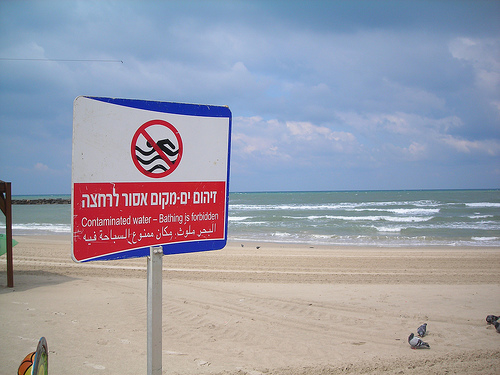
The health of Tel Aviv and Herzliya residents should not be ignored:
For over two weeks the beaches of Tel Aviv and Herzliya have been polluted by sewage from Or-Yehuda. For over a week Zalul Environmental Association has been waiting for an answer from the Ministry of the Environment about their failure to enforce the law.
Zalul asks Green Prophet readers, does this seem right?
I love to cook with my microwave. Sure, it’s possible to manage without it, and there are better ways to defrost food.
However, there are environmentally sound reasons for preferring it to conventional cooking: It only heats the moisture in food, so more energy is retained. Microwave cooking preserves nutrients in vegetables. And since many microwave utensils can go straight to the table and they scorch less, less water and detergent are needed for washing up.
Because microwaves cook food using electromagnetic radiation, many people are afraid to use them. The FDA discusses the issue here. I’m not here to convince anyone to buy an electrical appliance they don’t feel comfortable with.
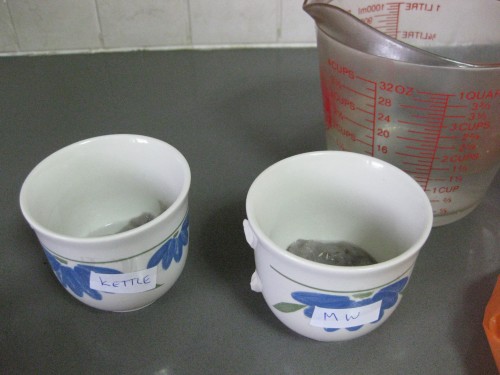
But when a post on Green Prophet made questionable claims about microwaved foods, I spoke up in the comments and offered to debunk the claim that seeds watered with microwave-boiled water won’t sprout.
Snow is a serious matter for Lebanon. So serious, in fact, that the white part of the Lebanese flag represents the country’s snowy mountains. Snow also plays an important economic role, since Lebanon’s six ski resorts draw tourists from nearby countries. Most significant of all, however, is the fact that the mountain soil absorbs the slowly melting snow, replenishing Lebanon’s mountain aquifers. Especially considering the highly alarming drought conditions throughout the region, snow is “crucial for the survival of Lebanese.”
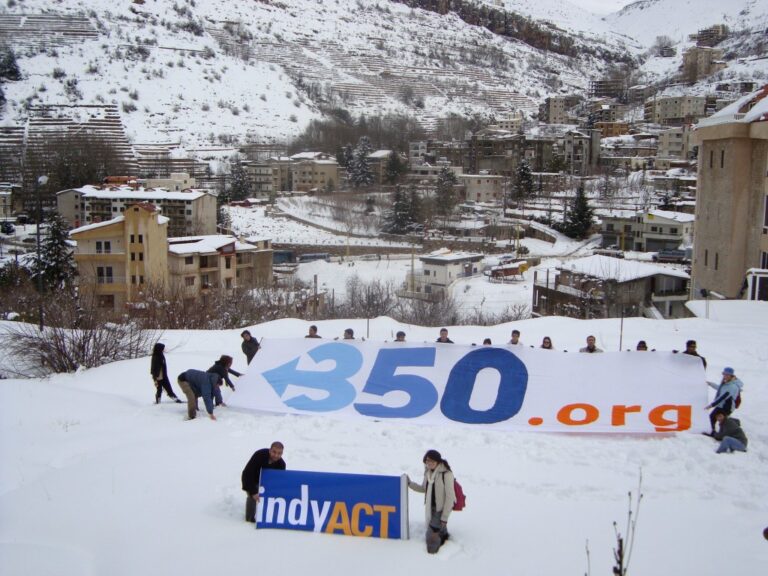
So it’s not surprising that over 95 activists gathered in Faraya, Lebanon on Sunday to take a stand against climate change (although it is certainly exciting!). Participants, organized by the Leage of Independent Activists (IndyACT), drew a symbolic line across the snow to demand goverments “draw the line” on snow cover loss, a major consequence of climate change.
In an official statement issued yesterday, Executive Director of IndyACT and Arab Climate Alliance coordinator Wael Hmaidan said, “If we do not take climate change seriously enough, we will reach a point where we will need to remove the white color from our flag, and start importing water for our survival.”
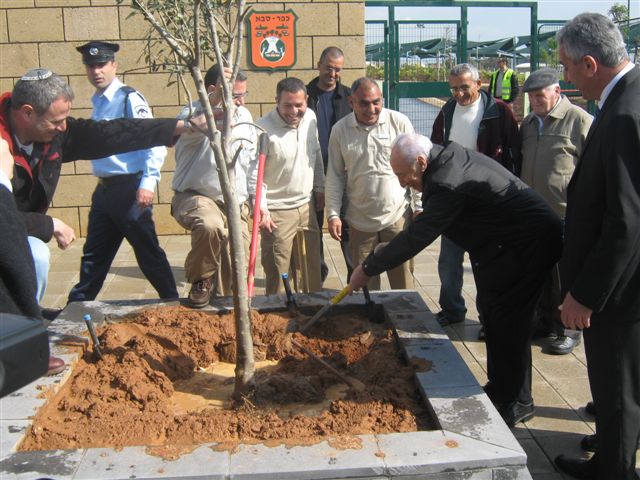
Somewhere between juggling appointments with potential Prime Ministers in-waiting, Israeli President Shimon Peres (pictured with shovel) found time to get his hands dirty in Kfar Saba recently, which has been awarded the title of Israel’s first “green city.”
During the visit to the town 15km north east of Tel Aviv, Peres received a gift himself, a home composter to recycle organic waste at the President’s official residence in Jerusalem.

 If you’re a regular reader of Green Prophet, you’ll already know that the US and Israel have forged ties to co-develop renewable energy products. And that top US energy leaders were in Israel a few weeks ago.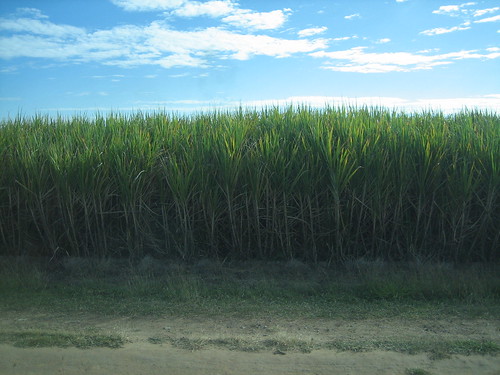


 Honda Civic GX and Mercedes-Benz E 200 NGT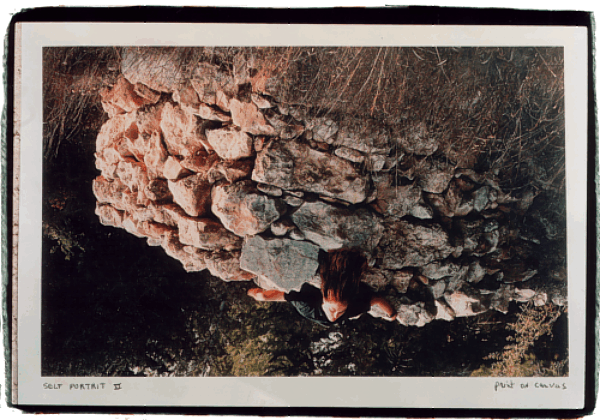
 The journey began when Zakai first moved to the Ellah Valley, Israel’s last stretch of natural greenery wedged between Jerusalem and Tel Aviv. Meaning Valley of the Goddess from the Hebrew, she says, Ellah Valley is home to great biblical stories, such as King David and Goliath.

 The olive tree in this photo is reputed to be 2000 years old – give or take a century or so.