“In the midst of uncertain time, renewable energy remains consistent and steadfast in its expansion,” said Francesco La Camera, IRENA’s Director-General. “A more decentralised energy system, with a growing share of renewables and more market players, is structurally more resilient.”
Health insurance is a regulated financial product. Insurers operate under binding contracts, overseen by state insurance commissioners, that legally obligate them to pay claims meeting policy terms. Policyholders who believe a covered claim was wrongfully denied have legal recourse through state regulatory channels.
The New Zealand Merino Company, now rebranded as Zentera, has quietly removed the phrase “world’s leading ethical wool brand” from its website, a notable change that comes after a disturbing investigation by PETA Asia-Pacific into the company’s ZQ-certified wool supply chain, PETA reports to Green Prophet.
Somehow vegetables with short seasons excite the imagination and appetite more sharply than produce that’s available all year around. Good Middle Eastern cooks have many recipes for delicate fava beans, and this turmeric-fragrant soup is one.
“In the midst of uncertain time, renewable energy remains consistent and steadfast in its expansion,” said Francesco La Camera, IRENA’s Director-General. “A more decentralised energy system, with a growing share of renewables and more market players, is structurally more resilient.”
Health insurance is a regulated financial product. Insurers operate under binding contracts, overseen by state insurance commissioners, that legally obligate them to pay claims meeting policy terms. Policyholders who believe a covered claim was wrongfully denied have legal recourse through state regulatory channels.
The New Zealand Merino Company, now rebranded as Zentera, has quietly removed the phrase “world’s leading ethical wool brand” from its website, a notable change that comes after a disturbing investigation by PETA Asia-Pacific into the company’s ZQ-certified wool supply chain, PETA reports to Green Prophet.
Somehow vegetables with short seasons excite the imagination and appetite more sharply than produce that’s available all year around. Good Middle Eastern cooks have many recipes for delicate fava beans, and this turmeric-fragrant soup is one.
“In the midst of uncertain time, renewable energy remains consistent and steadfast in its expansion,” said Francesco La Camera, IRENA’s Director-General. “A more decentralised energy system, with a growing share of renewables and more market players, is structurally more resilient.”
Health insurance is a regulated financial product. Insurers operate under binding contracts, overseen by state insurance commissioners, that legally obligate them to pay claims meeting policy terms. Policyholders who believe a covered claim was wrongfully denied have legal recourse through state regulatory channels.
The New Zealand Merino Company, now rebranded as Zentera, has quietly removed the phrase “world’s leading ethical wool brand” from its website, a notable change that comes after a disturbing investigation by PETA Asia-Pacific into the company’s ZQ-certified wool supply chain, PETA reports to Green Prophet.
Somehow vegetables with short seasons excite the imagination and appetite more sharply than produce that’s available all year around. Good Middle Eastern cooks have many recipes for delicate fava beans, and this turmeric-fragrant soup is one.
“In the midst of uncertain time, renewable energy remains consistent and steadfast in its expansion,” said Francesco La Camera, IRENA’s Director-General. “A more decentralised energy system, with a growing share of renewables and more market players, is structurally more resilient.”
Health insurance is a regulated financial product. Insurers operate under binding contracts, overseen by state insurance commissioners, that legally obligate them to pay claims meeting policy terms. Policyholders who believe a covered claim was wrongfully denied have legal recourse through state regulatory channels.
The New Zealand Merino Company, now rebranded as Zentera, has quietly removed the phrase “world’s leading ethical wool brand” from its website, a notable change that comes after a disturbing investigation by PETA Asia-Pacific into the company’s ZQ-certified wool supply chain, PETA reports to Green Prophet.
Somehow vegetables with short seasons excite the imagination and appetite more sharply than produce that’s available all year around. Good Middle Eastern cooks have many recipes for delicate fava beans, and this turmeric-fragrant soup is one.
“In the midst of uncertain time, renewable energy remains consistent and steadfast in its expansion,” said Francesco La Camera, IRENA’s Director-General. “A more decentralised energy system, with a growing share of renewables and more market players, is structurally more resilient.”
Health insurance is a regulated financial product. Insurers operate under binding contracts, overseen by state insurance commissioners, that legally obligate them to pay claims meeting policy terms. Policyholders who believe a covered claim was wrongfully denied have legal recourse through state regulatory channels.
The New Zealand Merino Company, now rebranded as Zentera, has quietly removed the phrase “world’s leading ethical wool brand” from its website, a notable change that comes after a disturbing investigation by PETA Asia-Pacific into the company’s ZQ-certified wool supply chain, PETA reports to Green Prophet.
Somehow vegetables with short seasons excite the imagination and appetite more sharply than produce that’s available all year around. Good Middle Eastern cooks have many recipes for delicate fava beans, and this turmeric-fragrant soup is one.
“In the midst of uncertain time, renewable energy remains consistent and steadfast in its expansion,” said Francesco La Camera, IRENA’s Director-General. “A more decentralised energy system, with a growing share of renewables and more market players, is structurally more resilient.”
Health insurance is a regulated financial product. Insurers operate under binding contracts, overseen by state insurance commissioners, that legally obligate them to pay claims meeting policy terms. Policyholders who believe a covered claim was wrongfully denied have legal recourse through state regulatory channels.
The New Zealand Merino Company, now rebranded as Zentera, has quietly removed the phrase “world’s leading ethical wool brand” from its website, a notable change that comes after a disturbing investigation by PETA Asia-Pacific into the company’s ZQ-certified wool supply chain, PETA reports to Green Prophet.
Somehow vegetables with short seasons excite the imagination and appetite more sharply than produce that’s available all year around. Good Middle Eastern cooks have many recipes for delicate fava beans, and this turmeric-fragrant soup is one.
“In the midst of uncertain time, renewable energy remains consistent and steadfast in its expansion,” said Francesco La Camera, IRENA’s Director-General. “A more decentralised energy system, with a growing share of renewables and more market players, is structurally more resilient.”
Health insurance is a regulated financial product. Insurers operate under binding contracts, overseen by state insurance commissioners, that legally obligate them to pay claims meeting policy terms. Policyholders who believe a covered claim was wrongfully denied have legal recourse through state regulatory channels.
The New Zealand Merino Company, now rebranded as Zentera, has quietly removed the phrase “world’s leading ethical wool brand” from its website, a notable change that comes after a disturbing investigation by PETA Asia-Pacific into the company’s ZQ-certified wool supply chain, PETA reports to Green Prophet.
Somehow vegetables with short seasons excite the imagination and appetite more sharply than produce that’s available all year around. Good Middle Eastern cooks have many recipes for delicate fava beans, and this turmeric-fragrant soup is one.
“In the midst of uncertain time, renewable energy remains consistent and steadfast in its expansion,” said Francesco La Camera, IRENA’s Director-General. “A more decentralised energy system, with a growing share of renewables and more market players, is structurally more resilient.”
Health insurance is a regulated financial product. Insurers operate under binding contracts, overseen by state insurance commissioners, that legally obligate them to pay claims meeting policy terms. Policyholders who believe a covered claim was wrongfully denied have legal recourse through state regulatory channels.
The New Zealand Merino Company, now rebranded as Zentera, has quietly removed the phrase “world’s leading ethical wool brand” from its website, a notable change that comes after a disturbing investigation by PETA Asia-Pacific into the company’s ZQ-certified wool supply chain, PETA reports to Green Prophet.
Somehow vegetables with short seasons excite the imagination and appetite more sharply than produce that’s available all year around. Good Middle Eastern cooks have many recipes for delicate fava beans, and this turmeric-fragrant soup is one.
Those clever clever folk over at the British Council Israel are this week hosting a live video conference with British energy expert Francis McGowan and an audience in Turkey, all from the Council offices in Ramat Gan.
Francis McGowan, senior lecturer in politics from the University of Sussex, is a member of the Sussex energy group, based at the University, which aims to “identify ways of achieving the transition to sustainable, low carbon energy systems whilst addressing other important policy objectives such as energy security” through cross-disciplinary research and dialogue with policy-makers and practitioners.
It’s not so clear from the press release whether McGowan will be here or in Turkey, but he will be speaking about ‘European Energy policy in a changing environment’, and the two communities will be linked by a live video link.
The event is on Wednesday, March 25th, at 6 PM (18:00), and is at the British Council headquarters at Hahilazon 12, Ramat Gan, as one of their Cafe Scientifique events. Further info from them at 03 611-3623
For those of you familiar with the typical American college student spring break, you know that it generally entails transporting an Animal House environment to exotic locations such as Cancun, Fort Lauderdale, the Bahamas, or the Carribean. However there has been a movement in recent years to offer students an alternative to these stereotypical spring breaks, in equally exotic locations – such as central America, eastern Europe, and yes, even Beer Sheva.
Starting tomorrow, Earth’s Promise (Shvuat ha-Adamah) and the Jewish National Fund will team up to allow alternative spring breakers to take part in expanding the Beer Sheva NGO’s “Setting Strong Roots” community garden program.
The “Setting Strong Roots” initiative is only one of the programs led by Earth’s Promise, which we featured here on Green Prophet a couple of months ago. This particular program helps the large Ethiopian immigrant community in Beer Sheva with their transition to Israel by building community gardens in unused urban plots. The benefit is both social and environmental – community ties are strengthened at the same time as local produce and plants are grown. (See the photo of a community garden above.)
The Porter School of Environmental Studies (PSES) at Tel Aviv University supports a new garden initiative: How do you stop peacocks from the neighboring garden, that just love the vegetables in your own little hard-won patch of green? Or the mole rat that happily digs its tunnels under the roots? (Especially when you firmly believe that every creature has a right to live and thrive…)
How do you convince a busy, overstressed cafeteria manager to take the trouble and separate organic wastes just for you? How do you build “herb spirals” and “lasagna beds” to maximize crops in a city setting? This is just a small sample of the numerous challenges faced by a handful of committed, environmentally aware students from Tel Aviv University, who set out to create the University’s first sustainable urban garden.
According to a press release issued by the company, Israel’s Frutarom acquires the business of the American flavors company Flavors Specialty Inc. (FSI) in a deal worth $17.2 million. This is good news for the bleak economy. And for the food and beverage industry, we suppose. But the big question Green Prophet has is what is Frutarom doing to improve its stinky environmental record?
Time and time again, Frutarom in Israel is being targeted for severe odor nuisances. The Ministry of Environment here enforced a pollution charge just last month: In mid-February 2009, the Haifa Magistrates Court convicted Frutarom of causing severe odor nuisances, in violation of the Business Licensing Law and the Abatement of Nuisances Law.
Last month the company was held accountable for the mystery maple syrup smell wafting through the streets of Manhattan, especially in the Upper West Side. The smell was emanating from Frutarum’s New Jersey plant, investigators tracked down, and the maple smell was from fenugreek, used as a health supplement, and also in the Yemenite gooey dip called hilbe.
It seems that the Emirate state of Dubai is continuing to construct projects that are not only grand but totally unique as well (see its wind-powered skyscraper here).
Not only do they have world’s first indoor snow ski slope, the world’s most modern and advanced airport, and most luxurious hotel The Dubai Atlantis (with “Bridge” suites going for $25,000 per night), Dubai now can boast the world’s tallest building the 2,684 foot Burj Dubai Tower (pictured left).
Not only is this unique building special for its architectural design (it was built in sections over a 4 and half year period, beginning in September, 2004), it was constructed to withstand the extreme temperature ranges of this Persian Gulf city-state, where external temperatures during the summer can average more than 50 degrees C (122 degrees F).
Although only a portion of the building is actually composed of either offices or residential properties, that portion alone is higher than what used to be known as the Sears Towers in the American city of Chicago.
The building has been specially designed to withstand both moderate earthquake tremors as well as wind resistance to its upper portions. Even so, the top portions of the more than half a mile high edifice have a wind sway of 1.2 meter or 3.9 ft. (And previous reports we’ve covered suggest that no serious environmental impact assessments have been done prior to undertaking these massive land-altering construction projects.)
One might wonder why such a building was built, especially since office suites in the tower go for $4,000 a sq. ft. and residential apartments for a mere $3,500 a sq. ft. But this is just part of the entire scope of this location, which is trying to be the most modern and unique in the world.
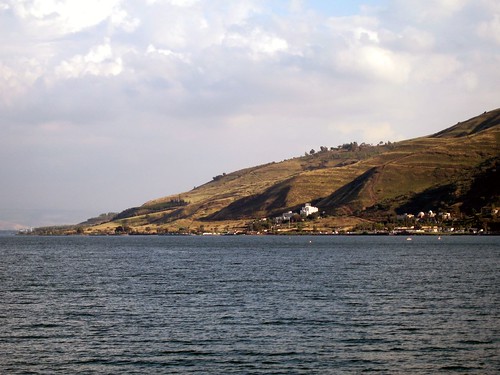
Israel’s Lake Kinneret (Sea of Galilee). As compensation for polluting the Yarmouk River, Israel will pump freshwater from the lake into Jordan
As if the regional water scarcity wasn’t bad enough already, Israel will soon begin compensating Jordan with freshwater after oil waste and sewage contaminated the shared Yarmouk River water supply.
After detecting pollution from the Israeli side of the river last week, the Jordanian Ministry of Water and Irrigation suspended pumping from the King Abdullah Canal, which supplies Amman with one-third of its total water demand.
The ministry also filed an official complaint against the Israeli government, claming a violation of Jordan’s 1994 peace treaty with Israel. According to the agreement, Jordan receives 60,000 cubic meters of water daily from Israel’s Lake Kinneret during the month of March. Jordan Valley Authority (JVA) Secretary General Musa Jamaani said Israel will pump up to 180,000 cubic meters from the Kinneret to Jordan, and will pump another 50-60,000 cubic meters this summer.
Mr. Jamaani also indicated that, although the relevant authorities will take steps to prevent similar incidents in the future, there are no safety guarantees. He said, “If it reoccurs, we will close down the waterways and get our compensation. If Israel is fine with supplying us extra water in return for what it pollutes, it’s up to them… the pressure is on them rather than on us.”
While observant Jews bless their food before they eat it, bless first fruits of the season, trees, and guard the cycles of the moon “religiously” to mark their holidays, the Blessing of the Sun occurs only once every 28 years.
The event marking a natural and spiritual phenomenon for Jewish people, will happen on April 8.
According to tradition and (Chabad.org), the blessing of the sun marks the point in time when the sun returns to the exact point in the sky it occupied on the same day of the week during the creation of the world.
So this April, millions of Jews from all over the world are expected to gather to commemorate this day.
Sara Goldstein, a 26-year-old New Zealander will be one of the first to be able to fulfill this commandment this year. “To be the first to bless the sun is quite a privilege,” she said, predicting that thousands of backpackers from Israel along with members of the local community will gather in New Zealand to mark the date.
Green Prophet has presented some solar-powered air conditioning technology developed in the Middle East. While we like to support local innovation, the practical ones might come from afar: A company located in Denver Colorado, USA, have developed on of the most practical solar powered air conditioning systems made to date.
Named the Coolerado, after the mountain state in which the device was developed by its originator and Coolerado Corporation CEO Mike Luby, is a portable completely environmental friendly unit that utilizes both the power of the sun, water, and a clean form of energy from the atmosphere known as psychrometic energy, which deals with the heat transfer of water vapor which results in a virtual cooling process of the air itself.
The units include a set of solar panels which create the electricity used to power the unit. Fresh air is drawn into the unit by means of a special fan. The air then passes through a special filter to remove any impurities, and then enters special chambers known as HMX’s of heat and mass exchanges. Since the air that enters the exchanges contain quantities of water, this water is retuned to outside atmosphere, and the “conditioned” or cooled air is then sent to the structure to be cooled by means of a duct.
To give more efficiency to the solar panels themselves, who lose part of their ability to produce electricity due to overheating, cooled air can be sent to cool the panels from the back side.
My Scottish mother, in her finest Glaswegian accent, used to call my room a “pig sty” when I was a kid. Now an Israeli farm is getting fined for creating a pig sty.
Unbeknownst to many outsiders –– and insiders –– Israel operates farms that raise pigs for selling to the pork market. New immigrants and foreign workers especially create a demand for the pork, while among the mainstream Jewish and Arab population pork is quite taboo.
On February 22, 2009, reports the Israeli Ministry of Environment, the Acre Magistrate’s Court convicted the owners of a pig farm for operating a pig sty without a business license and of polluting water sources.
The defendants were convicted of allowing pig farm wastes to flow untreated into unsealed earth pools, from where they overflowed to open space, littering the public domain and endangering water sources with pollution. In addition, says the Ministry, wastewater was discharged from the pools to open space, using leaking pipes, and pig carcasses were discarded on the ground.
The 2009 Week of Love for Nature, Water and the Environment (in short: the week of peace, love and dupey du) took place this week in Israel. It was the seventh year running from March 13 – 21, 2009, according to the Israeli Ministry of Environment.
The annual event, organized by the Ministry of Environmental Protection, Nature and Parks Authority, Israel Water Authority and Ministry of Education, is meant to raise public awareness of nature, heritage, environmental and water protection, so that future generations will also be able to enjoy natural and heritage treasures and will take steps to protect them.
Events during the week include ceremonies, happenings, tours and activities targeted at a wide range of audiences, from decision makers and heads of local authorities to students and the general public. The aim of the week in 2009: to increase public awareness of nature, water and the environment, in general, and of the protection of wildlife and their environment, in particular, says the Ministry.
Israel has already done it. Now the governments of China and Vietnam are conducting their own safety tests on some baby bath products, such as Johnson and Johnson (J&J) No More Tears, found to be contaminated with formaldehyde and 1,4-dioxane in a report issued March 12 by the Campaign for Safe Cosmetics.
Some major Chinese, Taiwanese and Vietnamese retailers have pulled these products from their shelves. The Israeli Health Ministry has stated that U.S. baby products with carcinogenic contaminants are not sold in Israel.
Green Prophet got wind of some new courses when “the Sea” called us this week: The school, the Social Economic Academy, with branches in Tel Aviv, Haifa and Jerusalem is opening its spring semester this year with the course: “I buy – I exist: A journey in the trail of the consumption culture.”
The course will take a critical outlook at the recent global economic crisis the consumption Western culture and its implication every Wednesday at 7:30 PM at Bikuri Haitim Center on 6 Hestman St. Tel Aviv.
They offer another course to Israelis, which has a green edge too: “The Space between Food and Capital: facts you never knew about food, environment, society and economy.” Michael Pollan would be proud. According to the SEA the course will deal with the impact of the food industry on the quality of life and will take a outlook on this industry’s political side, the injustice in the global food balance and more.
The “WATEC 2009” Exhibition, along with an international conference featuring a problem-solving forum for water, energy, and environmental technology issues, will be held in Israel on November 17-19, 2009. Time to book your hotels, and airplane if you are planning on coming from abroad.
According to Oded Distel, director of the National Water Technology Program at the Ministry of Industry, Trade and Labor, approximately half of Israel’s water industry leaders are expected to present a sales growth in 2009 despite the global crisis.
Although Mr. Distel believes that the global decline in demand will affect the Israeli water industry – just as it does other aspects of the economy – there is an opposite and strong trend pointing toward an increased demand for solutions to increasing water production and optimizing its use, which will stabilize the current situation and ultimately generate growth in certain companies.
Israeli Researcher Finds Earth Cracks May Contribute to Global Warming
“Fractures breathe, and this process has direct relevance to the question of global warming,” says Dr. Noam Weisbrod –– With the ever increasing shortage in the world’s water resources and dire warning of Israel’s own ongoing drought, research to reduce contamination of existing water resources while developing new potable sources has become a pressing concern, here, as in the rest of the world.
For example, due to massive deterioration of groundwater quality, the Israeli coastal plain aquifer now provides less than 50 percent of its output 20 years ago.
Thus the need to halt or reverse the degradation of the country’s groundwater is crucially important.
Hydrologist Dr. Noam Weisbrod’s research is providing the basic knowledge that can help in solving this crisis by understanding how pollutants reach the subsurface and how they behave underground.
With people losing their jobs in America left, right and center, effects of the global economic crisis are being felt in the Middle East too. Israelis, whose Gross Domestic Produce relies so much on exports has to scale back dramatically when America loses spending power. Yet people are asking here, why isn’t there more recycling.
Today, Green Prophet’s Jeffrey Yoskowitz, a writer and researcher based in New York, asks if recycling is bad for the economy. To get some background on this piece, read his earlier post on Jeffrey’s tour of a recycling facility.
In a bad economy, it’s often the good environmental practices—using energy-efficient light bulbs, insulating homes, driving less, eating less meat—that end up prevailing, in part because they save people money.
But that’s actually not true of recycling, which, for better or worse, is intimately tied to the health of international markets—and the willingness of countries like China to buy our recycled materials. Right now, demand for those materials has shriveled up, which has been a huge blow to recycling plants.
“We were in the red by December,” says John Haas, the recycling coordinator of Ocean County, New Jersey—and it’s the same story throughout North America.
A factor in annual budgets
Ever since recycling centers became widespread in the early 1990s, they’ve turned out to be boons to municipalities, offering a reliable source of local revenue. The more prosperous and more productive the economy, the more revenue that recycling centers generate.
From the late 1990s up until last October, according to Haas, the price of raw materials was so highly inflated and recycling programs were so successful that many municipalities started factoring recycling revenues into their annual budget. Since 1995, for instance, Ocean County’s recycling plant had shared $16 million with its county government.
But, as a result of the current financial crisis, recycling centers aren’t generating enough money any more, costing the city and county governments much-needed cash.
Drops in demand reflect market prices
Since October, demand for manufacturing materials like aluminum, cardboard, and plastic have dropped precipitously, and so have prices. Aluminum, the most profitable material for the New Jersey recycling centers, was selling at $2,100 per ton back last July, but by January had dropped to $944 per ton, as big buyers like Anheuser-Busch lowered their bids to reflect current market values.
Plastics, cardboard, and paper have all seen a drop in demand as well, both because of the lack of new construction projects, and also—most startlingly—as a result of China’s economic slowdown.
“China is a major buyer of cardboard, newsprint and plastic, and usually pays high prices,” explains Haas. “When they stopped buying, it was very significant.” Until recently, the Chinese had been reliably high bidders on paper and cardboard products, which they would then reprocess into boxes to ship consumer goods back to the United States.
What happens when China stops buying
It was a standard formula that provided a stable relationship between recycling centers and Chinese manufacturing—and it helped prop up eco-conscientious recycling programs here in the United States. And it all made sense as long as China’s economy grew exponentially and its consumer goods poured into the U.S. market.
That fact alone raises a few alarming questions about the relationship between recycling and consumption. Is recycling wholly dependent on the reckless consumerism that is, in turn, responsible for many of our environmental problems today? Do, say, paper recycling and other eco-traditions here in the United States depend entirely on China’s continued breakneck growth?
To be sure, recycling will continue with the recession, and despite the hard times, things are looking up. “It will be a challenging year for everyone, but based on prices for March, we feel much better,” said John Haas. “Things are looking up, and we’ll be monitoring it on a regular basis.”
But for now, with fewer purchasers and lower prices, it seems that recycling centers will be forced to sell once-valued commodities for cheap, undercutting their expenses. And, if things worsen and the markets erode further, a great deal of recycling could halt altogether, putting stress on our landfills.
This, in turn could force manufacturers to seek out virgin raw materials to produce what were once products with multiple life spans. Let’s hope it doesn’t come to that.


 Those clever clever folk over at the British Council Israel are this week hosting a live video conference with British energy expert Francis McGowan and an audience in Turkey, all from the Council offices in Ramat Gan.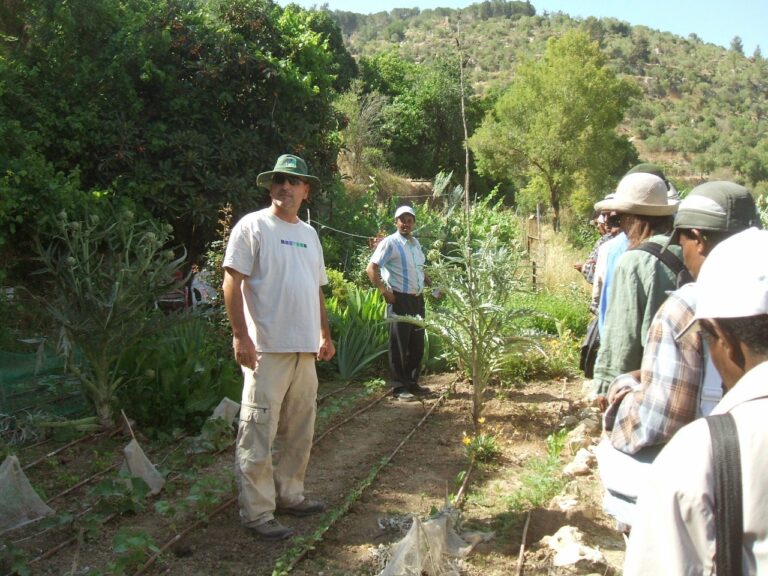
 For those of you familiar with the typical American college student spring break, you know that it generally entails transporting an Animal House environment to exotic locations such as Cancun, Fort Lauderdale, the Bahamas, or the Carribean. However there has been a movement in recent years to offer students an alternative to these stereotypical spring breaks, in equally exotic locations – such as central America, eastern Europe, and yes, even Beer Sheva.


 It seems that the Emirate state of Dubai is continuing to construct projects that are not only grand but totally unique as well (see its
  Israel’s Lake Kinneret (Sea of Galilee). As compensation for polluting the Yarmouk River, Israel will pump freshwater from the lake into Jordan

 Green Prophet has presented some