Home Blog Page 716

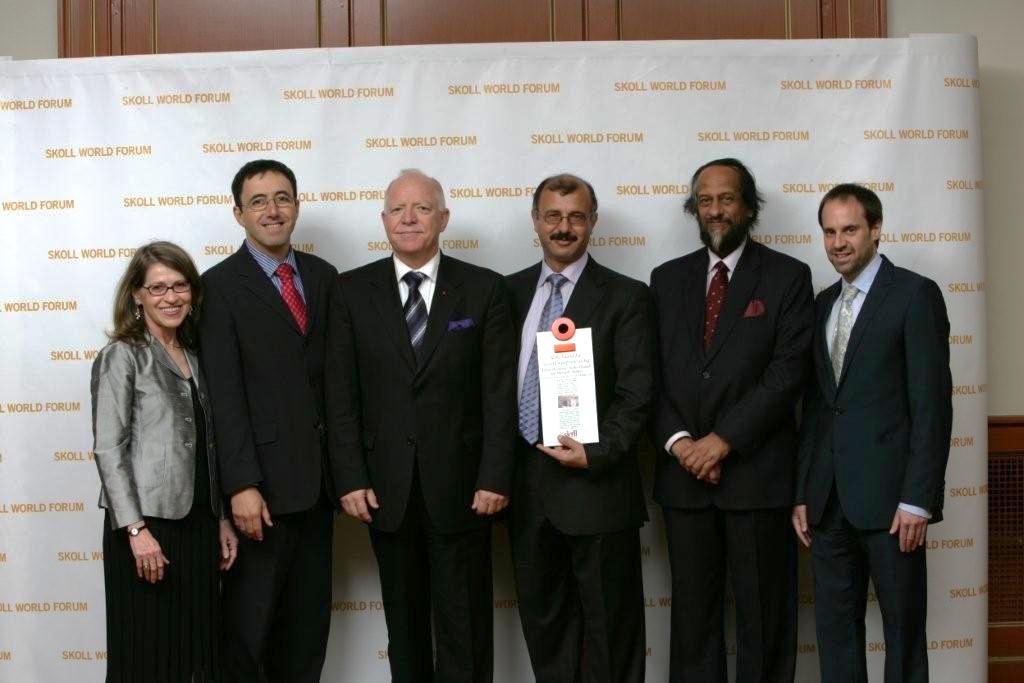
Our Friends From "Friends of the Earth Middle East" Get $750,000 From Skoll For Water Work

11

skoll-award-foeme friends earth middle east

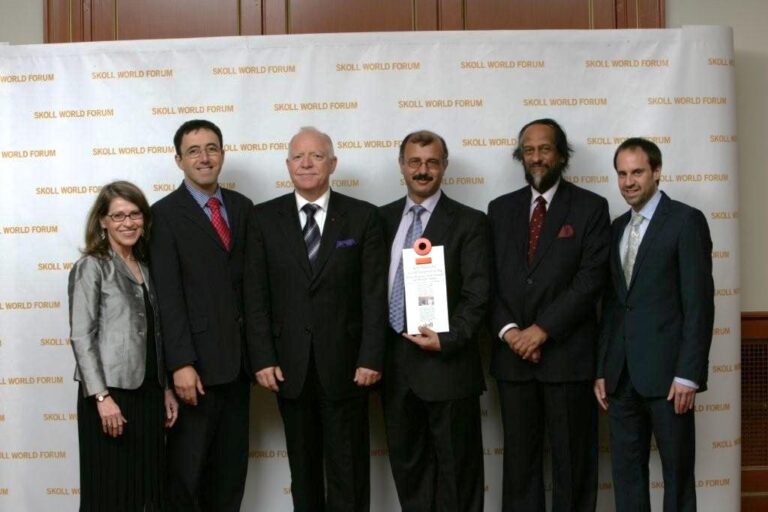
EcoPeace / Friends of the Earth Middle East (FoEME) today announced it is the recipient of a three-year, $750,000 award from the Skoll Foundation to expand its cross border community based activities and deepen its organizational capacity to advance water and peace issues in the Middle East.

“In the midst of conflict, we have produced very tangible results. All of the key issues that the organization has led are on the local, national, regional and often international agenda”, said Munqeth Mehyar FoEME’s Jordanian Director.

The award is one of seven new Skoll Awards for Social Entrepreneurship presented by the Skoll Foundation to recognize the most innovative and sustainable approaches to resolving the world’s most urgent social issues.

Earth Hour Competes With Football in Israel, Jordanians March With Candles

4

jordan-earth-hour
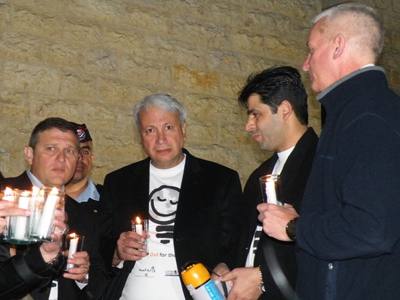
Jordan’s Environment Minister Khalid Irani, RSCN Director General Yehya Khaled, Amman City Manager Ammar Gharaibeh and Wild Jordan Director Chris Johnson hold candles during an event marking Earth Hour on Saturday night (Photo via RSCN)

Regional Earth Hour celebrations mixed:

On Saturday night at 8:30 p.m. when many people in both Jordan and Israel were watching their favorite TV programs or weekly football match, others were marking International Earth Hour, when more than 4,000 cities in 88 countries all over the globe commended this special environmental awareness hour be either dimming or extinguishing non-essential lighting.

The action was mooted by environmental activists to make people aware of the threat that climate change is having on our environment as a result of too much reliance on fossil fuels to create the electricity that enables us to enjoy the comforts and pastimes that most people take for granted.

The event went unnoticed for many Israelis however, as it virtually coincided with an important football match being played against Greece in Israel’s national stadium in Ramat Gan.

In neighboring Jordan, however, much more attention was being given to this event

Israel's Knafo Klimor Architect Firm Build Agro-Housing Apartments In China

12

klimor-knafo-china-image-israel

Slated for a 2011 finish date, Knafo Klimor Architects look to be the first Israeli firm hired to design a green building in China. Their concept: to bring the greenhouse inside the house. The team breaks from the model, where historically, Israelis look to the United States, or at least Europe to fulfill their design and architectural dreams.

Their specs:
Program: 150 apartments, multi-stories greenhouse, tenant’s club & kindergarten
Client: Living Steel
Area: 10,000 sqm
Status: completion 2011

Aora Powers Up "LEGO-like" Units For Solar Energy Production in the Arava Desert

7

aora-solar-power-picture

Aora Solar Energy Company, formerly known as EDIG Solar, is ready to begin producing clean tech energy at their power station located at Kibbutz Samar in the Arava Valley.

The station, which uses a combination of solar generated electricity thermal power and alternative fuels such as bio-diesel, bio-gas, and natural gas, is expected to produce around 100 kilowatts of power as well as 170 kilowatts of heat capacity. The idea of placing this initial plant in the Arava region is due to the availability of sunlight and space to install the photo-electric collection plates needed to collect the solar energy needed to operate the thermal gas turbines.

The company was recently successful in raising $5 million in needed operating capital by offering a round of Series A bonds to various investors. The funding was raised with the assistance of EZKlein Partners, EDIG Construction and L&Q Solar, who are active in investing in international solar energy projects.

By using a “hybrid approach” which means using other fuels sources during the night or on cloudy days, the company can assure continuous electrical power generation twenty four hours a day.

Less Government Bureaucracy Would Solve Israel's Water Crisis

3
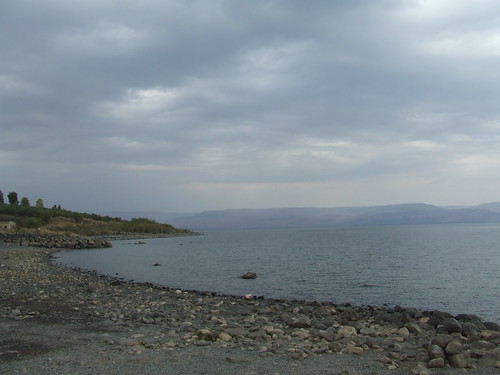
Sea of Galilee photo kinneret
Sea of Galilee

Two interesting articles were published in the past week about Israel’s water shortage and possible solutions. In the first one, “Drops in the Bucket,” which appeared in Haaretz, the article discusses how Israelis can expect water rations and increased fees for water in the near future, like the inhabitants of countries such as Cyprus and Jordan, if the government continues to be slowed down in making decisions by lengthy bureacracy and legislation. 

The CEO of Mekorot, Ido Rosolio has been particularly vocal about preventing this, as Mekorot, which is the national water utility, is a company that should be and is able to handle Israel’s water needs and provide the necessary infrastructure to maintain it in the longterm.

However, the government has thus far failed to pass the necessary legislation to do so. 

Sustainability In The City (of Tel Aviv), To Celebrate 100 Years Now And 100 In The Future

6

tel-avi-100-sustainable

Some green groups are criticizing the city of Tel Aviv for not being sustainable at all; they’re also criticizing the city for this new conference happening April 1-2, on urban sustainability. It is part of dozens of events to celebrate Tel Aviv’s 100 year birthday this year.

For your reading pleasure, and interest, Green Prophet has posted the City’s handout about the event. Propaganda from the Mayor’s office or real and true efforts at making Tel Aviv sustainable? You decide. Here’s their blurb:

The Centennial Conference: In recent years, Tel Aviv-Yafo has been undergoing major processes of development. The international symposium will relate to these processes from a critical point of view, offering academic and professional insight into how the city should develop. The Centennial Conference on Urban Sustainability will consist of two parts that will address the future of the city and present ideas on urban renewal in relation to sustainability:

  1. An international symposium
  2. An international student competition and exhibition

The international symposium will consist of presentations by keynote speakers, case studies from around the world, round table discussions of mayors, city planners, architects, designers, artists, journalists and academics from leading universities, and debates between local and international speakers. These sessions will lead to a discussion on the future of Tel Aviv-Yafo in the next 100 years.

(Green Prophet adds: Some skeptics wonder with the state of security affairs in Israel, if there will be a next 100 years).

Video on Israel-Jordan Water War On Jordan TV

3

Clean water, and water resources dominate the news over here in the Middle East. Recently Green Prophet reported on Israel’s “water” compensation to Jordan, and the Jordan crisis dealing with radioactive water.

This video segment from Al-Arabiya offers a Jordanian view on the water story, or “war” as they report, between Jordan and Israel.

Israel NEWTech, A Government Initiative To Promote And Grow Israeli Water Technology And Innovation

4

Since its inception, Israeli scientists have always put great efforts into developing solutions to help alleviate their country’s chronic water problems.

Beginning with innovated “drip” irrigation systems (companies Plastro and Netafim) for arid regions, and continuing with desalination of seawater in the early 1960’s and recycling of sewage waste water in the 1970’s and ’80s, projects developed to conserve Israelis’ scarce water supplies have been leaders in their field, and much of this technology has been exported to other countries that also have serious water problems.

More recently, these conservation and recycling projects has resulted in the creation of a new program known as Novel Efficient Water Technologies or Israeli NEWTech for short. Going far beyond the original projects for providing more water resources for agricultural use, as well as for combating “desertification” of the country’s Negev arid region, Israel NEWTech water projects are also involved in treatment and recycling of sewage and other waste water, new advanced methods of desalination, as well as water security and management programs.

Best quotes from Jaime Lerner about sustainability

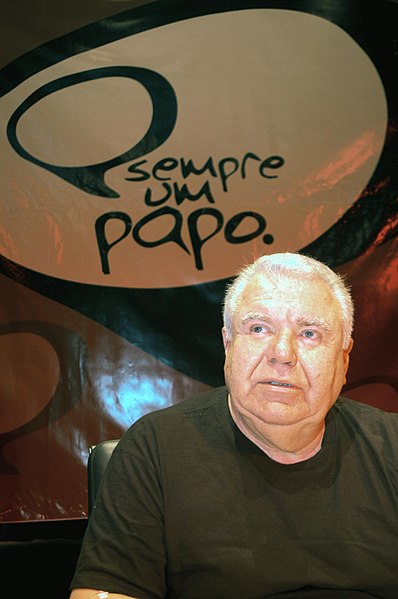
jaime lerner brazil jewish urban planner photoSitting in his favorite cafe, outside his home, Jaime Lerner opens his little black notebook. He sits and scribbles ideas while waiting for his next meeting with one of the many mayors, diplomats, governors and senators who make the pilgrimage to meet him from all over the world.

His notebook, much like Leonardo da Vinci’s Codex, is filled with wild ideas from across the entire spectrum of human experience. From rough blueprints of Dock-Dock – a tiny futuristic automobile intended to cut congestion and pollution – to sketches of a “portable street,” to the truly wild… Rap lyrics to what he calls The Sustainable Song.

The world leaders he meets every week in the little cafe in Curitiba, Brazil, come because they believe that Lerner’s notebooks, and his experience, may hold some of the solutions to the problems of climate change, and the problems that plague most modern cities.

“There is little in the architecture of a city that is more beautifully designed than a tree.”

-Jaime Lerner

Lerner is a man of innovative and brave solutions. In his days as mayor and governor, he made a deal with the local fishermen, “If he fishes fish, the money goes to him. If he fishes rubbish, bottles, glass, cans, we will buy it from him. If the conditions are bad for catching fish, he’ll catch rubbish. The more rubbish he gets, the more money he gets and the cleaner the bay gets. The cleaner the bay gets, the more fish he’ll be able to fish. It’s a win-win solution.”

Naysayers will dismiss such wild ideas. Say that they will never stand to the test of reality, and are not feasible. But Lerner has repeatedly proven that his solutions are not only feasible, but also sustainable and profitable. And while other mayors measure the pace of change in months and years, for Lerner it is measured in minutes, hours and days.

“Creativity &  innovation is starting… We cannot have all the answers…”

-Jaime Lerner

“Lerner is a longtime proponent of what might be called ‘blitz urbanism’: the rapid, workable improvement that does an end run on bureaucrats and doubters,” says Newsday’s Justin Davidson. He sees stealth, as a key to transformation. “We have to do things quickly because next week we might not be here anymore. And you have to be quick to avoid your own bureaucracy. Bureaucracy is like a fungus that contaminates everything.”

As 3-time mayor of Curitiba, Lerner used this philosophy to transform his city’s main street, into a pedestrian mall in just 72 hours. Fast enough for the tractors to do their work, but not fast enough for the bureaucrats and local business owners to complain, and put a stop to his vision.

Over the next 20 years, Lerner shaped the city’s future and turned it into a shining example that is studied to this day. “We built the opera house in two months, the botanical gardens in three months, Niemeyer’s museum in five months. It wasn’t that we were chasing after records – it was necessity.”

“Creativity starts when you cut a zero from your budget”

-Jaime Lerner

Botanical Garden (photo by Jeff Belmonte)
Curitiba’s Botanical Garden (photo by Jeff Belmonte)

As a young architect in the mid-1960’s, Lerner saw his city’s population cross the 500,000 line. Soon, this third-world city, was struggling with many new problems.

“I saw things happening that I thought were wrong,” he says. “They were destroying the city’s history, opening up big roads that wiped out the whole memory of the city, planning the city just for cars.”

In 1971 he became mayor, and began implementing radical and progressive changes that changed Curitiba forever. Some of this changes are so radical, they may seem impossible… Unless you witnessed Lerner make them possible.

Curitiba is a city bordered by a floodplain, and while many wealthier cities such as New Orleans and Sacramento, have chosen to build expensive levee system, Curitiba purchased the floodplains and turned them into parks. Unable to afford tractors to mow these parks, Lerner employed ‘municipal sheep’ who keep the vegetation under control and whose wool funds children’s programs.

“We arrived to the conclusion that it was better to save an existing wood than to build a new park. So we started to save existing woods with the help of families that could take care of them. Thanks to that, the green areas indicator of Curitiba went from 0,5 square meters per citizen in 1971 to 52 square meters per citizen; while the population grew three times.”

-Jaime Lerner

The city now ranks among the world leaders in per-capita park area.

When faced with the challenge of how to service Curitiba’s slums and shanty towns, Lerner began paying people for their trash.  He paid with bags full of groceries and transit passes.

The slums became much cleaner and to this day, Curitiba has one of the highest levels of garbage separation in the world.

“The car is like our mother in-law. We have to have good relationship with her, but you shouldn’t let her dictate your whole life… If the only woman in your life is your mother in-law, you have a problem.”

-Jaime Lerner

In 1988, Lerner began work on his masterpiece – the Rede Integrada de Transporte (RIT), or integrated transport system.

photo by xander76
Curitiba Bus Stop (photo by xander76)

Lerner was given Federal money to build a subway, but he discovered that a subway costs ten times the amount of a “light rail”, which, in turn, costs ten times as much as a bus system, even one with dedicated bus ways. For Lerner, the choice was clear. He would build a rapid transit system based on buses.

The Speedybus, as it is called, is a system of specially constructed Volvo buses that can carry over 270 people each. The buses run in dedicated lanes, and stop with clockwork precision in high tech bus stops which Lerner designed himself.

The result is an experience that is nothing like the bus systems we know, but is instead similar to riding a subway, at a fraction of the cost, and completed city-wide in two years.

“A sustainable city is the one that integrates housing, work and leisure, while preserving its history and investing in public transportation.”

-Jaime Lerner

So what can we learn from this? It’s a nice story, but are these kind of wild ideas applicable in a city like… Tel-Aviv?

Why not?

Curitiba is a city much bigger, with more people and poorer than Tel-Aviv. Every excuse we can come up with for why this wouldn’t work here has already been proven by Lerner to be just that… an excuse.

All it takes is a leader with a vision, and the courage to make drastic changes without fear of the short-term political fallout.

“One of the things I have learned is that we have to be committed to simplicity. There is no need to be scared of simplicity. And we can’t want to have all the answers in the world. Many cities end up putting off things because they want to understand everything. They don’t understand that innovating is about starting. Taking care of a city is a process that you start, and then give the population space to respond. There is no place in a city that can’t be better. There is no toad that can’t be a princess, no frog that can’t become a prince.”

-Jaime Lerner

I highly recommend Nitzan Horowitz’s excellent documentary called “Urban Legend” which is available online. He travels the globe, from India to Curitiba, and eventually brings Lerner to Tel-Aviv. See the video below:

Environment 2020 and Green Commuting Events This March In Tel Aviv

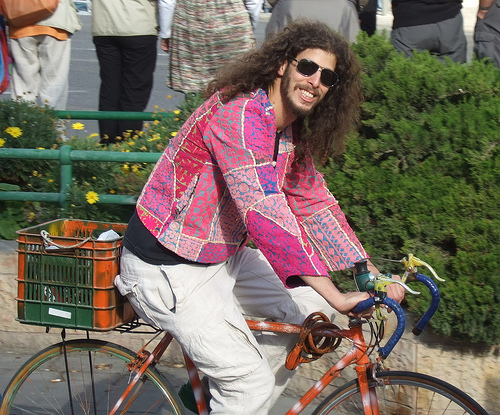
green-commute-bike-israel-jerusalem-photo

The Ministry of Environmental Protection in Israel lists two important green events for the end of March. Get your pedals on the bike spinning: First up is “Environment 2020” A conference dealing with “Challenges, Innovations and Corporate Social Responsibility” in Israel. This leading environmental conference, says the Ministry, will take place on March 30, 2009 and will feature of host of speakers from Israel and abroad.

Sponsored by dozens of organizations, industries and corporations alongside the Ministry of Environmental Protection and environmental organizations, it is expected to draw some 700 participants.

Sessions will include: setting a national environmental agenda, environmental regulation, green branding, environmental risk analysis and cleantech as a key to growth. Guest speakers include Stanley Greenberg of Greenberg Quinland Rosner Research and Martin Kace, founder and president of EMPAX.

Green Commuting: This March 30, launches a green commuting competition, aimed at encouraging employers to promote alternative means of transportation to work, including car pooling, car sharing, public transportation and walking.

The competition is part of a larger project aimed at shifting Israel’s commuting patterns away from the private car. For this purpose, a Hebrew guidebook for employers on green commuting was recently published.

Be there, or be green with envy. For more, see the Ministry’s website. (There’s been a flurry of green events this March in Israel. Any connection to St. Paddy’s Day?)

[image via davidmasters]

Eco Rabbi: Parshat Vayikra – Vegetarian Sacrifices?

4

baby lamb in the grass photoEach week Orthodox Jews read one segment of the Five Books of Moses so that they can complete the entire Five Books within the course of a year. In this week’s Eco-Rabbi post I discuss a Jewish approach to meat.

I’m a vegatarian… sympathizer. (Seriously, could you really eat lamb after looking at that picture?) Yeah, I couldn’t go without eating meat. But I understand the importance of respecting the animal that gave up its life to be eaten.

Down the block from where I live there are regular hafganot, demonstrations, against the slaughter of innocent animals so that us evil meat eaters can have an unhealthily full stomach.

Personally, I think that they’d do a lot more for the well-being of animals if they would protest the mistreating of animals, and not the eating of them. Sure, the mistreating is addressed at the demonstrations, but I think the message is lost in the presentation. I would certainly sign a petition to that extent, instead of what happens now, where I just get hungry for a burger when I see them there…

Get Green Website Helps Israelis Go Green

5

Do you dream of an Israeli-based website that concentrates information about all the great local eco-friendly businesses into one virtual green portal?  That provides reviews, offers coupons, and even has a membership club with a monthly raffle of organic vegetables?  A website that arranges Israeli eco events on an interactive virtual calendar?

Well wake up!  As Herzl said, “if you will it, it is no dream.”  And thanks to co-creators of a new Get Green website, Hila Rom and Dana Chapnik, we can be dreamy-eyed while wide awake.

get green website israelA first look at the website turned up many familiar businesses that we’ve featured here on Green Prophet – such as Buddha Burgers, Nagaya, Katanchic, and Baby Organic.  But a closer look revealed that Get Green’s reach is far and wide in the realm of environmentally conscious businesses.  The directory of businesses is divided into categories that include the standard green businesses but also green architecture, organic deliveries, permaculture, green books, and solar energy, among others.

So how does the Get Green website help with the bigger picture?  In Hila Rom’s own words, “We believe in practical ecology and the power to choose, or the power of our money.  If companies see that people are willing to buy green products, then they’ll start making them.  When you have the information, you can make the right choice.”

How to save the turtles

2

ecoocean-israel photo andreas weilOur dear friend Andreas Weil from EcoOcean sent us the YouTube link of the new ad created by the agency Shalmor Avnon Amichay/Young & Rubicam.

The ad was donated by the agency to support EcoOcean, a non-profit marine education organization. This company, says Weil, cares about the environment and donated the ad as part of their mission to help raise awareness about the environment in Israel.

Employing a baby turtle, the commercial hits our emotions right where it counts. And the Hebrew at the end reads: “Life Is In Your Hands.”

Watch the commercial, visit EcoOcean. Or read about their work in marine conservation in Arabic through this link EcoOcean. Look around for Hebrew too.

If you are ever thinking about donating money to an NGO in Israel, EcoOcean would be one of my top 5 pics.

Water Relationship Possibilities Between Israel and Gazans In Better Days

5

water-gaza-israel photo bottle desert thirsty man

As if to add to their current misery, the 1.5 million inhabitants of the Gaza Strip are now facing an acute water shortage due to ground water contamination. These findings were made in a research project recently conducted by three Gaza academics: Dr. Ziad Abu Hein, head of Environment and Earth Sciences Department at the Islamic University in Gaza, Dr. Khalil Tbeil, lecturer at the Faculty of Agriculture at Al-Azhar University in Gaza, and Dr Midhat Abu An-Na’im, of the Geology Department at Al-Azhar University.

The three scientists published their findings in a research paper which received an award at a competition sponsored by the Saudi government’s Sultan Bin Abdul-Aziz research competition and submitted to a conference on water conservation being held in Egypt, where the paper won a third place award.

The three scientists were not allowed to attend the conference, however due to the blockade being imposed on Gaza by both Egypt and Israel.

Israeli Trees Go Hightech and Alert Farmers With SMS When Thirsty

7

sms-tree-thirsty-israel photoIt sounds like a fantasy of Audrey II, the colorful man-eating plant from the Little Shop of Horrors movie: Israeli scientists have developed a new device that taps into the stem of a tree and when water levels are low, the tree can text a message, email the farmer, or turn on the irrigation tap to water itself.

Measuring electric conductivity inside the tree, a parameter of water stress, the Israeli researchers Eran Raveh and Arieh Nadler from the Volcani Institute of Agriculture, say that Californian citrus and mango farmers, banana plantations and vintners have already expressed interest in the technology, which can be programmed by the farmers themselves.

Now developing it into a product, Raveh tells ISRAEL21c that it will take about three to four years until the novel device is on the shelves: “We have a water crisis here in Israel and need a way to irrigate more accurately,” says Raveh.