Home Blog Page 703

Israeli-American Entrepeneur Noah Dan Sells Sustainable Pitango Gelato in Washington DC

Hazelnut gelato

Noah Dan has not forgotten the tastes of his childhood.  He remembers eating brara, the fruits and vegetables bursting with incredible flavor but too “ugly” to package for sale in the cities, on Kibbutz Givat Brenner, where he was born and raised.  He also remembers eating creamy, homemade gelato in Trieste, Italy where he spent summers with his Italian grandparents.

Now a resident of the Washington DC area, Noah is the founder and CEO of Pitango Gelato.  Pitango, whose namesake is a variety of cherry that grows wild in Israel, recently opened two new shops in Washington, DC and Reston, Virginia after a successful first run in Baltimore, Maryland.  In his attempt to reproduce the gelato of his childhood, Noah has found a way to build a business that is sustainable, conscientious, and produces a very high-end product without the use of chemicals or artificial additives.

Although he describes his model as upside down and risky because he invested about one million dollars to build production capacity before serving his first spoonful, Noah believes customers taste the difference, and the expense was well worth it.  “Our gelato and sorbets enjoy a clean, balanced flavor and do not leave behind the unpleasant aftertaste and greasy palate associated with industrial-strength ice cream products,” proclaims Pitango’s website. “Our customers understand the difference in quality and price between the pint of fresh local strawberries that goes into our strawberry sorbet and an artificially flavored product that may go by a similar name.”

Metrolight and 11 Israel-Related Cleantech Headlines, Week of May 31, 2009

0

tal-ya-water-israel-dew-collectors

During the week of May 31, 2009, The Israel Conference took place in California in which over $20 billion was represented that could be used to fund Israeli startups, including cleantech companies. MetroLight raised $3 million and Sunday Energy and Ormat signed a deal to build the largest solar roof in the Middle East. For these stories and more, check this week’s 11 Israel-related headlines below.

Investing and Trade
1. The Israel Conference in LA to Spark Deal Flow Between Israel Clean Tech and California

2. HCL CleanTech raises $5.5m from Khosla Ventures and Burrill & Company

3. Metrolight lands $3M in funding, names CEO

4. Investment in Green Energy Quadruples in 4 Years

5. Cleantech investing surpasses IT in Europe despite dip

6. So what if oil prices have fallen

Solar
7. Sunday Energy forges new ground in Israel with Ormat

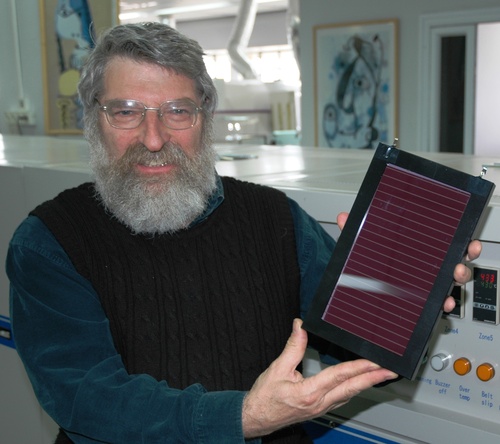
8. Israeli firm boosts performance of photovoltaic solar array

Water
9. Tal Ya Water Irrigation Trays Make the Most of Dew

10. Drinking Water From Air Humidity

Geothermal
11. Exploiting Limited Resources

JGooders.com Raise Money and Spirits for Green Jewish Groups

jgooder logo environment giving charityJust six months ago, JGooders.com was started as way to build a global, accessible, vibrant, and transparent central Jewish and Israeli arena that would connect needs and generosity; social initiators and social enablers, and allow everyone to Do Good. [from JGooders.com]

JGooders is off to a fast start, as hundreds of Non Profit Organizations have signed up and started to raise money and awareness through the website. According to Tova Serkin, JGooders’ chief business officer, the website is a great way for young adults and people of all ages to get involved in community service and Israeli social action programs. Not only is the website convenient for those looking to contribute through service work and donations, it is also a nice way for NPOs to collaborate, fundraise, and promote their causes and upcoming events.

Turning to their environmental focus, Tova said that environmental organizations were a solid portion of the NPOs involved with the website. So far, around 25 organizations have been promoting environmental causes in Israel and the United States.

Rich Oil State Dubai Plans To Power Up With Solar Energy

2

burj-dubai-interior-strabala

Following on the heels of the much publicized Masdar City, the first carbon emissions free city in the world, Dubai (which likes to do everything in larger than life scale) has announced its plans to build the region’s largest solar power plant.

According to the Gulf News, the plant, as announced by Ali Bin Abdullah Al Owais, executive director of electricity affairs in the country’s Energy Ministry, will create enough electricity needs and will have enough left over for other countries in the region, he said.

Kfar Vradim in the Galilee Cuts Back on Garbage

kfar-vradim-galileeLocated in the northern part of Israel, in the western Galilee, Kfar Vradim is in an area surrounded by greenery.  But this summer, the town decided to go greener.  Starting last week, the town council of Kfar Vradim put a decision about trash into effect.

In an attempt to encourage their residents to recycle more, they have reduced their garbage collection frequency from twice a week to once a week.  The hope is that when residents see their garbage piles heaping up they will consider alternatives to the trash can.  Namely, the recycling bin.

The Kfar Vradim press release is as follows:

“A revolutionary decision made by the town council of Kfar Vradim in the Galilee: the town council of Kfar Vradim is the first authority in Israel to decide that garbage will be collected once (instead of twice) a week as of June 1, 2009. 

A Birthright That Turns Green

birthright trips organic farms photo

Coming to Israel for the first time is now becoming more environmentally friendly. Not only does Taglit-Birthright still offer a free 10-day trip for Jewish 18 to 26 year olds, but now each trip incorporates at least one environmental awareness aspect, and some newer tracks are even environmentally centered.

Taglit Birthright Israel first started in 1999 as a way to bring young Diaspora Jews to Israel for the first time. Generous and passionate Zionist donors have made large contributions to fund an amazing 10-day adventure, completely free of charge for participants.

Since the program’s inception, more than 200,000 participants from 52 countries have come on the program to experience Israel and examine their Jewish identity.

Taglit Birthright providers have made a solid effort to promote environmentalism by incorporate hiking in Israel’s north and south and education about issues of water shortage and sustainable agricultural on all of the trips.

Birthright is now taking the next step by bringing groups to solar and wind power centers, recycling plastic bottles, and finding ways to use the tour bus less.

Hunt for Air France Flight 447 Brings Garbage Problem to the Surface

16

plastic-patch garbage patch sea

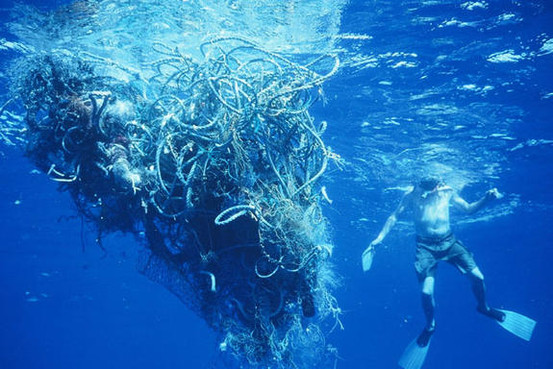
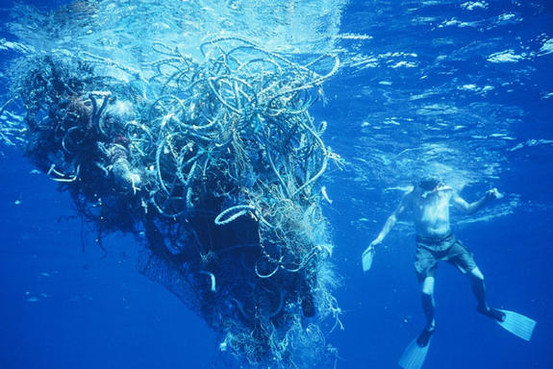
Brazilian naval personnel were astonished to discover that what they thought to be remains of the missing Air France flight 447 in the Atlantic Ocean turned out to be nothing more than garbage and other debris located at or near the surface of water.

Even the supposed oil slick that they thought came from the missing plane has now been attributed to being bilge oil from a passing ocean vessel. And what was thought to be pieces of the plan’s fuselage turned out to the pieces of plastic as well as a wooden pallet!

Smaller marine bodies of water are at even greater risk; especially ones like the Mediterranean, said to be one of the most polluted bodies of sea water, as well as the Persian Gulf.

Tal Ya trays make water from dew

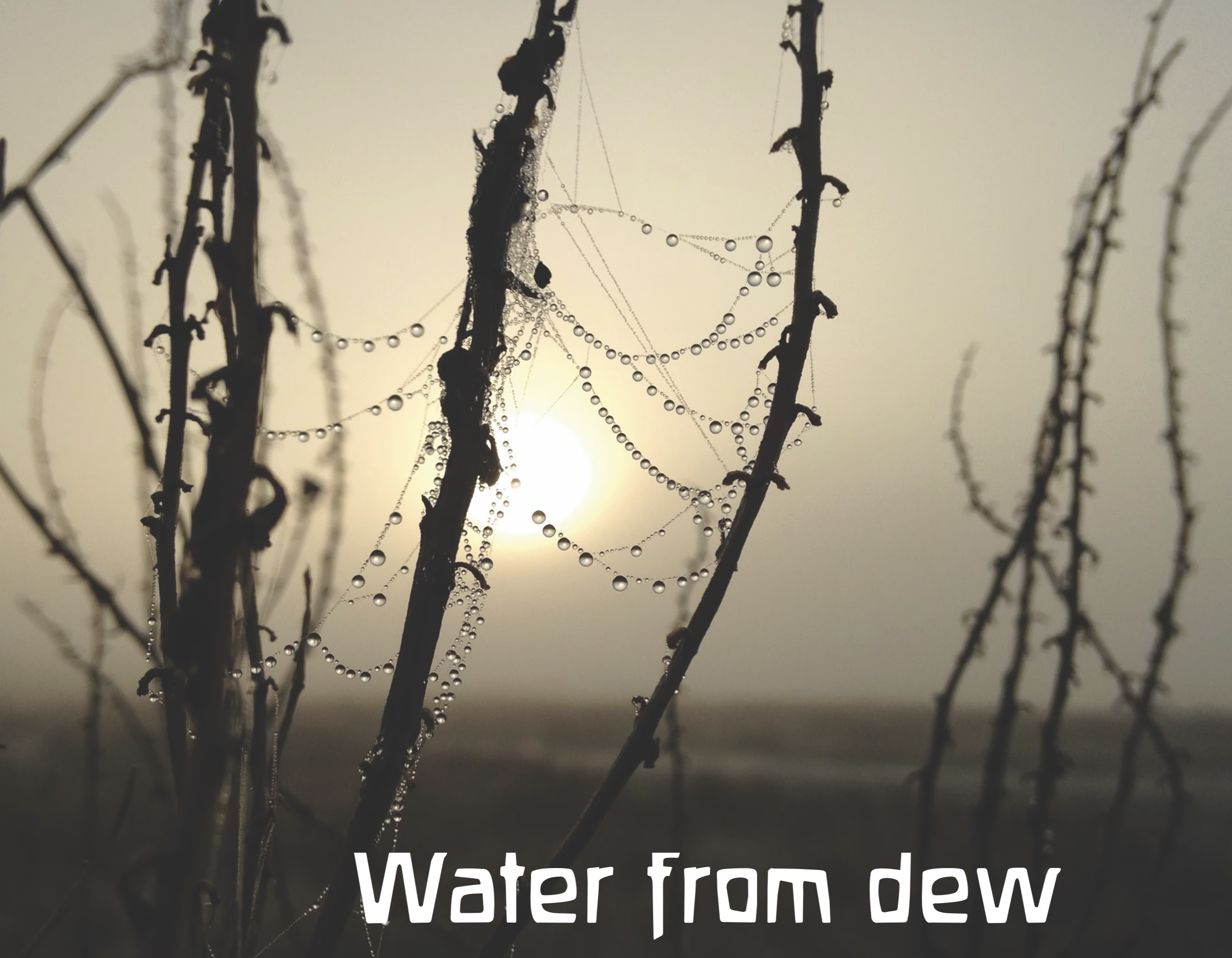
The ancient Israelites used stones to collect dew from the air, and there is a prayer in the Jewish prayerbook that asks for dew for the crops. Now the modern Jews from the Land of Israel ones are taking the idea further.

The Israeli company Tal-Ya Water Technologies, promises to squeeze dew from the air for watering crops where water resources are precious or scarce. This new invention has a number of ecological benefits that go beyond simple water savings. They are similar to the Dutch passive irrigation product called Groasis which we featured here

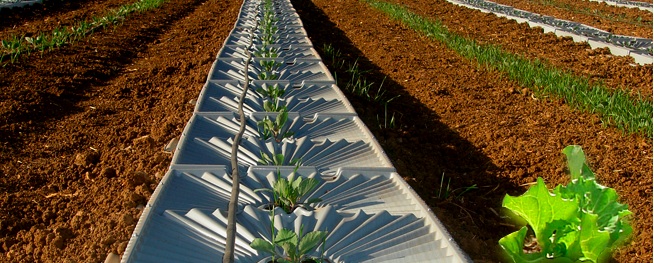
For about $1 a piece, which serves one plant or seedling, a square serrated tray made from a special plastic composite sits directly on the ground.

tal-ya water dew collectors, trays, israel

The reusable Tal Ya tray is fitted with a hole in the center for a plant to grow. Using non-PET recycled and recyclable plastic with UV filters, and a limestone additive, Tal-Ya’s trays do not degrade in the sun or after the application of pesticides or fertilizers.

An aluminium additive helps the trays — about 70 cm by 70 cm for a pepper plant — respond to shifts in temperature between night and day. When a change of 12 degrees centigrade occurs, dew forms on both surfaces of the Tal Ya tray, which funnels the dew and condensation straight to the plant and its roots.

The trays are also made in larger sizes for trees, Avraham Tamir, the company head and inventor tells Green Prophet.

Benefits of Tal Ya trays

Plastic trays clear weeds, naturally

“Using our system has a number of benefits,” Tamir says. Farmers don’t need to worry about weeds because the trays block the sun, so weeds can’t take root. “Farmers need to use much less water, and in turn much less fertilizer on the crop,” he explains. Less fertilizers and pesticides means less groundwater contamination.
tal ya water dew trays israel

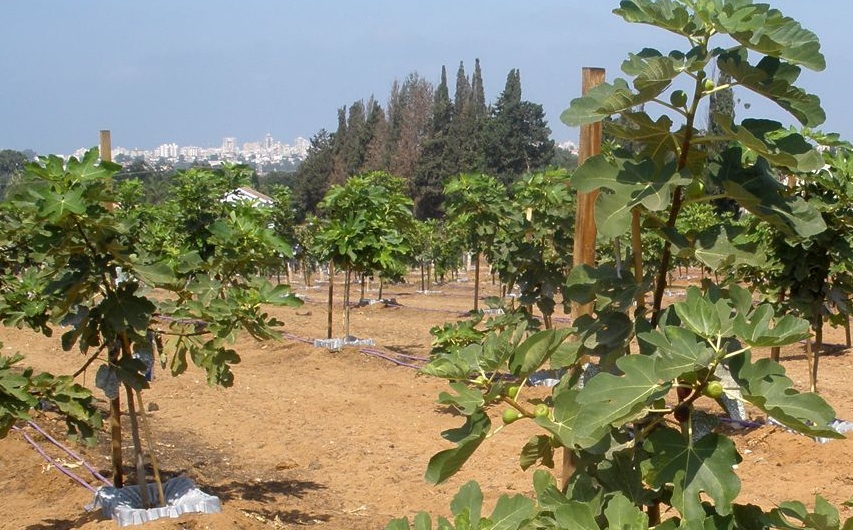
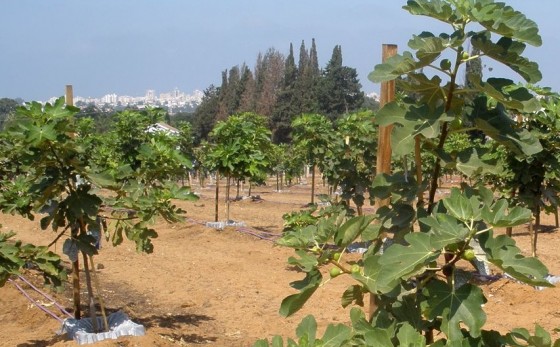
Locking together like pieces of Lego, see how they look in the field above, special sections of the tray make space for irrigation and watering equipment to fit into the solution.

Field tests in Israel with the Ministry of Agriculture suggests whopping water savings of up to 50 percent of irrigated water by using the Tal-Ya dew collecting system.

“Dew collection starts at night,” Tamir says. “The critical mass goes down below,” he explains while pointing to the serrated edges of the trays. If it rains, we can amplify 1 mm of rain so that it equals 27 mm.”

Protection from extreme temperature change

Water from dew and condensation is in effect distilled water. Adding this to the soil alleviates the salinity from irrigation, says the company. The trays also protect crops from extreme shifts in temperature, like in Canada or the United States where late and early season frosts put some crops at risk.

Of course, “the amount of water collected depends on location,” Tamir points out. Humidity factors, temperatures and precipitation are important to consider.

Founded four years ago and based in the village of Gan Yoshiya in Israel, research collaboration to help build Tal-Ya which means “God’s dew” in Hebrew, came from the Hebrew University, the Ministry of Agriculture, the Volcani Institute and Ben Gurion University.

Tal-Ya launched its new product at the Agritech exhibition in Tel Aviv. Tamir says he is now selling his product to Israeli farmers, and looking forward to international buyers from America.

Cons of Tal Ya trays

___

Update 2021: when I wrote this article years ago I was excited about small ideas that could improve agriculture. But there is a big but: Tal Ya trays are made from a non-renewable resource: plastic. Plastic leaches into the soil and eventually groundwater.

Plus there are aluminum additives in the tray. No till agriculture and regenerative organic agriculture using ground coverage from hay or compost is probably the way forward for farmers planting trees for this generation and next.

Woody Harrelson

Read our interview with Nature’s Path about regenerative organic agriculture and learn from Woody Harrelson about why regenerative agriculture is best.

More innovative low-tech water technologies:
Watercones in Yemen to Evaporate Seawater to Drinking Water
EWA Collects Water From Thin Air
A Qatari Seawater Greenhouse


Recycling Mikveh Water to Put God and Environment on Same Page

mikveh recycled water israelEvery month, observant Jewish women in Israel and around the world immerse in a ritual bath known as a mikveh. Some men do it too before the Sabbath and holidays.

Now a unique project in Jerusalem intends to recycle water from the mikveh showers that people take before immersing in the pool of living water.

Anywhere You Go FreeGo, Electric Scooters in Tel Aviv

freego-skateboard-scooter

When it comes to transportation around Tel Aviv, there are a number of alternatives to driving a car. For longer commutes, riding public transportation with Dan or Egged buses helps reduce the amount of pollution.

For shorter commutes, there is the option of going by foot or the ever-popular bicycle.

While the bicycle provides a great combination of health benefits, quick travel, and produces zero emissions, a new method of transportation is becoming popular for both Tel Aviv youth and elderly.

FreeGo electric scooters are becoming more prevalent around Tel Aviv today.

Futuristic Dubai Vertical Farm Uses Seawater to Sustain Crops

7

seawater-interior-dubai-vertical-farm photo

You have to hand it to those United Arab Emirates Gulf states. Their futuristic projects are simply something out of a popular science fiction novel; and 25 years or so ago, they definitely would have been. Just look at the towering Burj in Dubai, artificial islands, or their wind-powered rotating skyscraper to get a taste. Or how about cooled sand while you lay on the beach in Dubai?

Environmental projects including specially designed buildings, business parks and residential centers are years ahead of other countries. And now, a project in Dubai is developing something even more awesome: A vertical farm that looks like something out of Star Trek and will use sea water to cool and humidify the crops, while converting the humidity into fresh water.

Zomet Drachim TV Series Stresses the "People Factor" in Ecology

6

פתיח צומת דרכים

Atar Friedman, a young Israel based ecologist, has launched a special TV documentary series to make people more aware of ecology in her country and how it relates to the human factor.

The first year’s series, divided into three parts, involves Friedman and two others, Omer Pomerantz and Maoz Yaacov, going on a “driveabout” around the country and meeting all kinds of interesting people who are involved in various projects dealing with ecological and environmental or “green” issues.

“Zomet Drachim” means intersection, and in this case refers to how the people involved in the series reach their own “intersection” (in regards to ecology) that will influence and change their lives.

“The two guys I went around with had different perceptions about the environment,” Friedman tells Green Prophet. “Omer, a high tech person, knew nothing about the subject of environmental problems, and the other, Maoz, is a social worker and ‘cowboy type’ who lives in a moshav (cooperative settlement) and wants to know more about ‘green’ issues.”

Dye-ing To Power Solar Cells in Africa

9

3gsolar dye electricity solar power

With many types of solar technology in development, it can be challenging to determine which is most effective.

The efficiently in which a solar cell can convert sunlight into usable energy is certainly crucial, but cost is also of great importance in today’s solar industry.

Technology like dye-sensitized solar cells offer a new, more affordable direction that is off to a good start thanks to companies like Israel’s 3GSolar.

The Province of Manitoba and Israel Have A Watershed Moment

water canada manitobaA joint Manitoba-Israel collaboration on research into wetlands and watersheds will be supported by a $100,000 grant from the province, Water Stewardship Minister Christine Melnick announced today. “This is especially important for Manitoba as we move forward to restore and protect our wetlands including the large Delta and Netley/Libau marshes on the southern shores of Lake Manitoba and Lake Winnipeg,” Melnick said.

The grant will help the International Institute for Sustainable Development implement a joint project with the Galilee Technology Centre in Israel (MIGAL). The project arose from collaboration between scientists from Manitoba and Israel that began last August with the very successful Manitoba-Israel Water Experts Symposium, said the minister.

Palestinian Organic Farm EcoBaladi to Market in Jerusalem

farmer-wadi-fuqin eco baladi jerusalem organic market

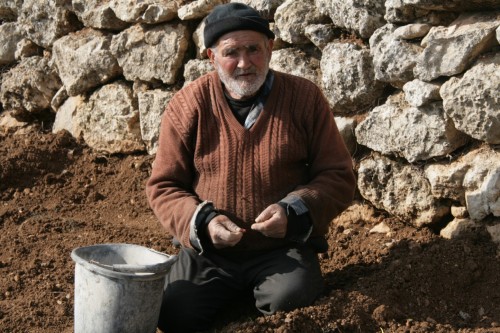
Earlier in the year, GreenProphet visited the organic farms of Wadi Fuqin, a Palestinian village located south of Jerusalem on the border of the West Bank. If you haven’t had a chance to go to the farm, you can see the vegetables in a farmer’s market this Friday in Jerusalem. Most of the small plots are farmed by families; this 73-year-old (above) is planting onions.