Home Blog Page 696

Dive Into WATEC – A Not To Miss Water Clean Tech Conference in Tel Aviv This November

0

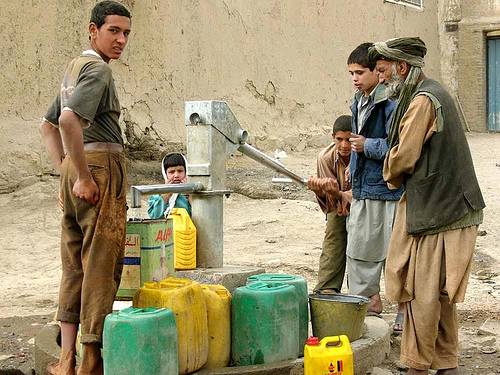
water-pump-afghanastan

The world economic chill is not cooling global warming, says organizers from the international water tech symposium and conference WATEC. This is part of their announcement for the 2009 conference happening this November in Tel Aviv.

I’ve been to a couple WATEC conferences in the past — they happen once every 2 years — and if you are looking for innovation and water solutions for your company, community or state, this is the place to be.

Some 150 ministerial delegations, company directors and business people are expected to visit the 5th International Water Technologies and Environmental Control Exhibition – WATEC Israel 2009 – on November 17-19 at the Trade Fairs and Conventions Center in Tel Aviv.

At the same time, an international conference will examine the need for a sustainable economy to reduce environmental damage, for the benefit of future generations. The conference will address the problems and challenges facing different countries – more efficient water consumption, limiting environmental pollution and the increasing use of alternative energy sources.

Will Radiation Sickness Vaccine Transform Hazards of Nuclear Into Energy Innovation?

5

American nuclear reactor
One of the dangers of exploring the nuclear energy option in the Middle East is radiation sickness and the risks it poses to power plant workers.

Of course we are all too aware of the risks of explosions like in Chernobyl too.

Radiation sickness, which by many is considered to be even more devastating than a possible nuclear bomb explosion itself, may be on the way to being greatly alleviated by the efforts of researchers such as Professor Andrei Gudkov, a chief staff member at the Roswell Park Cancer Institute in New York  as well as being a researcher at Cleveland Bio-Labs; a branch of the Cleveland Medical Institute, in the USA.

In a special, exclusive article in the July 17 weekend edition of the Yediot Ahronot newspaper, and available on-line in English on Ynetnews.com, Prof. Gudkov, who received a PHD in molecular biology from Moscow University, came up with the idea of developing a protein based “vaccine” against the effects of radiation against radiation. It came to him while working on a medication that would enable cancer patients who undergo radiation therapy to withstand being exposed to radiation without suffering the usual harsh side affects – and with less damage to healthy, non-cancerous tissue.

SeaGen Develops Underwater Storage Sytem for Gas

0

gas tank environmentalThe use of gas as an energy source is expected to increase globally, which also increases the need to find safe and economic solutions for storing large quantities of gas.  The current solution is to store large gas tanks near populated areas, occupying expensive and valuable areas of land.

In the upcoming WATEC Conference (the 5th International Water Technologies & Environmental Control Exhibition & the 2nd International Conference) being held in Tel Aviv in November 2009, an innovative Israeli solution to the problem will be presented.

SeaGen Systems Ltd. – a company under the umbrella of Yozmot HaEmek Ltd. – has developed an underwater Liquefied Petroleum Gas (LPG) storage terminal that would enable the storage of gas out at sea.  (Liquefied petroleum gas has many uses, such as cooking gas, car fuel, and industrial fuel.)

These terminals are based on a clean technology that eliminates the risks involved in current gas storage and, at the same time, is economically beneficial.  Within the maritime terminals, gas would be stored in “smart tanks” that are unique in being able to withstand high levels of underwater pressure.  The tanks enable the LPG to be stored as a liquid (not a gas) and therefore enable more efficient, cheaper storage.

Lots of Sunshine Power in the Holy Land as China and Israel Complete Solar Plant

1

Laying Solar Panels Israel’s northern town of  Katzrin is the first town in Israel to receive its electricity from solar energy with the installation of a 50 KW “rooftop” solar power plant.

The solar installation was installed by a cooperative agreement between the Chinese Sun Tech Power Holdings, based in Wuxi China, and Ramat Gan based Solarit Doral, which develops commercial and private solar energy projects.

When in full operation, the plant is expected to generate around 85,000 kilowatt hours of electricity, and surplus electricity will be sold back to the national electricity grid for NS 2.01 per KWH, which amounts to about $0.55 US. Cleantech reported on the start of the project last year.

The joint agreement is an example of joint economic projects now going on between both Israel and China. Sun Tech Power Holdings, which specializes in the manufacture of solar energy roof tiles for private homes and commercial enterprises, is also involved in projects with American companies, including the California based Open Energy company, which will manufacture under license the SolarSave line of 50-watt, 4-foot solar roof tiles.

Brown Seaweed Liquid Morphs to Heart-Healing Gel

9

biolinerx-seaweed-gel-photo

Come on guys: this is just another umpteenth reason why people need preserve nature and our seas and respect them — BioLineRx just got a $282 million deal to license its heart healing medicine based on the common brown seaweed.

No doubt it is the most expensive seaweed known to medical history – the Israeli company BioLineRx, founded in 2003, just released the news that one if its two compounds – the BL-1040 – to repair damaged heart muscles after cardiac arrest, has been licensed by the New Jersey-based company Ikaria Holdings in a $282.5 million deal, confirms a BioLineRx representative, Dganit Bar.

Ikaria now owns the worldwide exclusive license to BL-1040, and what could be a potential breakthrough treatment for preventing repeat heart attacks after an initial event.

City Waste Dubai Event Sets To Manage Middle East Garbage

0

pile-of-trash-shook photo

City Waste is an inaugural four-day event that will take place from 11-14 October 2009. The Middle East’s rapid growth over the past years has brought about significant waste management challenges to the region.

In response to these challenges, the City Waste 2009 will be a platform to discuss and share strategies on the increasing quantities of generated waste as well as the need for innovative waste management solutions.

The event will be officially inaugurated by the UAE Minister for Environment & Water, H.E. Dr. Rashid Ahmad Bin Fahad, on the first day of the main conference, Monday 12 October 2009.

Eng. Hassan Mohammed Makki, Director of Waste Management Department, Dubai Municipality, will provide a keynote presentation on strategic insights into the Clean Up the World Campaign. He will reveal new waste systems and upcoming green technologies that are being utilised by the municipality, such as vacuum waste collection systems, underground storage facilities, and underground compactors for commercial districts.

Will You Be A Middle East Climate Refugee? Escape To An Underground Desert Living Unit

8

loki-underground-desert-unitCan’t stand the climate change heat? Why not move underground?

For Reynard Loki and Jennifer Daniels, the future might lie, for some people in places such as Israel or Australia, in what they are calling Underground Desert Living Units, UDLU for short.

Loki began working on the idea in March 2008, and he later found Daniels to do the illustrations.

When asked how he was inspired to create UDLU, Loki said a news article titled “Exotic climate study sees refugees in Antarctica” got him thinking about where such refugees might live. Another news article titled “Global Warming Threatens Australia’s Iconic Kangaroos” spoke of climate models showing up to a six-degree rise in Australia’s temperature by the year 2070.

The article predicted that large swaths of Australia will become dry and parched.

And then a radio interview with British scientist James Lovelock about New Zealand serving in the future as a “lifeboat” for climate refugees in the southern hemisphere convinced Loki that the idea of UDLU might be useful to think about and envision.

“You’ve seen it happening in Australia already: Desert is spreading and things just won’t grow,” Lovelock told a New Zealand radio station reporter last year. “The island nations like New Zealand will be spared that kind of damage.”

IQWind and 7 Israel-related Cleantech Headlines, Week of July 12, 2009

shari-arison-miya-waterDuring the past week, IQWind raised $500k from U.S. investors and N-Viro launched a clean soil facility in Israel.

Israel’s water situation was compared to Tanzania’s and Shari Arison (pictured left) made the news about looking to increase her solar-energy holdings.

For these stories and the rest of this week’s 7 headlines, check below.

Citizens Shut Out as Tel Aviv Debates Skyscraper City

6

Neve Tzedek Skyscraper Map

The Tel Aviv City Council held a discussion yesterday on a handful of building plans that, if approved, would effectively transform some of the city’s most historic areas beyond recognition.

The discussion, which council members described as “fateful” and “dramatic,” drew a large number of city residents, eager to have a say in the planning of their neighborhoods.

However, the discussion was conducted in a manner that seemed to exclude the public, while avoiding a serious discussion of the city’s future development.

Water Rich and Water Poor – A Tale About Israel and Tanzania

1

tanzania water israel cooperation photo

Israel is very small country, as compared to most African countries, such as Tanzania.

Yet despite this vast land difference (Israel has a land area of 8,019 sq miles compared to Tanzania’s 364,900 sq miles) Israel has been able to utilize 95% of its renewable water resources, estimated at 1,800 million cubic meters, and grow a significant part of it’s own food.

Tanzania has significantly more fresh water resources available, including more than half of Lake Victoria, Africa’s largest fresh water lake; Lake Tanganyika, and part of Lake Nyasa (otherwise known as Lake Malawi).

Yet despite this, Tanzania has a chronic food shortage due to a severe water shortage problem, and millions of children suffering from various physical ailments attributed to malnutrition. Can Israel help them?

N-Viro International Smells Lucrative Sewage Sludge in the Center of Israel

0

israel land polluted photo

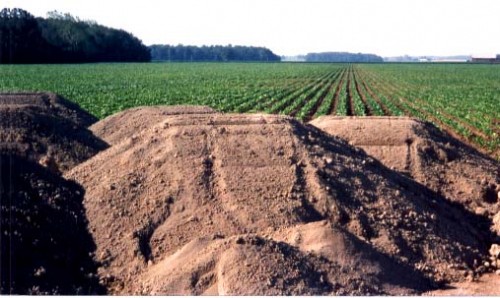
Dan region’s sewage sludge smells like an appetizing business venture for N-Viro International.

The Ohio-based environmental and materials operating company, which pioneered the conversion of sewage sludge  into commercial soil fertility products, is expected to open a new N-Viro Soil manufacturing facility to serve Israel’s Greater Tel Aviv region by the end of this year.

Abu Dhabi Company Aabar to Get into the Electric Car Business

0

The Tesla Roadster, a purely electric sports carThe Tesla Roadster is a purely electric sports car. Coming to Abu Dhabi?

The oil-rich United Arab Emirates owe most of their wealth to their natural abundance of petroleum.  But what they’re starting to do with that wealth is very interesting.  Abu Dhabi, for example, is increasingly leveraging its oil wealth in favor of positioning itself as a center for clean energy.

Last week Aabar, a company controlled by the emirate of Abu Dhabi, acquired 40% of Daimler’s interest in Tesla Motors Inc. in order to jointly work on the development of lower carbon emission vehicles.

Khadem Al Qubaisi, the Chairman of Aabar Investments, said that “when we acquired our stake in Daimler in March we identified a number of potential areas for cooperation between our two businesses.  One of these was a desire to focus on the development of electric vehicles and projects aiming at the reduction of CO2 emissions.  Our joint involvement with Daimler in Tesla is completely in line with this strategy.”

The CEO of Daimler, Dr. Dieter Zetsche, similarly expressed a positive outlook about joint work with Aabar, and explained that “Aabar is supporting us with the development of battery systems and electric power trains, accelerating the worldwide commercialization of electric vehicles.”

Lebanese Expats Build Suburbia in Bint Jbeil

7

lebanon-map-bint-jbeilAccording to Lebanon’s Daily Star, the war-ravaged southern town of Bint Jbeil is remaking itself as a suburban summer getaway for expatriates who left over the last three decades of strife.

Suburban living has made deep imprints across the Middle East, particularly in the shopping malls that have sprouted up in the West Bank and the mega-mall planned for Israel’s Beer Sheva.

In the war of 2006, Bint Jbeil was a major flashpoint between Hizbollah and Israeli troops; Hassan Nasrallah delivered an incendiary speech there. But the violent history starts earlier: Bint Jbeil was invaded by Israeli troops in the 1978 Operation Litani. From 1982-2000, Israel occupied southern Lebanon, including Bint Jbeil, following the country’s civil war.  The Daily Star reports that thousands of Lebanese left the country during the 1970s and 80s to start anew in the American Midwest, particularly Dearborn, Michigan. Since 2000, they’ve come home for summers spent in villas that remind them of their adopted home:

Pollution in a Promised Land: Alon Tal on Israel and the Environment

2

alon-tal-pollution-promised
Here in Israel a few months ago we celebrated Yom Ha’atzma’ut or Independence Day with fireworks, barbecues, and mutual congratulations on how much we’ve achieved in 61 years –– absorbing millions of immigrants, sustaining a vibrant democracy, building a dynamic economy –– and a certain amount of soul-searching about how much we still haven’t: peace, intra-Jewish harmony, a national soccer team that qualifies for the World Cup finals and more.

In honour of Yom Haatzmaut, I read a brilliant 500 page book ––rather sad, I know, but that’s the kind of kid I’ve always been ––Prof. Alon Tal’s “Pollution in a Promised Land: An Environmental History of Israel” is the definitive work on the subject. In retrospect it was also the perfect read for the day.

Tal’s book does much more than its subtitle claims. As you would expect it tells the story of how Israel’s rapid economic development has come at a high environmental price; it traces the roots of Israel’s current water crisis to bad planning and short sightedness in the early years of the State;

BGU Makes Green Plan for Bedouin City of Rahat

3

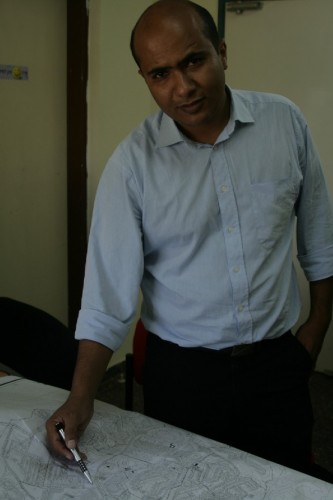
ahmad-amraniAs a geography Master’s student at Beer Sheva’s Ben-Gurion University, this semester I took a class in environmental law and policy with Alon Tal (we profiled him here). Our final project was to work on a green plan for Rahat, an Israeli Bedouin city that suffers from serious issues of garbage control, shade, green spaces and environmental awareness.

The Jerusalem Post’s Ehud Zion Waldoks covered our final meeting. As a member of the open spaces team, I went on a field trip to Rahat with Ahmad Amrani (left) who is trying to green the city. Rahat is not the first Bedouin locale to take on the environment; Darijat is Israel’s first solar village.