Creators who want to influence people for good should also think carefully about tone. Environmental storytelling does not need to lecture or shame audiences. It can invite curiosity instead.
The company's Next Generation Process (NGP) Pilot Plant in London, Ontario, has officially moved into initial operating campaigns, generating the kind of structured, repeatable data that separates laboratory promise from commercial viability.
In the modern nutrition universe, that level of commitment deserves an applause. But for those who don’t live in a Nordic fishing village, the nutrition company Zinzino has built its omega-3 research and formulations around these principles, combining biomarker testing, antioxidant protection and traceable sourcing across both sustainably harvested small-fish oils and a vegan marine-microalgae alternative.
Dubai Municipality has set up 12 AI-powered "Ehsan Stations" to safely and officially feed strays. The city also officially supports Trap-Neuter-Return (TNR) programs.
Creators who want to influence people for good should also think carefully about tone. Environmental storytelling does not need to lecture or shame audiences. It can invite curiosity instead.
The company's Next Generation Process (NGP) Pilot Plant in London, Ontario, has officially moved into initial operating campaigns, generating the kind of structured, repeatable data that separates laboratory promise from commercial viability.
In the modern nutrition universe, that level of commitment deserves an applause. But for those who don’t live in a Nordic fishing village, the nutrition company Zinzino has built its omega-3 research and formulations around these principles, combining biomarker testing, antioxidant protection and traceable sourcing across both sustainably harvested small-fish oils and a vegan marine-microalgae alternative.
Dubai Municipality has set up 12 AI-powered "Ehsan Stations" to safely and officially feed strays. The city also officially supports Trap-Neuter-Return (TNR) programs.
Creators who want to influence people for good should also think carefully about tone. Environmental storytelling does not need to lecture or shame audiences. It can invite curiosity instead.
The company's Next Generation Process (NGP) Pilot Plant in London, Ontario, has officially moved into initial operating campaigns, generating the kind of structured, repeatable data that separates laboratory promise from commercial viability.
In the modern nutrition universe, that level of commitment deserves an applause. But for those who don’t live in a Nordic fishing village, the nutrition company Zinzino has built its omega-3 research and formulations around these principles, combining biomarker testing, antioxidant protection and traceable sourcing across both sustainably harvested small-fish oils and a vegan marine-microalgae alternative.
Dubai Municipality has set up 12 AI-powered "Ehsan Stations" to safely and officially feed strays. The city also officially supports Trap-Neuter-Return (TNR) programs.
Creators who want to influence people for good should also think carefully about tone. Environmental storytelling does not need to lecture or shame audiences. It can invite curiosity instead.
The company's Next Generation Process (NGP) Pilot Plant in London, Ontario, has officially moved into initial operating campaigns, generating the kind of structured, repeatable data that separates laboratory promise from commercial viability.
In the modern nutrition universe, that level of commitment deserves an applause. But for those who don’t live in a Nordic fishing village, the nutrition company Zinzino has built its omega-3 research and formulations around these principles, combining biomarker testing, antioxidant protection and traceable sourcing across both sustainably harvested small-fish oils and a vegan marine-microalgae alternative.
Dubai Municipality has set up 12 AI-powered "Ehsan Stations" to safely and officially feed strays. The city also officially supports Trap-Neuter-Return (TNR) programs.
Creators who want to influence people for good should also think carefully about tone. Environmental storytelling does not need to lecture or shame audiences. It can invite curiosity instead.
The company's Next Generation Process (NGP) Pilot Plant in London, Ontario, has officially moved into initial operating campaigns, generating the kind of structured, repeatable data that separates laboratory promise from commercial viability.
In the modern nutrition universe, that level of commitment deserves an applause. But for those who don’t live in a Nordic fishing village, the nutrition company Zinzino has built its omega-3 research and formulations around these principles, combining biomarker testing, antioxidant protection and traceable sourcing across both sustainably harvested small-fish oils and a vegan marine-microalgae alternative.
Dubai Municipality has set up 12 AI-powered "Ehsan Stations" to safely and officially feed strays. The city also officially supports Trap-Neuter-Return (TNR) programs.
Creators who want to influence people for good should also think carefully about tone. Environmental storytelling does not need to lecture or shame audiences. It can invite curiosity instead.
The company's Next Generation Process (NGP) Pilot Plant in London, Ontario, has officially moved into initial operating campaigns, generating the kind of structured, repeatable data that separates laboratory promise from commercial viability.
In the modern nutrition universe, that level of commitment deserves an applause. But for those who don’t live in a Nordic fishing village, the nutrition company Zinzino has built its omega-3 research and formulations around these principles, combining biomarker testing, antioxidant protection and traceable sourcing across both sustainably harvested small-fish oils and a vegan marine-microalgae alternative.
Dubai Municipality has set up 12 AI-powered "Ehsan Stations" to safely and officially feed strays. The city also officially supports Trap-Neuter-Return (TNR) programs.
Creators who want to influence people for good should also think carefully about tone. Environmental storytelling does not need to lecture or shame audiences. It can invite curiosity instead.
The company's Next Generation Process (NGP) Pilot Plant in London, Ontario, has officially moved into initial operating campaigns, generating the kind of structured, repeatable data that separates laboratory promise from commercial viability.
In the modern nutrition universe, that level of commitment deserves an applause. But for those who don’t live in a Nordic fishing village, the nutrition company Zinzino has built its omega-3 research and formulations around these principles, combining biomarker testing, antioxidant protection and traceable sourcing across both sustainably harvested small-fish oils and a vegan marine-microalgae alternative.
Dubai Municipality has set up 12 AI-powered "Ehsan Stations" to safely and officially feed strays. The city also officially supports Trap-Neuter-Return (TNR) programs.
Creators who want to influence people for good should also think carefully about tone. Environmental storytelling does not need to lecture or shame audiences. It can invite curiosity instead.
The company's Next Generation Process (NGP) Pilot Plant in London, Ontario, has officially moved into initial operating campaigns, generating the kind of structured, repeatable data that separates laboratory promise from commercial viability.
In the modern nutrition universe, that level of commitment deserves an applause. But for those who don’t live in a Nordic fishing village, the nutrition company Zinzino has built its omega-3 research and formulations around these principles, combining biomarker testing, antioxidant protection and traceable sourcing across both sustainably harvested small-fish oils and a vegan marine-microalgae alternative.
Dubai Municipality has set up 12 AI-powered "Ehsan Stations" to safely and officially feed strays. The city also officially supports Trap-Neuter-Return (TNR) programs.
Corals caught munching on jellyfish. Are they adapting to climate change?
It would seem that jellyfish, often referred simply to as “jellies” wouldn’t have any problem floating around near patches of coral – unless that coral just happens to be a predatory species known as mushroom coral, or fingia scruposa in Latin.
This unusual phenomenon was seen last March in the coral reefs near the southern Israeli city of Eilat, on the Gulf of Aqaba. The story was reported in a British environmental news site Earth News which is part of the BBC. It’s as though corals may be reacting to stressful conditions at sea by changing their eating habits.
Dubai’s been building without limits and now seeks debt hold on “The World” artificial islands project.
When the idea was conceived, money seemed limitless, their goals too: Real Estate developers Nakheel of the artificial island “World” project in Dubai now say they will ask creditors to accept a moratorium on debt worth billions of dollars, according to Al Jazeera.
The World is a man-made archipelago of 300 islands constructed in the rough shape of a map of the landmasses of the Earth, located 4 kilometres off the coast of Dubai, United Arab Emirates. Its islands are composed mainly of sand dredged from Dubai’s shallow coastal waters, and is one of several artificial island developments in Dubai. The project was originally conceived by Sheikh Mohammed bin Rashid Al Maktoum, the ruler of Dubai. The project has since been suspended due to a cash-flow problem.
Despite a number of objections by both environmentalists (who say wind farms are dangerous to birds and are aesthetically ugly; there isn’t enough water available for use in the solar energy plant turbines), California’s largest utility company is planning on investing up to $1.5 billion on developing solar and wind energy farms – and some of that money will be going to Middle East companies.
The Eilat-Eilot International Renewable Energy Conference reports that the Toronto Stock Exchange (the TSX) is looking to develop relationships with Israeli clean tech companies. The Toronto Stock Exchange offers the world’s largest market for clean tech companies, and the world’s eighth largest stock exchange, according to the release.
Israeli companies, especially hi-tech and biotech companies are well-represented on the NASDAQ, New York and London Stock Exchanges, but they are yet to establish themselves on the TSX.
Clean technology companies from Israel or by Israeli scientists are not yet at the stage to be publicly traded, but some companies like the geothermal energy company Ormat (based in the US) are traded in the US. A past exec from this company split off from Ormat to form his own geothermal company Ram Power, now listed on the Toronto exchange.
“Israel is a world leader when it comes to clean technology developments, however the companies behind these developments often have trouble marketing their technology and raising money – this is where we see our added value in any partnerships we establish,” says Raymond King, a business development manager at the Toronto Stock Exchange.
Modern agriculture practices in Israel have caused population shifts in animal species.
Is a border line simply a virtual line appearing on the map? If so, why is it that Israeli rodents are more cautious than Jordanian rodents? Why is it that there are more ant lions in Israel than in Jordan? And how come there are more reptile species in Jordan than in Israel?
A series of new studies at the University of Haifa’s Department of Environmental and Evolutionary Biology and the University of Haifa-Oranim’s Faculty of Sciences and Science Education are exploring the answers.
During the week of November 15, 2009, the 2009 WATEC water conference took place in Tel Aviv. Israel plans to desalinate Cypriot water and Green Prophet wrote about two companies that are generating power from leaks in water pipes. For these stories and the rest of this week’s 9 Israel-related cleantech headlines, see below.
Negev farmer Doron Akiva, grows organic olives for Negev Nectars. His piece of land has reputedly been farmed since the time of David and Solomon.
“A land flowing with milk and honey” – that’s one of the most well-known passages from Exodus describing the Land of Israel and one of the first biblical expressions to make its way into the English language. Today, Israel is known for its abundant variety of high-quality food products made from these very ingredients.
While olive oil and dates from Israel are widely available in the United States at supermarkets and health food stores, a new American company called Negev Nectars – based in the Tri-State region – is making sure that the very “best of the sustainable best” from Israel will be delivered to American doorsteps, three times a year.
In a community-supported agriculture (CSA) style distribution network, Americans interested in enjoying Israeli-grown organic olive oil, herbal teas, honey, dates, chutneys and preserves, can satisfy their passion and eco-yearnings by subscribing to Negev Nectars’ CSA.
For $180 a year (the number translates to “life” multiplied by 10 in Jewish numerology), subscribers enjoy hand-selected foods that meet the rigorous standards and values of the most discriminating eco-aware individuals. Profits are channelled back to supporting the farms and people in Israel that practice sustainable farming. These practices benefit the Middle East region and ultimately the entire world.
A green gift from the Middle East
Initially, the boxes will be delivered before major Jewish holidays, but as the endeavour grows, Negev Nectars’ founders Marvin Israelow and Jeffrey Yoskowitz plan to expand deliveries to coincide with major seasons and holidays for people of other faiths as well.
It’s a healthy idea that sends the right message. When you support Negev Nectars, you’re putting your money where your mouth is, because the venture gives back to individuals and farms that are working in desert agriculture R&D and growing crops in harsh desert climates. These practices can and do reverberate across the entire Middle East.
“Most of the shelf-stable products I’m bringing over to the US are made from crops grown with brackish water, using the latest water saving technology to grow in the desert, and for the olive trees, using mainly a desert olive, the Barnea olive, which was discovered in the Sinai and yields more oil per fruit than most other varieties,” says Yoskowitz.
While some people believe it’s essential to reduce the size of your ecological footprint by supporting no-impact or low-impact food – meaning that the food that you eat should be grown and produced locally – Yoskowitz sees no contradiction between maintaining these values and buying into a Negev Nectars’ CSA box.
Thinking global, acting locally
In the Northeast United States where Negev Nectars is setting up, there is no locally produced olive oil. “You can’t get sustainable organic olive oil here,” says Yoskowitz. In fact, he adds “you can’t get [locally grown] olive oil at all.” Despite that, “everyone’s’ still buying olive oil,” he points out.
Olive oil, a staple food in Mediterranean climates, is known for its health properties. It can reduce ‘bad’ cholesterol, while providing the good cholesterol our bodies’ need to function.
Negev Nectars’ founder Israelow is an American philanthropist who supports desert farming research out of Ben Gurion University in Israel. Yoskowitz (pictured left) is an environmental activist, filmmaker, writer and blogger for Green Prophet. Both scoured Israel this summer to locate and select the best products for their CSA members.
“It’s one of the ways to get to know the land of Israel,” says Yoskowitz, who seems particularly pleased that Negev Nectars offers an olive oil produced from the biblical site Kadesh Barnea. It’s likely a spot where the Israelites camped along the Exodus route they took from Egypt to their Promised Land.
Update June, 2019: Negev Nectars is no longer in business.
A North American Jewish environmental awareness center is expanding its programs in environmental education to make Jewish students more aware of the need to combine the values of Judaism with those of preserving the environment.
The Teva Learning Center, headed by Director Nili Simhai, has become North America’s foremost Jewish environmental education institute, with the purpose of combining concern for preserving the natural environment with the spiritual ethics taught in Judaism, including recognizing the beauty of God’s Creation of the world and the role we all have in understanding and perpetuating the “cycles of Creation” as found in the Bible.
The second annual meeting of the Arab Forum for Environment and Development (AFED) took place this past Thursday and Friday, this time with a harsh warning. That we are not doing enough to prevent environmental catastrophe in the Middle East.
Drawing together a versified group of delegates from the Middle East and North Africa, AFED is an attempt to form a unique Arab forum that is instrumental in promoting new environmental policies. AFED’s mission statement states that “the necessity has emerged for an independent non-governmental Arab forum, active and influential in promoting policies and projects to support sustainable development and defining common environmental issues, in a manner which helps in designing plans to tackle future challenges.”
The timing of the conference comes three weeks before the climate change summit in Copenhagen.
At the conference, environmental experts warned the delegates about the extreme effects that climate change would have on the Middle East. They stated that although the Middle East and North Africa only produce 5 percent of global carbon emissions, the region would be particularly devastated by rises in air and sea temperatures.
Internal pinhole cracks get repaired by Curapipe’s little pig train.
Small, pin-hole leaks in water, oil, and other types of pipelines often result in substantial fluid losses as well as environmental damage. It now appears that an Israeli company CuraPipe Systems has invented a unique way to seal pinhole leaks in water and other types of piping networks.
This year’s poor olive harvest isn’t just an environmental issue: it’s a metaphor for the Israeli-Arab conflict.
Israeli Itzhak Moreno holds a sack of freshly picked, plump Israeli olives, purple and ripe for the press. For the past year, he has been toiling in an orchard off the main road to Jerusalem, waiting for the right moment to harvest his olives and produce extra virgin olive oil. But the sack he holds does not contain fruit he collected. He confiscated it from thieves from a nearby Arab village who stole his fruit in middle of the night.
“We need to guard our olives during the day, evening and night,” Moreno says. “There are a lot of Arabs around here and they come and steal olives from us. This is our reality.”
Across the mountains, deep in the West Bank, Palestinian farmer Fadel Ahmed Narwajeh looks dejectedly into his half-filled bucket of olives. Above him stand armed Israeli soldiers. But Narwajeh is actually pleased to see troops, as they are there under a Supreme Court order to protect him and his grove from Jewish settlers who have laid claims on the land and have damaged his olive trees.
Recognizing sewage as a resource and alternative source of energy, Israeli company Applied CleanTech is ready to commercialize its mechanical and chemical solution that separates sewage into raw materials like cellulose and oil.
The company further aims to collect every bit of solid waste that ends up at the water treatment plant, and recycle it into valuable raw materials.
Prof. Yair Ein-Eli hopes that one day his new green battery could be used in anything from hearing aids to electric cars.
Perhaps it was Israel’s deserts and dunes that supplied the inspiration for Prof. Yair Ein-Eli’s battery that lasts for thousands of hours and has a silicon power source that reverts back to sand when it’s spent.
The research was conducted at the Technion – Israel Institute of Science and recently published in the journal Electrochemistry Communications. The article explores how this new breed of portable electrochemical battery produces thousands of hours of charge from an abundant and non-polluting fuel source.
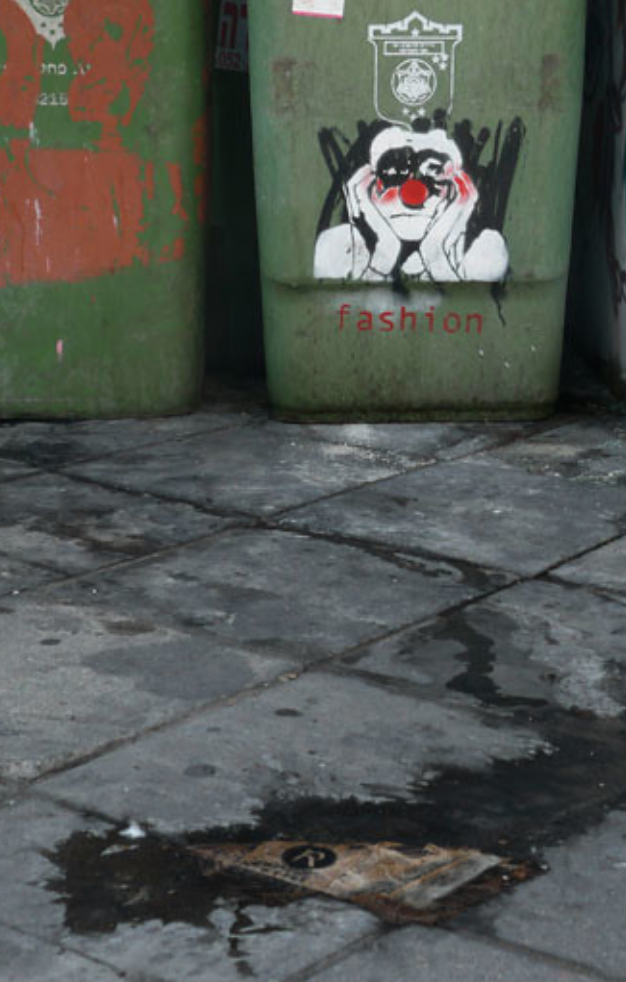
Is fashion garbage? Maybe asks this graffiti monster.A bit messy, but Israelis ask how art can be a tool for peace, an elusive quest
Reusing an abandoned movie theater as an art exhibition space? There’s an idea. An idea conjured up by the Inspire Collective (not active online since 2016 – updated 2020), an inspiring group of artists who describe themselves:
“We’re a small group of full time public artists now (for the last 7 years) working with a wide variety of mediums and organize global public art exhibitions, etc…an inspired art/activist collective in the Middle East working for a positive social climate by underemphasis of politics, economy, and dogma thru the overemphasis of art, creativity, and the dynamics human spirit that refuses to submit to oppression.
“We are people who know that cooperation is magic.”
“Street art and graffiti are the world’s largest and strongest social expression movements in history,” say the people from Reuse
Since the formation of the ubiquitous INSPIRE Collective (in West Jerusalem in 2003), we have helped over 700 independent artists from around the world to exhibit their works here in the Middle East.”
Their latest project was ReUse 3, an art exhibition that took place last night and transformed an abandoned movie theater on Pinsker Street in Tel Aviv into an exhibition space to temporarily house the works of 150 local and international artists.
Led by graffiti artists who think their renewal ideas are supreme? This is a neglected building in the Jaffa Port. Converted into a huge set of dentures, using graffiti.
Inspire Collective explains the mission of the exhibition as follows: “On November 19th; Are will have a social cause: whether we like it or not, abandoned and neglected spaces are a global bi-product of industrial abuse.
Due to the wasteful nature of capitalist ideologies, real world problems, like homelessness, poverty”, and social alienation never seem to get solved, yet rethinking and reusing these neglected and abandoned spaces within our own communities can help to ease these societal ills.”
Reusing these public spaces causes us to perceive these spaces without economic glasses; it helps us to see through a more social lens & potentially reverse the process of these problems around the world.”
The notion of recycling and using “kilim” or tools from another primary use is mentioned in the Mishna. Here is a paper on ancient sources and discussion on the Jewish ideas behind reuse (links to PDF).
The authors analyzing perhaps where our throwaway culture came from, write:
“Recycling itself is probably as old as – indeed, seems to be a fundamental characteristic of – the human species. The archaeological record is crowded with artifacts that display the results of recycling behavior.”
“Recycling was the result of it not always being clear what to do with garbage. Should one leave it where it was or fell, in the house, courtyard, or street, which would result very often in pungent unpleasant results; or bury it near or further away from one’s town or dwelling, requiring time and effort; or cart it to a dump, also requiring time and effort?
“While scavengers might have removed some of it for use or recycling, garbage, even in ancient times, continued piling up.
Recycling and continued use of broken implements for as long as possible, of course, reduced some problems of waste control. Ancient society was not a “waste maker” society. On the other hand, recycling and using broken implements reflected an almost inbred aversion in the ancient world to a throwaway society. Implements were either expensive, difficult to make or replace, or provided parts that might be used for recycling.
“This even resulted in a phenomenon known as “provisional discard.” “Junk” might be kept around the house until some use was found for it as a
“From analyzing the finds in “middens,” or piles of refuse, archaeologists learned that people did occasionally throw away perfectly good tools or implements.
“While trash was a function of class, and clearly, the well-to-do would make more trash and could discard objects with less concern than their poorer neighbors or fellows, they seem to have respected thrift concerning objects and implements.”
The participating artists in ReUse 3 included (drum roll):
A1one
Bafl
DEDE
lil lil
JAEone
por el sol
surianii
geerard
RADICAL BPN
FALTO
dninja
IMC
donstarkell
relish
Eclisse Creazioni Art & Photography
ant
Natashalatrasha
POE
AFK Crew
Seven Logo’s
Gatsycakes
ZUrigo
camila lash
Gorm
Yelz1
Mkan1
HOL2WEG
Stahler
Mimi The Clown
C215
fineartvaughn
Tarkinson
aka WASS
DOM?NIC
Ryan Seslow
The Rat Bat
korp
ciah-ciah
Stick-A-Thing
Loki B
Just Do It Miss Kaplan
teoz
JaxieJax
Cans Can Fly
Stelleconfuse
Simon Milligan
NOLA Rising
Silly Girl (Paris)
Aphro
Biafra Inc.
Himbaer
dellboy
Earworm
Waattt?
Neromonga
pHoG!L
Uno Blasé
SEAMOnster
VisualDirt
Langa
-TONA-
psycoholics_nyno
VinylOne
ABCNT
found around
Rene Gagnon
Kevin Soto
машка
Shameless
X-10
Jason Mamerella
The Sinna
Ame72
DeadlyDaisy
xgrimerx
GG
Funk25
hRODh
DogTired
Haevi Styles
bimimonsters
SINHA
Miss Understood
ASHK
SEVEN (LOGOS)
RedRidingHood
CONTRA
NE1
XOCH
EXEL/AK77
SeveN
ROST1
dint wooer krsna
Mr Penfold
Claudio Parentela
davaca
ICY
SOT
popay
Janene Gentile
Appearing on CNBC, serial entrepreneur Jon Medved mentions the thousand or so clean tech start-ups in Israel.
He’s also talking about the tried tested and true clean tech companies: In geothermal energy, the largest in the world is Israel’s Ormat (ORA) which trades on the NASDAQ.
Medved discusses the solar companies Solel and BrightSource. Solel has been operating plants in America for 30 years. These two companies are now neck in neck, looking to provide power for 2.5 million homes in California.
Medved also talks about the Ashkelon’s IDE which builds desalination plants in 35 countries around the world. He also touches on irrigation, and Shai Agassi’s Better Place.

 Corals caught munching on jellyfish. Are they adapting to climate change?
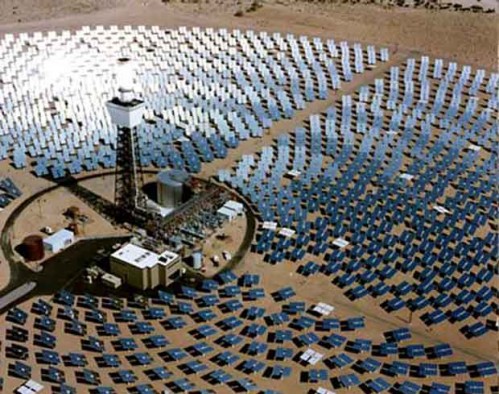
 PG&E says it will more than a billion in alternative energy projects.

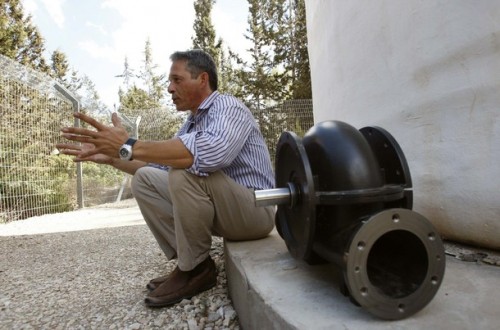


 Negev Nectars’ founder Israelow is an American philanthropist who supports desert farming research out of Ben Gurion University in Israel. Yoskowitz (pictured left) is an environmental activist, filmmaker, writer and blogger for Green Prophet. Both scoured Israel this summer to locate and select the best products for their CSA members.
![main_pic5[1]](https://www.greenprophet.com/wp-content/uploads/2009/11/main_pic51-500x372.jpg)

 Internal pinhole cracks get repaired by Curapipe’s little pig train.
 This year’s poor olive harvest isn’t just an environmental issue: it’s a metaphor for the Israeli-Arab conflict.