Home Blog Page 662

Yemen to Soon Have the World’s First Waterless Capital

14

Yemen’s water crisis is worsening as the country struggles with armed conflicts on three fronts. Above: a village well almost runs out of water.

As delegates head to the United Kingdom for a key conference on Yemen, experts warn that Sanaa could become the first capital in the world to run out of water within a decade. “Water is one of the underlying challenges that needs to be addressed in order to secure the long term development and stability of Yemen,” Ginny Hill, an associate fellow at Chatham House’s Middle East and North Africa Program told The Media Line.

“Everybody is so focused on immediate concerns about anti-terrorism, but there are a number of underlying issues that are facing the Yemeni government,” she said. “Resources like water and oil are running out.”

Morocco Developing an Environmental Charter

3

morocco donkey drinking water photoMorocco, still very undeveloped compared to the west, looks to make an environmental plan of action.

Morocco is currently consulting with political and environmental groups and activists over the preliminary draft of the country’s environmental charter, which targets preserving the environment and fostering sustainable development.

While the first draft was taking shape, the government in Rabat is struggling with how to encourage Moroccans to practice environmental stewardship. To address this issue, King Mohammed VI has launched the country-wide consultation, while also holding regional awareness-raising workshops in January to bring awareness to the average citizen.

As the consultation heads for its February 23rd conclusion, there is still much disagreement over the clarity of the draft and its accessibility to Moroccan citizens.

“I think it’s easy for citizens to understand the charter,” Environmental Ministry spokesperson Abderrahim Diab told Magharebia news website on January 24th.

RECIPE for Ma’amoul Cookies, a Tender Arabian Pastry Delight

12

mamaoul cookies sweetiesMa’moul means “filled” or “stuffed” in Arabic, and these tender, crumbly pastries are stuffed with dates or nuts.

Traditionally, they’re made in special wooden molds that imprint the pastry with individual designs – so you know if your ma’amoul is stuffed with walnuts, dates, or pistachios, without having to take a bite.

People all over the western east eat them at holiday times: Moslems during the nights of Ramadan, and Christian Arabs at Easter time. Jews of Egyptian and Lebanese origin eat ma’amoul stuffed with nuts at Purim because tradition says that Queen Esther, heroine of the Purim story, ate nothing but nuts, seeds, and fruit from the day she entered Ahasuerus’s palace. And as she hid her Jewish origin, so the dainty pastry hides the rich nut filling inside.

Lacking the special mold, you can simply roll walnut-sized balls of  pastry, drop a teaspoon of filling in the center of each round, and gather the edges up towards the top, pressing it shut to hide the filling. Here’s the recipe.

Cook Time: 15 minutes

mamoul cookies recipe

Ingredients:

2 cups all purpose flour

1 cup semolina

2 sticks salted butter, softened

1/2 teaspoon allspice

1/4 teaspoon orange blossom water or 1/2 teaspoon rose water

2 1/2 tablespoons sugar

1/4 cup chopped nuts (pistachios, walnuts, or almonds)

powdered sugar for dusting

2 tablespoons milk

Preparation:

Preheat oven to 350 degrees Fahrenheit.

In a medium bowl, combine flour and semolina. Set aside.

In a smaller bowl, beat together butter for 30-45 seconds. Slowly add in flour mixture until combined. Stir in milk, allspice, and orange blossom water. Roll dough into 12 pieces.

In a small bowl, combine nuts and sugar. Set aside.

Grab your dough and push into 2 inch circles onto parchment lined cookie sheet. Place about 1 teaspoon of nut mixture on top of dough. Fold and press dough together to seal the filling. Repeat with remaining dough and nut mixture.

Bake for 20-25 minutes until golden brown.

Drinking Beer in Cans and Other Middle East Regional Recycling Problems

9

old beer cans vintage fritz brew photoThese steel cans will take years to oxidize completely

Let’s face it everybody: recycling, or the lack of recycling that is, is one of the biggest environmental problems this planet faces after climate change.

This situation is a very acute one here in the Middle East, as noted in some previous Green Prophet articles such as “The Middle East is Drowning in Waste,” Lebanon’s Sidon garbage dump (where “you smell it before you even see it”) and Israel’s well known “landmark” the Hiriya garbage mountain that is in the process of being turned into a national park.

But one apparently growing problem, at least in alcohol consuming Israel that is, is the one dealing with litter caused by beer and other beverages processed in non-recyclable containers – especially cans.

Mama Nazima’s Jewish-Iraqi Cuisine by Rivka Goldman

7

jewish iraq food recipes bookA culinary heritage centuries old is preserved in this cookbook.

This is a Jewish collector’s cookbook. It contains 100 old-fashioned recipes that evolved out of the centennial Jewish presence in Iraq, plus a synopsis of Jewish history there.

Through the book run parallel threads, the main one being the recipes. Around the recipes are comments and traditional Arab proverbs revealing glimpses of the old Jewish-Iraqi culture. Another is the author’s memories of her mother, to whom she dedicated the book; and a third, Iraqi anti-Semitic persecution culminating in a pogrom in 1941, and the community’s exit from their ancient home in 1950.

The recipes themselves are appetizing and easy to follow. The author lays great claim on the healthiness of the food, which is easy enough considering that almost every recipe includes fresh vegetables. I was pleased to see two variations on majadra, a combination of rice and lentils. Most of the desserts are based on fruit, such as date-almond balls and apple-cinnamon rolls.

There seems to be a great love of stuffed foods in Iraqi culture. There are stuffed vegetables and leaves, turnovers stuffed with chickpeas or meat, kibbeh dumplings filled with meat or fish. One chicken recipe calls for a stuffing composed of meat and spices. There is even a fruit stuffed with meat: quinces. And the seasonings featured call to mind all the exotic flavors of the Orient. Cumin, ginger, cinnamon, cloves, hot paprika, cilantro and garlic are some.

However, I found mistakes in the recipes. The savory turnovers call for 1 cup of water and 2 of flour, which would produce a thick batter rather a dough. I added another cup of flour and my chickpea turnovers came out fine – I concluded that a typo had been allowed to go uncorrected. This is a problem, because it’s repeated with every savory turnover recipe, and there are three.

A recipe for sweet turnovers stuffed with nuts and honey is missing the flour for the dough until you look at the stuffing ingredients, and there is the flour. These mistakes are annoying and have probably made inexperienced cooks create some strange variations.

The photographs add little, being small, blurry, and for some reason all a monochrome green.

People interested in Jewish cuisine and culinary history will find this cookbook worth having. But I advise reading through each recipe carefully before tackling it, and using your common sense if something doesn’t look right.

Mama Nazima’s Jewish-Iraqi Cuisine is published by Hippocrene Press, NY. ISBN 0-7818-1144-9. You can buy it here on Amazon and in doing so a small percentage of your purchase will support quality environmental journalism on Green Prophet.

Middle-Eastern recipes you might enjoy cooking:

GM's Volt Versus the Renault-Nissan Electric "Better Place" Edition

13

electric car nissan renault Chevy’s Volt Concept Car – Better than Better Place?

In the past year or so, we’ve posted a number of articles dealing with electric cars and the technology surrounding them, especially those being developed by an Israeli company, Better Place, whose total electric version was exhibited at the recent COP 15 Conference on Climate Change in Copenhagen. And if you’ve been reading the news you wouldn’t have missed a recent $350 million investment in the company led by HSBC. So somebody is believing in them.

By this time next year, several types of electric cars are expected to be available to the general public, including General Motor’s new Chevrolet Volt version.

Saudi Arabia Seeks to Join International Renewable Energy Group IRENA

saudi arabia irenaWill Saudi Arabia’s IRENA Membership Help Influence  Environmental Change?

Saudi Arabia, a country which still contains much of the world’s remaining petroleum reserves, is now trying to put its environmental “money where its mouth is” by joining the International Renewable Energy Agency (Irena). In an article posted on January 17 in the UAE’s “The National” English news site, Saudi Arabia has expressed interest to join the multinational clean energy organization, headquartered in Abu Dhabi.

Dr. Sultan al Jaber, the chief executive of Masdar, Abu Dhabi’s clean-energy firm, said IRENA, as the energy agency is known, had received “official notification from Saudi Arabia to become a signatory state.” 

During the IRENA meeting, which preceded the opening of the 2010 World Future Energy  Summit, also held in Abu Dhabi,  Dr al Jaber said that he hopes that he will receive official word from Saudi Arabia that it will agree to become a member of IRENA within the next three weeks.

Muslim Reflects on Recycling Potential for the Middle East

8

snow uk roadsThe UK snow-in didn’t stop this Muslim woman from recycling. Now she proposes some reasons why the Middle East should start.

Snowy weather affects our recycling: Snow storms, heavy rain and the lack of grit to melt the snow on roads here in the UK delayed garbage collection for most of the country. That has led to a huge piling of garbage, recycling bins and glass bottles in my particular neighbourhood, but that hasn’t stopped me from organising my household rubbish into recyclable groups to reduce waste.

I’m a passionate Muslim environmentalist and strongly believe that individual effort has an impact globally. In this suburban English area foxes and rats are potentially spreading disease since the high number of rubbish bags in people’s gardens are being ripped open and biodegrading. I will have to resort to take my recycling products to local facilities, once the weather improves!

So how does my recycling affect any Middle Eastern country?

Well, plastic recycling is not widely practised in the Middle East. Even though recycled materials are collected, they’re not taken to recycling plants because companies don’t find it economically viable to do so.

Further information from “Recycling in the Middle East” (no longer updated, 2020 – we removed the link) states that plastic collected is used as land fillers but after 30 or so years the plastic starts to release methane gas, a very dangerous greenhouse gas with high global warming potential.

Why recycle?

• For every ton of paper that is recycled, at least 30,000 litres of water is saved.
• Around 3,000 to 4,000 KWh electricity is cut down.
• A reduction of around 95% of air pollution is achieved.

In Islamic culture recycling is a rewarding scheme which bring benefits to both people and the environment. Wasting on the other hand should be avoided as the Quran states: “…Do not waste by excess, for Allah does not love the wasters.” Quran, (6:141)

If I as a Briton can maintain my recycling come rain or snow I know in the long run it will help the planet as a whole.

Future Waste Management Development

I’m glad to know that while the main contributors of global warming – America, China and Russia – are being pressured to act faster, smaller countries who otherwise don’t get voiced are becoming more active in reducing their land waste.

For example the Abu Dhabi Environmental Authority is one company who plan to provide better administration of waste materials in the Emirates with solutions for the treatment of all types of waste materials.

Further, according to the World Bank estimates, billions of dollars will be invested in the environmental sectors in the Middle East over the next ten years.

Image via zaufishan

Is Israel Coming out of The Nuclear Closet by Planning Nuclear Power Station?

nuclear power station israelCleaner Than Coal? We Doubt it. But Israel mulls nuclear power.

It’s not just Abu Dhabi looking to build a nuclear power plant for generating electricity. According to the business newspaper Globes, Israel is considering building a nuclear power plant of its own in the Negev desert region.

Instead of looking to cleaner energy sources, the Israel Electric Company (IEC) says it is mulling the idea of building  a nuclear fuel power station as an option instead of a coal fueled one.  

Winter Heating Tips

1

With the cold creeping in it is tempting to do all you can, no matter how wasteful, to stay warm. The good news is that you don’t have to be wasteful to be warm! Typically, energy bills climb in the winter months due to the use of heaters. But if you are cold, and the heater isn’t doing the trick, the trick is not to turn the heater up, but to make sure it can work effectively.

Make sure that you don’t have any drafts. Holes around windows can cause loss of much-needed heat, a little bit of electrical tape around your windows can make a BIG difference. Also, proper insulation is a great investment. While the initial price might be steep, what you save of electricity will cover it in the long run. If you can’t replace your windows for double paned, consider covering them, curtains, can do a great job.

Finally, make sure that your heating system is running efficiently. If you are going with a space heater, some models need less energy than others. If you have central, have a technician come at the beginning of the season. A small maintenance bill can save you the cost of replacing the whole unit!

Happy winter!

Recipe: Reap Your Wild Oats To Make Nourishing Oatstraw Tea

29

wild oats recipeCalcium and mineral-rich oatstraw tea nourishes, soothes – and stimulates.

Wait – that’s supposed to be “sow your wild oats” – isn’t it?

It makes more sense to reap them. At this time of year in the Middle East, native Avena sterilis sends up its nodding seed heads in empty lots, fields, and neglected gardens everywhere. All you have to do is yank up a handful, stalk, leaves, seeds and all, and bring it home to make tea. The oat kernels hidden inside the bearded husk are tender and difficult to extract by hand, but the good news is, you can cut up an entire stalk (minus the root), take this oatstraw and brew a nourishing tea out of it.

How is oatstraw tea good for you? This home remedy is rich in calcium and the minerals and vitamins that nourish bones (helps prevent osteoporosis). It helps to stabilize blood sugar. Nowadays people know that when you eat the grain as oatmeal, you reduce cholesterol and improve blood circulation, but fewer take advantage of wild oats to make the infused tea, which does the same.

My Dream for an Organization that Helps the Homeless and the Environment

8

homeless people garbage middle eastKaren ponders the possibilities of a new social idea to help the homeless and the environment.

Walking down the street this morning, watching a homeless man rummage through the trash for recyclable bottles and cans, I had a dream.  A dream of an organization that helps the homeless while helping the environment.  A dream of an organization with a twofold social and environmental conscience.

What if there was an organization that encouraged the way that the homeless scavenge for recyclable goods?  Though fueled by economic necessity, their actions nevertheless help the environment and should be encouraged.

This could be done in many ways.  Through creating, for example, a one-stop recycling center and soup kitchen where homeless people could bring the cans and bottles that they’ve collected and receive double the normal worth of the returned deposits.  And while they’re there, it would be nice if there was a hot meal waiting for them free of charge, as well.

Or what if there was a way for homeless people to borrow small carts so that they didn’t have to carry around all those bottles and cans in bags slung over their backs?

Israeli NGO Tevel B'Tzedek Helps Rectify Environmental Damage in Nepal

5

Tevel b’Tzedek, an Israeli-based non-governmental organization, defines itself as being “dedicated to creating a new generation of Israeli and international Jews engaged in social and environmental justice by offering them a direct experience of the developing world through study and service internships.”

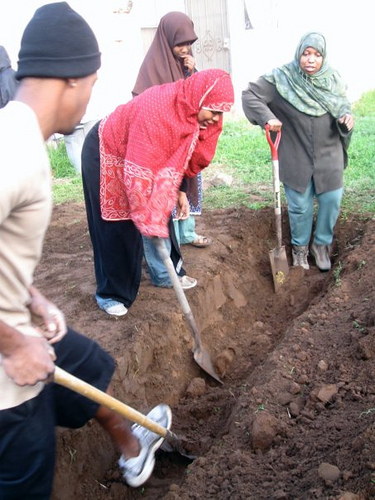
One of their most recent service internships, in the Dunwa Rai fishermen’s community in Nepal, brought 6 young Israeli and American Jews to help 30 local men and women rectify a polluted river situation.  The ecology of the river that the community had fished in for generations was disrupted, and so together all the volunteers dug a pool.

The Tevel b’Tzedek volunteers included a former officer in the Israeli army, an artist from Tel Aviv, and a recent graduate of UC Berkeley in Anthropology.

The project also developed an agricultural education center, and is bringing irrigation, fish farming (aquaculture), a vegetable nursery, greenhouses, bio-gas toilets and more to “a population whose struggle to improve their agricultural yield will mean the difference between whether they will be able to stay on their ancient lands or be forced to migrate to inner city slums.”  The project, then, achieves social improvement through environmental sustainability.

Sunday Solar to Build Large Solar Array on "Damaged" Negev Land

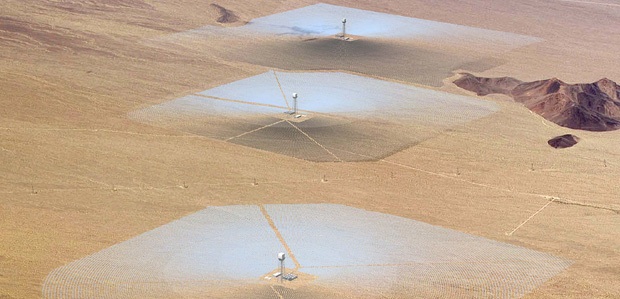
Israeli solar energy innovator Sunday Energy has been chosen to construct a solar energy panel array in a section of the country’s Negev desert region, according to an article in Globes financial news.

The 5 mw installation will be constructed together with Moshav Yad Natan in a 120 dunam (42.5 acre) area where the land as been designated as “damaged” or non-usable due to either extensive agricultural use or from erosion. Cost of the project is estimated to be around $26.3 million and will include photovoltaic (PV) solar panel arrays, engineering facilities and water reservoirs to supply the water needed to supply steam for the turbines that will generate the electricity.

Eltel Networks Smart Meters A Good Example for Middle East Countries to Follow

A “Smart Meter” vs The Old Standby

Many experts articles dealing with energy talk about saving energy costs using systems currently in operation.  Such is the case of a Finnish company Eltel Networks who have entered into an agreement with a large Finnish energy company Fortum  to supply more than half a million of these energy saving electricity meters to homes in this Nordic country of 5.4 million people.

The project is the largest of its kind in Finland and will be carried out by 2013. Eltel will start the installations of new smart meter boxes in 2010. The idea of installing these special electricity monitoring devices in businesses and private homes is hoped enable people to save a substantial amount on their electric bills, which can be quite high during Finland’s long and extremely cold winters.

The project is estimated to cost around 120 million Euro and will provide Fortum with real-time intelligence that will revolutionize both the customer relations and operations of its power grid.