Home Blog Page 655

Regional Cooperation Can Save Med Region Billions in Conservation Efforts

0

salit kark photo conservation israel mediterranean

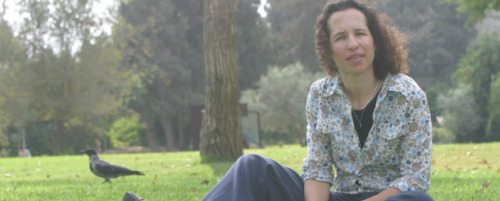
Green Prophet has reported on the research of Dr. Salit Kark a couple of months ago. I went on to interview her, and here’s a story about our conversation and her research that aims to save billions in conservation efforts in the unique Middle East region.

An Israeli researcher is playing a leading role in developing a pan-Mediterranean conservation effort which could save more than $67 billion for the 25 governments whose countries are situated around the Mediterranean Basin. Along with her researcher husband and an Australian colleague, Dr. Salit Kark recently wrote a paper that was the cover story in the Proceedings of the National Academy of Sciences. The researchers sought to determine how much energy could be saved if countries within the Mediterranean Basin were to collaborate on conservation decisions and efforts. After crunching the numbers, they estimated huge cost savings if the governments would merely work together.

Morocco Looks to $9 Billion Solar Project to Supply 40% of Country's Power By 2020

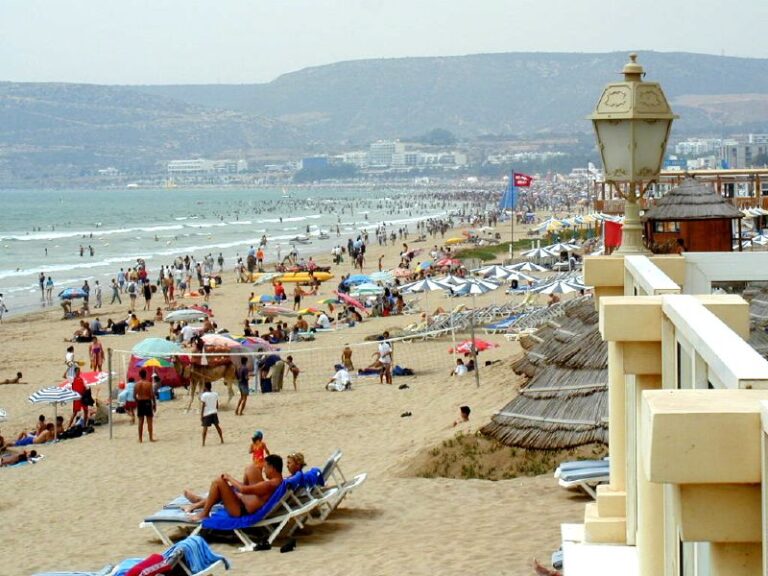
Every day is a beach day in Morocco. In a smart move, the country unveils its plans to solar-ize the nation. Image via joaomaximo

Countries in the Arab world are starting to wake up to the potential of solar energy, especially those with no known oil reserves. Morocco is the latest to announce its intentions to solar-ize the country in a $9 billion project, reports the Global Arab Network. When completed, by around the year 2020, Morocco could be supplying about 40% of its entire energy needs by way of the sun. The goals are ambitious, but Morocco’s officials say that the sunny North African country is clearly positioned to deliver: with 3,000 hours of sunshine a year, the country “feels” about 5 kWh per square metre per day.

Re-Assessing Masdar City

3

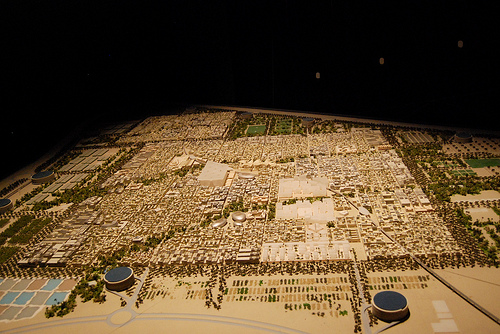
masdar city carbon footprintIs Masdar City a beacon for Middle Eastern development? It may take another 10 years to find out.

We have been skeptical of Masdar City and Foster+Partners, the architects responsible for the emergent eco-city’s design, but BBC reporter Tom Reap’s recent article paints a compelling portrait of this dubious venture.  Although projected building costs are exorbitant (approximately $22 billion), and the project is being funded by Sheikh Khalifa bin Zayed Al Nahyan’s vast oil fund, it is worth revisiting the drawing board to determine Masdar City’s merits.

A Day on Our Planet (Interactive Virtual Tour of Planet Earth)

0

See Virtual Tour of Earth at night.

It’s easy to forget sometimes what all this is for. With Earth Hour behind us and Earth Day coming in a little less than a month it can be overwhelming when we are bombarded by the media: “Do this for Earth Hour” and “If you don’t do that you obviously don’t care enough.” It can get tedious.

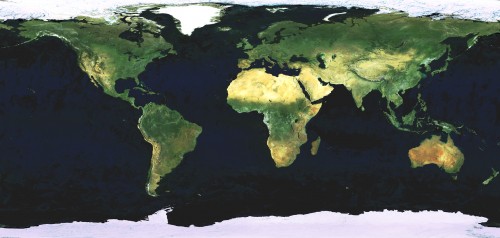
You may have come across the maps of earth compiled of satellite photos. As you know, there is no one point in time that Earth is entirely in the dark, or entirely in the light, as presented below. These images were stitched together from the highest quality, and cloudless, photos of every inch of the planet.

Japan and Saudi Arabia Plan Giant Desalination Equipment Plant to "Freshen Up" Regional Water Supplies

0

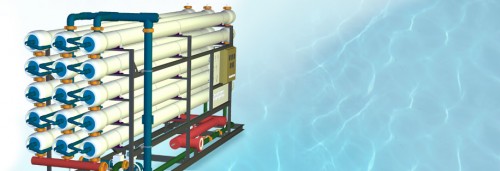
saudi arabia desalination plant with japan image Revese osmosis membrane equipment will help quench thirst of oil rich, but water-poor Saudi Arabia.

Saudi Arabia has been in the news a lot in regards to building desalination facilities, on which the Kingdom depends for most of its fresh water supplies. This includes what has been hailed as the worlds’ largest desalination facility in the Jubail Industrial Zone, on the shores of the Persian Gulf. But now, something different is in the works, as the Kingdom has reached an agreement  with two Japanese companies, Toyobo, and Itochu corporation, to build a plant in Saudi Arabia to construct the equipment used in the desalination plants, making it much easier to construct new water producing facilities as needed.

David De Rothschild Sails Plastiki With Environmental Lessons to be Learned

2

David de Rothschild finally sets sail on his recycled bottle boat, Plastiki.

English banking family scion David de Rothschild and his crew are already 8 days out to sea in the much heralded Plastiki sail boat made almost entirely out of recycled plastic material, including 1,200 gas filled plastic bottles. And David is sending followers Twitter updates from @DRexplore daily.

The specially designed catamaran was featured last week in a special half hour program on CNN,  in which De Rothschild and his crew sailed out of San Francisco Harbor following a very moving send-off that included environmental group representatives, local municipal authorities, reporters from various news media groups; and even a delegation of Pacific islanders in native costumes who blew on conch shells and recited special prayers to the sea gods to insure a safe voyage. The vessel plans to arrive in Sydney Australia in late April.

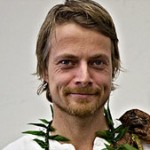
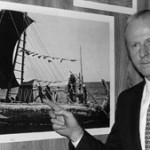
The six member Plastiki crew, which is led by David himself, includes Jo Royle (skipper), the only female crew member and the boat’s skipper.  Another crew member is none other than Olav Heyerdahl, grandson of Thor Heyerdahl who achieved fame in 1947 when he sailed his Konkiki balsa wood raft from Peru to French Polynesia.

olav plastiki

Olav Heyerdhal and grandfather Thor

Olav Heyerdhal (pictured right) is an accomplished scuba diver and hopes to help the Plastiki crew relive the experiences that his grandfather Thor experienced more than 60 years ago.

Compared to the Kontiki, the Plaskiti has all the modern electronic gadgetry needed to document their voyage, as well as be in communication with the outside world. The electrical power needed for this equipment as well as for lighting and other needs, will come from batteries that are recharged by solar energy.

Fresh water is being supplied by a small desalination device on board.

But taking all the media hype aside, the real mission of the Plastiki is to reach and study a huge “plastic island” of accumulated plastic trash and other flotsam which is floating in the mid Pacific and is estimated to be the size of the American State of Texas.

This was mentioned in a previous  Green Prophet article when the craft was supposed to set sail, but was delayed for several months due to weather and other logistical considerations. The voyage is meant to bring world attention to the problem of pollution and other environmental problems brought on by a world  population that is now only beginning to realize that the resulting global warming and climate change is being partially caused by over-use of fossil fuels and by a “throw away society” whose cast-offs of plastic bags, bottles, and other waste materials have created these “islands” of flotsam in all the world’s oceans; which not only are an eyesore, but are very dangerous to marine life.

Another crew member American Vern Moen is in charge of making the film of the voyage, The Plastiki Film, which will try to bring to light the condition of the Pacific Ocean, due to all the discarded plastic and other waste material now present in it. Another crew member, Max Jourdan, of mixed French and British linage, is involved in making a film of the voyage, on behalf of National Geographic.

The world’s seas and oceans, including the Mediterranean in particular, have become increasing polluted by oil spills, industrial and human wastes, and simply by garbage dumped into them by us, the world’s human inhabitants. This increasing problem was also brought to light during the search operation for the missing Air France Flight 447 in June, 2009.

De Rothschild conceived the idea of undertaking such a voyage back in 2006 when he became increasingly concerned about the plight of the world’s natural wonders, especially the oceans. His thoughts regarding the need to have better environmental use of plastic materials can be summed in his own words:

“We need to re-think our use of plastics so that it can contribute to solutions rather then compounding the problems. Together, this is the only way we can more forward and create the necessary solutions for our planet”

We wish the Plastiki and its brave crew success in the remainder of their voyage; which should help to make people realize everywhere that we all share a part in shaping this planet’s environment and ultimate destiny.

In the meantime, enjoy a video with David de Rothschild and Jo Royle who speak about the problem of plastic.

http://www.youtube.com/watch?v=brY1Z2m8IMo[/youtube

::CNN

Read more on Middle Eastern marine environmental issues:
Jordan and Israeli Scientists Cooperate to Study and Protect Gulf of Aqaba
Coastal Erosion Threatens Evolutionary Hot Spots in Gulf Region
Garbage Trucks Dump Straight into the Sea in Lebanon

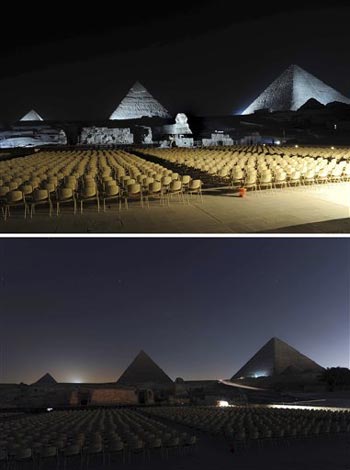
Lights Out for the Sphinx and Pyramids On Earth Hour in Egypt

The Sphinx and the Great Pyramids of Giza shut off their lights for one hour on Saturday evening in Egypt to mark Earth Hour, a global protest for climate change initiatives. The whole world sat in darkness for one hour as an attempt to bring awareness to the growing concerns facing the planet in terms of global warming and climate change.

This was the second consecutive year that Egypt participated in the international event. Amal Habib, a 28-year-old photographer based in Cairo, visited the Cairo Tower at the assigned time. She was skeptical of promises by the Egyptian government to turn off the lights of the tower, but was gladly surprised to see the darkness.

Jordanian Airspace to Get Tourism Boost With Royal Jordanian Partnership Deal

jordan environment photoOsta, Dabbas and Mousa at sigining ceremony: will Jordan’s air industry become more environmentally friendly?

Jordan’s fragile environment is threatened by a number of problems, including a severe lack of fresh water, increasing pollution of the Gulf of Aqaba, due to overdevelopment by both Jordan and Israel, particularly the effects of regional air and ground pollution in Jordan other  regional population centers. These problems were widely discussed during a recent environmental blogging workshop organized by Green Prophet which included participants from Jordan, Israel, and the Palestinian Authority. And when Green Prophet’s Karin met Prince Hassan of Jordan, the problems more clear.

Another environmental issue: air, noise and other forms of pollution caused by commercial airlines, will get a big boost by a memorandum of understanding that was signed between Jordan’s national air carrier, Royal Jordanian, and the USAID/Jordan Tourism Development Project II to help minimize the environmental impact of the airline’s operations on the country’s air and surface infrastructure. The agreement, reported on the website AME Info is expecting to boost tourism to Jordan.

GreenRoad Saves Lives and Fuel (& Why Branson and Gore Invested in Them)

hod fleishman Greenroad gore investment newsIn terms of green investment, they’ve got the perfect track record: Richard Branson’s Virgin Green Ventures has invested in the fuel-saving tech of GreenRoad. Now Al Gore’s fund. Karin reports.

Both average folk and environmentalists wait in earnest for all-electric vehicles like the Nissan LEAF, the Chevy Volt or Israel’s Better Place-Renault car to roll out of the plants, but greener transportation solutions are needed now. Bridging the gap is Israel’s GreenRoad, which has found such an efficient way to save fuel and reduce accidents that even the insurance companies are impressed.

The company hasn’t built a hybrid-electric powered turbo engine that runs for hundreds of miles. It hasn’t figured out how to power road vehicles with hydrogen or water. And you won’t find it selling a solution that will only be ready sometime down the line. Instead, GreenRoad has an attractive tool that saves gas for trucking fleets and cuts down on accidents – simple as that.

What's Sustainable about Masdar's Foster+Partners?

6

Should architectural firms such as Foster+Partners re-think their language of sustainability?Foster+Partners, architect firm, claim projects like Masdar City are sustainable. Are they?

Meet Foster + Partners: one thousand employees work in their twenty-two offices scattered around the world.  Their employees hail from 50 nations, which diversity they say leads to “creativity, innovation, and motivation.”  They are the people behind projects such as Masdar City that have received extensive coverage from us in the past, and they have received dozens of prestigious rewards.  Most significantly, Norman Foster, partner in the firm, was honored by the United Nations Association of New York at the 2009 Annual Humanitarian Awards Dinner for his efforts to encourage sustainability.

Kuwait Still Cleaning Up Environment After Saddam's Mess

1

kuwait oil fields saddamWhile the final votes were being counted in the Iraqi elections this week, a three-day conference was held in Kuwait to discuss efforts to repair the environmental devastation inflicted by a previous Iraqi regime nearly two decades ago.

In retreat from its seven-month occupation of Kuwait that triggered the Gulf War of 1991, Saddam Hussein’s forces carried out a scorched-earth policy, exploding nearly 800 oil wells.

The crude oil leaking from these wells, together with the billions of gallons of seawater used to extinguish the fires, resulted in sludge-filled lakes that eradicated desert fauna and flora, and polluted aquifers.  Over 100 square kilometers of land will need to be cleansed of these oily lakes.

Doha Conference Defeats Tuna Ban, But You Can Still Do Your Part for Charlie

0

bluefin tunaThe end of the line of the bluefin tuna in Japan? A Doha, Qatar conference proposes a ban on fishing. The verdict: defeat for the ban and the tuna.

At the recent CITES Agreement conference in Doha Qatar, a proposal to ban commercial fishing for the Atlantic bluefin tuna, a prized delicacy in Japan, was defeated. It happened during a meeting by representatives of the 175 countries that belong to this agreement which was originally enacted to save endangered animal species. The giant fish, which can grow to a length of 2.5 meters and weigh up to 350 kilograms, are one of the longest living ocean fish; living as long as 30 years – providing they don’t get caught. All too often they wind up in Tokyo sushi bars, and their future appears to not be very good, since the UN backed conference could not circumvent the opposition to a ban on the export of the fish.  Environmentalists worldwide are outraged. But we in the Middle East should care. Our region is one of the most important spawning grounds for this majestic fish.

11 Things I Learned From My Dog

3

The other night my dog passed away. Looking back over the past ten years I realized that I had learned many valuable lessons from her. This post is a summary of those lessons, for your benefit …and a eulogy. This is not a Thoreau-ian post about how we should get back in touch with nature, but more about how I grew from seeing the world through a completely different perspective. However, isn’t – being in touch with the world around you – just what being environmentally friendly is all about?=

1. Get excited about going for a walk

Every dog owner knows that dogs have a special radar, so if you even think about going for a walk, dogs can read something in your body language and like a bullet are at the door the very instant you start thinking about a walk, let alone actually say the word “walk”. “Puppy”, my dog, would get so excited, jumping around, jumping on you, when we were getting ready to take her out it was a challenge to get the leash on her, until we taught her ‘sit’.

People aren’t built to sit in an office from 9-5 daily. A dear friend learned recently, the hard way, that if you don’t get up from time to time you can get sick, or worse. In “Stand Up While You Read This” Olivia Judson points out that “…sitting is one of the most passive things you can do. You burn more energy by chewing gum or fidgeting than you do sitting still in a chair.” Puppy taught me to go for a walk and explore the world around me.

Image credit: cloneofsnake

2. Stop and smell the flowers / Sniff out the news

When you’re a dog, you want the flowers to smell like dog-piss and Puppy would stop at every single flower to smell it. One challenging aspect of walking a dog is getting past every fire hydrant, or wall for that matter. After a rain it was always particularly difficult to get more than three feet with Puppy outside. But I guess it’s like Facebook for her. Which dog peed where? Is there anyone new it the neighborhood?

The reason why we’re obsessed with social networking is that it’s so important to know what is happening in your neighborhood. Craig’s List, and sites of a similar nature, were designed just for our “sniffing” purposes. Who’s new in town? Which is the best doctor to visit for X? Where can I get the best deals… In truth, you never know when you can lend a hand, or need an hand lent.

3. Don’t waste food

It’s a lot easier to be environmentally friendly with your waste when you have a dog. Better than a compost heap in many ways, Puppy would always jump around excitedly when the meal was over and she knew she’d be getting her treat. (Even on Fraggle Rock a compost heap doesn’t jump for joy when you give it your leftovers.) Living with Puppy heightened my awareness of what I eat, and what I potentially waste. When I cook now, I try more carefully to judge portions and not waste good food.

4. Give a kiss to say “thank you”

Puppy always loved getting tasty morsels of food we left over, such as yummy chicken skin, or cheese. But whenever we gave her something she’d always kiss our hand, a quick lick. It wasn’t that she was trying to get some remaining grease, you knew when she sniffed that grease. This lick was a kiss, a quick: “Thanks for the food!” It cost her nothing, just a very quick postponement of gratification to show her appreciation. But I’ll tell you, getting those kisses made me want to keep giving her those treats.

I learned from Puppy that no small deed is too small to merit a thank you. My wife laughs when I thank her for a kiss, but I appreciate them, so I say thank you.

5. Love unconditionally

Puppy was always excited to see you. And she made sure that you KNEW it! Most dog owners I know describe the same experience: whenever I came through the door, puppy would be there jumping, excited as if I had been gone forever, even if I had only been out for an hour.

If you love someone, shouldn’t you let them know? How often do you greet the people you care about at the door?

6. Get pet any chance you get

Sitting and reading with Puppy around needed three hands: one hand to hold the book, one hand to turn pages …and one hand to pet Puppy. She wouldn’t have it any other way. We all need touch, and one thing I learned from Puppy was that if I needed a hug, or a hand held, it’s okay to ask for it. I loved petting my dog, and she loved being petted. That’s the way we are.

7. Protect the people you love

My grandmother lives with us, in a separate, but adjacent, apartment. Whenever my grandmother would go to answer the door, Puppy would come running to see who it was. She cared about us, and even saved us from several burglaries. I learned from Puppy that if I care about someone, I should make sure that they are okay. If a guest stays late, I make sure that they can get home safely — it’s not just chivalry. It’s safety.

8. Bark!

Don’t be afraid to let someone know that you don’t trust them, or what they’re up to. When someone came to the door that Puppy didn’t know, she would bark. Sure, that can be a little intimidating for guests, but I’d rather be safe. Once she saw that we trusted a guest, she would go back to her daily nap. I learned from Puppy that it’s okay to call someone out when you don’t trust them. I found that it’s usually good that I said something, because people usually put their own interests first, whether it’s justified or not.

9. Run

When we would let Puppy off her leash to run she would lose ten years, figuratively. It would always be a chore to get her back on the leash and bring her home, she loved running in the hills near our house so much. It took ten years off my age just watching her, it would bring me back to a time that everything was new, fresh. Puppy must have run through those fields hundreds of times, but she was always excited to run through them again. I learned from Puppy that a good run does you good, and it makes your life that much more fun when you get excited about things you love doing.

10. Appreciate the sunrise

Puppy used to sleep at my feet, and one summer we used to get up before I had to go out and run in the fields. Each day Puppy would wake me up a little earlier than the day before ’till we were waking up before the sunrise. After running I liked to sit by a bench on the side of the road overlooking the valley near my home and I noticed that Puppy would face the valley, even if the bench did not. I could usually tell if she had seen something that she would have liked to chase, a deer for instance. She would tense up and you could see her chasing that deer in her mind’s eye. Wishing that she were just a little closer…

On these mornings I could see that she was just looking at the view. It looked like she was just enjoying the sunrise. How often do we do that? It was really Puppy that made that happen, waking me up so that we could share those breathtaking sunrises. No wonder she couldn’t wait to get up.

11. Wear your emotions on your butt / Let people know how are feeling

You could always tell what mood Puppy was in. You just had to look at her tail. I learned about the power of being honest with my emotions from Puppy. If you don’t express how you are feeling, how can you expect the people around you to be sensitive to your needs? Like it or not, we are social, and part of living with others is giving them cues to how we are doing. Puppy would make sure I knew when she wanted to be petted, when she needed to go for a walk and when she just wanted to nap. It helped me be a good friend to her, as she was to me. Whenever I was down, she could tell and would come over and nudge me, make me pet her. It always made me feel better.

Puppy adopted my family about ten years ago, she jumped over the garden wall of my parent’s home and my father pointed out that if she could, a burglar could as well. So we kept her. She passed away from anaphylactic shock the other night after a walk, we’re not sure if it was from something she ate, or something that bit her. The vet was not able to tell, and couldn’t save her.

We’ll miss you Puppy.

How Green Is Your Garlic?

10

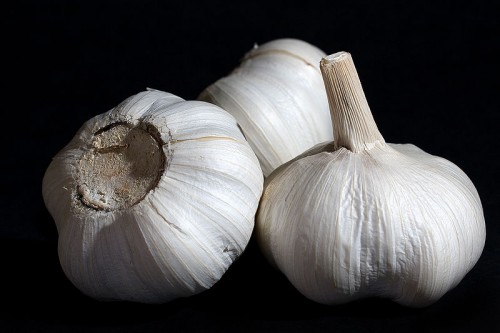
white-chinese-garlic-bulbsImported garlic looks beautiful, but locally grown is  healthier.

Contaminated garlic from China  was a scandal in the late 1990s and up till 2009. Fueled by anger over tainted pet food, toothpaste, and medicines from China, health-conscious consumers were outraged at the huge quantities of cheap Chinese garlic that were being “dumped” – sold for less than production costs – into US, European, and Australian/New Zealand markets. Garlic lovers were worried about the cloud of health issues around the beloved bulb. And garlic farmers took a major economic blow.

Are those issues still active? Talk has died down. Maybe it’s because China’s garlic exports slowed down significantly in the last year. This is due to increased domestic garlic consumption, which rocketed with the appearance of swine flu. The Chinese believe garlic’s anti-viral properties are strong enough to prevent the virus.

There’s less publicity about the hazards of Chinese garlic from local growers. No recent outcry in the press. But there’s been no proof that conditions have improved, either.

The problems with Chinese garlic

Charges against Chinese garlic included:

  • Use of sewage to fertilize the soil in garlic farms;
  • Presence of nematodes, fungus, and other agricultural pests in the bulbs, which contaminate soil where cloves taken from them are planted, as in home gardens. Importing countries therefore mandated…
  • Fumigation with the toxic, ozone-depleting pesticide, methyl bromide, upon arrival at the importing country;
  • The use of chlorine to bleach the bulbs an attractive white color;
  • Use of chemicals to prevent the vegetable from sprouting during the months of travel from China to the importing country.
  • American garlic farmers argued that their prices were high compared to the Chinese because they paid fair wages and gave workers benefits, while Chinese producers have a dependable source of cheap labor too ignorant to demand basic rights.

Our question is, has any of that changed? The fat, white bulbs with all the stringy roots cut away, packaged in  plastic mesh bags, are still in markets everywhere. Before you reach for that convenient little bundle, ask yourself if you’re easy in mind, eating and serving that garlic. Isn’t it worth the time to buy locally grown?

Right now is fresh garlic season in the Middle East, soon in colder climates too. We recently bought fresh, purple-striped garlic at NIS6. per kilo – $1.60 for 2.2 lbs. At that price, it wasn’t hard to buy 10 kgs of the pungent stuff, which should last our family of busy cooks for almost the whole next year. Apart from anything else, local garlic is juicy and tastes as it should: fresh.

You can hang the bulbs up to dry in loose bunches, or buy some already braided and ready to hang. If you prefer, cut the mild-tasting stalks off and eat them as greens, leaving the bulbs to dry separately.

How to eat the greens? Strip off the tough, dirty outer leaves and wash the stalks well. Then you can:

  • Chop them into finger lengths and stir-fry them
  • Stew them with carrots and potatoes
  • Drop them into your next pot of soup
  • Roll them in olive oil, season with salt and pepper, and grill them
  • Blend them with toasted almonds, salt, pepper and olive oil for a seasonal pesto

braiding-fresh-garlicA vendor braids fresh, local garlic at an Israeli open market.
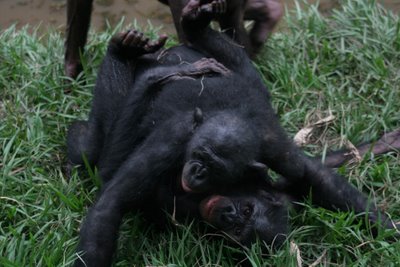
Photo by Miriam Kresh.

Photo of white garlic bulbs by NoodleSnacks, via WikiMedia.

More on eating locally from Green Prophet:

Monkey love: When Females Rule fornication, Mother Earth Delights

Can humans learn from their primate cousins about sex and the stewardship of the planet?

From the world of science comes data that suggests males who share are more likely to copulate, and with greater frequently, than their stingier counterparts.

Granted, the males in this study were of the chimp variety, and what they were sharing was raw meat, however, the researchers point out that this study lays the foundation for future human studies. (Chimpanzees exchange meat for sex, study shows)

Before any homo sapiens dismiss these results as monkey business, remember that we share upwards of 97-99% of our genetic code with our lower primate cousins, chimpanzees being just one of them. And we all know that sex is subject to the same forces of nature vs. nurture as just about every aspect of the human condition.

Besides, animal behavior can teach us much about ourselves. If we combine this recent data on chimp sharing with what we know about another species – the Bonobos to be exact – there’s an intriguing question to be asked.

It might not seem close to the Middle East culture, but what would our planet be like if females ruled fornication?