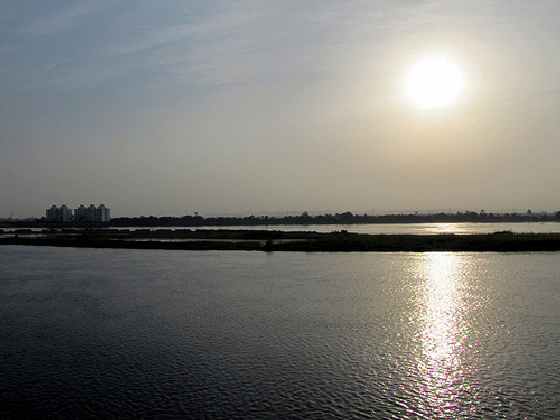
Tel Aviv’s first green hi-rise, Ohio-Israel partnership, Volkswagon and more headlines related to Israeli cleantech and the environment. Image via [nivs].
During the week of July 20, 2010, “wind prediction” company, Pentalum raised $9 million. Tensions between Israel and Lebanon over natural gas in the Mediterranean heated up and Rosetta Green and Seambiotic are partnering to develop improved algal strains for the biofuel industry. For these stories and more, see this week’s headlines below.
And yet, Dubai’s 3900 sq km hosts a plethora of migratory birds traveling between Africa and Asia, as well as various year-round species. We’ve always thought of this particular emirate as a wealthy wasteland, but can it actually support a healthy variety of wildlife as well?
Dubai is surprisingly diverse, according to Wildlife Extra. Its mountains, off shore islands, and rocky outcrops, as well as the mangrove swamps, tidal wetlands, lagoons, mud flats, and desert scrub all support an equally impressive array of birds.
Among them are gleaming kingfishers, predatory eagles, bee-eaters and owls. And in winter, it’s possible to travel just outside of the city glut to view flocks of salmon-colored flamingos with their black-tipped beaks.
Dubai’s sanctuary for birds
Part of the 10 km tidal creek that flows from the Gulf and Dubai city was set aside as the Ras Al Khor Wildlife Sanctuary and includes nutrient rich tidal mud flats and lagoons, along which mangrove saplings were planted in 1993. Sheikh Mohammed established the sanctuary and continues to be responsible for its management.
Mangrove forests can help mitigate climate change
They take their management seriously here. Police patrol the area to ensure that visitors do not disturb the wildlife and visitors are required to apply for a permit 3 days before their visit in order to enter. These measures allow conservation managers to maintain the sanctuary’s ecological integrity.
Plan ahead, get your permit
But the trouble is worth it. Against the backdrop of the infamous skyline, parents can take their children on a peaceful outing, get fresh air, and teach their children about the spunky life of birds. There is the Spoonbill, whose long beak resembles a spoon, and who favors lakes, marshes, swamps and mud flats. Or the Purple sunbird so named for the racy splash of color on its rump.
So if you’re heading to Dubai and want to escape the rat race, head for the sanctuary, winter is best, and immerse yourself in the flighty world of our feathered friends.
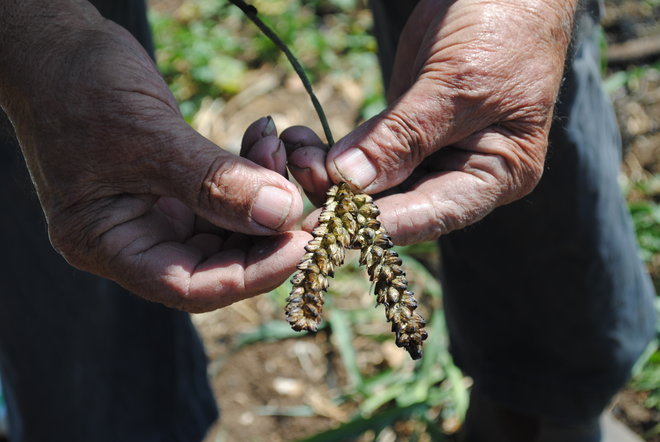
Folks seeking new taste sensations are going wild over the flavor of freekah, frikeh (Arabic: فريكة) or farik, an Arabic smoked green wheat – a staple in the Middle East for thousands of years.
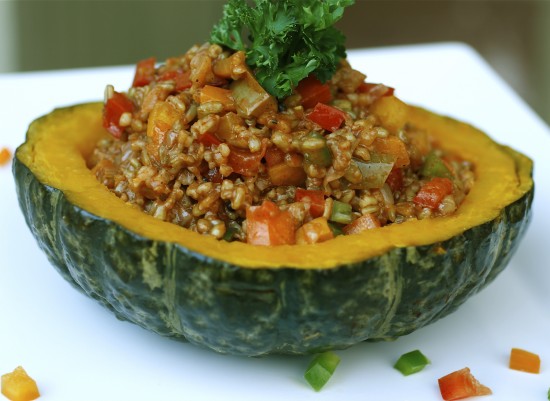
Where wheat grows in Syria, Lebanon, Israel, Jordan, and Egypt, people set aside part of the harvest to make freekeh. Its young wheat is gathered before the grain matures. Dried and briefly toasted over open fire, the freekeh grain gains a smoky, almost-sweet flavor and a greenish-gold color. It also delivers a powerful supply of vitamins, minerals, and fiber. Modern chefs in Israel and the States are now discovering dozens of ways to highlight this traditional slow food‘s unique flavor in cooked dishes and salads.
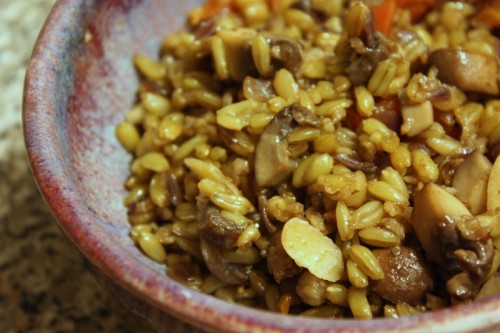
If pure freekeh is too smoky for your taste, try mixing it with rice, as Sarah of the Foodbridge blog did: Farik with Rice.
Look for freekeh in ethnic Arab stores, health food stores, and your local shuk. Try combining it with cooked root vegetables, as salad. Or as a stuffing for vegetables or meat, instead of rice. Or even as a hot breakfast cereal with chopped dried fruit and nuts.
Just remember that 1 cup of the smoky-flavored grain needs 2 to 2 1/2 cups of water to cook thoroughly and still be a little chewy, as for pilaf. 3to 4 cups are needed for the freekeh to burst open and become soft, as for hot cereal.
More on traditional Middle Eastern food from Green Prophet:
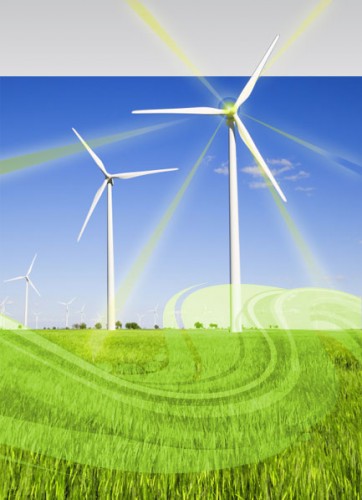
One of the main problems both in planning and running a wind farm is knowing where the wind will come from and how strong it will be. Pentalum thinks they have the solution.
Pentalum Technologies Ltd have raised an additional $9 million from three venture capital fund, the Israeli business daily Globes is reporting.
The company has developed what they call a SpiDARTM: “a revolutionary, cost effective, patent pending, Lidar system, for remote sensing of wind.
“The system targets all three main wind farm applications: wind resource assessment, wind farm operation optimization and wind forecasting.”
LIDAR stands for light detection and ranging and the technology is used for establishing the range as well as other information of a target by using laser pulses.
When used in the wind power industry to measure the oncoming horizontal winds the system proactively adjust the blades to both increase power and to protect the rotor from damaged caused by excessive winds.
Masdar’s CEO acknowledges oil and gas are finite, yet the energy provider continues to exploit UAE’s natural resources to fund renewable projects with the same quest for fame and fortune that kept us glued to oil [image via GDS Digital]
Given its celebrity status and our skepticism of its real sustainibility, we at Green Prophet endeavor to keep abreast of Masdar City’s progress. We questioned the Masdar carbon credit scheme as another attempt to justify the world’s interminable pursuit of black gold, but recently it seems that oil-fed businessmen such as Masdar’s CEO are beginning to catch up and acknowledge that yes, oil is a finite resource.
So when an energy company propelled by one of the oiliest economies on the planet says that oil will not always be around, what alternative does he offer?
Israel’s LN Greentech and Ohio develop a clean tech cooperation agreement.
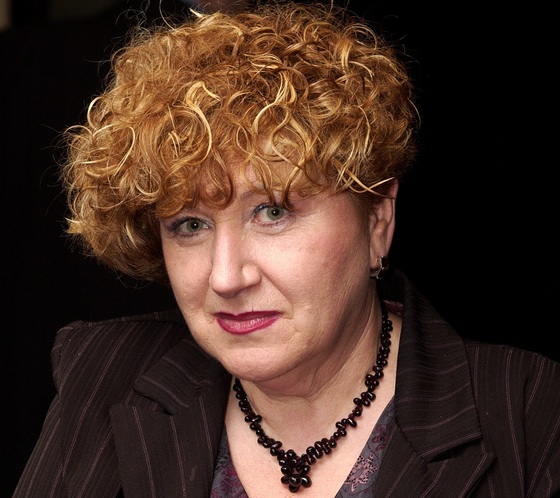
Klara Oren (above), the CEO of the Israeli clean tech-focused incubator LN Greentech, started the company in her living room in the early ’90s. She thought it would be a good way to help Israel’s new immigrants from Russia to integrate. Back then the focus was on biotech, and the government liked her approach so much that it provided funding to help transform research ideas into companies.
Unlike the American incubator model, LN Greentech, now privatized, is Israel’s only incubator that’s focused on promoting the development of clean tech companies in the country. And according to company reports, it’s about to branch out in the US via a new partnership with businesses in Ohio.
In the face of nuclear sanctions, Merhdad reports on Iran’s renewable energy agenda. Time to invest in Iran’s sun? Above image of streetlights in Tehran.
These days the news about using renewable energy are heard more than ever before in the Iranian media. One of the most talked about news item is related to the production and consumption of solar energy in public and private sectors. Although the media and the universities emphasize the use of clean and renewable energy, some governmental organizations insist that the price of technologies like solar panels, is just way too high.
According to Mohammad Behzad, the Iranian Deputy Minister of Energy, the production of solar energy in Iran needs $2,000 USD investment for every KW of electricity produced, and this amount can be reduced for mass production. Behzad, who was speaking in the opening ceremony of the Center of Applied Education and Research for Solar Energy in Tehran in June 2010, also mentioned that the Ministry of Energy is ready to buy energy produced by solar technologies from the private sector.
Does it sometimes feel like you are constantly racing, while life passes by in a blur? There are natural ways to avoid this stress. Image via Stig Nygaard
Rising blood pressure, muscular tension, fraying nerves, trouble sleeping and killer migraines, does this sound like your life? Well, stress is a killer and in today’s modern age we seem to be willing to accept it as a normal part of our lives, especially here in the Middle East where life wouldn’t be complete without it.
It doesn’t have to be part of your daily existence though; there is a natural way of getting rid of stress so you can avoid all the side effects that go with it. Just as much as you can get rid of migraines naturally, there are some simple keys to avoiding stress. Read on for our tips.
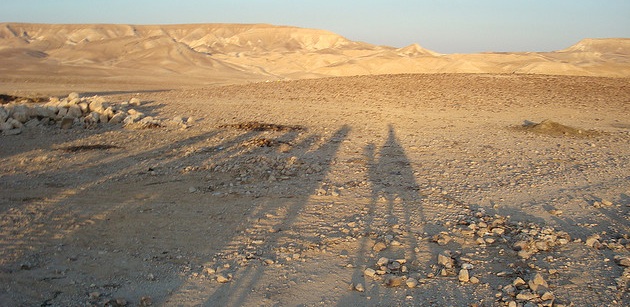
It would create jobs and better dividends for the marginalized Bedouin in Israel’s Negev Desert. So will the Israeli Government allot a lease-land quota for solar energy on Bedouin-settled land?
Arava Power, based on an Israeli kibbutz, recently signed a solar energy land lease deal with Israeli Bedouin (previously nomadic people). The deal, it seems has prompted the Bedouin to want a bigger or guaranteed share in Israel’s solar energy land lease market.
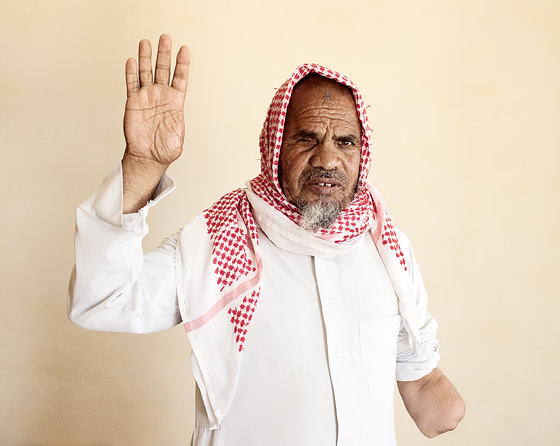
According to the Jerusalem Post the Bedouin city of Rahat and its Mayor Sheikh Faiz Abu Seheban called a press conference last Thursday to publicize his community’s intentions to the Israeli government. “I sent a letter asking for a special quota of solar energy specifically for Bedouin,” the mayor said. Should the Bedouin get it?
“Entering the solar energy market would create jobs for Beduin residents and save on electricity. The Beduin are the poorest community in Israel,” he added. The Beduin would lease their land to private solar developers and would work at the solar fields.
The Israeli government has plans to have 10% of its country’s energy to be from renewable sources by 2020, and has since guaranteed attractive feed-in tariffs for medium-sized projects attracting international investment and interest. Clearly the Bedouin people in Israel are no chumps. They want a share in the solar energy gold rush. Since land-rights issues for the Bedouin are still a very dodgy issue in Israel, we can foresee this topic being a very political one.
Tehran has bikes routes in place, but people aren’t using them because they’re needed in dense urban cores.
We all know about the importance of cycling for health and for creating sustainable cities and communities (like Vauban the German car-less city) that encourage carbon-free transport.
Traditionally Iranian cities have had a rich culture of bicycling in the first decades of the twentieth century. In Tehran and some other cities like Yazd and Esfahan with its beautiful bridge in center of Iran, many urban trails were made by bicycle.But this culture was weakened in the 50s and 60s when modernization became the base of governmental strategies in Iran in several fields like architecture, urban design, and urban transportation. The automobile became the main mode of transportation. The use of bikes died out.
Mehr was a goddess and symbol of a religious belief in Indo-Iranian culture associated with the creation of the world. Many from Iran look to their roots of this nature-based celebration with preparations already starting next month.
The Mehregan Festival or the Persian Festival of Autumn is an ancient Persian fest which is dedicated to Mehr (or Mithra/Mitra), the goddess and symbol of light, friendship, faith, love and kindness.
It is celebrated each year at the beginning of Autumn on the 16th of Mehr in the 7th month. This year October 8. But in some regions, it is celebrated earlier, like in September in the United States. And like in some religions, such as Christmas, preparations can start early.
In ancient Iran, there were two great national festivals that both were celebrated when the length of day and night were equal (solstice).
The first is exactly in the beginning of spring (summer solstice), which is called Nowruz. This festival is still the greatest national festival of Iran, despite it being an Islamic state, and is celebrated widely in the first day of spring with special ceremonies. It is also the first day of Iranian calendar and the day that the nature is alive again after winter. Nowruz is on March 21. Both Mehregan and Nowruz, derived from the Zoroastrian religion, rejoice nature and that’s why we think it’s the perfect holiday to “celebrate” on Green Prophet.
When you are breastfeeding your baby, you’ll want to feel comfortable feeding her everywhere. Breastfeeding is enjoyable for baby and mom and helps keep you both healthy. You’re helping the environment too, because the manufacture of formula and bottles uses precious water supplies and generates pollution and waste.
Hezbollah’s stake in the “cleaner” natural gas wells at sea expose “government inefficiency, incompetence and corruption and the lack of adequate services in transportation, water, education, health.”
Israel’s northern neighbor is scrambling to set up a legal basis to challenge the Jewish state’s discovery of a gigantic natural-gas reservoir in the Eastern Mediterranean. Lebanese leaders are scrambling to pass legislation to govern offshore gas and oil exploration, following the discoveries of two gigantic natural gas reserves off the coasts of Israel and Lebanon, two countries in a state of war for decades.
The Lebanese parliament is set to discuss two draft laws that could manage offshore gas and oil exploration on Monday. The two versions of the bill differ over who will control potential revenues from offshore gas and oil discoveries: the President, through the Ministry of Energy and Water, or an independent body.
Aly Morad and Salah El Din Helmry to kayak 27 days in January, 2011 to draw awareness to the polluted Nile River [image via David Berkowitz]
It takes a special kind of person to stop, take stock, to imagine how our actions today will translate tomorrow, the next day, and even 100 years from now. In Egypt, with its bulging population of at least 80 million, climate change could drastically impede the quality of life. And already, Egyptians can’t trust their tap water. But 2 friends aim to change all of that by kayaking from Aswan to Alexandria in 27 days.

 Tel Aviv’s first green hi-rise, Ohio-Israel partnership, Volkswagon and more headlines related to Israeli cleantech and the environment. Image via [nivs].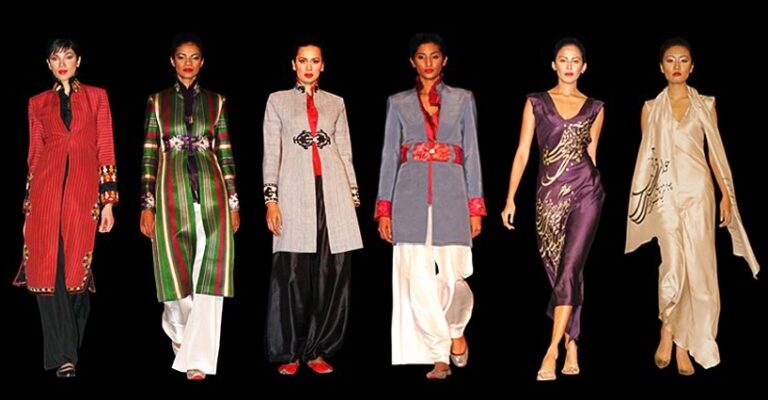
 Zolaykha Sherzad revives Afghan artistic culture and trains women with her Zarif Design company in Kabul.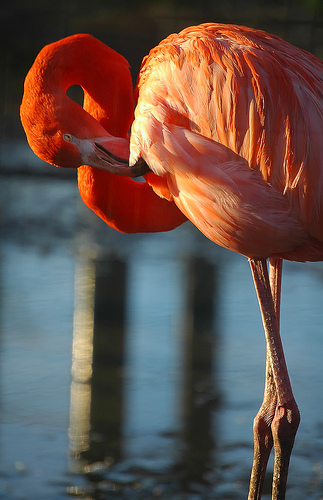

 One of the main problems both in planning and running a wind farm is knowing where the wind will come from and how strong it will be. Pentalum thinks they have the solution.
 Israel’s LN Greentech and Ohio develop a clean tech cooperation agreement.

 Tehran has bikes routes in place, but people aren’t using them because they’re needed in dense urban cores.
 Mehr was a goddess and symbol of a religious belief in Indo-Iranian culture associated with the creation of the world. Many from Iran look to their roots of this nature-based celebration with preparations already starting next month.
  Act confident when nursing your baby in public. Breastfeeding is good for you, your baby, and the environment.
 Hezbollah’s stake in the “cleaner” natural gas wells at sea expose “government inefficiency, incompetence and corruption and the lack of adequate services in transportation, water, education, health.”