Health insurance is a regulated financial product. Insurers operate under binding contracts, overseen by state insurance commissioners, that legally obligate them to pay claims meeting policy terms. Policyholders who believe a covered claim was wrongfully denied have legal recourse through state regulatory channels.
The New Zealand Merino Company, now rebranded as Zentera, has quietly removed the phrase “world’s leading ethical wool brand” from its website, a notable change that comes after a disturbing investigation by PETA Asia-Pacific into the company’s ZQ-certified wool supply chain, PETA reports to Green Prophet.
Somehow vegetables with short seasons excite the imagination and appetite more sharply than produce that’s available all year around. Good Middle Eastern cooks have many recipes for delicate fava beans, and this turmeric-fragrant soup is one.
Health insurance is a regulated financial product. Insurers operate under binding contracts, overseen by state insurance commissioners, that legally obligate them to pay claims meeting policy terms. Policyholders who believe a covered claim was wrongfully denied have legal recourse through state regulatory channels.
The New Zealand Merino Company, now rebranded as Zentera, has quietly removed the phrase “world’s leading ethical wool brand” from its website, a notable change that comes after a disturbing investigation by PETA Asia-Pacific into the company’s ZQ-certified wool supply chain, PETA reports to Green Prophet.
Somehow vegetables with short seasons excite the imagination and appetite more sharply than produce that’s available all year around. Good Middle Eastern cooks have many recipes for delicate fava beans, and this turmeric-fragrant soup is one.
Health insurance is a regulated financial product. Insurers operate under binding contracts, overseen by state insurance commissioners, that legally obligate them to pay claims meeting policy terms. Policyholders who believe a covered claim was wrongfully denied have legal recourse through state regulatory channels.
The New Zealand Merino Company, now rebranded as Zentera, has quietly removed the phrase “world’s leading ethical wool brand” from its website, a notable change that comes after a disturbing investigation by PETA Asia-Pacific into the company’s ZQ-certified wool supply chain, PETA reports to Green Prophet.
Somehow vegetables with short seasons excite the imagination and appetite more sharply than produce that’s available all year around. Good Middle Eastern cooks have many recipes for delicate fava beans, and this turmeric-fragrant soup is one.
Health insurance is a regulated financial product. Insurers operate under binding contracts, overseen by state insurance commissioners, that legally obligate them to pay claims meeting policy terms. Policyholders who believe a covered claim was wrongfully denied have legal recourse through state regulatory channels.
The New Zealand Merino Company, now rebranded as Zentera, has quietly removed the phrase “world’s leading ethical wool brand” from its website, a notable change that comes after a disturbing investigation by PETA Asia-Pacific into the company’s ZQ-certified wool supply chain, PETA reports to Green Prophet.
Somehow vegetables with short seasons excite the imagination and appetite more sharply than produce that’s available all year around. Good Middle Eastern cooks have many recipes for delicate fava beans, and this turmeric-fragrant soup is one.
Health insurance is a regulated financial product. Insurers operate under binding contracts, overseen by state insurance commissioners, that legally obligate them to pay claims meeting policy terms. Policyholders who believe a covered claim was wrongfully denied have legal recourse through state regulatory channels.
The New Zealand Merino Company, now rebranded as Zentera, has quietly removed the phrase “world’s leading ethical wool brand” from its website, a notable change that comes after a disturbing investigation by PETA Asia-Pacific into the company’s ZQ-certified wool supply chain, PETA reports to Green Prophet.
Somehow vegetables with short seasons excite the imagination and appetite more sharply than produce that’s available all year around. Good Middle Eastern cooks have many recipes for delicate fava beans, and this turmeric-fragrant soup is one.
Health insurance is a regulated financial product. Insurers operate under binding contracts, overseen by state insurance commissioners, that legally obligate them to pay claims meeting policy terms. Policyholders who believe a covered claim was wrongfully denied have legal recourse through state regulatory channels.
The New Zealand Merino Company, now rebranded as Zentera, has quietly removed the phrase “world’s leading ethical wool brand” from its website, a notable change that comes after a disturbing investigation by PETA Asia-Pacific into the company’s ZQ-certified wool supply chain, PETA reports to Green Prophet.
Somehow vegetables with short seasons excite the imagination and appetite more sharply than produce that’s available all year around. Good Middle Eastern cooks have many recipes for delicate fava beans, and this turmeric-fragrant soup is one.
Health insurance is a regulated financial product. Insurers operate under binding contracts, overseen by state insurance commissioners, that legally obligate them to pay claims meeting policy terms. Policyholders who believe a covered claim was wrongfully denied have legal recourse through state regulatory channels.
The New Zealand Merino Company, now rebranded as Zentera, has quietly removed the phrase “world’s leading ethical wool brand” from its website, a notable change that comes after a disturbing investigation by PETA Asia-Pacific into the company’s ZQ-certified wool supply chain, PETA reports to Green Prophet.
Somehow vegetables with short seasons excite the imagination and appetite more sharply than produce that’s available all year around. Good Middle Eastern cooks have many recipes for delicate fava beans, and this turmeric-fragrant soup is one.
Health insurance is a regulated financial product. Insurers operate under binding contracts, overseen by state insurance commissioners, that legally obligate them to pay claims meeting policy terms. Policyholders who believe a covered claim was wrongfully denied have legal recourse through state regulatory channels.
The New Zealand Merino Company, now rebranded as Zentera, has quietly removed the phrase “world’s leading ethical wool brand” from its website, a notable change that comes after a disturbing investigation by PETA Asia-Pacific into the company’s ZQ-certified wool supply chain, PETA reports to Green Prophet.
Somehow vegetables with short seasons excite the imagination and appetite more sharply than produce that’s available all year around. Good Middle Eastern cooks have many recipes for delicate fava beans, and this turmeric-fragrant soup is one.
Some focus strictly on natural building and organic farming, others rely on tourism to stay afloat, while the most ambitious ecovillage fuses agriculture, art, building, education, energy, and even medicine into a holistic community model. Penyon Bay Ecovillage, when it gains traction, will fit into this latter category.
Who’s responsible for this Tel Aviv tree? The local Tel Aviv environmental committee.
Some of the red tape preventing local environmental issues from being resolved has to do with the fact that national government has too much on its plate. Even in a small country like Israel, local issues can often be seemingly ignored by the national government and municipalities are sometimes powerless to do anything. Over recent years, though, Israel has been granting greater control of environmental issues to the local authorities and following a law passed in 2006, 250 environmental committees have been established all over the country.
The committees met for their first conference last week, titled Democracy and Environmental Under Local Authority in Israel 2010: First National Conference of Local Environment Committees.
Desperation and an entrenched car-culture is pushing Cairenes towards outlandish solutions to their hellish traffic congestion
In the bursting-at-the-seams megacity of Cairo, it seems that there is no escaping the traffic. Roads grind to standstill for hours most days and the traffic jams are only getting worse as the Egyptian population simultaneously heads to Cairo every morning either to work or in search of a job. However, one organisation has decided that if there is no space on the road than the solution is take to the air and introduce the ‘Helicopter Taxi’.
Yep, you read right. According to Al-Arabiya, an Egyptian aviation company will be launching a flying taxi project as part of a plan to solve traffic problems in the city. Five turbo helicopters have already been purchased so that people can be flown around Egypt and Cairo whilst avoiding the traffic below. As well as plans for fire fighting and medical evacuation helicopters, these flying taxis will also be “affordable to all people” wishing for a stress-free (and let’s face it a more exciting) Monday morning commute. However, something’s not adding up.
What is the impact of development on the Gulf’s marine ecosystem and can oil companies really play a part in its preservation?
As sharks face the threat of extinction worldwide, conservationists in Egypt have recently raised concerns over the need to protect reef sharks in the Gulf by establishing sanctuaries. Fifty years ago, the Gulf waters were filled with diverse marine life but the criss-cross of oil tankers, conflict and urban development has had its toll on the fragile ecosystem. In Kuwait, environmental filmmaker Zeina Aboul Hosn joined a research expedition in 2008 in search of the forgotten sharks of the Gulf. What she found was dead sharks in the fish markets and a worrying lack of awareness of the importance of sharks for sustaining marine diversity.
Reported by Al Jazeera, the 22 minute film explains that in the past Kuwaitis heavily relied on fishing and pearl diving for their sustenance. However, this all changed when oil was discovered and the Gulf waters then became simply the means of transporting a quarter of the world’s crude oil. The generation which grew up as fishers and pearl-divers is now dwindling in numbers and the link between the sea and the Kuwaitis is increasingly muted.
The Magreb nations have a bright solar future: don’t miss your chance to be part of it!
Solar Maghreb in Casablanca, Morocco on 24-25 May 2011 is the must-attend utility-scale solar conference to make contacts within the five Maghreb nations – meaning “the Western” ones, in Arabic – of Morocco, Algeria, Tunisia, Mauritania and the Western Sahara.
With Desertec, and the region’s proximity to Europe, the future export potential of the region is high. With high levels of solar radiation, Solar Maghreb is one of the most attractive renewable energy investment destinations in the world.
After recovering from the shock of motherhood, Karin tries an eco-compromise by using washable diapers half of the time.
It’s been 4 months since I’ve given birth and I decided that I was fit enough to try washable, reusable diapers. My daughter is exclusively breastfed, an undertaking that completely overwhelmed me for the first few months of her life. But the benefits of breastfeeding are enormous. Call me a wimp, or call me out for not being green enough, but I couldn’t ever imagine during that period, finding the energy to wash diapers. Praise be to women before the invention of disposable diapers. But as the editor of Green Prophet, I know I need to walk the walk. It was time to try washables.
Where I live in the Middle East, the only options open to me are online ordering, and I found all the systems and options so expensive and really confusing – not to mention the sour behavior from my husband every time I brought the idea up. (He’s thinking smelly diapers all over the place). So back in Canada for a visit – I took a trip to the local BabiesRUs to see with my own eyes what washable diapers are available. Here’s my story.
The latest research from Israel is revealing some unexpected insights about attraction and partner selection. If sparks aren’t flying between you and a potential mate, could the problem may be as close as the bugs in your gut?
Right now the findings apply only to fruit flies, humble insects that because of their quick lifespans and genetic uniformity have taught humankind a thing or two about the inner magic of our bodies and our world. In this case, they helped Tel Aviv researchers test a new theory that basically says this: not only do we adapt to our environments, but so do the symbiotic bacteria living in our bodies, and our adaptations are actually intertwined as part of a larger biological milieu.
Three years of extra snow has weakened Ireland’s salt stocks, demonstrating an overall lack of preparedness for the effects of climate change. Outline of Birket Maraqi salt lake in the oasis of Siwa, Egypt
Facebook status updates from the UK read like this: “go away snow”, “does anyone know if its safe to drive to this or that icy town?”, or, finally, “thank goodness – I can fly.” People joke that the UK shuts down with the kind of snow that Minnesotans can suntan in. But there’s also a serious side to this story.
The weather in the UK is not normal. Just like Russia’s drought and the Middle East’s higher temperatures, global warming has permanently altered weather patterns. And by having to import salt from Egypt to clear its roads, Ireland demonstrates the same lack of preparedness we all have for this new reality.
Egypt finally harnesses a powerthat it understood centuries ago
Egypt now has one of the very first entire towns in the world to be powered exclusively with solar power. And actually, it is a pair of towns, so it is a world first. The two villages were not previously on the national grid. Oum Al-Sagheer and Ein Zahrah are located about 500 miles from Cairo at Siwa, which is a desert oasis tourism destination.
Hassan Younis, Egypt’s minister of Electricity and Energy announced the project this week. The villages will get solar to power all the mosques and schools and each of the other facilities in the two villages, as well as the houses of their residents, and even right down to the street lighting.
Predictions of water loss in Yemen by 2020 threaten lives and agriculture – Children must still fetch water for towns that are increasingly parched and dry.
According to experts cited by CNN, Yemen could be the first nation to completely run out of water in as little as 10 years, a prospect that creates a grim future for the young population of 24 million that is expected to double in 20 years.
In Yemen’s capital Sana’a, which could be the world’s first city to go dry, the population is growing at a rate of 7 percent per year as people are fleeing from the parched outer areas of the country to Sana’a. Despite a 1,185 mile shoreline, as the poorest nation in the Middle East, experts predict Yemen is on target to literally run out of water.
Reef sharks in the Gulf are especially vulnerable without sanctuaries to ensure their protection.
Red Sea sharks are threatened by Yemenese poachers who sell their fins to Asia for a fit price. But it turns out that Persian Gulf shark species are also vulnerable. So much so that conservationists have advised regional environmental groups and governments to set aside sanctuaries that will protect them.
As predators, sharks play an essential role in any marine ecosystem. Without them, prey are able to proliferate, in turn eradicating food lower on the chain. Failure to institute substantial measures to protect Gulf sharks would lead to a serious imbalance, and harm the economics of people who rely on it.
Using drip irrigation techniques, the 1,000 square metre ‘water scarcity park’ will harvest rainwater and also use solar power to generate electricity to pump water for irrigation. Drip irrigation is a technique used to conserve water as draws water directly from it sources and takes it the plants through a network of pipes with small holes so that water waste is minimal.
Netafim pipes snake through farmer’s fields and deliver water and nutrients right at the root base
The park which was opened by the country’s Vice-President Dr Najah Al-Attar, is located in Dummar, a suburb of Damascus and is planted with various drought-resistant flora. It is hoped that the park will be used as model for public and private parks and help rationalize the consumption of water and energy.
The water scarcity crisis in Syria has been blamed on a combination of poor water management, lack of rainfall and the over-extraction of water. In the past, Syria was comfortably supported by the Euphrates River in the top half of the country but the diversion of large amounts of water into agriculture and industrial sector means that the supplies are not sufficient to support the population. According to reports in The National, scientists reported that between 2002 and 2008, water availability dropped from 1200 cubic meters to 750 cubic meters per person in Syria.
Unlike the rich Gulf states which are able to afford expensive desalination plants, Syria is struggling with water scarcity and urban household face water cuts each evening. Severe drought in the rural east of the country has also drastically affected 1.3 million people with 800,000 of whom had had their livelihoods devastated and half a million forced to move into the cities just to eke out a living. According to a February report by the United Nations Office for the Coordination of Humanitarian Affairs, this has been the “largest internal displacements in the Middle East in recent years.”
Sadly, Syria is not an isolated case in the region as the entire Middle East is facing water shortages. A report by theArab Forum for Environment and Development(AFED) remarked that Arab region is one of the driest in the world- 70% of the land is dry and rainfall is sparse- and the effects of climate change will only exacerbate the situation. After delays in the rainy season serious concerns were raised with regards to water availability in Lebanon and Jordanians were also urged to pray for rainwater. The AFED report added: “Without fundamental changes in policies and practices, the situation will get worse, with drastic social, political and economic ramifications.”
Chefs without borders: now anyone can cook for the crowds.
What if we told you that there is a way, if you’re as industrious as the Dutch founders of a website called Tweetjemee, to buy meals from your neighbors? Frankly, if such a service existed I’d harass Miriam every day for her spinach and mushroom soup or her delicious-looking sambusaks.
For every lousy cook like me, there are hundreds of Miriams who have sensational culinary skills just waiting to be shared. Tweetjemee cooks have an opportunity to do just that, while everyone else in the neighborhood can enjoy a home-cooked meal without the hassle of going out to a restaurant.
Daniel Birns, international activities advisor at the U.S. Department of Energy, speaks Dec. 15 at a US-Israel environmental symposium at the Israeli Embassy in Washington, DC.
Virginia’s largest electric utility is eagerly seeking Israeli “clean-tech” partners that offer innovative technologies aimed at slashing the world’s dependence on fossil fuels through the development of renewable energy sources like solar, wind, seawater and biofuels.
Dominion Resources GreenTech Incubator, based in Ashland, Va., is a nonprofit business incubation program formed by Dominion Resources, the Virginia Biosciences Development Center and two other local entities. David Lohr, the program’s executive director, will lead an official Virginia delegation to Israel on Jan. 6, with the goal of identifying three to five companies that could be ideal matches for the year-old venture.
“This is our first international effort, and we’re very excited,” said Lohr. “Our joint initiative tries to incubate and commercialize technologies in the clean-energy sector. We are hoping to replicate the success we had with Israeli life-sciences companies three years ago by moving into green-tech. This has been part of our strategy from the outset.”
The Virginia executive was one of three speakers at a Dec. 15 environmental symposium co-sponsored by the Israeli Embassy, Washington law firm ZAG/S&W and the U.S.-Israel Science and Technology Foundation.
The issue of raw sewage may not be hitting the headlines in the Middle East like concerns over water scarcity, but in the Palestinian territories and Israel it’s a real problem. Inadequate waste water treatment plants in the Palestinian territories means that only 22.5 million cubic metres out of around 150 million cubic metres of raw sewage created every year is adequately treated to make it safe for reuse. Most of the raw sewage is contained in septic tanks which aren’t always well-enforced and so the sewage can easily seep into the ground and contaminate Palestinian and Israeli ground water supplies.
It seems that just like nature, sewage knows no boundaries and so raw sewage irresponsibly released by either community ultimately affects the shared Palestinian-Israeli water sources. A recently launched joint Israeli-Palestinian project supported by the Italian Trade Commission is hoping to draw the two sides together in a bid to resolve this sewage problem.

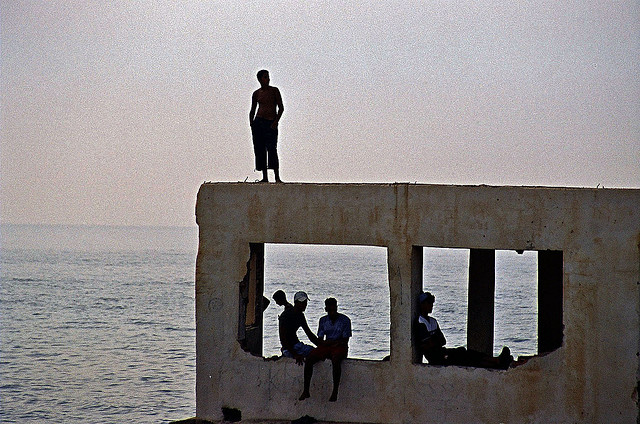
 When it comes alive, the Penyon Bay Ecovillage will overlook the Bay of Alhoceima in Northern Morocco.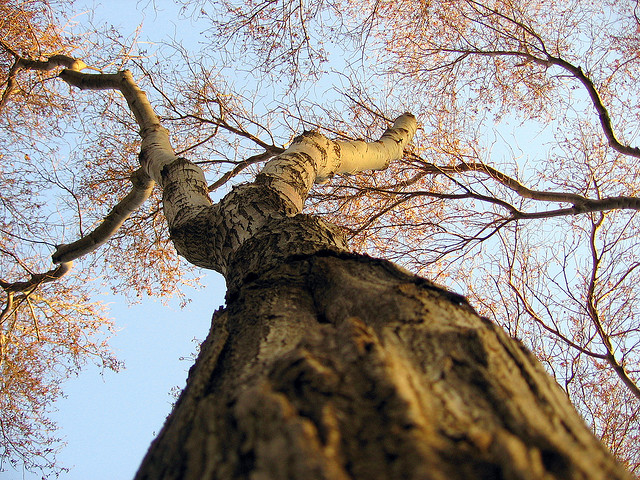



 After recovering from the shock of motherhood, Karin tries an eco-compromise by using washable diapers half of the time.

 Three years of extra snow has weakened Ireland’s salt stocks, demonstrating an overall lack of preparedness for the effects of climate change. Outline of Birket Maraqi salt lake in the oasis of Siwa, Egypt



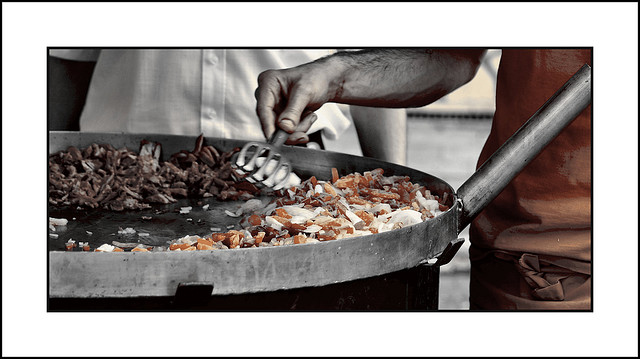

 Chefs without borders: now anyone can cook for the crowds.
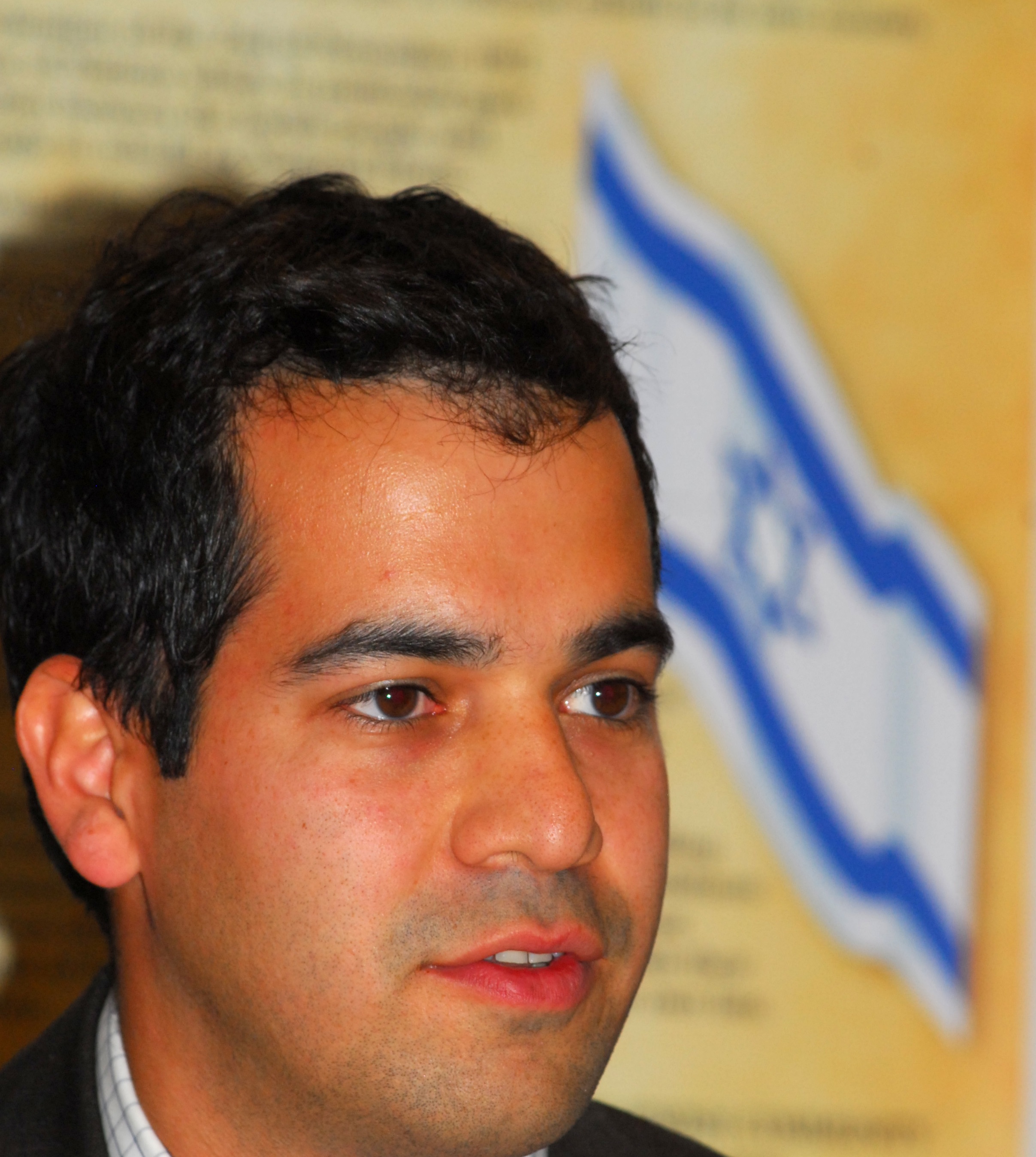 Daniel Birns, international activities advisor at the U.S. Department of Energy, speaks Dec. 15 at a US-Israel environmental symposium at the Israeli Embassy in Washington, DC.