Koh Phangan may be known for yoga, detox retreats, and full moon parties, but beyond the curated paradise lies a different reality—one of injured stray animals and the quiet work of rescue. This story explores PACS (Phangan Animal Care for Strays), a grassroots animal shelter tackling overpopulation, disease, and neglect on the island. Through firsthand experience with teens, it reveals how meaningful travel, volunteerism, and compassion offer a deeper kind of healing—far from the Instagram version of paradise.
The earliest stages of life, from infancy through childhood, form the foundation for lifelong health and development. During these years, the brain develops rapidly, children learn social and emotional skills, and the body undergoes significant physical growth.
Back in late 2025, Green Prophet began asking uncomfortable questions about what’s really inside your yoga pants, from transparency failures (yes, those infamous see-through leggings) to the less visible and scarier issue: Your sweat is unlocking microplastics and chemical coatings sitting in the most absorbent parts of the human body.
Reliable light matters in more places than ever. It matters on a back road after sunset, in a cabin with limited power, and at home during a storm outage. Research across sustainability guidance, preparedness resources, and off-grid living coverage points to one clear takeaway: people want lighting that works well, lasts longer, and creates less waste.
Koh Phangan may be known for yoga, detox retreats, and full moon parties, but beyond the curated paradise lies a different reality—one of injured stray animals and the quiet work of rescue. This story explores PACS (Phangan Animal Care for Strays), a grassroots animal shelter tackling overpopulation, disease, and neglect on the island. Through firsthand experience with teens, it reveals how meaningful travel, volunteerism, and compassion offer a deeper kind of healing—far from the Instagram version of paradise.
The earliest stages of life, from infancy through childhood, form the foundation for lifelong health and development. During these years, the brain develops rapidly, children learn social and emotional skills, and the body undergoes significant physical growth.
Back in late 2025, Green Prophet began asking uncomfortable questions about what’s really inside your yoga pants, from transparency failures (yes, those infamous see-through leggings) to the less visible and scarier issue: Your sweat is unlocking microplastics and chemical coatings sitting in the most absorbent parts of the human body.
Reliable light matters in more places than ever. It matters on a back road after sunset, in a cabin with limited power, and at home during a storm outage. Research across sustainability guidance, preparedness resources, and off-grid living coverage points to one clear takeaway: people want lighting that works well, lasts longer, and creates less waste.
Koh Phangan may be known for yoga, detox retreats, and full moon parties, but beyond the curated paradise lies a different reality—one of injured stray animals and the quiet work of rescue. This story explores PACS (Phangan Animal Care for Strays), a grassroots animal shelter tackling overpopulation, disease, and neglect on the island. Through firsthand experience with teens, it reveals how meaningful travel, volunteerism, and compassion offer a deeper kind of healing—far from the Instagram version of paradise.
The earliest stages of life, from infancy through childhood, form the foundation for lifelong health and development. During these years, the brain develops rapidly, children learn social and emotional skills, and the body undergoes significant physical growth.
Back in late 2025, Green Prophet began asking uncomfortable questions about what’s really inside your yoga pants, from transparency failures (yes, those infamous see-through leggings) to the less visible and scarier issue: Your sweat is unlocking microplastics and chemical coatings sitting in the most absorbent parts of the human body.
Reliable light matters in more places than ever. It matters on a back road after sunset, in a cabin with limited power, and at home during a storm outage. Research across sustainability guidance, preparedness resources, and off-grid living coverage points to one clear takeaway: people want lighting that works well, lasts longer, and creates less waste.
Koh Phangan may be known for yoga, detox retreats, and full moon parties, but beyond the curated paradise lies a different reality—one of injured stray animals and the quiet work of rescue. This story explores PACS (Phangan Animal Care for Strays), a grassroots animal shelter tackling overpopulation, disease, and neglect on the island. Through firsthand experience with teens, it reveals how meaningful travel, volunteerism, and compassion offer a deeper kind of healing—far from the Instagram version of paradise.
The earliest stages of life, from infancy through childhood, form the foundation for lifelong health and development. During these years, the brain develops rapidly, children learn social and emotional skills, and the body undergoes significant physical growth.
Back in late 2025, Green Prophet began asking uncomfortable questions about what’s really inside your yoga pants, from transparency failures (yes, those infamous see-through leggings) to the less visible and scarier issue: Your sweat is unlocking microplastics and chemical coatings sitting in the most absorbent parts of the human body.
Reliable light matters in more places than ever. It matters on a back road after sunset, in a cabin with limited power, and at home during a storm outage. Research across sustainability guidance, preparedness resources, and off-grid living coverage points to one clear takeaway: people want lighting that works well, lasts longer, and creates less waste.
Koh Phangan may be known for yoga, detox retreats, and full moon parties, but beyond the curated paradise lies a different reality—one of injured stray animals and the quiet work of rescue. This story explores PACS (Phangan Animal Care for Strays), a grassroots animal shelter tackling overpopulation, disease, and neglect on the island. Through firsthand experience with teens, it reveals how meaningful travel, volunteerism, and compassion offer a deeper kind of healing—far from the Instagram version of paradise.
The earliest stages of life, from infancy through childhood, form the foundation for lifelong health and development. During these years, the brain develops rapidly, children learn social and emotional skills, and the body undergoes significant physical growth.
Back in late 2025, Green Prophet began asking uncomfortable questions about what’s really inside your yoga pants, from transparency failures (yes, those infamous see-through leggings) to the less visible and scarier issue: Your sweat is unlocking microplastics and chemical coatings sitting in the most absorbent parts of the human body.
Reliable light matters in more places than ever. It matters on a back road after sunset, in a cabin with limited power, and at home during a storm outage. Research across sustainability guidance, preparedness resources, and off-grid living coverage points to one clear takeaway: people want lighting that works well, lasts longer, and creates less waste.
Koh Phangan may be known for yoga, detox retreats, and full moon parties, but beyond the curated paradise lies a different reality—one of injured stray animals and the quiet work of rescue. This story explores PACS (Phangan Animal Care for Strays), a grassroots animal shelter tackling overpopulation, disease, and neglect on the island. Through firsthand experience with teens, it reveals how meaningful travel, volunteerism, and compassion offer a deeper kind of healing—far from the Instagram version of paradise.
The earliest stages of life, from infancy through childhood, form the foundation for lifelong health and development. During these years, the brain develops rapidly, children learn social and emotional skills, and the body undergoes significant physical growth.
Back in late 2025, Green Prophet began asking uncomfortable questions about what’s really inside your yoga pants, from transparency failures (yes, those infamous see-through leggings) to the less visible and scarier issue: Your sweat is unlocking microplastics and chemical coatings sitting in the most absorbent parts of the human body.
Reliable light matters in more places than ever. It matters on a back road after sunset, in a cabin with limited power, and at home during a storm outage. Research across sustainability guidance, preparedness resources, and off-grid living coverage points to one clear takeaway: people want lighting that works well, lasts longer, and creates less waste.
Koh Phangan may be known for yoga, detox retreats, and full moon parties, but beyond the curated paradise lies a different reality—one of injured stray animals and the quiet work of rescue. This story explores PACS (Phangan Animal Care for Strays), a grassroots animal shelter tackling overpopulation, disease, and neglect on the island. Through firsthand experience with teens, it reveals how meaningful travel, volunteerism, and compassion offer a deeper kind of healing—far from the Instagram version of paradise.
The earliest stages of life, from infancy through childhood, form the foundation for lifelong health and development. During these years, the brain develops rapidly, children learn social and emotional skills, and the body undergoes significant physical growth.
Back in late 2025, Green Prophet began asking uncomfortable questions about what’s really inside your yoga pants, from transparency failures (yes, those infamous see-through leggings) to the less visible and scarier issue: Your sweat is unlocking microplastics and chemical coatings sitting in the most absorbent parts of the human body.
Reliable light matters in more places than ever. It matters on a back road after sunset, in a cabin with limited power, and at home during a storm outage. Research across sustainability guidance, preparedness resources, and off-grid living coverage points to one clear takeaway: people want lighting that works well, lasts longer, and creates less waste.
Koh Phangan may be known for yoga, detox retreats, and full moon parties, but beyond the curated paradise lies a different reality—one of injured stray animals and the quiet work of rescue. This story explores PACS (Phangan Animal Care for Strays), a grassroots animal shelter tackling overpopulation, disease, and neglect on the island. Through firsthand experience with teens, it reveals how meaningful travel, volunteerism, and compassion offer a deeper kind of healing—far from the Instagram version of paradise.
The earliest stages of life, from infancy through childhood, form the foundation for lifelong health and development. During these years, the brain develops rapidly, children learn social and emotional skills, and the body undergoes significant physical growth.
Back in late 2025, Green Prophet began asking uncomfortable questions about what’s really inside your yoga pants, from transparency failures (yes, those infamous see-through leggings) to the less visible and scarier issue: Your sweat is unlocking microplastics and chemical coatings sitting in the most absorbent parts of the human body.
Reliable light matters in more places than ever. It matters on a back road after sunset, in a cabin with limited power, and at home during a storm outage. Research across sustainability guidance, preparedness resources, and off-grid living coverage points to one clear takeaway: people want lighting that works well, lasts longer, and creates less waste.
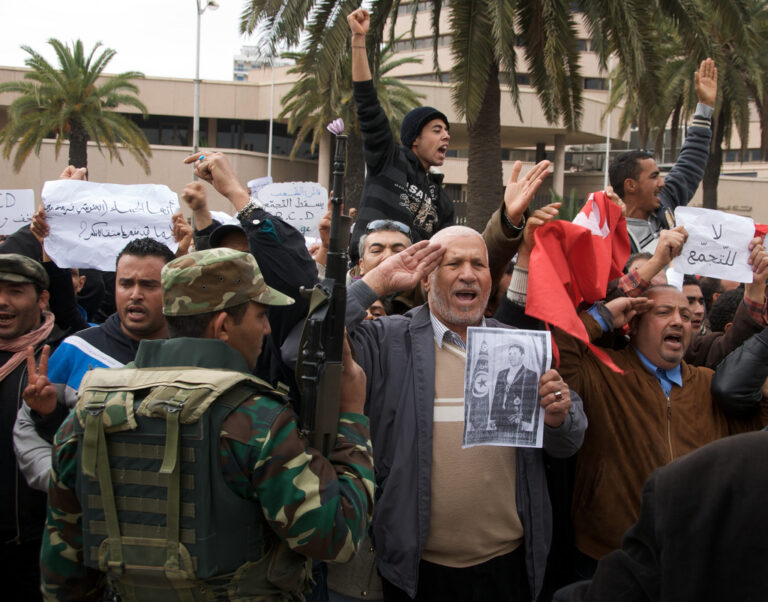
Bahrain, which saw deadly protest this month, is eager to control the price of food according to Wikileaks
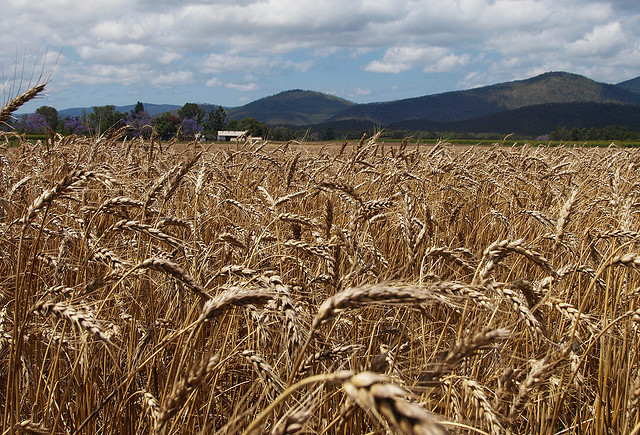
Rising food prices have been at the centre of the recent riots to hit the Arab world and so it comes as no surprise that many Arab nations are working hard to avoid similar food price rises.
According to the Wikileak revelations, Bahrain increased government subsidies in an effort to off-set rising prices for lower-income families in 2008 and has promised more generous subsidies recently. Even so, this hasn’t stopped political turmoil as the tiny Gulf state has been rocked by explosive protests this month that left seven dead and hundreds injured when troops opened fire on protesters.
Friendly Energy has installed 70 rooftop solar systems in Israel, like this one in Beersheva.
European companies continue to find interest in photovoltaic (PV) solar projects in Israel. For example, we recently reported about the joint venture between the Spanish multinational Soltec Renewable Energies and Shikun & Binui Solaria to build a solar power plant in Timna, not far from Kibbutz Ketura, where the German multinational Siemens (a part owner of Arava Power Company) is helping to build the first PV field in Israel. Now an Italian energy company, Enerpoint, has acquired the Israeli solar EPC (engineering, procurement and construction) firm Friendly Energy.
Desert pivot irrigation project is one of Gaddafi’s several “eco wonders” that could be axed
In a way, it might be possible to have empathy for Libya’s embattled head of state, Muamar al Gadaffi, whose beloved green projects all over this desert kingdom may soon be coming to an abrupt end. Prior to all the present confusion that is occurring in Libya, Colonel Gadaffi involved himself in a number of unusual “green” projects, including a project to construct the largest artificial river which Gadaffi himself acclaimed as being “the 8th natural wonder of the world.”
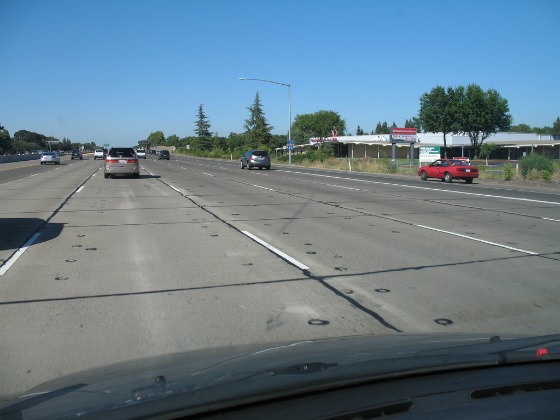
Between 11,500 and 51,000 vehicles drive on California freeways and expressways every day.
Energy Harvesting Journal posted earlier today that California Assemblyman Mike Gatto has proposed a bill that would require the state to use piezoelectric technology on its highways. The technology generates electricity from the vibrations on the road that are created by passing vehicles.
Green Prophet’s Arwa measures her family’s carbon footprint to Hajj.
Last year, my auntie and her family- the Hussains- did one of the most important things that a Muslim can do in their lives. They fulfilled one of the five pillars of Islam and went to Hajj which is a pilgrimage to Mecca in Saudi Arabia. However, as a journey required by every Muslim who can afford it, concerns have been raised about the impact of this annual pilgrimage on climate change due to aviation, waste and litter. If every year around 3 million people make the journey, what is their carbon footprint? Also how can we ‘green’ Hajj to make its impact on the planet gentler?
In the first installation of a three-part feature, I will be totting up the carbon footprint of the Hussain family’s pilgrimage from the UK to Mecca. Now, I am not claiming to be some carbon expert who has measured their journey accurately, I just wanted to look at the major aspects of the pilgrimage and their environmental implications. Stay tuned for part two where the good and bad (environmental) aspect of Hajj are explored and suggestions are made to help ‘green’ Hajj.
Travel to Mecca and Back
A large chunk of the Hussain’s carbon footprint is from their flight as they are travelling from the UK to Saudi Arabia. All together the family consists of five members and they travelled from Manchester Airport to King Abdulaziz International. According to one carbon calculator (and remember they all differ hugely) this brings them to a grand total of 11.65 tonnes of carbon for their flights.
Now taking into consideration that they stayed in Mecca for 18 days, this brings them to a total of around 25.57 tonnes of carbon according to calculations by the Carbonica holiday calculator.
Travel in Mecca
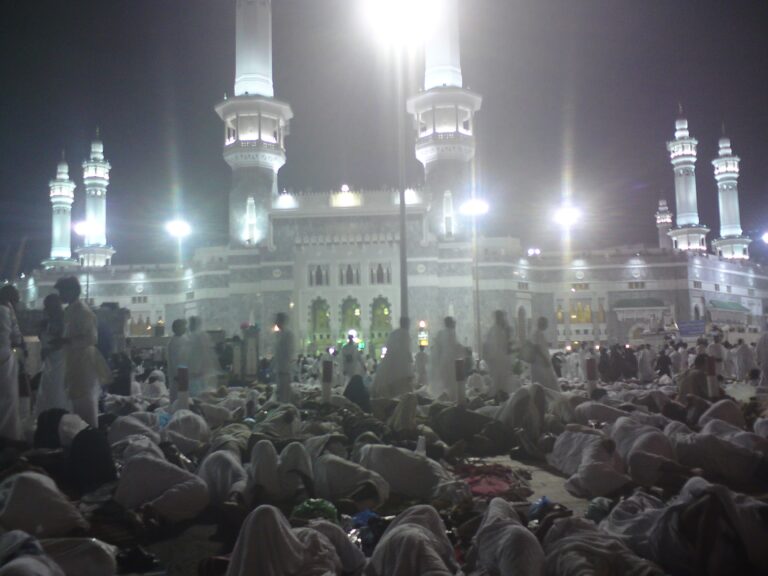
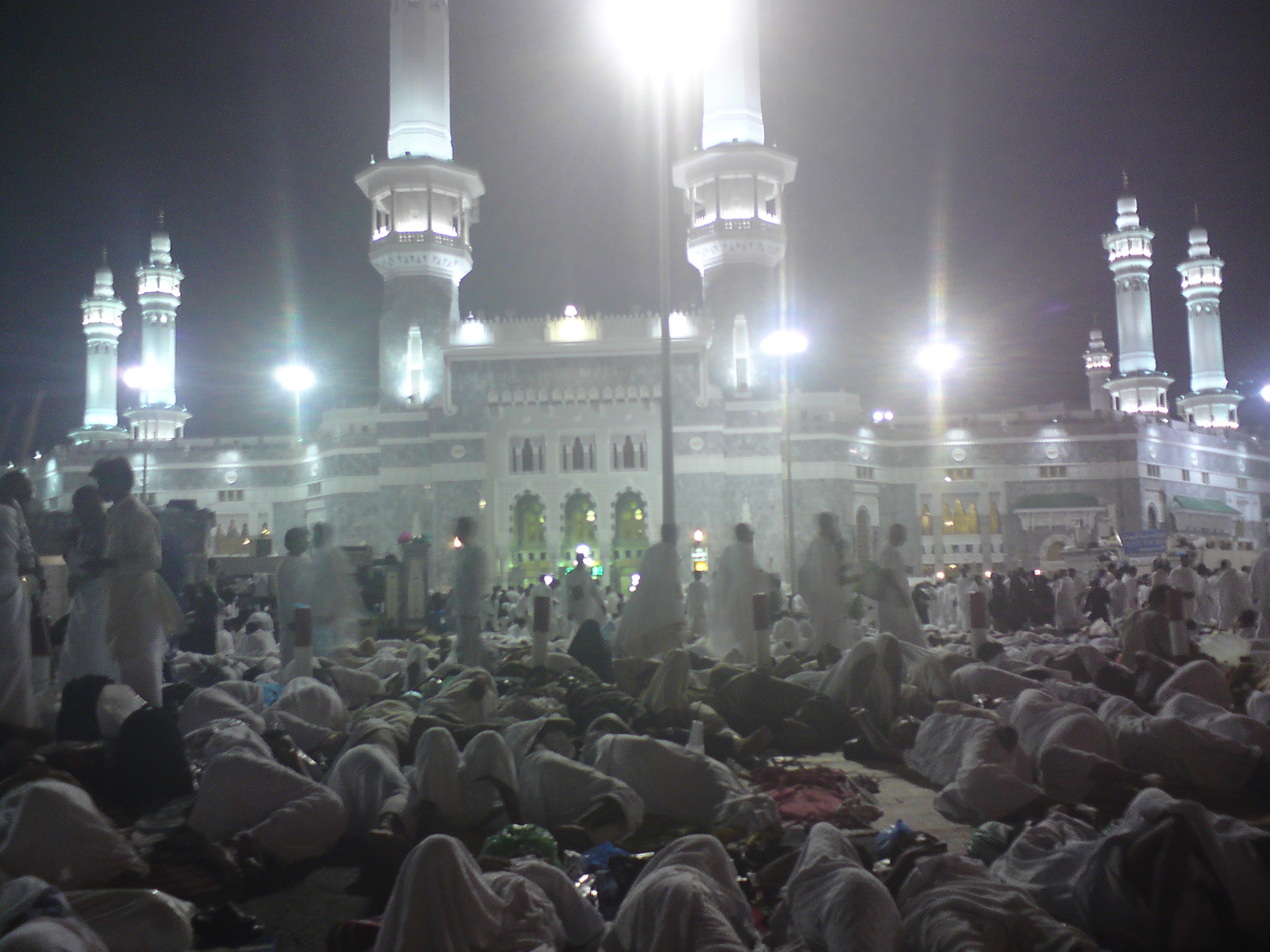
The Masjidi al-Haram (Kaaba) complex in Mecca is always busy with pilgrims during the hajj season. The staff are working round the clock! They are also efficient and have a unique way of doing things to ensure that the facility is comfortable for all. For this photo, I tried to capture the team work and the fast motion of running & mopping at the same time.
Overall, my aunty’s family relied on buses and coaches to get around. Clearly some locals do bring their own private transportation but due to high congestion most visitors will rely on public transport. Iman Hussain, my aunty’s daughter noted that due to the volume of people heading to prayers at the same time, travel is Saudi is very slow. Consequently, this brings the Hussain’s total carbon footprint to approximately 32.77 tonnes of carbon. This calculation does not include any activities they took part in, where they stayed or what they ate.
Food & Drink
I struggled to find a carbon calculator which considered the carbon footprint of food and drink during travel/holiday but I still felt it was an important category to include. Iman Hussain noted that most of the food publicly provided during Hajj is tinned food as well as lots of fruit. “Due to the heat, everything was in plastic containers as the food would just go off very quickly otherwise. Most of the tinned food was imported from different countries and there was a lot of waste.” No doubt the huge amount of imported and tinned food as well as waste and reliance on plastic containers would add to the carbon footprint.
Even so, the overall carbon footprint is already quite large and there are probably many other pilgrims with larger footprints. Look out for part two and three when I explore what can be done to cut this carbon footprint and make Hajj more environmentally friendly.
Image via Iman Hussain.
Again I just want to re-iterate that I am no expert on carbon calculation. In fact, I welcome any offers from experts to assess the carbon footprint of the average Hajj pilgrim properly as it was the lack of any data which led me to this rather slapdash effort.
This story makes our hearts sing! Taking the threat of plastic bags seriously, Abu Dhabi is preparing for the 2013 total ban with a plastic-free weekend.
Residents of the United Arab Emirates use 11.6 billion plastic bags every year. That’s 11.6 billion camel-killing, toxin-oozing, non-biodegradable bags that choke our water ways and blight beautiful places. And for what?
By 2013, Abu Dhabi will have no further use of plastic bags, but they need to smooth out the transition for residents. Which is exactly what is so brilliant about the plastic-free weekend that starts today and ends on Saturday.
However, this week brought sunnier news: On Tuesday, as the 4th annual Eilot-Eilat Renewable Energy Conference convened in Israel’s southernmost city, Arava Power celebrated the start of construction on Israel’s first solar field, a 4.9 MW facility at Kibbutz Ketura. In addition, the Electricity Authority issued 30 new licenses this week for medium-sized solar power plants that together promise to generate some 66 MW of electricity.
Reconciling nature and fashion with a new generation of biodegradable shoes.
We’ve seen some pretty interesting shoes on Green Prophet, such as these tongue shoes from Israeli designer Kobi Levi and these nature-friendly vegan shoes, but we would never have thought about sprouting new life from smelly worn shoes. OAT Shoes from the Netherlands did, and they’ve been awarded a ton of prize money for their ingenuity. Still in the conceptual stage and barely off the runway, it will be a long time before we see these in the Middle East. But hey, I’d walk 500 miles to be the gal who wears biodegradable shoes.
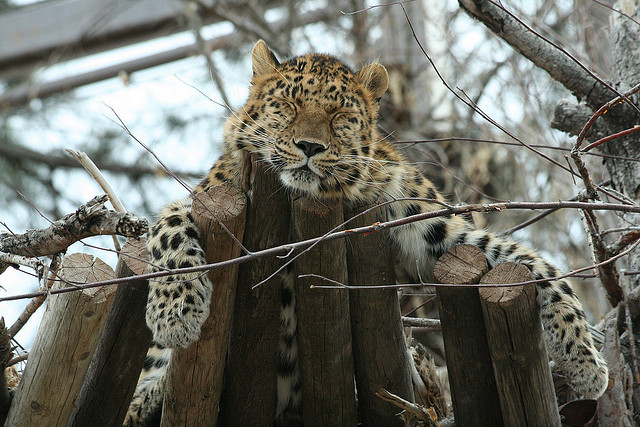
Leopards in Egypt are listed as critically endangered by the International Union for the Conservation of Nature.
During certain periods of ancient Egyptian history it was illegal to kill cats, any cats. The punishment for said infraction? Death. Cats were considered so sacred that only the Pharaoh was permitted to own them. Now, not only do sickly stray cats slink through the capital, but the country is facing widespread extinction of its wild felines. Of the ten wild cat species present in Africa, six once roamed Egypt. Just how many wild cats still exist is difficult to determine because the animals are so elusive, but experts claim that not only is it crucial to biodiversity to map and protect remaining populations, but to eco-tourism.
How is Israel ever going to meet its 10% renewable goal?
Israel with its population of 7 million hardly needs much total electricity. Only 40 Gigawatts (40,000 MW). To get 10% of its power from renewable energy, as it has pledged to do by 2020 – would take only about 4,000 MW of renewable power. Most of it will have to come from solar: there’s only 600 MW of wind potential.
So a mere 5 MW solar project is an exceedingly unambitious step towards the total 4,000 MW needed, and we are just 9 years from 2020.
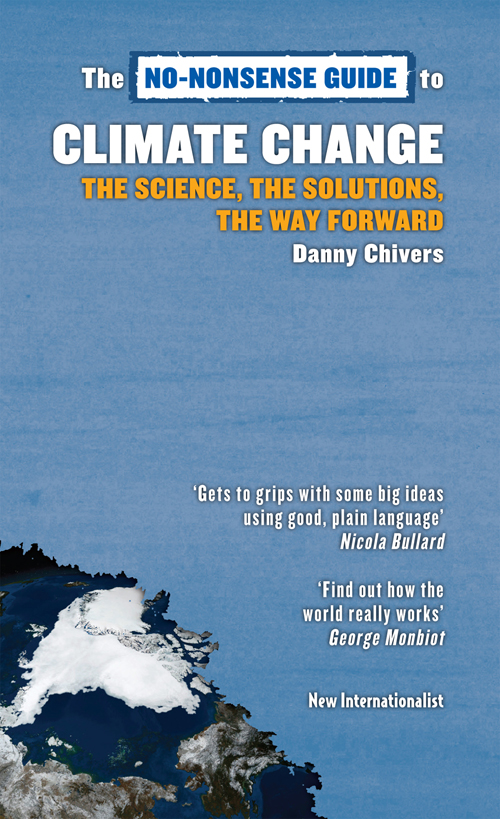
Getting to grips with climate science and all the different aspects and solutions to climate change can be a difficult thing- why not get the no-nonsense guide?
Maybe it’s just me but I think that one of the most difficult things about being a climate activist isn’t remembering to put out the recyclables for collection on a Wednesday but rather getting to grips with climate science. Maths and science were never my strong points at school and the most basic of climate science seems to be explained by boffins who way over-estimate my knowledge/abilities to be actually useful. So when I heard there was a ‘No-Nonsense Guide’ to climate change which included climate science I was pretty eager to get my hands on a copy. Thankfully I was not disappointed as the handy pocket-sized guide was easy to read and follow, and didn’t skimp on depth and detail either.
The tiny 200-page book in broken down into three sections which consist of a couple of chapters: the science, the solutions and the way forward. This makes it easy to follow and although you could dip in and out and use the chapter you want, I highly recommend you follow the set out structure on your first read at least.
The Suraya Foundation seeks funds to launch a radio campaign to convince governments, non-profits and ordinary citizens to root out reckless driving.
Engineer and entrepreneur Mohd Shahnawaz started the Suraya Foundation in memory of his young sister whose life was snuffed out by a reckless driver. Others might have shrunk in despair, but Mr. Shahnawaz has worked tirelessly, despite several obstacles, to be the UAE’s ambassador against reckless driving. His hopes to receive airtime donations for a series of carefully crafted radio advertisements discouraging recklessness were dashed when the government-owned radio station of Dubai asked for payment. The foundation is now seeking assistance from the public so they can get down to the business of saving lives.
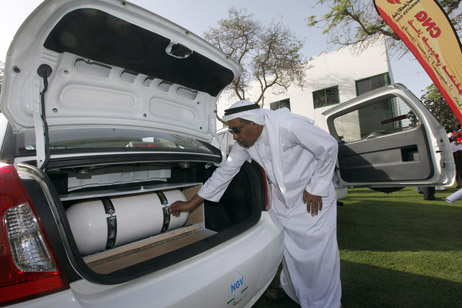
Dubai’s Director Of Transportation is among the first recipients of a compressed gas engine vehicle.
Starting with just five vehicles initially, the Dubai municipality plans to eventually outfit 500 vehicles with compressed gas engines with technical assistance from Compressed Gas Technology (CG Tech), The National reports. By burning a combination of petrol and natural gas, these cars will radically decrease emissions. Although the UAE has the seventh largest supply of natural gas in the world, the extraction industry does have its share of challenges, nor is natural gas a renewable resource. Even so, concerted worldwide efforts to reduce carbon emissions will go a long way to at least slowing down what Thomas Friedman calls “Global Weirding” in his landmark book Hot, Flat, and Crowded.
This beautiful table designed to evoke the genie in the lamp was carved out of layers of biodegradable, corrugated cardboard.
Sanserif Creatius is not the first designer to notice the jewels that comprise ancient Arabic art, design, and architecture. Mey and Boaz Khan made these lovely ecoolers that mimic ancient Arabic detail and ecological awareness, Hassan Fathy built sustainable structures that cherished the genius simplicity of old, and even Foster & Partners borrow extensively from the past. But what is most remarkable about the Mustafá table is the material out of which it was carved.
This led to a wide level of support for the protests, which ultimately led to the fall of the President Ben Ali and later President Mubarak. Now, however, commentators are drawing a link between protests in the Middle East and further rising global food prices.
You probably won’t be surprised to learn that rising oil prices is at the heart of the reason why the protest are driving up food prices. As Tafline Laylin wrote earlier today, the price of oil has risen 6% to $95.39 per barrel following the turbulence in the MENA region. This is apparently a six-year high.
As the agricultural industry is heavily reliant on fossil fuels (through machines, transportation and fertilizer production), this means that the rising prices of oil has led to the rising price of food.
With the recent revolt in Libya- a country which happens to be the world’s 12th biggest oil exporter- some commentators states that an impact on oil and consequently food prices is inevitable.
Egypt nudged prices upwards and so further protests will no doubt continue to push up the price of oil and food as they are so inextricably connected.
With the recent wikileak revelation that Saudi exaggerated its oil production by up to 40% this trend is set to continue in the future. It also reinforces the need to diversify our energy mix and seek more sustainable energy that is not so susceptible to market shocks and political turmoil.

 Bahrain, which saw deadly protest this month, is eager to control the price of food according to Wikileaks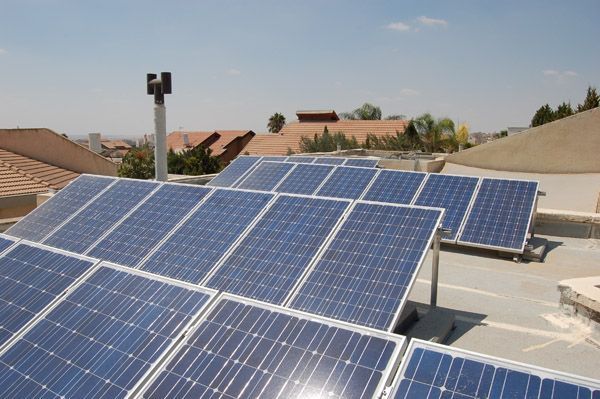



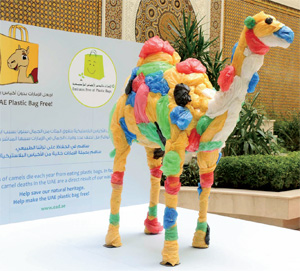
 This story makes our hearts sing! Taking the threat of plastic bags seriously, Abu Dhabi is preparing for the 2013 total ban with a plastic-free weekend.