Home Blog Page 52

Saudi greenhouses to feed desert people

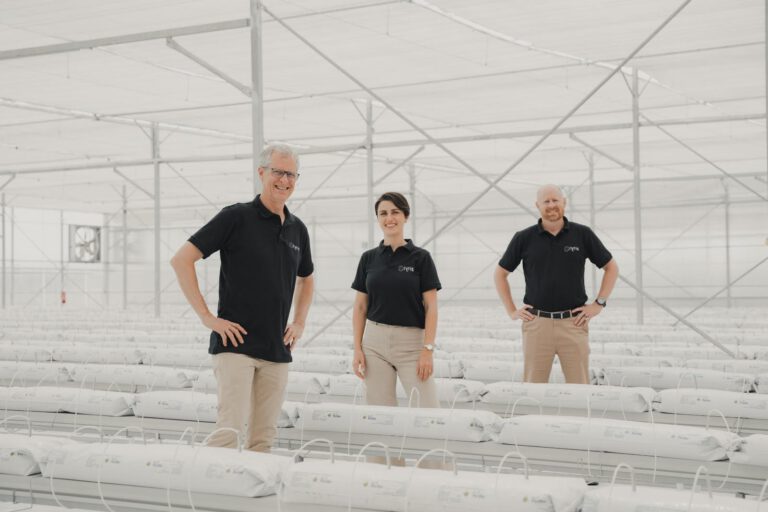
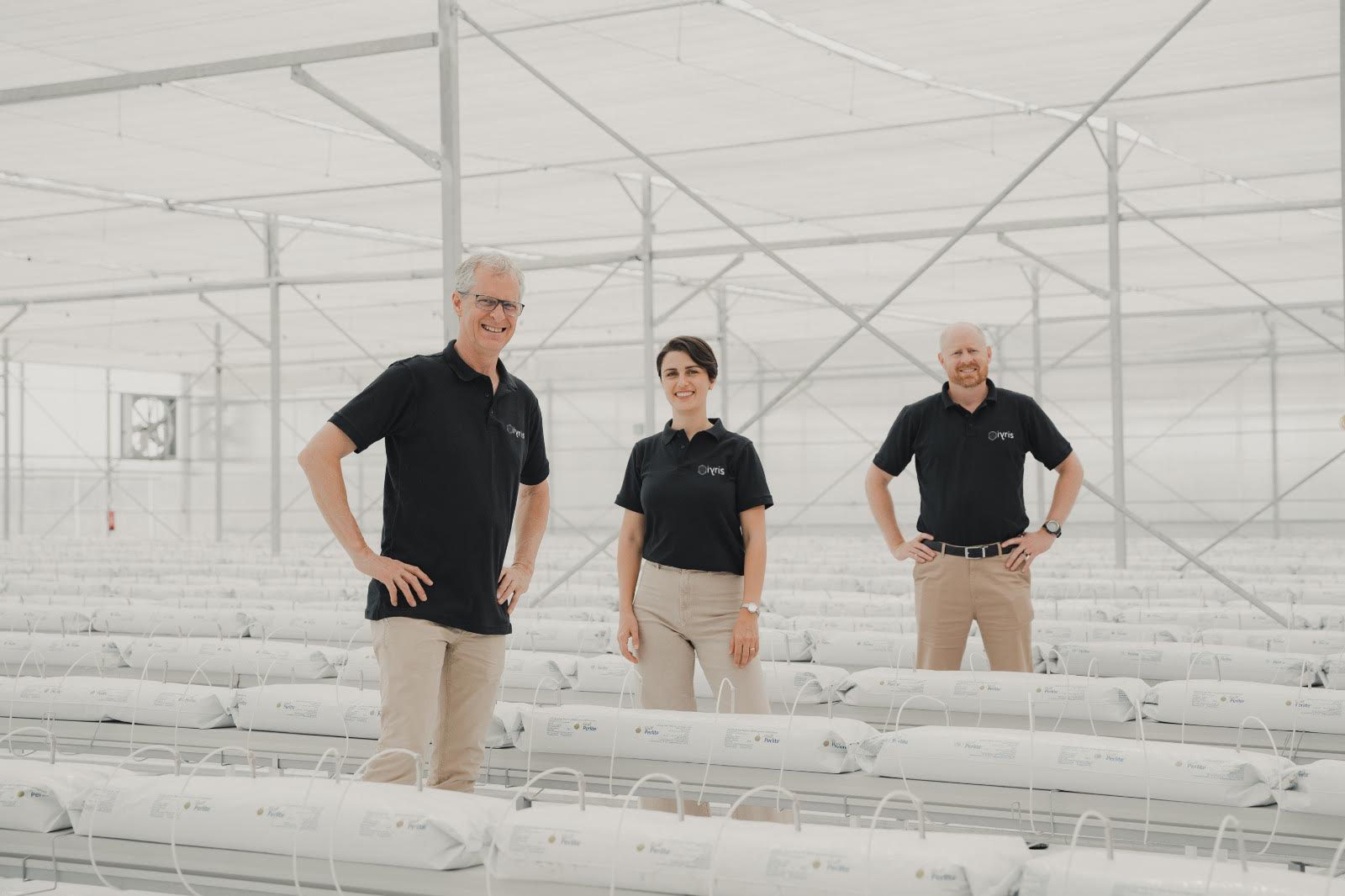
iyris greenhouse team
Iyris greenhouse team, the founders: Dr. Mark Tester, Dr. Ryan Lefers and Derya Baran

iyris delivers more resilient and reliable produce.

Iyris, a company from Saudi Arabia founded by foreign nationals, makes it easier to grow the likes of tomatoes – one of the world’s biggest fresh produce and processing crops – in environments increasingly impacted by climate change. The patented process, which tackles the challenges of hot climates, has the potential to revolutionize where crops are grown to address global food security issues. We interviewed one of the founders Mark Tester earlier this year on the innovation he championed. The company used to be marketed under RedSea Farms.

Their newly patented polyploid hybridization grafting process – mimics and significantly accelerates the natural evolutionary process of breeding genetic resilience into plant rootstocks. With this groundbreaking innovation, farmers can address, without having to change the way that they farm their land, their most urgent need: reliable, resistant crops that can mitigate and combat climate change.

The technology makes crops more resilient to stressful abiotic environments (e.g., salt, drought, heat and pests) delivering higher yields for farmers and reducing crop failure risk. The timescale and predictability of genetic resilience trait integration is significantly accelerated compared to previous methods. 

Related: How Daniel Hillel pioneered drip irrigation

Commercial trials of iyris’ current hybrid grafted diploid rootstocks, delivered an average 20-25% tomato plant yield increase over the best performing commercial alternatives. Expectations are that using this patented polyploid breeding process, yield increases will be even more significant. Results to date have demonstrated that polyploids can double yields when compared to diploids. 

RedSea farms
iyris grafts more desirable plants onto graftstock which is saline resistant

Uniquely, iyris’ plant science innovation allows multiple plant traits to be integrated simultaneously. Previously, scientists and breeders targeted single traits and experienced low predictability rates for even a single integration.

“These achievements in plant science are unprecedented and a significant moment in our mission to feed the world sustainably. iyris can now offer farmers a commercially validated and reliable solution addressing the environmental and economic challenges of today – in tomatoes alone, that’s worth billions of dollars annually,” says John Keppler, Executive Chairperson of iyris.

iyris’ published rootstock patent – ‘Polyploidization of interspecific tomato hybrids to create stable and fertile rootstocks’ follows decades of work and research, most recently at Saudi Arabia’s King Abdullah University of Science and Technology (KAUST), led by iyris co-founder, Professor Mark Tester – the world’s pre-eminent plant scientist. Professor Tester’s thesis developed from research (with his then – PhD student, Yveline Pailles) into resilient relatives of the tomato growing on sea-facing rock faces in the Galapagos Islands.   

Mark Tester, Indiana Jones of the Plants
Mark Tester, Indiana Jones of the Plants in the Galapagos

With increasing global temperature, and dwindling freshwater resources, ground-breaking innovative agriculture solutions are vital to break the food-water-energy nexus. The impact of climate change on global farming is becoming starker every year, and global food production is estimated to need to increase by 50%, by 2050, to feed soaring population rates. iyris’ innovation is perfectly timed given its potential to change the way that crops are grown, allow sustainable agriculture in previously unviable territories for farming and protect farmers from crop failure risk. 

Related: Lycored makes kosher and halal, non-animal tomato-based dyes

With its resilient hybrid tomato rootstocks already available in the market, iyris has proven the commercial viability of their technology in open-field trials. iyris has partnerships with two of the world’s largest tomato producers, with more commercial agreements to come. iyris hybrid rootstocks outperformed the best available alternatives across multiple crop seasons, hybrid tomato rootstocks sales have already exceeded 1 million units.  

Mark Tester, Ryan
Founders Mark Tester, Ryan Lefer

The market context is extremely positive. The processed tomato market (2023 data) is estimated at US$51.8 billion with 182 million tons produced annually. iyris and Professor Tester have already started research into other plant groups such as eggplants, melons and pumpkins, with the potential to increase commercial results and improve resilience exponentially.


The Orange Economy: How Religion and AI Are Shaping Innovation

0

The orange economy is an evolving concept based on the contribution and potential of creative assets to contribute to economic growth and development.

Is orange the pathway in to faith and reconciliation for people and planet? A monk going into a temple in Cambodia
Is orange the pathway in to faith and reconciliation for people and planet? A monk going into a temple in Cambodia. And a design conference in Tashkent on AI. How can we resolve both worlds? Can orange lead the way?

The creative economy is about translating the inspiration of culture and ideas into high-value businesses and enterprises.  For billions of people around the world their faith is a big source of inspiration and creativity. Artificial intelligence will be a major disruptor of our economy. It will also allow many people to join the ranks of the creative economy like never before. In essence, faith has a role to play in the unfurling of the next chapter in humanity’s economic story.

Indeed, prior to the contemporary era most acts of human creativity, we celebrate today were directly related to divine inspiration. This includes ancient artifacts like the bust of Nefertiti and the Pyramids to Renaissance objects like Michelangelo’s “The Creation of Adam” a fresco which forms part of the Sistine Chapel at the Vatican City.

Related: There are more pilgrims to Dubai mall than to Mecca and the Vatican

The recently concluded 4th World Conference on Creative Economy in Tashkent did not deal directly with faith, but attracted diverse individuals from around the globe from supermodel Naomi Campbell who took the stage to a priest who sat in the audience. Faith was even more present in part because the Uzbekistan Art and Culture Development Foundation, who organized the event in partnership with United Nations Trade and Development and the Ministry of Tourism and Creative Economy of the Republic of Indonesia, is involved in restoration works around the country.

Religion in many countries is a strategic reserve for what’s called the “Creative Economy.” For example, tourists around the globe include sightseeing to mosques, churches and temples in their itineraries. Similarly, history would suggest the pop stars of tomorrow are today members of youth choirs or similar groups.

“From a historic perspective the creative economy began with religious inspiration in many places. You can see that in very diverse areas from painting and music for example around the world. In a Muslim country [like Indonesia]… we embrace differences and members of other religions bring their own ideas to the development of the creative economy,” said Sandiaga Uno, Indonesia’s then Minister of Tourism.

The Jameh Mosque, a UNESCO World Heritage Site, is a prime example of Persian-Islamic architecture. Its intricate tilework, innovative use of geometry, and sustainable features such as the central courtyard for natural ventilation make it an inspiration for contemporary architects. The mosque demonstrates the potential for combining cultural richness with eco-friendly design.
Jameh Mosque of Isfahan, Iran is a major stop for tourists

Orange is a color often associated with the Protestant faith and in Asia with Buddhism, Hinduism and Sikhism. It is also the color associated with the creative economy to differentiate — it from other macroeconomy buzzwords like the green economy and blue economy.

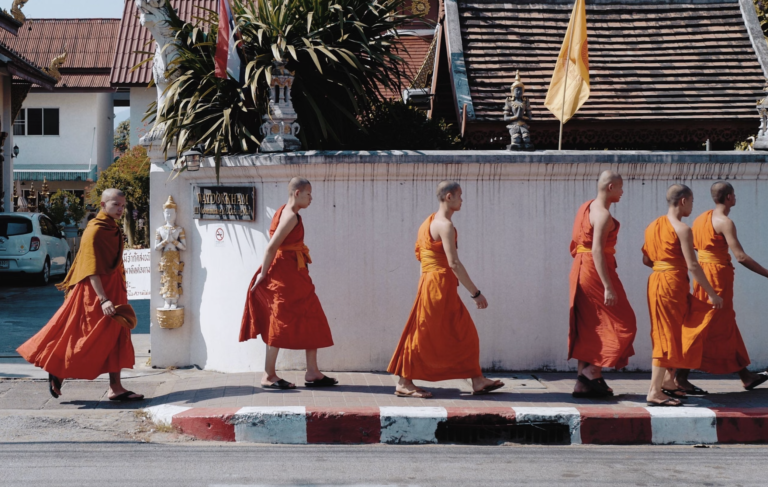
young monks outside a temple in Thailand
Monks in Thailand, dressed in orange

“This summit is about encouraging the talented people here  not to leave the country. Instead of seeking high-paying positions abroad, we want to attract those jobs to Uzbekistan,” said Uzbekistan Minister of Digital Technologies, Sherzod Shermatov. “Digital platforms can help achieve millions of views globally, enabling monetization and additional income. We aim to create local role models and success stories, and by combining digital tools with creative talent, we can open new doors for our youth.”

Simple yet innovative farming technologies and techniques save natural resources while increasing incomes
Simple yet innovative farming technologies and techniques save natural resources while increasing incomes in Uzbekistan. Digital farming is helping these women prosper.

The growth and development of the Orange Economy offers a growing and important sector — especially because polls show that from fashion to video games these are sectors in the economy which a growing number of youths see as important to their futures. There are other ways in which the creative economy growth goes hand in hand with the development of faith

“By focusing on creating an ecosystem where creatives can thrive within their home countries—leveraging technology, financial management, and global platforms—[countries] can better capitalize on … cultural wealth and retain talent that might otherwise seek opportunities abroad,” said Felipe Buitrago, Colombia’s former Minister of Culture.

Image from Brown Political Review by Kayla Morrison, 2024
Comuna 13, Medellin: A model for Middle East peace? Image from Brown Political Review by Kayla Morrison, 2024

In the past, Buitrago also stressed that the Orange Economy can help build peace and reconciliation between diverse groups. In the past, he has pointed to the example from his own tenure as minister and the example of the Comuna 13 area of Medellín. Here, two rival gangs faced off together with little chance of reconciliation. What ultimately brought these two together was a joint music festival in which the two groups battled it out over competing forms of music (such as rap and reggaeton) in these days.

“Faith is a key element of the creative economy. Because freedom of expression and belief are necessary conditions for creativity,”  Buitrago  said, “You cannot not be creative and non-inclusive at the same time. … Of course faith is a delicate issue and you can’t force people to have certain beliefs but, overall religion has played a major role in fostering creativity. As reinforcing and building identity…which often allows people to cooperate in harmonious ways.”

Looking toward the future faith, creativity and technology will often intersect. The pathway from “prophet” to “profit” will not always be clear. However, creativity, at times fueled by faith, will help spur greater creativity where-in new technologies will allow the visionaries of the future to unlock new possibilities for collaboration, innovation, and mutual understanding more quickly than ever.


Joseph Hammond
Joseph Hammond

Joseph Hammond is a former Fulbright fellow in Malawi and a journalist who has reported extensively from Africa, Eurasia and the Middle East. Hammond is also an Idove fellow at the African Union. He speaks enough Spanish and Arabic to discuss boxing, a sport he treasures. 

Unanswered questions after 11 people perished on an Egyptian dive boat accident

0

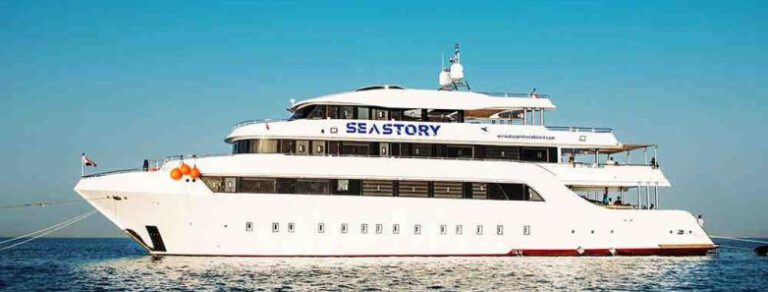
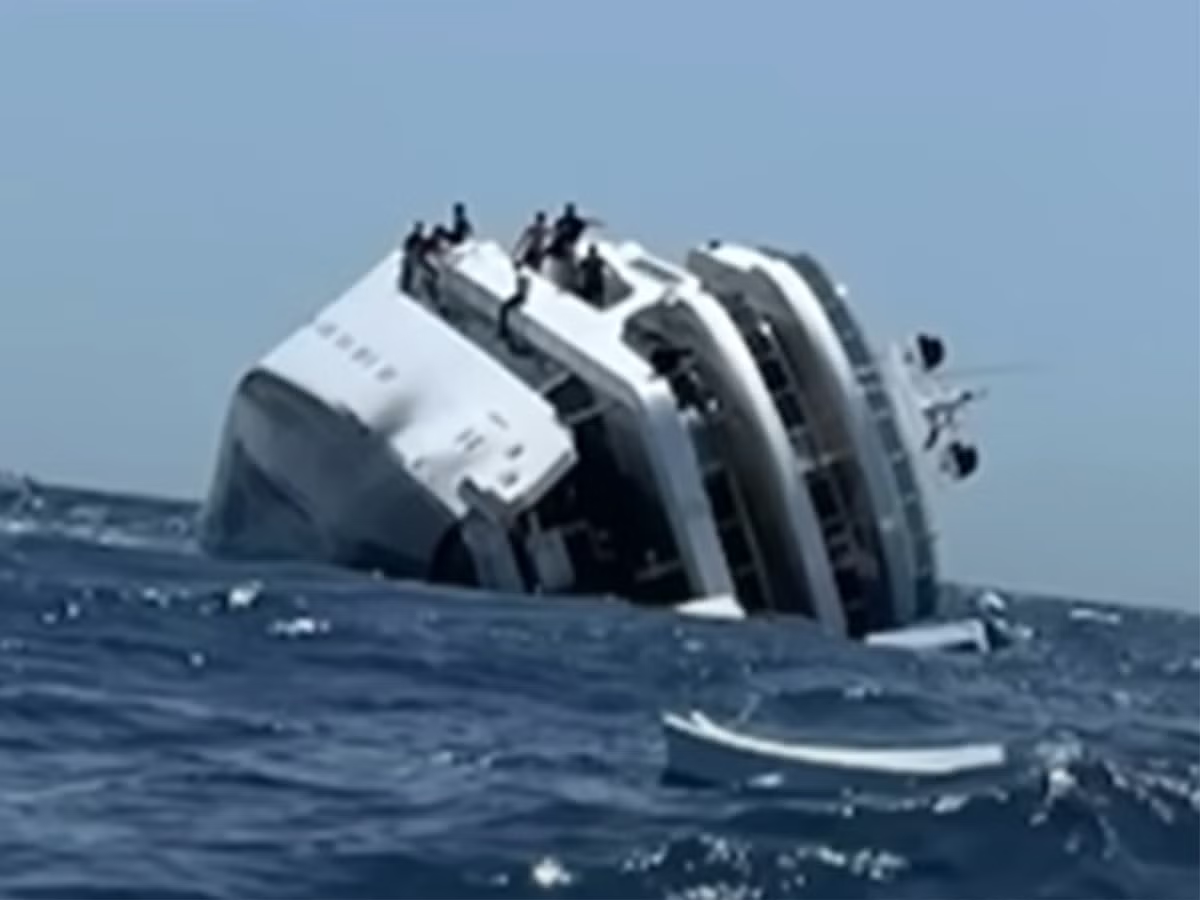
My Sea Story boat

Dive Pro Liveaboard has lost 2 boats this year. Another one caught fire in 2022. In November, Sea Story tipped and capsized in open water. Eleven tourists are presumed dead, plus a number of crew.

Dive Pro Liveaboard has lost 2 boats this year in the Red Sea. 12 tourists and a number of crew have died, yet the company is still taking bookings for Christmas

The Red Sea is a magical place. It’s in the mountains of Sinai where God first spoke with Moses and gave him the 10 commandments. The beautiful people, the food, the natural mix between sea and desert. The colors of purple, pinks, yellows, oranges, white and black. The coral reefs everywhere and diving in the Blue Hole is an adventure of a lifetime for many divers who do return again and again. Especially Europeans where Cairo is a 5 hour plane ride away.

But am Egyptian dive holiday went wrong for 33 tourists this past November when the second boat in the same fleet  owned by the dive company Dive Pro Liveaboard listed, capsized and sunk. The accident happened on November 25, a Monday, in the early hours of the morning, as early as 2:30am near the area of Marsa Alam about 20 km out into the Red Sea.

Location of the Sea Story tragedy

Location of the Sea Story tragedy on the Red Sea

The Egyptian Navy wasn’t called until a reported 5:30am and helicopters didn’t show up until about 10am or 11am, according to survivors. We first reported on the dive boat accident here right after it happened. Soon after, we were made aware that there were suspicious reports of the dive boat not suited to open seas because it had no keel and was refurbished with an extra floor making it top heavy (read here). Soon after a German diver reached out about a thesis a German student was working on documenting the hazards of Red Sea diving. He offered some solutions for fixing the growing concerns among dive boats and a dive boat checklist – you can get it here.

What we do know is that on Monday, 23 people out of 44 onboard, including crew and tourists, made their way to safety on rescue boats. The next day, some 36 hours later rescue crews pulled out 5 survivors, 4 tourists and one crew, a nephew of one of the rescue team. We have the story of one of the survivors, Michael Miles from Vaud, Switzerland, here, as told to us by his daughter.

In total there are 11 dead and/or missing from Germany, the UK, Poland and Egypt.

The dive operating company Dive Pro Liveaboard and the company that has facilitated the bookings of the trips have not responded to survivors requests for compensation or help. They have not responded to our requests to be interviewed. The Egyptian Navy’s emailed bounced. Dive Pro Liveaboard is based in Hurghada and based on its website is run by Ali Aref. They are still taking bookings for their remaining 2 boats.

“Crazy! Insanely bad management,” says a Reddit commenter. “They also ran a boat Sea Legend that caught fire in Feb where one German diver died. And in 2022, another of their boat also caught fire. How are they still allowed to operate? Makes you question the local systems and enforcement too.”

Both companies Dive Pro Liveaboard and the Dutch-based Liveaboard.com are continuing to book dive trips on risky boats despite the concerns. We have here an eyewitness who travelled on the Tillis, one of the boats being offered by Liveaboard.com currently on its Holland-based booking platform noting how they feared for their life on that boat. Yet only positive reviews are shown on the site.

Sea Story survivor Michael Miles told his daughter he booked on the Tillis (read here one tourists account of lack of safety standards on the boat) but was transferred to Sea Story. See screenshots from December 8 below that bookings are still being made for the dive boat company and if you read comments you will see that Liveaboard.com and Dive Pro Liveaboard in Egypt have a history of switching out boats. Why?

Liveaboard.com still carrying on booking holidays for the Dive Pro Liveaboard which lost 2 boats in the last year from catastrophic accidents that have killed 12 tourists and many crew.

Liveaboard.com still carrying on booking holidays for the Dive Pro Liveaboard which lost 2 boats in the last year from catastrophic accidents that have killed 12 tourists and many crew.

Tillis booking liveaboard.com Sea Story

Tillis booking liveaboard.com transferred to Sea Story boat on arrival. This was a common thing, as noted in the comments. Guest Michael Miles was switched from Tillis to Sea Story when he goat to the boat. Tillis went out on the trip but was not involved in the accident.

The fatal accident on November 25 has left dozens of survivors and the families of those who have died looking for answers and in the very least some financial compensation. Over the last 2 weeks, there are the questions we have collected, still unanswered. If you have any information about the Sea Story, answer in the comments below or email us [email protected].

Open questions after the Sea Story dive boat tragedy

Where did the accident actually happen?

By the time the Navy arrived to the sinking boat several hours after it capsized, they cordoned off the area around the boat, and wouldn’t allow rescue crews from other dive companies in for another day, some 36 hours, on Tuesday. The reason is that there was a risk of a diver bubble entering an air pocket and changing the pressure in the boat. The whole boat could go down.

One source says the boat was in 12 to 15 meters of water, another said 1000 meters. What was it? In deep open water or closer to the shore? If you look at the maps of the Indian Ocean/Red Sea areas you don’t need to boat long to get into water reaching hundreds of meters of depth. Why did it take the Navy 36 hours to agree to let divers inside even though survivors could be heard knocking and whistling from the outside?

Eyewitness accounts put the boat as close to 20km to shore and as far as 80km. A shipping boat was seen passing by at 10am by the survivors curious to know the exact location of the wreck.

Eyewitness accounts put the boat as close to 20km to shore and as far as 80km. A shipping boat was seen passing by at 10am by the survivors curious to know the exact location of the wreck. Marsa Alam sea Story dive boat nautical maps by fishing-app.gpsnauticalcharts.com.

Sea Story travelled from Port Ghalib at Marsa Shouna around 9 to 10pm. They were supposed to arrive at Sataya Reef after 6 or 7 hours at sea early in the morning. Around 2:30 am the boat went down within minutes (as many as 10), but the parts of the bottom of the boat floated about the surface. This is information supplied by survivors interviewed by Green Prophet.


Sea Story’s approximate location in the Red Sea/Indian Ocean. One source estimates 80 km out, another 20 km out in the sea. Depths are around 600m. Why is it reported that the boat sunk in 12 to 15 meters? 

One survivor told Green Prophet that at 10:00 am a helicopter arrived at the wreck. Shortly after, he says (maybe one hour), the motor boats of the Masa Nakari, a dive center brought the survivors from the life rafts to the Polish liveaboard.

Why did it take the Navy so long to let rescue divers in?

Rescue divers reported hearing knocking sounds coming out of the boat, meaning there were people trapped inside after the initial rescue. From Monday there was knocking coming out of My Sea Story. Why did the Navy only let the private rescuers in on Tuesday?

Why did it take so long for the Navy to come? The boat started sinking around 2:30 am. The Navy showed up at around 10am or 11.

Why does the Navy have no dive guides? Or equipment?

Questions about the boat operator

Why did the Tillis and My Sea Story go out when there were warnings and advisors against going to sea?

Was the cook driving the boat?

Why was an inexperienced captain in charge of such a large vessel?

Where is the captain of the ship? Is he on the run? A Facebook eulogy by a friend suggested he killed himself; others say he was in jail. Maybe he is in hiding?

Why are people booking on one boat and getting transferred to another?

How are they still booking trips on Tillis?

Why is Liveaboard.com not refunding money to people afraid of the Dive Pro company in the Egypt who have booked trips on boats like Tillus, also unsafe remodeled boats?

Who is certifying an ancient dive boat as seaworthy?

Why was My Sea Story away from the dive site and why did they separate from Tillis, the sister boat on Sunday?

The Navy and the Egyptian Authorities

Why are there no images coming out from the Navy of the boat in the water?

Where is the wreck now?

Why are they hiding the original location of the wreck?

Why has the public not been told if the boat finally sank?

Why were rescued passengers denied their passports to go home unless they signed a waver?

One diver reported a hole in the boat? Was there a hole in the boat?

Why didn’t the marines try to prop up the boat from sinking? Use floatation equipment?

Where is the crew? Why aren’t they allowed to talk with the media?

Why are the actual divers who went into the Sea Story and saved lives, not being celebrated? Their contribution being told?

Who will compensate tourists and the crew who lost their lives?

Some speculate that the Navy has towed the boat from the site where the boat overturned into shore, close to a reef. Why?

The rescue team that went in rescued 5 people. They found 4 bodies. There were no other bodies on the boat. Were there people still alive in their cabins? According to this rescue story (we interviewed the daughter) the rescue crew could not get into all the cabins. Did they give up on them? Were the risks too great?

There is a debate on whether the boat was in 12-15 meters or in 1000 meters of water. This fact could have changed rescue strategies. Some sources say the boat was close to shore near a reef and eventually sunk in 12 to 15 meters of water. Other say 20 to 80km out in the open water, at about 1000 m depth and the boat was towed back to shore and sunk near a reef by the Navy.

December 10, update: We attempted to book a dive trip on the Tillis through Dive Pro directly. The reply from a rep named Zozo was “Which week, which route, here in Egypt or in KSA?”


If you have anything to contribute to this evolving story, send us an email: [email protected]



How Islamic-era agriculture points way to sustainable farming methods

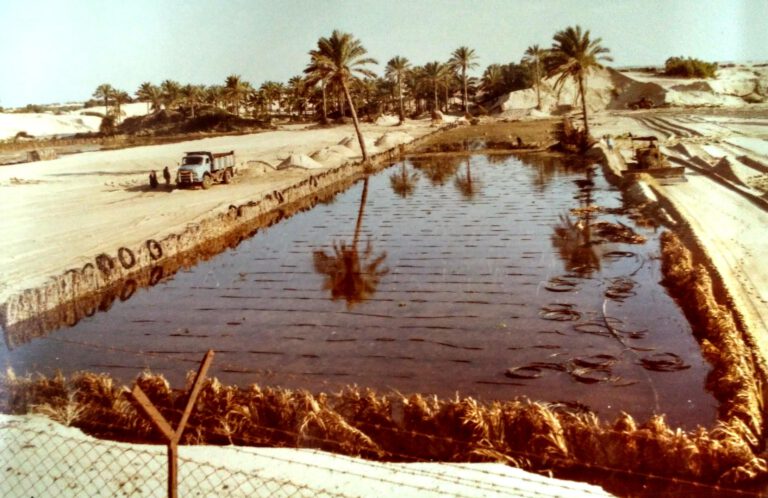
Flooded Mawasi plot (1983) along southern coast of the Gaza StripCredit: Yair Friman
Flooded Mawasi plot (1983) along southern coast of the Gaza Strip Credit: Yair Friman

The researchers suggest that the early Islamic agroecosystems were ahead of their time

As global water resources become more strained, the insights gained from traditional agricultural systems could pave the way for the development of innovative, low-water-use agricultural practices to confront the growing challenges of water scarcity and food insecurity in arid and marginal regions.

A new study exploring traditional sunken groundwater-harvesting agroecosystems in coastal and inland sand (SGHAS) bodies of Israel, Iran, Egypt, Algeria, Gaza, and the Atlantic coast of Iberia offers fresh perspectives on ancient agricultural techniques that could inform modern sustainability practices.

The research, which combines geospatial analysis, archaeological findings, and historical documentation, sheds light on the innovative use of water-harvesting and soil-enrichment technologies developed in the early Islamic period and their continued relevance to contemporary agricultural challenges.

The paper stems from an international workshop at Bar-Ilan University (BIU) in 2023 on continuity-discontinuity of ancient water-harvesting agricultural systems that resulted in a special issue in the journal Environmental Archaeology.

This study on early Islamic (late 9th – early 12th century) Plot-and-Berm (P&B) agroecosystems located along Israel’s Mediterranean coast evolved into an investigation of the long-term viability of regional SGHAS as a sustainable agricultural model.

These methods to utilize water, typically found near urban settlements, leverage local organic material and urban refuse to enrich the inert sandy substrate, creating fertile grounds for growing crops such as vegetables, watermelons, dates, and grapes. Importantly, SGHAS systems provide a model for long-term water security by utilizing shallow groundwater in conjunction with rainfall for irrigation and groundwater replenishment.

The Israel Science Foundation-funded study was jointly headed by Prof. Joel Roskin from the Department of Environment, Planning and Sustainability at BIU and Dr. Itamar Taxel, Archaeological Research Department, Israel Antiquities Authority, along with post-docs Drs. Lotem Robins and Ruben Sanchez (BIU), Prof. Revital Bookman and doctoral candidate M.Sc. Adam Ostrowski (U. of Haifa).

Despite their initial success, early Islamic P&B agricultural systems in Israel were largely abandoned after the Crusader conquest and, surprisingly, were not reestablished. However, these traditional systems found renewed application in regions such as Iran, Algeria, the Gaza Strip, and parts of Iberia since the Middle Ages, where they continue to support agriculture in marginal environments.

With many arid and marginal regions facing expanding populations and decreasing water resources, these ancient water-harvesting practices can address the global challenge of sustainable agriculture.

The long-term use of these agroecosystems contributed to continuous, shallow groundwater availability, which is essential for agricultural production and local food security in arid regions. These systems, which include advanced soil-enrichment techniques and groundwater harvesting methods, show the resilience of traditional agricultural practices and their potential for modern adaptation in water-scarce regions.

Navazo Spain: Oblique aerial photo of modern Navazo agriculture by Sanlucar de Barrameda, Spain. The green pool water is next to a shallow well in the shed by the palm and shady vegetated berms are in the background.Photo courtesy R. Sanchez
Masseira agriculture north in Apulia, northwestern Portugal. Seaweed is collected for sand enrichment. The plot and berm are utilized by irrigation from well into 1 m deep groundwater. Today a wide range of local family-farm produce is sold at stands. Seaweed photos courtesy of Álvaro Campelo. Additional photos by Prof. Joel Roskin. 

The researchers suggest that the early Islamic agroecosystems were ahead of their time, offering a glimpse into agricultural practices that were remarkably advanced compared to later agricultural systems. This understanding helps explain the approximately 400-year gap between the abandonment of early Islamic systems and the reappearance of SGHAS in the 15th century.

“We could not find written or factual evidence of the crops grown in early Islamic times, nor decipher the know-how and motivation for this original, exhaustive and ingenious effort to earthwork, enrich and cultivate sand. However, the inception of traditional Middle Age on SGHASs probably stemmed from a growing demand to cultivate the extensive new world influx of fruits and vegetables from arid zones and the Americas,” notes Prof. Roskin.

“We speculate that the Islamic agroecosystems provided several similar species to those found today in the traditional SGHASs. The reappearance in the Middle Ages and third expansion of SGHASs in the late 19th century early 20th century in Iberia suggests that this type of agriculture is adaptable to varying economic and cultural settings and therefore may possess potential for certain, current socio-agronomic scenarios.”

Masseira gallery: Masseira agriculture north in Apulia, northwestern Portugal. Seaweed is collected for sand enrichment. The plot and berm are utilized by irrigation from well into 1 m deepgroundwater. Today a wide range of local family-farm produce is sold at stands.

Seaweed photos courtesy of Álvaro Campelo. Additional photos by Prof. Joel Roskin.
Navazo Spain: Oblique aerial photo of modern Navazo agriculture by Sanlucar de Barrameda, Spain. The green pool water is next to a shallow well in the shed by the palm and shady vegetated berms are in the background. Photo courtesy R. Sanchez

While modern agriculture often relies on intensive water usage and depleting soil quality, traditional systems like SGHAS offer more sustainable, low-impact alternatives that can be adapted to contemporary needs. The study highlights the value of traditional agroecosystem models as analogues for contemporary agricultural challenges, particularly in the face of climate change and global food security concerns. While traditional agricultural methods cannot entirely replace modern, industrialized farming, they remain valuable in preserving local knowledge and expertise that have been honed over centuries. The study underscores the potential for integrating traditional agricultural practices—such as SGHAS—into modern sustainable agriculture solutions, particularly for communities facing water scarcity and environmental stresses.

The research further suggests that SGHAS-style systems, which rely on rainfall-replenished groundwater, offer a pathway for community-driven, ecologically sensitive farming practices. These systems are not only sustainable but also promote community engagement, resilience to climate change, and environmental stewardship. As traditional farming methods gradually fade in the face of industrial agriculture, these agroecosystems offer important models for creating locally adaptive, sustainable food systems.

Can goats predict earthquakes? Dogs a volcano about to blow? Scientists say yes

0
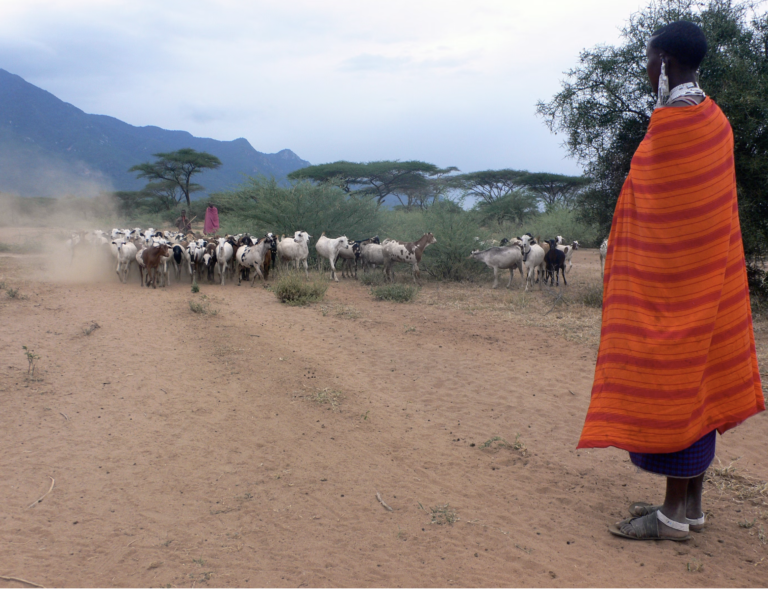
Goats know when to run for the hills

Seconds before our bomb shelter alert started my dogs came to paw on the front door to be let inside. It’s as if they know something is coming before we do. “There are many anecdotes about animals being able to foresee disasters such as earthquakes and volcanic eruptions, but hardly any systematic studies,” says Martin Wikelski, Director at the Max Planck Institute for Ornithology in Radolfzell and professor at the University of Konstanz. “But scientists in this field don’t have it easy, either,” he grumbles. “One can quickly be dismissed as a sort of diviner.”

Animals can sense natural disasters: Goats on Mount Etna in Sicily, for example, become anxious before major eruptions. Their movement profiles may provide warning of imminent eruptions in future.[less] © MPI of Animal Behavior/ MaxCine
Animals can sense natural disasters like diviners: Goats on Mount Etna in Sicily, for example, become anxious before major eruptions. Their movement profiles may provide warning of imminent eruptions in future. Via Animal Behavior/ MaxCine
He is investigating the use of animals to predict events where technology fails or is not available and is part of a research group called Icarus to investigate these questions.

Related: goats are fire-fighting friends

He would like to test whether animals can be used as biological early-warning systems for natural disasters such as earthquakes and volcanic eruptions. He’s even had his idea patented: the project, which he submitted to the European Patent Office with the support of the technology transfer company Max Planck Innovation, is called DAMN (Disaster Alert Mediation using Nature). Insurance companies have already expressed interest.

He tells the story of Rome and that people were lying peacefully in their beds as danger approached from the north. The Celts were marching toward the city, threatening to destroy it. The geese woke sleeping inhabitants with their loud quacking and thus saved the Capitoline.

Today, every guide book on Rome includes the story of the vigilant geese, but this story is by no means the only example of animals prophesying impending doom. Roman naturalist Pliny the Elder, who died when Mount Vesuvius erupted in 79 CE, reported that birds become restless before earthquakes. In modern times, too, we’ve seen time and again animals behaving strangely before natural disasters – and such diverse species as elephants, dogs, snakes, toads, fish, bees and even ants.

In February 1975, near the Chinese metropolis of Haicheng, numerous snakes were seen that had slithered out of their hideaways in the middle of winter and frozen to death in the snow. Shortly thereafter, the city was rocked by earth tremors with a magnitude of 7.3. The residents were evacuated in time due in no small part to the reptiles’ abnormal behavior.

Related: earthquake equipment can predict conflict an

In March 2009, at San Ruffino Lake in Italy’s Abruzzo region, the toads that are normally found here in great numbers suddenly disappeared in the middle of the spawning season. A few days later, an earthquake destroyed the nearby town of L’Aquila.

“When animals go crazy, run away from the sea and go to the highlands,” advises an Indonesian children’s song. It comes from Simeulue island, off the coast of Sumatra, close to the epicenter of the quake. Because the inhabitants had learned from their ancestors to correctly interpret the behavior of chickens and water buffalo, they were able to save themselves from the tsunami. Despite enormous property damage, there were only a few deaths on Simeulue.

Wikelski records animal migrations and behaviors around the globe. His focus isn’t restricted to migratory birds, but includes a broad range of wildlife. Using radio transmitters, he tracks storks on their way from Europe to Africa, monarch butterflies on their journey from Canada to Mexico, and the wanderings of rodents that disseminate seeds in the South American rainforest.

The small tachographs the scientist uses for this can not only report the exact GPS coordinates of the wearer, but also measure acceleration in different directions. This enables the researchers to draw conclusions about the animal’s behavior.

“This technology allows us to conduct our observations around the clock,” says Wikelski. “If we attach transmitters to different animals in regions prone to natural disasters and record their behavior, we can subsequently find out which animals would have redicted, for example, a volcanic eruption or an earthquake.”

Scientists want to use transmitters to trace the movements of elephants in Aceh. They are strapped to their neck so… [more]© MPI of Animal Behavior/ MaxCine
Scientists want to use transmitters to trace the movements of elephants in Aceh. © MPI of Animal Behavior/ MaxCine
Then the researchers could, in the future, use these candidates as an early-warning system.

Wikelski and his colleagues launched an unusual field trial in April 2011. “If we want to study how animals behave before a volcanic eruption or an earthquake, we can’t do it in the lab,” the researcher explains. “We have to actually wait for such an event to occur.”

Although Etna is one of the best researched volcanos in the world, it has not yet been possible to reliably predict such events over the long term – especially as regards the intensity of the eruption. Martin Wikelski and his colleagues thus wanted to find out whether there are animals that can do this better.

In their search for suitable candidates, the scientists also turned to ancient myths for inspiration: “Originally, we really did consider geese,” recalls Wikel ski. “Then we asked locals who have been living with their animals at the foot of Mount Etna for generations. They said: Forget the geese, use goats instead!”

The people in the region knew their animals extremely well and thus knew that they have a keen instinct for impending natural phenomena. “A shepherd then promptly made eight goats available to us,” reports the behavioral scientist.

Most of the time, the animals live in small herds on the slopes of the volcano. They are driven into the valley only twice each year. The scientists used one such opportunity to fit the goats with transmitter collars in place of the bells they would normally get. Weighing 390 grams, the devices, which Wikelski had specially produced for the experiment, record both the exact GPS position and the acceleration on three axes and allow the data to be read via a local radio network.

Researchers attach an Icarus sensor at the neck of a goat in Sicily. MPI of Animal Behavior/ C. Ziegler

Back home on their computer, the researchers can access the data and, using special software, visualize the movement patterns and the behavior of the goats on the monitor.

Whether the animals sleep, eat, run or jump over the lava rocks – each of these behaviors produces a characteristic acceleration pattern.

They confirmed that Wikelski’s idea actually worked: whenever a major eruption was imminent, the animals were already perturbed hours before, running up and down or hiding under bushes and trees when they had the opportunity.

The International Space Station is about to receive a small antenna to carry out the work to try and measure and understand nature’s 6th sense.

::ICARUS

(This article was summarized from an article produced by the Max Planck Institute for ICARUS)

World’s oldest-known wild bird lays egg in Hawaii. She’s 74!

0
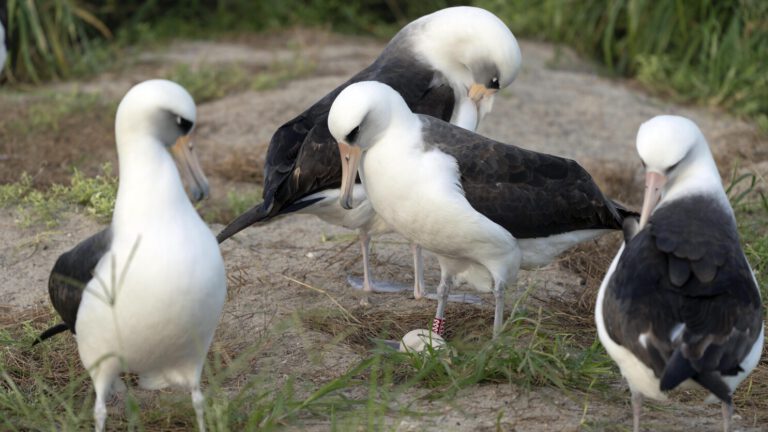
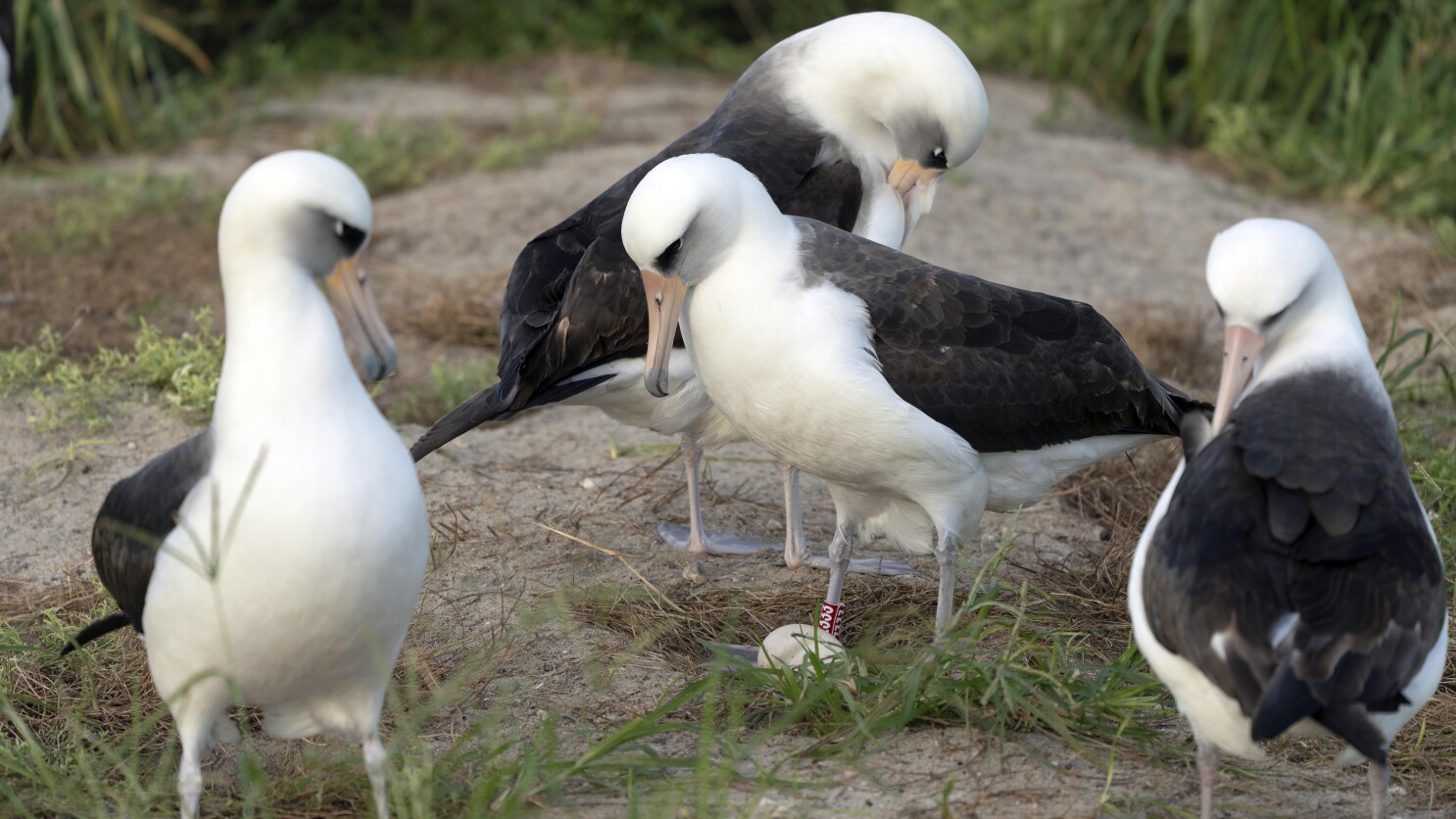
Wisdom, the albatross. It’s never too old to be a mom

You could say so many things are for the birds. The latest is having children in old age.

Jokes aside, scientists are happy to report that a a 74-year-old Laysan albatross with as many as 30 offspring is trying for another child.

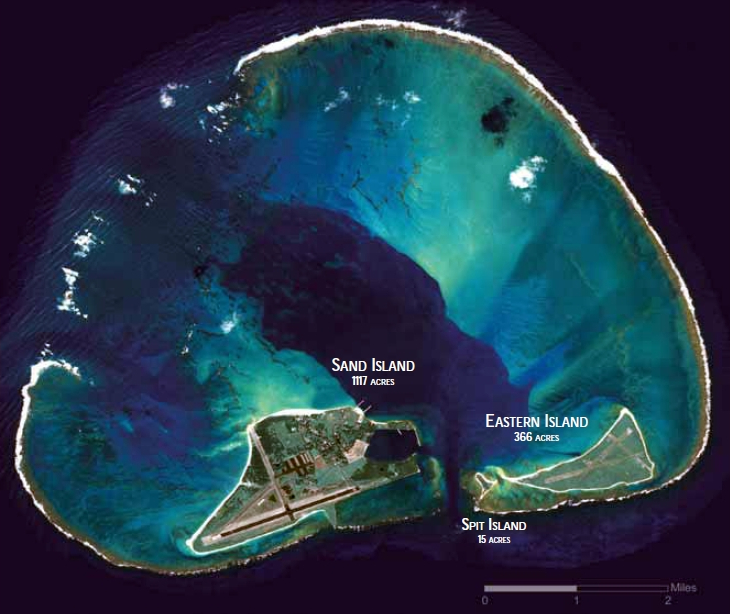
The bird with the Latin name Phoebastria immutabilis, and called ‘Wisdom’, nests on the Midway Atoll National Wildlife Refuge, alongside nearly 70% of all Laysan albatrosses in Hawaii. She was first ringed as an adult in 1956 by the legendary ornithologist Chandler Robbins and is now the world’s oldest known banded bird in the wild.

Midway atoll
Midway Atoll, Hawaii

“We are optimistic that the egg will hatch,” Jonathan Plissner, supervisory wildlife biologist at Midway Atoll National Wildlife Refuge said in a statement. Millions of seabirds return to the refuge to nest and raise their young every year.

Wisdom and her partner, a bird called Akeakamai, have returned to the Pacific Ocean atoll since 2006. They mate for life, and lay one egg a year.  Akeakamai has not been seen for the past several years and Wisdom has started speaking with other males since her return.

Albatrosses are not expected to live more than 50 years, making Wisdom a legend among birds. She hatched her latest chick a few years ago in February 2021, making her at least 70 years old.


Christmas tree rentals are the greenest gift for Christmas

0

In Cork, Ireland you can rent a Christmas tree.

Every year Christian families have the same question at Christmas? Should we buy a plastic Christmas tree and pack it up in the box every year, and use it for the next 15 years, or should we buy a real tree?

Real trees are expensive and have their own hassles with procuring one if you live in the city, and getting rid of it along with its shedding needles. Plus, who wants to but a 10-year old tree whose destiny it is to die?

Entrepreneurs all over Europe from Paris to Ireland are coming up with novel ideas: Christmas tree rentals. You place an order for a tree, it gets delivered in time for the celebration, with its roots intact in a pot. You keep it watered and free from tinsel and when the time comes they pick it up and take care of it for the next holiday.

You can find the services in Paris, Cork, Ireland and in some cities in Germany –– companies renting out Christmas trees in the pot every year. Our friend in Paris says she has tried this service and it’s great! You rent a tree and then return it alive after the holidays. The trees last about 7 years from when rentals start and when they get too big for anyone’s home or office, they are planted in the forest to live out their next decades. This is a great way to reduce carbon emissions.

As an alternate, if you can’t find a tree rental company near you, you can turn to companies that sell live trees, and if you have ample space in your yard or have agreement with a local park or school you can plant the tree after the holiday, keeping it in its original pot.

Buy a living Christmas tree you can planet in your local park or church yard
Buy a tree that you can plant in your backyard, local church or graveyard

In California, you can reach out to The Living Christmas Company. Trees are pricey at several hundred dollars. But they have unique varieties like the Aleppo Pine, a variety that hails from Syria.


Trapped in a dive boat for 36 hours, survivor’s daughter raises red flags over rescue

0
Handout of the rescue, Egyptian Navy

As more time passes since the Egyptian dive yacht sunk on November 25 off the coast of Egypt, survivors are asking questions of how so many things could have gone wrong. From lack of batteries in the life vests, to leaking life rafts, to an unresponsive Navy. Why did it take more than 36 hours for those that couldn’t escape the wreck to be rescued? Why was the rescue done by a private crew and not the Navy? And were their sounds of distress being heard for 36 hours before the rescue crew went in?

A modern motorized yacht called My Sea Story was underway in the Red Sea on November 25 with 44 people on board – including 33 tourists – when an accident occurred. The My Sea Story listed back and forth several times and then started sinking, with a portion of it staying afloat in the water. Twenty three jumped off the boat in 2 life rafts, but many people remained inside the boat unable to escape including Michael Miles, 70, from Vaud, Switzerland.

Related: did the Egyptian dive boat yacht sink because it wasn’t suited for open water? 

We spoke with his daughter about the rescue, which seemed like a miracle. But as time goes on survivors are doubting the Egyptian authorities, and the Navy which took credit for the rescue. Local divers have also sent us photos and updates that the people listed on the rescue team are not correct. Are the Egyptian authorities trying to hide something?

As of today, four fatalities are confirmed, seven people are still missing, 33 people have been rescued. The families of loved ones want answers.

Michael Miles, pictured below, was stuck in the boat for 36 hours, with his cabin mate, believing they would die. He left a goodbye message to his wife and daughter on his camera should he not survive. There was a pocket of air from which he could breath but time was running out.

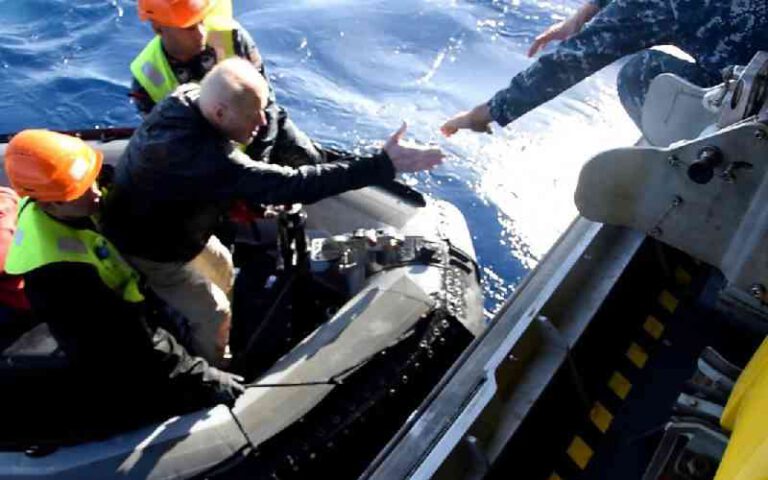
Michael Miles rescue
Michael Miles rescue from the Egyptian dive boat My Sea Story, documented by Egyptian authories

According to several sources the boat started sinking between 2:30 and 3:30 am, and it took less than 10 minutes, but the Navy didn’t officially arrive until 5:30 am. It was dark and life saving equipment wasn’t functioning because nothing had batteries.

A number of our sources suggest the Navy had no interest in rescuing those still trapped inside. It is rumored that the Navy does not have a dive crew or the equipment to keep the capsized boat afloat.

Melvina Miles, the daughter of Michael told Green Prophet: “My father even put a trouser on the pothole to signal they were there and alive.

Goats know when it's time to run for the hills
Location of dive boat accident

“He said also that there were no batteries in their life jackets so that their torches and trackers couldn’t work.

“They were also regularly blowing the whistles of their life jackets to signal their presence.”

According to Egyptians at the rescue site – believed to be an estimated 20km into the Red Sea from the Egyptian coast – knocking sounds could be heard from the boat but that the Navy wouldn’t let them access the boat for a rescue mission.

One reason a European dive operator gave us, was that it might be too dangerous in case an air pocket would change the balance in the boat bringing them all down with it.

Related: sinking dive boat spurs safety checklist for dive boat operators

Despite the risks, a number of divers went in, and brought out 5 people alive, and 4 bodies of crew and tourists.

“My father doesn’t understand why they took so long to search the boat for the missing people and also believes the only reason someone came to rescue them is because an Egyptian divemaster had his nephew missing and he managed the pressure the army to be able to search the boat for him,” says Michael’s daughter Melvina.

“The boat didn’t sink, it floated at the surface. My father had a window but it was too small to get out from and it was high above him. He was able to open it to get some air to it, so it was definitely outside the water. The thing is that in order to get out of the boat, they had to dive down the boat and into the corridors. That was maybe 10 meters. His cabin what as the bottom of the boat but as it got overturned he ended on the top at the surface

“My father is very grateful to be alive. We know there a lot of shady things with the Egyptian authorities but it would be too much energy for a probably disappointing result to try to sue them,” she says.

“He told me that captain of the boat was quite young and didn’t seem very experienced. He was not taking the waves in the correct way and before especially not when it got to the big waves. I believe it was one of the biggest reasons for the boat to sink. If a boat isn’t positioned correctly in the waves it is not good.”

Melvina noted that the company her dad booked the 5-day tour through Liveaboard.com, and they did not respond to her family’s dire situation when her dad was among those stuck inside the boat. No phone calls, nothing.

“Liveaboard never contacted my father to know how he was recovering. They don’t answer our phone calls either,” she says.

Related: dive boat sinks with 44 onboard 

She is connected to a survivor’s group and is hoping to find justice in some way for what happened to her father and to the way the authorities treated her when she and her mother arrived to Egypt to comfort her father. “When I arrived in Egypt I called the hospital to speak to my father. The first thing they said was, you are the Swiss case, your father’s credit card credit is not high enough, you need to make a Bank transfer and if not we won’t let him out.”

“I was so shocked at this, and then really angry. When my dad arrived in Marsa Alam after being rescued, the officials came to make videos with survivors and the media but after this he got no help from the Egyptian authorities of any kind. Luckily my mother was already in Egypt. The accident was on Monday and Melvina arrived on Wednesday.

“What makes me the most angry is that my father almost died because they didn’t do what they could to save him and probably some the missing people could have been saved,” says Melvina.

“In some recent articles they say 6 deaths and 5 people missing which makes me believe they found more bodies but don’t want to make it official.”

Items that should not have have been out of place during an accident, hampered rescue efforts and maybe prevented more people from being rescued as they might have been trapped in their cabins.

“My father said that when the diver came to rescue him, the door of his cabin was blocked because of the debris and he had to help to open it. Apparently some other cabins doors were also blocked so they couldn’t search them.”

When the rescue team came they did not bring extra masks and shared regulators. It was deemed a risky operation with reports of sharks circling around the cadavers.

Melvina’s dad never encountered sharks: “He couldn’t see outside, the boat window was too high. He had to climb to open it to get some air inside because the water had some fuel from the boat. It was complicated and he got injured doing it.”

Survivors and the families of those dead and missing are asking: why did the Navy not do more to rescue the tourists? Did they neglect and even prevent rescue divers from going in? Where are the reports and investigation? Why was a dive boat most likely refurbished and not seaworthy out in the water against calls from the authorities that the sea was too rough? Who is going to compensate them for loss of personal effects and loss of life? How has the company that owns My Sea Story had 2 boats go down in the last 2 years and still operating?

Given that tourism industry is worth billions in Egypt and it’s the only lifeline to employment for millions, it’s probably the interest for Egyptian officials to brush this latest tragedy under the rug. Soon it will be Christmas season. One source who dove with the company in the past said he thinks that “Egyptians prefer missing tourists over dead bodies. Missing, for the Egyptian Authorities is a happier ending and it can mean anything, especially for insurance companies. Maybe they swam to the nearby Socotra Island? Or they have taken off together for a secret new life sipping cocktails in the Caribbean?”

Since the Gaza attack on Israel in 2023 tourism to nearby Sinai, Egypt has been deeply affected. Some resorts at a standstill. With thousands of people cancelling their holidays to the Red Sea region, considered one of the best diving spots in the world some parties may have an interest that the show go on.


Egypt dive boat sank because it wasn’t built for open water, sources claim

Would you try chocolate hummus?

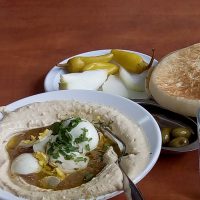
A plate of hummus

It’s a long debated question, sometimes a joke, and it’s also become a serious competition. Who does hummus best in the Middle East? Hummus is a dip and a spread, but Middle Easterners eat it as a hearty breakfast, warm off the stove, with a pita, lemon, parsley and lots of olive oil. A dollop of cooked fava beans, ful, is also welcome among hungry working men. Since the Hezbollah started sending missiles to Israel, people from Lebanon have started engaging with Israelis across the border, asking for a hand in peace. Their common language: hummus.

One X account Mount Levnon, represents a Christian Maronite group of Lebanese. The identity of the account is anonymous but they are advocating for “a free Maronite state, committed to a Mediterranean alliance with Israel , Cyprus, and Greece.” And one of the ways they engage with Israel is by sharing hummus tips and secrets. (We have the best recipe of hummus in Israel, provided by Maxim founders – Jews and Arabs who co-own a restaurant in Haifa).

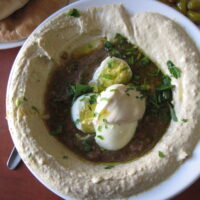
But Mount Levnon might not agree. “I’m raising my kids to be super friendly with Israelis, treat them like family, chat about anything under the sun. But the moment hummus or falafel comes up, that’s where we draw a BIG, BOLD RED LINE,” they write on their account, joking that real hummus is from Lebanon and that “fake” hummus is from Israel and it’s marketed under the Sabra brand.hummus from Israel and Lebanon

One on team Israel, Klaas, writes. “If only there could be peace and open borders so we can come sit around the table together and fight this out once and for all.:

But When Mount Levon saw that Israelis were also making a version of hummus made from chocolate, the line was crossed.

chocolate hummus
Hummus chocolate from Israel

Mount Levnon, who is pro-Israel and is starting to learn Hebrew says jokingly, “I’m officially breaking the ceasefire, stop putting chocolate in your hummus. Come on Israel, we need to talk.”

Carlos Abadi on team Israel replies, “We surrender, admit to heresy, and accept the punishment.”

Slow Food chef Moshe Basson from Jerusalem who is from Chefs for Peace,  told Green Prophet that hummus was eaten by Queen Ester in the Bible. It’s roots go way back. As for who made it first, maybe Adam and Eve? Who makes it best? The heat is on. Also don’t be surprised that if you visit Israel or Lebanon that locals fight over which joint makes the best hummus. Some more on the debate about hummus in Jaffa.

The classic hummus and ful recipe

Make your Middle East friends proud with this genuine and tested recipe for hummus with ful

  • 1 pound dried fava or haricot beans, soaked overnight (organic everything if possible)
  • 2 cups dried chickpeas soaked overnight
  • 1 1/3 cup tehini
  • 6 eggs
  • 2 lemons, juice of 2 halves and one more tbsp
  • 2 large onions
  • olive oil
  • 5 cloves garlic
  • 1 bay leaf
  • water for cooking
  1. The Ful.

    Pick over the beans.Rinse them and put them to soak overnight in plenty of water. Next morning, drain the beans and put them up to cook in fresh water.Add a fat clove of garlic, a bay leaf, and some olive oil to the water. Cook the beans till tender.

    Favas take 1-3 hours. If you choose white beans, they will cook in far less time – up to an hour.When the beans are soft but not falling apart, crush 2 fresh cloves of garlic into a small bowl. Stir 1 tsp. each of salt and cumin in, and add this seasoned garlic to the bean pot.

    Add a tablespoon of lemon juice. Stir the beans up. Crush some of them with a potato masher or a fork, so that they’ll absorb the flavors of the seasoning. Let them cook another 5 minutes.

    Then either turn the flame off, or start serving.

  2. The Hamine or Slow-cooked Eggs

    You can just boil eggs as usual, or take this opportunity to do it the old-fashioned way. Make several, it’s not worth the trouble for only one or two. Take 6 eggs and the peels from 2 large onions. Put it all in a pot.

    Cover the eggs and peels in plenty of cold water; bring to a simmer.Drizzle a layer of olive oil over the surface. This prevents the water from evaporating during the long cooking period. Simmer the eggs, covered, over the very lowest flame you can achieve for 6 hours or overnight. They are delicate, creamy eggs, unlike any others.

  3. The Hummus

    Put 2 cups of dried chickpeas in a separate bowl. Cover them with plenty of water and let them soak overnight. As with the beans, drain them, and cook in fresh water till soft. It’s not a sin to open a can of chickpeas either. Although fresh-cooked always taste the best, canned chickpeas still make good hummousDo not add salt to either beans or chickpeas till they are completely cooked and easy to mash.Put the cooked or canned chickpeas in a blender or food processor.

  4. To them, add

    1 fat clove of garlic

    3 Tblsp. of tehini

    Salt to taste

    Juice from 1/2 lemon

    2 Tblsp. olive oil

  5. Tehini

    Put into a bowl:

    1 cup raw tehina paste

    3/4 – 1 cup water, depending on how thick or thin you like it

    1 fat clove garlic, crushed

    salt olive oil

    juice of 1/2 lemon

  6. Get Blending

    Blend all the ingredients, either by hand or in the blender. If you’re not used to the ways of tehini paste, don’t be alarmed that it initially becomes very thick when mixed with water. Keep mixing, it will smooth out amazingly.

  7. To serve:

    Spoon a generous amount of hummous onto the plate. Take the spoon and spread it into a neat circle, thinner in the middle.

    Spoon a ring of tehina on the inside of the hummous circle.

    Put a pile of hot beans in the center of the plate. Top the beans with a little chopped onion, chopped parsley, and a peeled, still-warm hamine egg. Squeeze lemon juice over the whole; drizzle olive oil over it. If you’re fond of hot sauce, drizzle a few drops of it over the dish too.

    Put some small plates or bowls with pickles, olives, sliced onions, or pickled lemons in them.Now tear a chunk off your pita and use it to scoop up some of everything. Savor every mouthful, it’s the real McCoy.

Appetizer, Breakfast, Main Course, Side Dish
Mediterranean
hummus, vegan


Ancient Chinese pottery in Jerusalem hints to the spring of creation

0
“We will forever keep the eternal spring”:
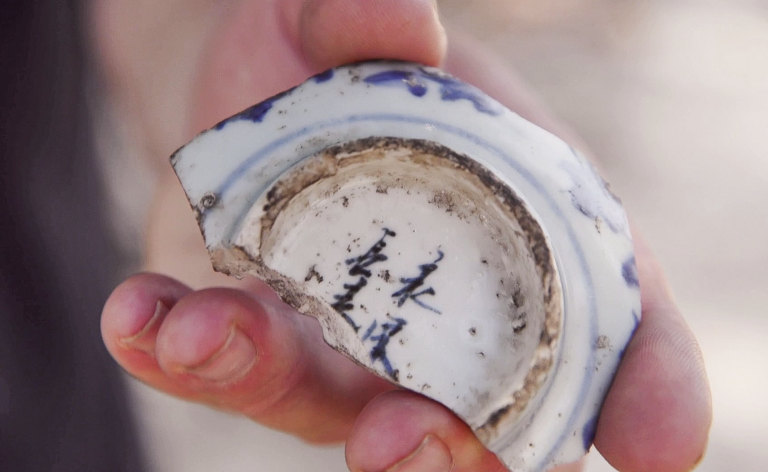
“We will forever keep the eternal spring” from the Ming Dynasty

We will forever keep the eternal spring

According to Jewish legend, in the first days of creation when water and land were separated, the world’s first water, a spring gushed forth out of the center of Jerusalem. The water source is still accessible under the Western Wall, the original wall that surrounded the Jewish Holy Temple. Could ancient pottery from China, found in Jerusalem, mean that the ancient Chinese knew about living water wisdom?

Archeologists from Germany and Israel found a 500-year-old Ming Dynasty shard on Mount Zion under a church which was built during the Ottoman Empire. It is the first piece of evidence that goes so back linking China to the Holy Land.

The rare 16th century CE Chinese inscription was discovered on a porcelain bowl fragment, reading: “Forever we will guard the eternal spring.”

Could the Chinese know and believe that under the city of Jerusalem lay the eternal spring?

This past summer, during routine procedures for the upcoming excavation season, Michael Chernin, an archaeologist at the Israel Antiquities Authority, suddenly spotted a colorful object sticking out of the dirt that had been cleared away while preparing the site.

When Michael pulled out the object and washed it, he recognized that there was an inscription on its bottom. Dr. Anna de Vincenz, pottery specialist, identified the inscription to be Chinese. At this point— the vessel was examined by the Hebrew University in Jerusalem’s researcher Jingchao Chen, who deciphered the inscription as reading, “We will forever guard the eternal spring.”

The team that found the pottery

The bowl dates back to 1520-1570, and originated in the Ming Dynasty. “Ancient Chinese porcelain vessels were previously found in Israel, but this is the first to bear an inscription,” say the researchers.

Related: living water protector Peter Steel in Canada

How did a dish make its way from China to Mount Zion? Historical writings indicate close 16th century trade relations between the Chinese Empire and the Ottoman Empire, then ruling the Land of Israel. According to Ming Dynasty annals, about 20 official Ottoman delegations visited the imperial court in Beijing during the 15th-17th centuries.

The trade relations between these empires are also described in travel books of merchants from this period. Thus, the writings of the Chinese scholar Ma Li from 1541 note colonies of Chinese merchants in Lebanese coastal cities such as Beirut and Tripoli. The work even mentions other important cities in the region such as Jerusalem, Cairo and Aleppo.

According to Israel Antiquities Authority Director Eli Escusido, “In archaeological research, evidence of trade relations between merchants in the Land of Israel and the Far East is known even from earlier periods – for example, of various spices. But it is fascinating to meet evidence of these relations also in the form of an actual inscription, written in the Chinese language, and in an unexpected place – on Mount Zion in Jerusalem”


What is Land “COP” in Saudi Arabia and why should we care?

beth moon trees
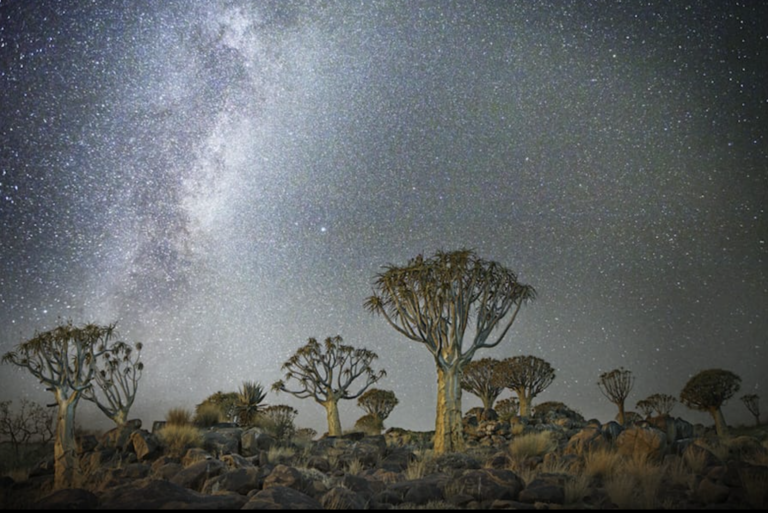
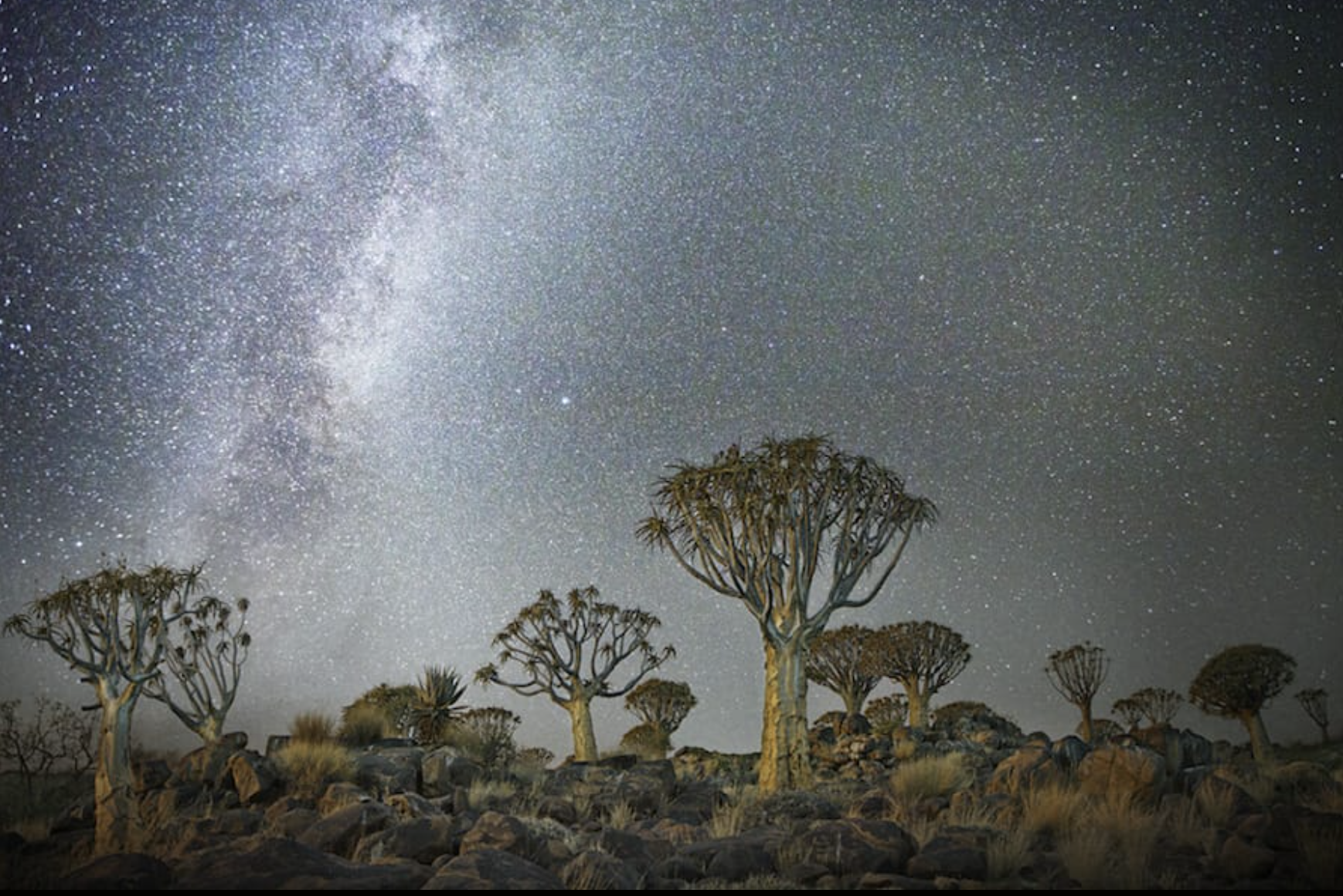
The Galapagos of the Indian Ocean – Socotra Island in Yemen. Yemen is one of the driest countries on earth. Image by Beth Moon.

We’ve all heard about the UN Climate Conference. COP29, was the latest and held in Baku. While there is much ado about these UN conferences bringing in diplomats from around the world to hobnob about the planet, most of the work gets done between the events. The UN climate event has a much lesser known cousin and it’s a COP for land, unattractively marketed as the NCCD COP and this year marks NCCD COP16, coinciding with the convention’s 30th anniversary. It will be the first time the event is held in the Middle East, in Saudi Arabia, an area most impacted by desertification, land degradation, and drought. 

Saudi is pouring its heart into globalizing and attracting international investment, manufacturing, tourism. Its development of NEOM is the flagship for modernizing and revolutionising the country on the global stage. But leaders are taking note that the West is interested in developing ancient customs like Slow Food in Saudi Arabia and the country has started making electric cars (Ceer), and investing in research teams to study its archeological past. Saudi is putting itself in the center of the stage for football, culture and issues that matter to to the West and East.

Despite the prevailing stereotype that the Kingdom is a desert country, deserts only represent 31.75 percent of its diverse surface features. Still, water is scarce and aquifers are depleted and research institutes like KAUST are investing in new tech in areas like hydroponics (see Red Sea Farms – Iris) to grow food in the desert using brackish water. Saudi Arabia is also undertaking a massive project to plant a million mangrove trees, an effort to stop desertification.

When we were interviewing the Saudi-based Red Sea Farms about impacts against desertification Mark Tester mentioned American-Israeli Daniel Hillel as a force for combatting desertification in the Middle East through his work and research on drip irrigation.

This Eco Park opened in 2021 and is the first of its kind in the Kingdom of Saudi Arabia dedicated to the preservation of mangroves. Oil company ARAMCO builds an eco park. Does anyone else see the irony?

But you came here for Land Cop. So what’s happening and how you can get involved. At this year’s CCD COP16, countries are expected to work with a dual approach, one through a negotiation track focusing on land restoration, drought resilience, and land tenure, and an action agenda focusing on voluntary commitments and actions on land, resilience, and people to reach the following goals:

  • Scale up land restoration efforts to restore 1.5 billion hectares of the globe by 2030
  • Boost resilience to intensifying droughts, sand and dust storms
  • Restore soil health and scale up nature-positive food production
  • Secure land rights and promote equity for sustainable land stewardship
  • Ensure that land continues to provide climate and biodiversity solutions
  • Unlock economic opportunities, including decent land-based jobs for youth

What the UNCCD Focuses on

rainwater tanks in Yemen
A farmer’s field in Yemen gets a boost by rainwater collection pools. A new-old way to combat drought.

1- Land Degradation

  • Up to 40 percent of the world’s land is degraded.
  • The global area impacted by land degradation is approx. 15 million km², more than the entire continent of Antarctica or nearly the size of Russia. It is also expanding each year by about 1 million km²
  • 46% of the global land area is classified as drylands, and 75% of Africa is considered dryland. 
  • The efficiency of Nitrogen fertilizers is only 46% and 66% for Phosphorus; the rest runs off, with dire consequences for soils.
  • Degraded soils lower crop yields and nutritional quality, directly impacting the livelihoods of vulnerable populations.
  • Agricultural subsidies often incentivize harmful practices, fueling water overuse and biogeochemical imbalances. Aligning these subsidies with sustainability goals is critical for effective land management.
  • Every dollar invested in restoring degraded lands brings between $7-30 in economic returns. Policy and economic incentives are urgently needed to unlock a trillion-dollar restoration economy.  

2- Drought Resilience

According to the International Drought Resilience Alliance (IDRA), which is a coalition of 36 countries and 28 international organizations aiming to tackle drought risks:

  • Droughts have increased by 29 percent since 2000.
  • From 1998 to 2017, drought generated economic losses of about US$124 billion across the world.
  • 1.84 billion people are drought-stricken, of which 4.7 per cent are exposed to severe or extreme drought and 85 percent live in low or middle-income countries.
  • Investing in drought resilience is one of the most cost-effective actions countries and regions can take, with returns of up to 10 times the initial investment.

3- People & Land Tenure

  • Drought, land degradation, and desertification disproportionately affect women, girls, indigenous peoples, local communities, and vulnerable groups like people with disabilities.
  • One billion young people living in developing regions are dependent on land and natural resources. Achieving global land restoration commitments requires youth involvement. 
  • Areas managed by local communities are characterized by lower rates of deforestation and land degradation. Preserving traditional and local knowledge and recognizing its key role in land restoration is crucial.
  • The impacts of land degradation disproportionately affect tropical and low-income countries, both because they are less resilient and because the impacts are concentrated in tropical and arid regions. 
  • Women, youth, Indigenous peoples, and local communities also bear the brunt of environmental decline. Women face increased workloads and health risks, while children suffer from malnutrition and educational setbacks.

The UNCCD COP16 (Land COP) will start on Monday, December 2nd. It will be held in Riyadh, Saudi Arabia, from December 2nd to 13th. It is the first time a desertification COP will be held in the Middle East.

UNCCD COP16 Agenda in Riyadh

  • Land Day (4 December): Focus on the role of healthy land in addressing climate change, job creation, and poverty alleviation, with emphasis on nature-based solutions and private sector engagement. 
  • Agri-Food Systems Day (5 December): Highlighting sustainable farming practices for resilient crops, healthy soils, and ecosystem protection. 
  • Governance Day (6 December): Exploring inclusive land governance and policies to strengthen equitable land management. 
  • People’s Day (7 December): Emphasizing the involvement of youth, women, and civil society in land-related decision-making. 
  • Science, Technology & Innovation Day (9 December): Aims to accelerate scientific advancements for land health and resilience. 
  • Resilience Day (10 December): Focus on policies and technologies that foster resilience to climate change.

Finance Day (11 December): Aims to showcase innovative financial mechanisms supporting land restoration and drought resilience.

Diving live aboard safety concerns in Egypt spurs thesis and safety checklist

0
Carlton Queen Dive boat sinks in Egypt in 2023

Diving is a beautiful hobby and pastime. It’s a sport that connects you with nature, new habitats and people, and gives you an opportunity to learn about marine life and the importance of saving the marine habitat, like kelp forests. But diving is a dangerous sport –– not only because you can be going 100 feet underwater kept alive by a tank but because there are hazards you can’t control connected to the safety of the dive ship you might choose. There is no place in the world where so many dive ships sink as in Egypt.

The busy location on the Red Sea is a favorite because of the location close to Europe, the charm of the Egyptian people, the gorgeous Red Sea and area around Sinai and the low cost. Low wages paid to divemasters and crew means a good price for customers, but it does not bode well necessarily for safety considerations. We interview a survivor’s family here.

A recent disaster on the Red Sea

Location of the Sea Story tragedy
Location of the Sea Story tragedy on the Red Sea

A 44-person live aboard ship sunk off the Red Sea coast last week. Four people have died and seven people are still unaccounted for. We wrote about the possible reasons for the accident. One past customer of the company, a diver, has said that the boat My Sea Story wasn’t suited for open water areas. And that safety concerns were not in place when she vacationed with the company a few years ago. We interviewed a survivor’s family here and the re

Diver and researcher Jan-Philipp Lauer from Germany reached out to Green Prophet and said the ”that stability issues may have contributed to the sinking of the Sea Story. This should be further investigated.”

He tells Green Prophet: “Following last year’s Carlton Queen accident, I worked with Taucher.Net to shed light on why these accidents keep happening.”

Taucher.Net is a Scuba diving platform.

Live aboard in Sharm el Sheikh Egypt

“Kiel University of Applied Sciences worked with us and Justus Schiszler wrote his bachelor thesis about diving liveaboard vessel safety (download it here). He also performed stability calculations on Carlton Queen based on photos.

“The calculations based on these photos showed that Carlton Queen’s stability was likely significantly lower than what would be considered adequate for a seagoing vessel. The same is, unfortunately, true for many diving liveaboards. There are no stability calculations for many of them.”

David Taylor, from Treswell in Nottinghamshire, thought he and his son Christian thought they were going to die when they realised they were trapped below deck on the Carlton Queen diving boat last year. “I started to lose the plot. I really was panicking we were going to die. There was no way to get out,” he told British media.

Make sure your liveaboard knows this safety audit checklist

kelp restoration
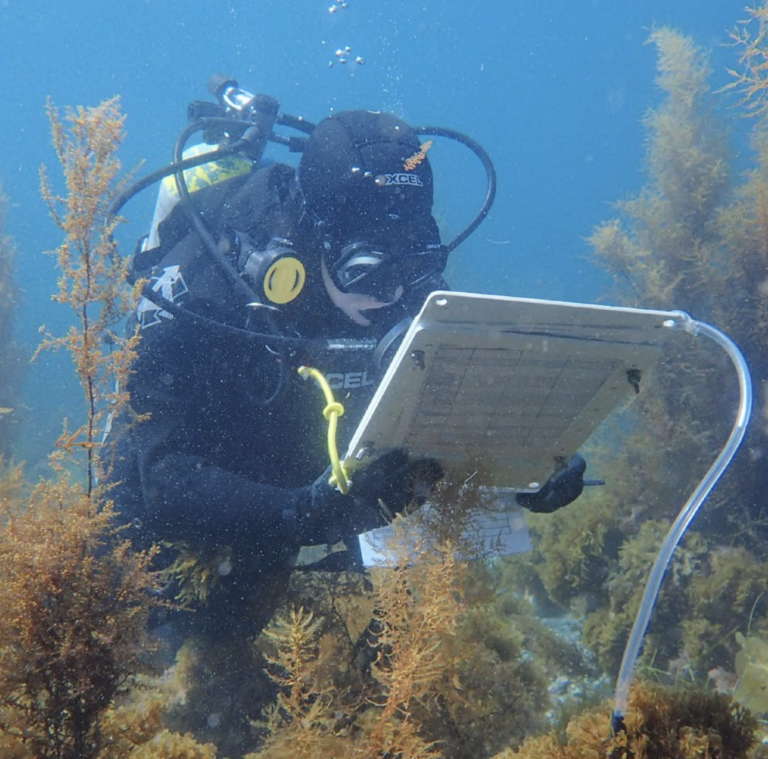
Safety checklist underwater

An inspection checklist before you dive can be found here.

The checklist is intended for maritime surveyors as many requirements are too technical for non-experts. It constitutes a stopgap measure since the same level of safety cannot be reached if a vessel is not built to appropriate classification society standards. For example, vessels with wooden hulls are not permissible under SOLAS.

“Since the bachelor thesis was completed,” Lauer adds, “we made significant progress with an independent audit program for diving liveaboards. A first version of an audit checklist is available on my website.

In summary, the thesis found:

  • 1 fatality every 37.8 accidents in shipping, for example cruise ships and container ships, which must all be SOLAS-compliant.
  • 1.2 or 2 fatalities per accident in diving liveaboard vessels (depending on the exclusion/inclusion of the Conception accident)

This difference, Lauer notes on his website, “in the level of safety offered by shipping versus diving liveaboards is alarming.”

Lauer notes on his website that since the sinking of the Titanic, strict regulations were put in place to ensure another accident wouldn’t lead to catastrophic loss of life like we saw back then. Safety of Life at Sea (SOLAS) was born.

SOLAS is an international maritime treaty designed to establish minimum safety standards for ship construction, equipment, and operation of ships and large boats. SOLAS is currently only mandatory for commercial vessels bigger than 500 gross tons or commercial vessels on international voyages (with some more exceptions). Smaller vessels can comply with SOLAS voluntarily. However, liveaboard vessels are generally smaller than 500 gross tons and do not engage in international voyages and thus SOLAS is not mandatory for them. Only national regulations apply to them.

None of the vessels involved in recent Red Sea and South Asian dive boat accidents were SOLAS certified.

Egypt dive boat sank because it wasn’t built for open water, sources claim

0
My Sea Story boat
Sea Story boat sank last week. Seven people out of 44 are still missing.

“Egyptians involved are so afraid to go to jail or even afraid of death if they speak out in public.”

Last week, international headlines were made as divers and dive operators died following after a live aboard dive boat flipped over and sank off the coast of Egypt near a popular dive site on the Red Sea. Some 44 people were aboard, 4 are known to have died, and 7 remain unaccounted for. As of December 8 these people were not found, so we assume there are now 11 people dead from the disaster. Both crew and tourists. Read a survivor’s story here and the remarkable realization that the Navy knew they were alive but did not come to the rescue.

Diver Emad Omran from Egypt reached out to Green Prophet and said that the boat was built too high for its size, and was “easily controlled by the wind” making it an easy target when the sea gets rough: “It wasn’t built for rough, hard seas,” he says.

The boat reportedly sunk near Sha’ab Sataya (also known as Dolphin Reef), off the coast of Marsa Alam, Egypt, on November 25.

“Actually it was built for easy kite surf live-aboard in a sheltered island environment,” he tells Green Prophet. Omran says that the owners of the boat “have no idea about diving or safety standards or even tourism creating a negative environment for dive operators in Egypt.”

The family of a British couple still missing after a tourist boat sank in the Red Sea have spoken of their “desperation” as they wait for news. Jenny Cawson, 36, and her husband Tariq Sinada, 49, from Devon, are believed to be among seven people still unaccounted for after the Sea Story went down off the coast of Egypt early on Monday. FAMILY HANDOUT

The company who operated Sea Story is called Dive Pro Liveaboards, and the “company must stop operating in the Red Sea,” says Omran.

Dive Pro Liveaboards did not answer our request for comments. They also own the boat Sea Legend that caught fire in February, killing one woman.

Linda Korres, familiar with the dive company and friends with member of the crew who died last Monday, eulogizes her diver and friend Aladin. He was credited for rescuing people.

She said she felt something was wrong with this company when she went diving with them three years ago, on the boat Tillis.

“I am sure the reason the Sea Story had to go out in the storm was out of reckless greed with some bribery involved,” Korres says. “Sending these cheap and quickly built and remodeled multistory narrow ships out, that are not suitable for open sea is a death sentence! Any time. But especially in these weather conditions. These ships are too shallow, aren’t going deep into the waters, have no keel to keep them upright in wind and waves, which makes them likely to tip over.”
She adds that the “motors aren’t strong enough, they have no anchors, the rescue islands are often old and useless, the zodiacs broken. Often there are no life vests and the few that there are, are not suitable for open sea, as they have no collar. There are no smoke detectors, no evacuation routs lit with emergency lights.”
“We need more safety, international controls from PADI,” she tells Green Prophet.
PADI is an international licensing and certification process for divers and dive instructors.
“Egyptians involved are so afraid to go to jail or even afraid of death if they speak out in public,” she says.
“Meanwhile I had several Egyptians confirming these issues. Also that the vessel was in fact not 2 years new, but old and just remodeled. In photos from Sea Story you see loose furniture, cabinets that can’t be locked, no safety lighting, barely some smoke detectors, no emergency exit signs or lighting and how on earth would anyone be able to get the rescue islands from that top railing? 

“We truly hope that the irresponsible owner of the ship Dive Pro Liveaboards, who already lost one of his four ships, the Sea Legend this year 22nd February, due to a fire and explosion, will be finally called responsible together with all the officials who looked away and still do for so many companies and ships in the Red Sea,” Korres added.

She recalls a trip out on one of the company’s boats, Tillis: “The furniture, sofas, tables and chairs were loose and slipped on the deck and the dining room with every wave. The beds had no railing. Several people fell out of bed at night and hurt themselves. Closets couldn’t be shut with locks and swung dangerously open all the time. The fridges on the deck couldn’t close properly, so that several times beer cans shot over the deck when the boat was rocking. We were lucky no one was hit.
“The crew could only use duck tape to secure drawers and the closets.”
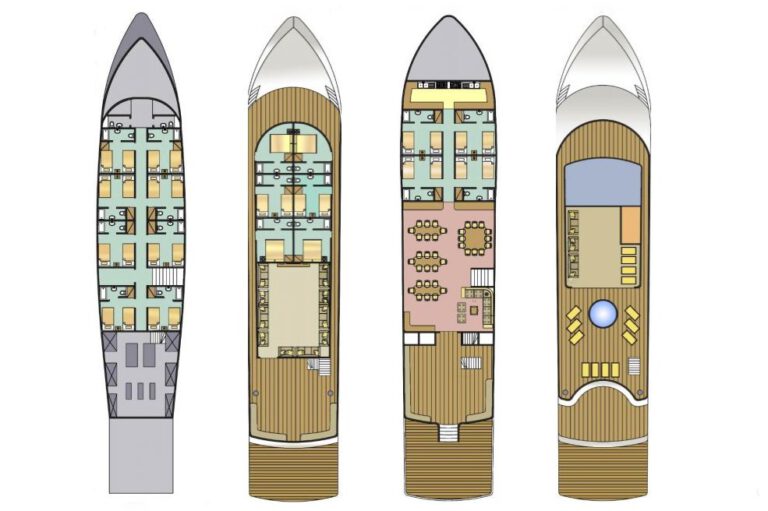
The floor plan of the Sea Story dive boat. Divers are trying to rescue those who may be trapped inside. 
The floor plan of the Sea Story dive boat. Divers are trying to rescue those who may be trapped inside.
She says that the crew or the captain of these boats are not to blame for the latest catastrophe: “They earn very little money and depend on the jobs. The owners don’t pay well and treat them badly. As result there is a new uneducated inexperienced hardly or non-English speaking crew every other trip. Instead of paying a fair salary and training them in all aspects and teaching safety regulations.”
A dive master earns about 300 Euros a week on a live aboard. The crew less, she says.
Some cabins had no life vests at all: “I remember very well desperately clinging to the bed, frightened as never before in my life, sobbing and crying silently in the dark on the first night, when sea was rough, not to scare my friend Caroline Strazzabosco with whom I shared an upper deck cabin.
“After some hours I realized she was just as scared to death as I was… sitting on her bed not letting go of her survival bag filled with water, medicine and cookies for us. Tillis got new paint, TVs and furniture a year after our trip. But I believe nothing improved or changed on the safety issues.”
Interior cabin, Sea Story
“Sea Story is said to be an only 2 year old ship. I doubt it. I rather believe it is one of the remodeled much smaller old ships. Often they just add some stories in height and cut the vessel to add some structure to make it longer… until it’s unrecognizable and receives a new name.”
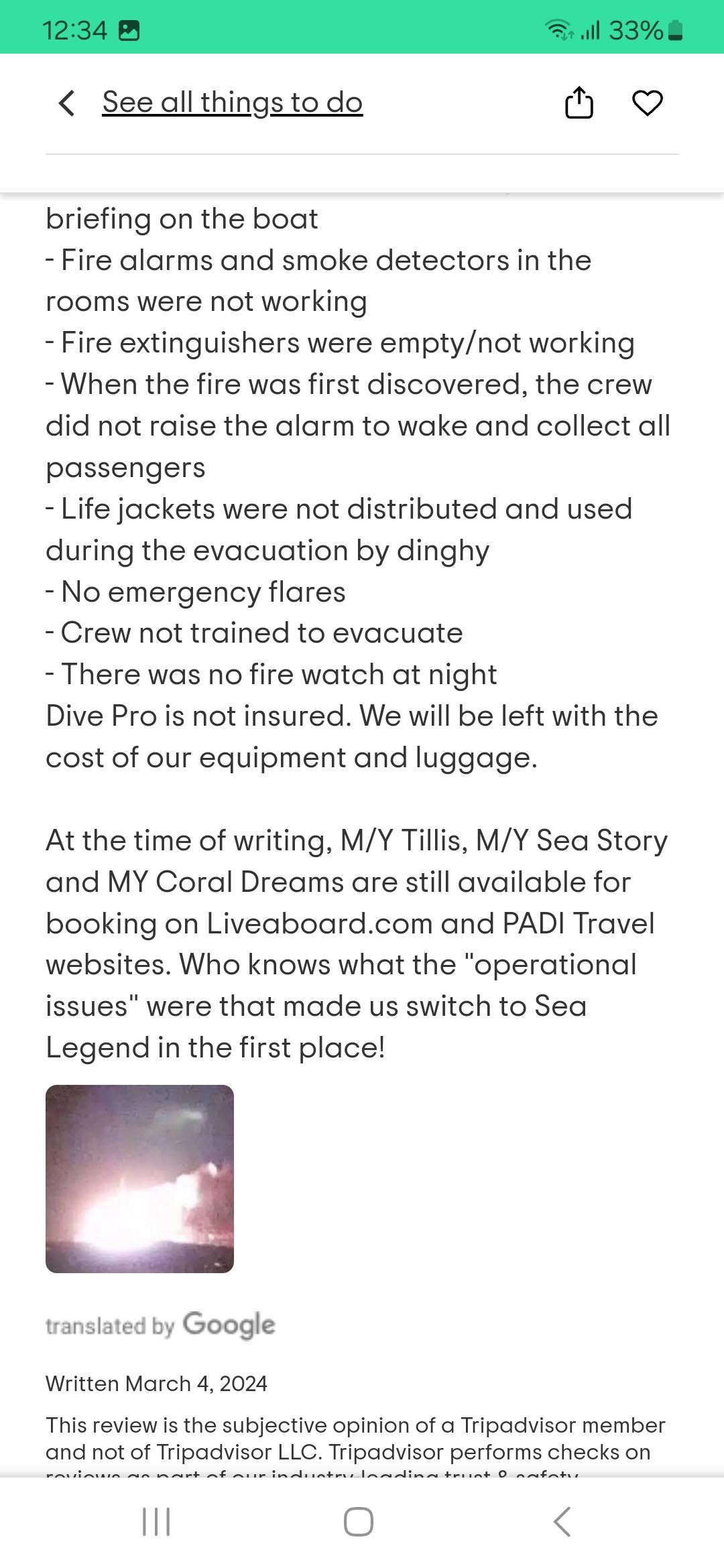
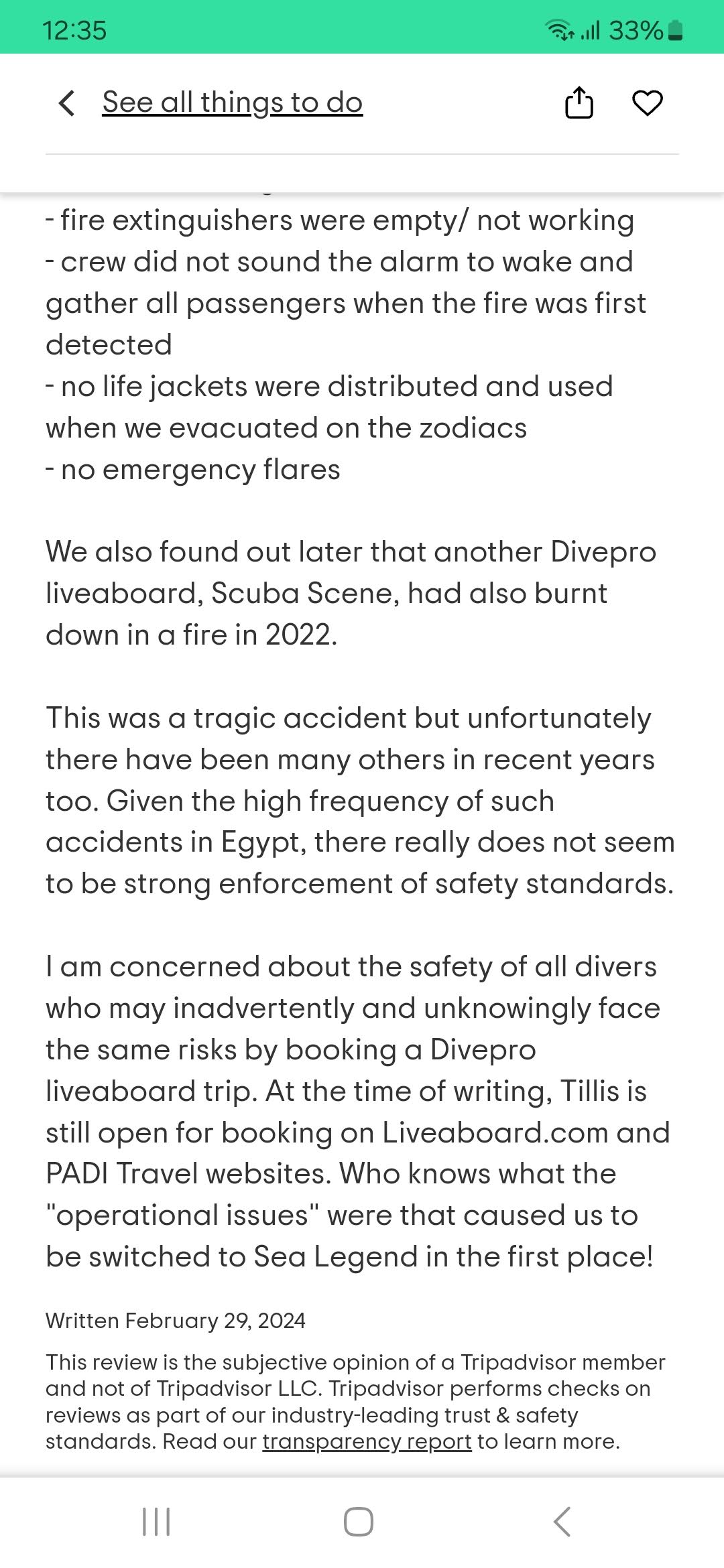
Below are several reviews about the company from TripAdvisor sent to Green Prophet from Omran:
Klorres sent us a link to a German newspaper article that printed an interview with one of the Egyptian rescue divers – professional divers Ahmed Ashraf and Khattab Faramawi from Egypt who rescued their brother Youssef Faramawi from the wreck of the “Sea Story” who came to the site.
Ashraf explained the risks for rescue. Some more parts of the scrubbed interview can be seen below.

“The diver rescuing his brother reported (from Google translation German to English): “The wreck has a big hole. If the ship had been made of steel, it would have sunk immediately. But it is made of wood. During the accident, several air chambers had formed in the wreck. The largest was very close to the hole in the outer wall. When we dived, we had to be careful that our exhaled air bubbles did not connect with the air chamber. If it had grown so large that it had traveled to the hole in the outer wall, all the air could have escaped from the wreck. The ship would have plummeted into the depths with us in its belly in seconds. We would have had no chance.

“How deep is the sea at this point?

“I don’t know exactly, maybe 1000 meters? Too deep, in any case.”

Sea Story sinking diver rescue story
The incidents of the Egyptian dive ship story still begs for questions to be asked. People around the world with loved one trapped inside are desperate to know how this could have happened, and who will rescue their loved ones. Did the Navy know they were alive and prevent dive rescue teams from entering the boat? This is the latest theory.
Please let us know if you would like to share your story with this dive company in Egypt. You can email us [email protected]. We hope to keep Egypt a safe place to dive.

How to Dedicate Time and Days for Effective Exercise

0

Exercise Scheduling: How Often Should You Work Out?

Exercise Scheduling: How Often Should You Work Out?

Working out requires a good level of concentration and physical effort. Regardless of the routine and exercises you want to follow, time will always be a factor. That’s why experts suggest working out 30 minutes daily, five days per week, for improved health. 

However, this recommendation does not apply to all exercises. Depending on your goals, age, health, activity level, and other factors, you may need to spend less or more time working out. A credible supplement provider like Biaxol can help complement your diet and power you through many workouts. 

This article explores how you can schedule time for specific exercises. Continue reading! 

Strength Training 

Strength training has multiple benefits, including keeping your muscles and bones strong and preparing your body for various other workouts. Good examples of strength training are bodyweight exercises like crunches, push-ups, planks, and weightlifting with barbells and dumbbells. 

Further, strength training can affect several muscle groups across your body, including your arms, abdomen, chest, hips, legs, and shoulders. Some experts recommend two to three 20-40-minute strength training sessions weekly. 

Depending on your level of activity and fitness levels, you can start with 15 minutes and gradually work your way to 30 minutes per session. 

Cardio Training 

Cardio can range anywhere from moderate to intense physical exercises. The best part about cardio is that you can choose to do what you enjoy. For example, you can run, swim, bike, and do other activities that come naturally to you. Besides, research has found that incorporating HIIT cardio sessions is one of the most effective and efficient workouts.

HIIT can get you far, as it’s intense, quick, and takes less time. Experts recommend adding some weights to the session, but you should watch your body and build up some resistance first. You can quickly work up a solid sweat with cardio movements in 25-30 minutes.

You can do cardio training three times a week, intensifying movements with adequate rest days in between. However, experts recommend low-intensity cardio workouts if you exercise for extended periods or daily. 

Weight Loss Training 

Food plays a critical role in weight loss training and sessions, and most enthusiasts employ a calorie deficit. However, the movements help burn calories, working with your diet. This means you may need to increase the length of time or days you work out to lose weight. 

Some studies have shown that 60 minutes daily, five times weekly, can help you lose weight—your weight matters. So, 60 minutes daily can help you burn about 150 calories, brisk walking about 280 calories, dancing over 300 calories, and jogging or running can help you lose over 550 calories. 

Generally, the number of calories you burn in 60 minutes depends on several factors, including the intensity of your exercise and weight. Speak to your physician before starting any routine. 

Should You Exercise Everyday of the Week? 

You can work out daily, but doing reps at a high intensity will put your body in trouble. You are exercising too much, which leads to a tired body because it’s challenging to perform at the same level each day. 

For these reasons, experts advocate rest days, recommending 3-5 days of workouts weekly, while other days can be used for rest and active recovery. That way, you’ll avoid getting tired and getting injured. 

During rest days, do light stretches, sleep well, stay hydrated, and eat healthy meals. Studies show that active recovery encourages healthy muscle growth. 

Conclusion 

fish and the med diet
Baked fish and avocado on toast is a good way to enjoy the Mediterranean Diet

Exercise has many benefits, including weight management and overall health. However, scheduling your workouts can help you build a solid routine. Observe the times and days available to you and plan accordingly. 

Mix up your workouts to target more muscles and gradually increase the intensity. Thirty minutes of intense physical activity like HIIT can produce amazing results. Take test days to relax, practice active recovery, and prepare your body for your next workout.


Earthquake data can predict war

0
earthquakes, earth building, Iran, architecture, AFP
An earthquake in Iran

The October 7 attack was a shock and surprise to civilians and the Israeli military. But technology used for predicting earthquakes and seismic shocks can be used to detect future attacks, say researchers from Tel Aviv University. They have looked at the data leading up to the attack where Israel was breached, 1200 killed and 250 were kidnapped, and say that unusual activity can be sensed in seismic measurements taken at the time. Of course it’s retroactive data and conclusions but researchers reveal that on the morning of October 7th, approximately half an hour before the deadly terrorist assault, the stations recorded weak but widespread human-induced seismic noise.

The researchers attribute these anomalous seismic amplitudes to the unusual movement of heavy vehicles within the Gaza Strip heading toward organizational points along the Israeli border up to 20 minutes before the ground barrier breach

The researchers explain that forensic seismology is often used to monitor conventional and nuclear explosions. However, this is the first time in history that weak ground motions resulting from preparations for a terrorist attack have been identified by analyzing the characteristics of seismic noise induced by vehicular traffic.

They believe the discovery demonstrates the potential usage of seismic-based sensing technology to provide early warnings of terrorist activity.

Related: Sexual crimes reported by the UN on October 7

The study, led by Asaf Inbal of the Department of Geophysics at Tel Aviv University’s Porter School of the Environment and Earth Sciences and Sackler Faculty of Exact Sciences, was published in The Seismic Record, a journal of the Seismological Society of America.

Israel has seen catastrophic earthquakes over the centuries and much of this data was gleaned from church records that reported back to the Vatican over the years. Israel has been saying for the last 30 years that a large earthquake can be expected at any time. Turkey is seismically very active in the last 10 years but recent research suggests that the tectonic plates between Turkey and Dead Sea Rift are not or no longer connected.

antakya earthquake
In Iskenderun, Turkey – one of the places most affected by the 7.7 magnitude earthquake centered in Kahramanmaraş

Inbal explains the data they found around the attack on October 7: “The Israeli Geological Survey operates a nationwide network of dozens of highly sensitive seismometers that continuously monitor ground motions. This network is primarily designed to detect and locate earthquakes and provide warnings of strong ground shaking caused by large-magnitude seismic events.

“However, three stations in the network—located in Amazia, Ktsiot, and Yatir, between 30 and 50 kilometers from Gaza—recorded unusual seismic noise levels early in the morning of October 7th, 2023. This noise can be attributed with confidence to the vehicular activity in Gaza as Hamas terrorists gathered for the attack. The time frame was between 6:00 and 6:30 AM, before the rocket fire began.

“The likelihood that the recorded signals originated from Gaza is over 99.9%.

“The motions recorded near the seismometers were in the range of tens of nanometers per second, whereas the minimum ground motion detectable by humans is several millimeters per second,” explains Inbal. “The characteristics of the noise originating from Gaza and captured by the Israeli stations are fundamentally different from those recorded at the same stations on previous Saturdays during those hours.

“We analyzed three years of data from the Israeli station trio recorded in the same time frame as the one leading up to the attack. We found no instance of a Saturday morning when correlated amplitudes were recorded at all three stations for over 10 minutes. It’s important to note that these stations are widely spaced, with each station primarily sensitive to seismic noise generated by nearby human activity.

“For instance, the distance between Ktsiot and Amazia is about 80 kilometers, and on previous Saturdays, there was no correlation between the data recorded at these stations. On the morning of the attack, when local activity near the stations was minimal, we found unique widespread seismic amplitudes, which monotonically increased with time approaching the attack.

“No known natural or human source on the Israeli side could have generated seismic signals with a distribution and intensity similar to those attributed to Hamas movements. Although the outdoor music festival near Re’im generated some seismic noise, our analysis shows that this noise does not match the strength or location of the noise sources recorded by the Israeli seismic network on October 7th.”

The analysis indicates the seismic noise detected began at 6:00 AM and intensified as the attack approached. Occasionally, the noise contained short bursts strong enough to pinpoint their source and track their progress. The location and intensity of these sources in Gaza suggest vehicle movements advancing southward and northward within Gaza, from Rafah in the south to the Erez crossing in the north, during the 30 minutes leading up to the attack.

“We have good resolution along Salah al-Din Road, a major thoroughfare crossing Gaza from Rafah in the south to Beit Lahia in the north,” says Inbal. “We can confirm with high certainty that their forces moved along this route at speeds of 25 to 50 km/h. Observations from stations dozens of kilometers from Gaza’s border indicate convoys of heavy vehicles such as bulldozers and trucks carrying operatives.

“Three minutes before the attack began, we detected noise sources reaching the northern end of Gaza near Beit Lahia and the southern end near Khan Yunis. At the same time, we continued receiving signals from central Gaza, near Nuseirat. We know the assault began almost simultaneously along the entire border, so these seismic observations provide further evidence of the extensive deployment of Hamas forces, likely enabling the simultaneous breach of the ground barrier.”