Home Blog Page 498

Middle East’s Wildlife Smuggling Putting Species At Risk

0

UAE-wildlife-smuggling-middleeast-IFAW-gorillas-cheetahThe demand for exotic animals in the Middle East – and particularly in the Gulf and Egypt- is putting animal’s lives at risk

From pet cheetahs on the streets of Dubai to python and falcon egg smuggling, the Middle East clearly has a wildlife trafficking problem. Even more troubling is that the market for these exotic animals is so lucrative that smugglers are putting the animal’s life at serious risk just to make a quick buck. According to the Middle East branch of the International Fund for Animal Welfare, smugglers commonly sedate young animals and carry them on board planes in hand luggage. But many never survive the journey.

BrightSource Energy Makes Gigantic Bet on 750 MW Solar Project

0

brightsource-750MW-Rio-Mesa-not-pv

BrightSource Energy is making a big bet on CSP while others switch to PV

The third huge US solar project from BrightSource Energy is its largest yet. At a whopping 750 MW it is the size of three or four US coal or gas plants.

Its Rio Mesa Solar Electric Generating Facility in California will use the solar tower technology it inherited from Israel’s Luz, its parent company (Luz Rises Again as BrightSource for California) in which a field of mirrors on poles reflects sunlight onto a tower to create steam to drive a turbine to make electricity.

But it comes at a time when many utility-scale solar companies are switching to PV (photovoltaic) solar – those traditional rooftop solar panels that most people associate with solar – from Concentrated Solar Power (CSP) such as this. Why?

Ex-Shell Scientist Insists Israeli Oil Shale Is Still A Possibility

2

adullum-shale-oil-israel-exploration-ieiScientist Harold Vinegar says there is a huge quantity of oil shale in Israel and, despite protests and risks, he still wants to extract it

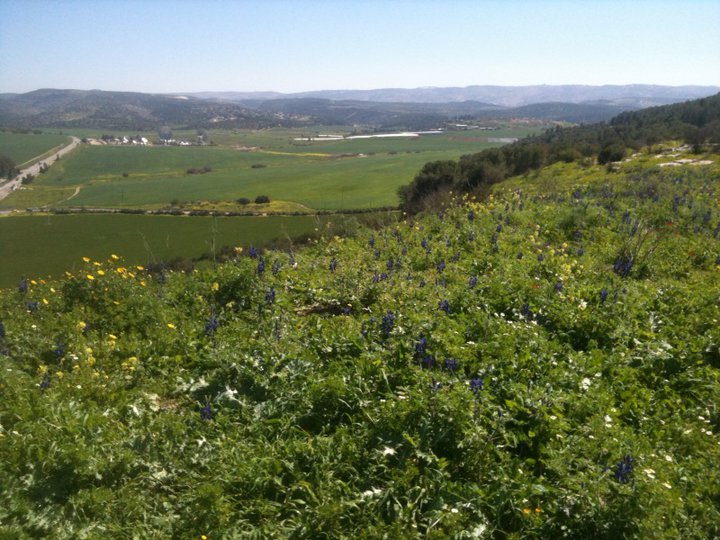
A project to explore the Elah Valley of Israel (pictured above) for oil shale has been underway since 2008 and despite protests from locals and environmental campaigners, those behind the project state that they are optimistic and will continue to work towards extracting the oil shale.

In an extensive interview with the Jerusalem Post, ex-Shell scientist Harold Vinegar who is part of the Israel Energy Initiatives (IEI) behind the oil shale venture, insists that Israel has the potential to extract “250 billion barrels of oil and perhaps more” using cleaner and cheaper techniques.

Jordan’s Princess Alia Calls for Humane Animal Slaughter Ahead of Eid al-Adha

1

animal rights, halal, kosher, Australia, Princess Alia, Jordan, H.R.H. Princess Alia Al Hussein (pictured right) is known around the world as an advocate for animal rights. She is currently on a mission to end the inhumane slaughter of animals for halal meat. Just in time for Eid al-Adha!

Jordan’s H.R.H. Princess Alia Al Hussein – sister to King Abdullah II – believes that stunning animals prior to slaughter is not only halal, but should be mandatory. Ḏabīḥah (ذَبِيْحَة) is the word used to describe how Muslims ensure that the meat they eat is pure and wholesome. According to a Wikipedia entry on the subject, “this method of slaughtering animals consists of using a well sharpened knife to make a swift, deep incision that cuts the front of the throat, the carotid artery, wind pipe and jugular veins but leaves the spinal cord intact.”

Unfortunately, many Muslims and Jews, who have similar rituals for kosher meat, take these traditions to drastic ends – often killing animals prior to stunning them. Last year we wrote about a bloody scene in Egypt, where scores of livestock were butchered on the side of the street in a manner considered more haraam (forbidden) than halal. And Australia, which produces a lot of the meat exported to the Middle East considers it perfectly lawful to slaughter animals without stunning them first. Longtime animal rights activist Princess Alia is determined to change that.

Meet the “Miss Pakistan” of Renewable Energy

2

natasha paracha miss pakistanNatasha Paracha was Miss Pakistan World in 2008. In 2011, she’s using her beauty and smarts to build a sustainable renewable energy climate in Pakistan.

Everyone knows that the first thing you ask any beauty queen is about that wish –– what she would do to make the world a better place if she ruled the planet.  In 2008, Natasha Paracha got that question moments before she became Miss Pakistan World. But instead of pursuing a glamorous tour promoting products, she chose to make her wish come true: today she is using education as a tool to accelerate clean technologies and sustainable development in Pakistan.

Natasha is from Islamabad, Pakistan and is residing in New York City and lives between both worlds helping Pakistan become more sustainable. She is doing this in a number of ways –– both locally and globally. Her insights can help investors and philanthropists access opportunities to ignite change.

In Pakistan she works with the Alternative Energy Development Board, the Ministry of the Environment, and with private businessmen focusing on climate change and renewable investments. In North America she’s the spokeswoman for Katerva, an ideas and technology accelerator.

Green Prophet speaks with Paracha on what investors and entrepreneurs can learn about the clean tech opportunities emerging from Pakistan, desperately in need of help.

Greenpeace Raises More Questions Over Jordan’s Nuclear Plans

4

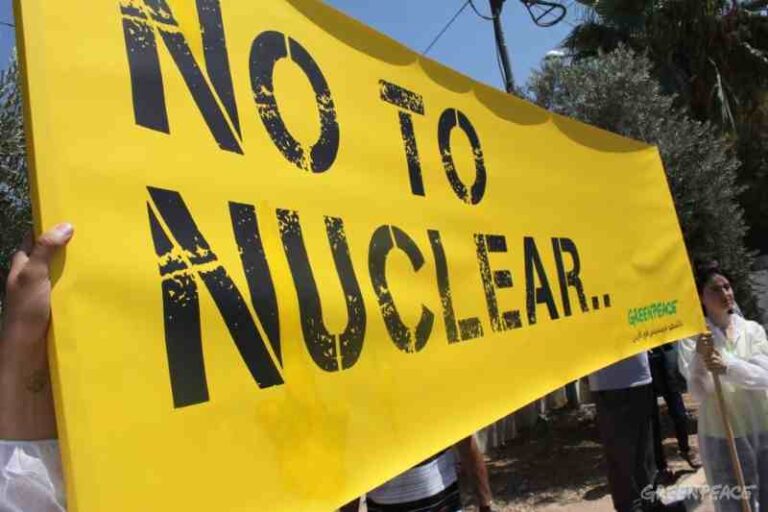
jordan-nuclear-power-greenpeaceFrom overstretched contractors exposed by Wikileaks to Japanese criticism over the poor selection of the reactor site, Greenpeace is raising serious questions over Jordan’s nuclear plans

Despite ongoing protests from green campaigners, it seems that Jordan is now determined to go down the path of nuclear power. Citing poor energy independence and high energy costs (around 22% of GDP), the country has laid out plans to establish a 1,000 megawatt nuclear reactor just 40 kilometres north of Amman the capital city.

However, a local branch of Greenpeace has been raising serious questions about these plans. One of which is the ability of the Russian company Atomstroy Export – which is one of the final three bidders currently being considered by the Jordanian government – to fulfill its commitments. The other being the poor location of the nuclear reactor so close to a water-poor, bustling metropolis.

Bono Fixes the World the Jewish Way of Sukkot

1

bono lemonBono’s ONE organization advocates inviting hungry people into your sukkah this holiday time.

Bono and Sukkot. These are two words that you have probably have never seen in the same article, let alone in the same sentence, but the U2 frontman is breaking ground by drawing connections between between important social causes and Jewish symbols. Besides being one of the greatest rockers alive, many of you may know that Bono’s advocacy group fights poverty and brings awareness to the dire situation that permeates the horn of Africa, where a severe drought has affected millions of people. The group recently released a PDF booklet that links the desperate situation there with the ancient Jewish holiday Sukkot that is still underway until Thursday.

Using Human Joggers to Generate Energy

1

"jogging energy electricity"Jogging is great exercise for you, and for the batteries that it can power.

A friend of mine in college once had a crazy idea to solve the American obesity crisis and alleviate global warming: encourage the obese to exercise and harness the energy created by their treadmills, ellipticals, cycling machines, etc. as an alternative energy source.  The idea was a little unorthodox, but had a kernel of brilliance as well.  Why not use human activity as an energy source?

Using power generated from human activity such as walking or jogging is not a new idea, but has previously required large, clunky equipment.  Two researchers at the University of Wisconsin Madison, Tom Krupenkin and J Ashley Taylor, have been working on that issue, though, and have come up with an innovative and convenient way to harness human jogging power.

Navies Circle Cyprus As It Explores Natural Gas

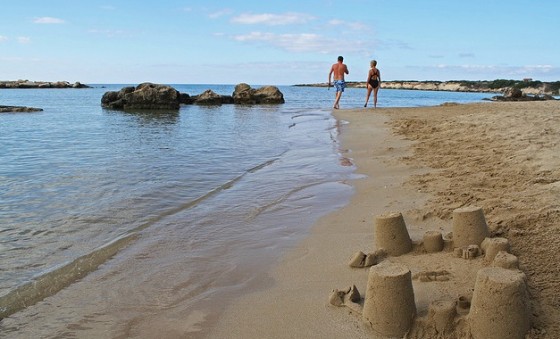
Cyprus beachNavies crowd into once placid waters as Turkey presses Cyprus on gas reserves

Turkey has a corvette, frigate and helicopters escorting its exploration vessel, the Piri Reis, as it explores for gas and oil. The US has quietly dispatched an aircraft and Russian naval vessels have been seen patrolling. News reports say US reconnaissance planes have circled the vessel on at least two occasions and on another occasion low-flying Israeli warplanes and helicopters “harassed” a Turkish ship.

Once the preserve of fishing boats and yachts, in the space of just a few weeks the serene waters of the Eastern Mediterranean have become a field of contention. As Greek Cyprus begins exploiting its potentially vast gas and oil reserves, Turkey has asserts its growing role as a regional power, and a worried Israel is pushing back.

Algeria to Invest $20 billion USD in renewable energy

1

algeria oil field $20 billion renewable energyAlgeria sets plans to achieve 40% renewable energy by 2030

Perhaps because it has noted what’s happened in neighboring Morocco (Could Morocco be First to Get 42% Solar?) and Egypt (Egypt in Top 22 Nations for Renewable Investment Potential) following their progressive renewable energy plans, now Algeria has announced an investment of more than $20 billion in renewable electricity over the next 20 years. The move would bring all three MENA nations to the forefront of  climate actions worldwide.

Egypt now leads all the MENA nations in attractiveness for renewable energy investment through the EU’s Clean Development Mechanism and Morocco – which already has a grid linked up to Europe – has become a key Desertec investment point since announcing its plans to provide 42% of its own electricity from solar, which is by far the most ambitious plan in the world. What’s more, as a kingdom, there is no opposition party to sabotage renewable energy as the Republican party does in the US.

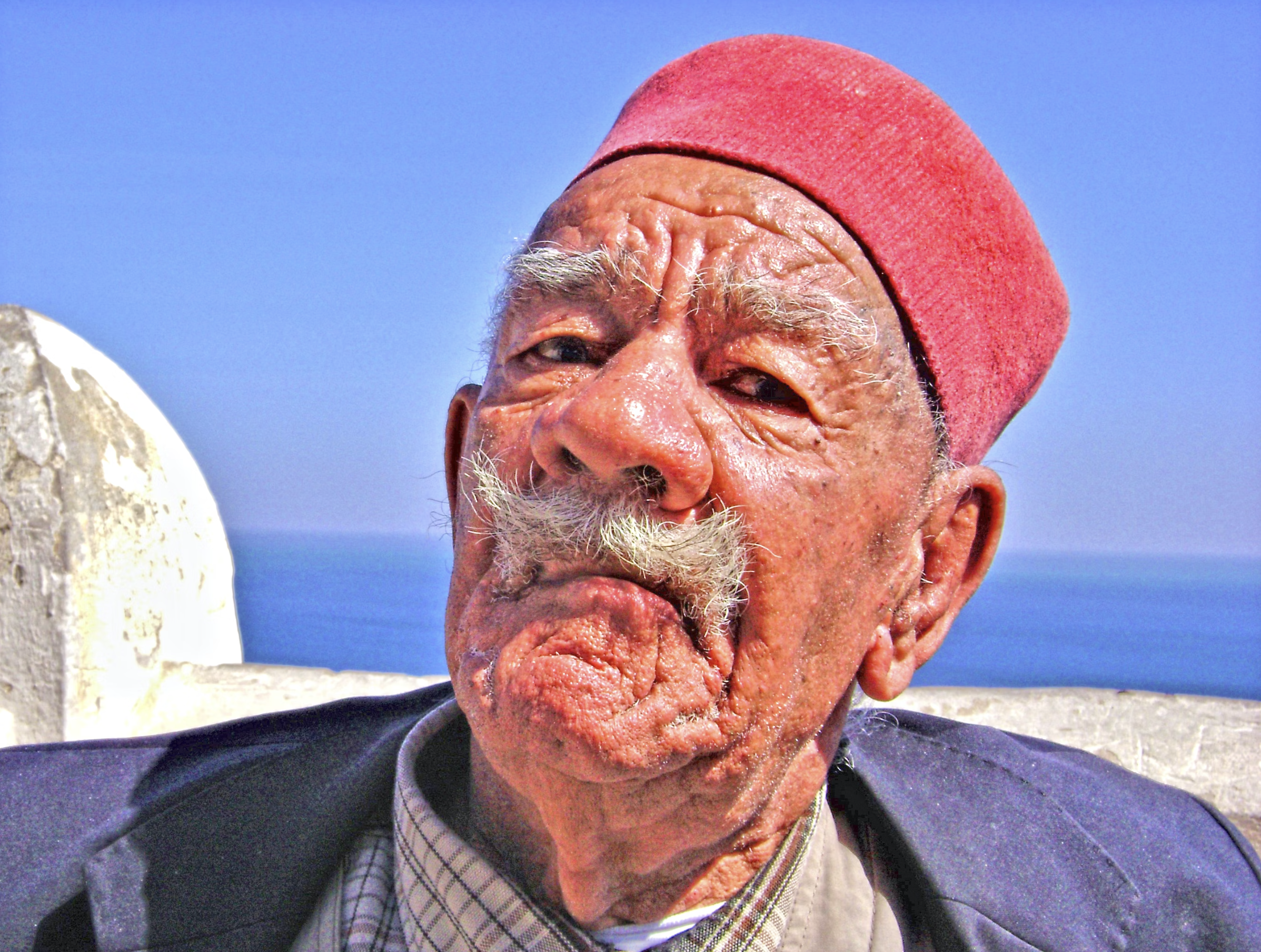
Algeria man with red fez hat
A local in Algeria

Algeria’s electric utility, Sonelgaz has a very fast-growing customer base of 6.2 million. It grew 3.9% from 2007 to 2008. Currently, most of Algeria’s electricity is produced through natural gas, although earlier this year the country launched a hybrid plant that boosts gas-fired production with solar panels.

Nordine Bouterfa, head of the Sonelgaz group in Algeria, told a press conference: “The total sum of electricity production development between 2011 and 2021 is nearly $35.4bn, $20bn of which will be dedicated to renewable energy. By 2030, some 40 per cent of electricity production for national consumption will come from renewable energy.”

In this plan, Algeria will be following in Morocco’s ambitious solar footsteps.

It is very encouraging to see these emerging nations embrace clean energy. Algeria will be split almost 50/50 between traditional and renewable energy investment. These are the nations where – if they followed the fossil energy route – the next 50 years of increased carbon emissions would be greatest.

So it is the energy choices of these nations that will make or break civilization, since it is in the world’s emerging economies that electricity growth is fastest.

Read more on MENA renewable energy:


Israel to Build $1.3 Billion Solar Project… for China??

3

China Suntech Israel Electric Corporation $1.3 billion solarA coal utility in Israel and the global leader in solar panel production form a joint project

Everybody knows that China is the world leader in cheap solar. By contrast, Israel has barely begun to tap the global solar market. Yet the world’s largest solar panel producer in China, Suntech, has invited Israel’s state-owned electric utility, Israel Electric Corporation (IEC) – which has no experience in solar power at all – to build three photovoltaic solar energy arrays in northern China, as part of a project worth $US 1.3  billion dollars.

IEC maintains and operates all of the power generation stations, sub-stations and transmission and distribution networks throughout Israel. All coal or gas. It has no solar projects under development. The project would be IEC’s most ambitious development overseas and its first ever solar PV power station. According to energy China Forum, the three solar arrays will total 240 MW, which is about the size of many coal plants. So… why IEC?

The Mashrabiya House Beats the Heat with Traditional Arabic Technique

4

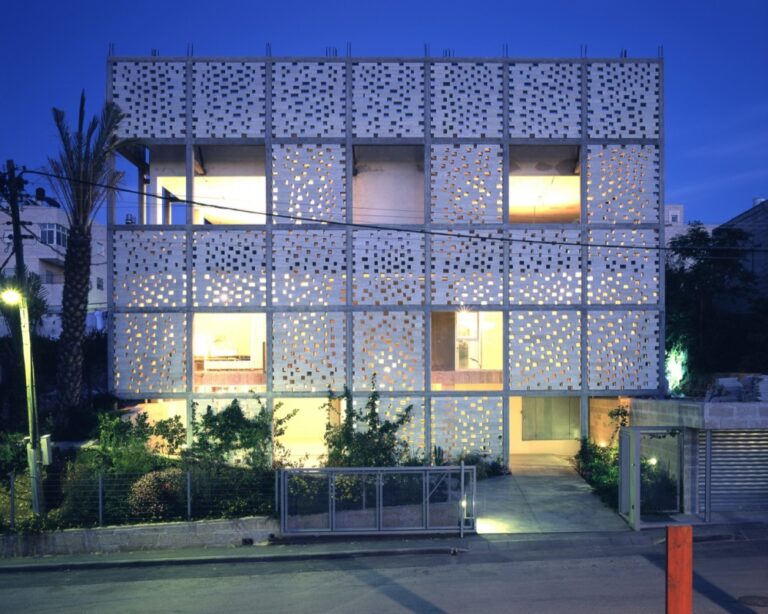
green design, passive design, sustainable architecture, green design, eco-designThis contemporary home located between Bethlehem and Jerusalem is wrapped in a Mashrabiya screen, which keeps the home nice and cool even on scorching hot days.

We’ve lauded the benefits of  ancient building techniques many times before. Both Hassan Fathy’s incredible mud structures in Egypt and ancient Syrian beehives are a model for sustainable design because neither require an air-conditioner to stay cool. But don’t worry. It isn’t necessary to live in a mud building or a cave in order to enjoy the benefits of passive design.

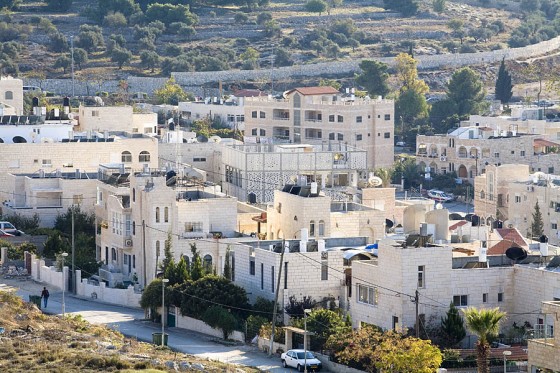
This 1700 square meter home designed by Senan Abdelqader is a contemporary stand out among the solid stone homes that typify architecture in the Arab village Beit Safafa located between Jerusalem and Bethlehem. It is wrapped in a mashrabiya – a latticed screen envelope on the outside of buildings that is not only aesthetically appealing, but also serves several practical functions.
green design, sustainable design, eco-design, passive design

The terraced home’s basement is tucked into the side of a steep slope. Natural lighting is facilitated with sunken courtyards that act as light wells. From this stout base emerges the rest of the home which is wrapped in a stone mashrabiya facade.

Stone is an excellent building material since it has superior thermal massing. In other words, it absorbs the heat of the day which can then be released at night when it is cooler. That being said, most of the stone being used in this region is Jerusalem stone – and its excess use exacts a steep environmental cost.
green design, sustainable design, passive design, eco-design

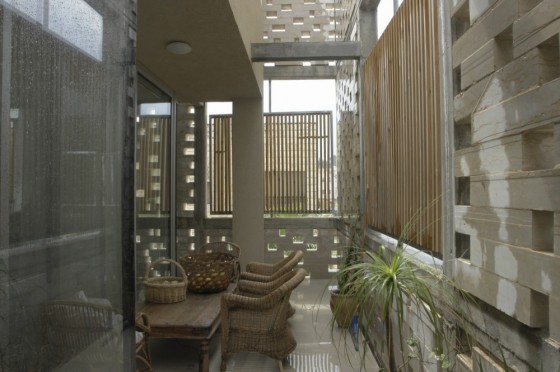
Set apart from the building, the pixelated envelope serves multiple functions: it circulates air to provide passive cooling, it deflects excess solar gain as well as wind and rain, and it allows just the right amount of diffused light to enter the home. This beautiful home also has a rooftop garden.

Beit Safafa is on the precipice of rapid urbanization. If that is the case and it has to be, we at least hope that other homes in the region will look to Abdelqader’s sustainable leadership for inspiration.

More Examples of Vernacular-Inspired Architecture:

Earth Architecture All the Way to Timbuktu

Hassan Fathy is the Middle East’s Father of Sustainable Architecture

The Epitome of Sustainable Architecture: 700 Year Old Iranian Caves

all images © Amit Giron

Better Late Than Never, Egypt Takes Control of Mercury Disposal

0

toxic waste, mercury, environmental hazards, pollution8 million fluorescent tubes are improperly disposed every year in Egypt, leaching dangerous levels of mercury into the environment. Finally, that seems set to change.

On the cards since 2007, Alexandria has finally opened up their first hazardous waste facility – mostly in order to manage mercury. Although many countries have attempted to limit the manufacture of products that contain mercury, Egypt still produces 40 million fluorescent tubes a year according to our friends at Almasry Alyoum. And nearly one quarter of them end up in landfills at best, or broken and spewing mercury at worst. After realizing how dangerous this unmanaged mercury is for the country’s fauna, flora, and people, in 2007 the Egyptian Environmental Affairs Agency (EEAA) teamed up with the Korean International Cooperation Agency (KOICA) in order to effect the Safe Disposal of Hazardous Waste Project. Nearly five years later, that collaboration has borne fruit.

Mosaic of Lost Socks feature recyclables as Art

0

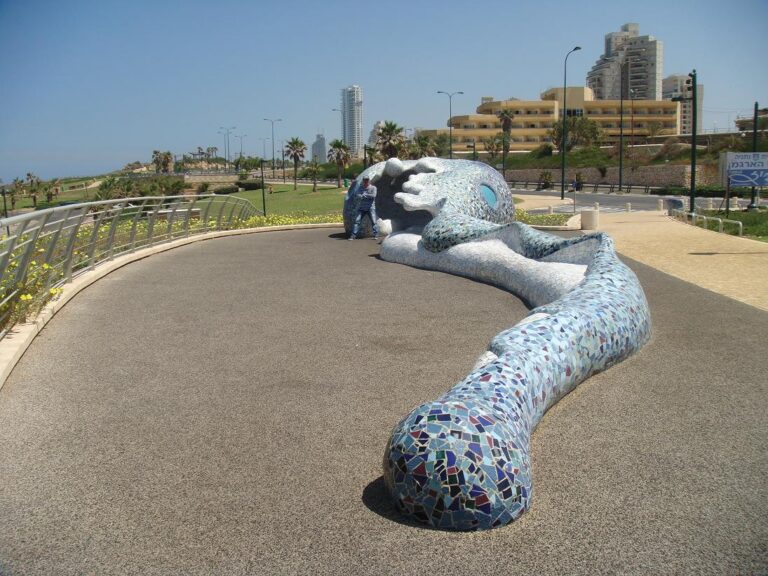
mosaic festival israelMosaic artist Ruslan Sergeyev and the “My Wave” recycled ceramic art creation on Netanya promenade.  Festival includes a mosaic of lost socks. Photo by Igor Sarni

Israel’s eight-day Sukkot festival, now ongoing, often includes a number of motifs and local themes which give emphasis to projects that help preserve the environment. This year is no exception as an ongoing mosaic arts festival, Netanya Mosaic, is currently occurring in the coastal city, located 30 km north of Tel Aviv.

This festival said to be the first of its kind in Israel traces the development of the use of mosaics as an art form from ancient times until the present day. What is particularly interesting about this festival is that participating artists are using a number of recycled materials to create their art work, including  glass, ceramic tiles, wood, fabrics, paper, and even clothing articles, items which have often been noted in Green Prophet articles for creating both art forms and furniture from discarded and recycled items.

Radioactive Church in Tokyo Dangerous as Chernobyl Dead Zone

7

japan churchPraying in a Tokyo church could expose you to radiation levels higher than Chernobyl dead zones.

In the same manner that Japanese authorities failed to prevent the Japanese nuclear disaster earlier this year, the authorities are dealing with radiation fallout –– in Tokyo. They are not telling the whole story. Locals armed with their own dosimeters are clocking levels higher than at the exclusion zone of Chernobyl. What one resident found at his 11-year-old kid’s baseball field is radiation levels that can make you sick. Another test found the highest radiation dose, in an undisclosed area of a church. Some 20 hotspots have since been identified.