Home Blog Page 455

Blingh20’s Most Expensive Water Costs $2,600 for 750ml

1

water issues, desalination, dubai, water, blingh20, paris hilton, dubai mall, Journal Arabia,The world’s most expensive bottle is encrusted in Swarovski crystals and costs a mere $2,600.

Earlier today we poked a little fun at Dubai Mall’s conspicuous consumption, leaving us with a tinge of guilt. After all, shouldn’t we feel compassion for our Emirate neighbors whose oil-wealth has veiled the absurdity of their white gold Mercedes, their global warming park, and their soaring towers? Maybe, but then we saw this bottle of water that costs $52.28 over on Journal Arabia and all our guilt fell away. And that’s cheap compared to Blingh20’s most expensive bottle of water, which you can get for a mere $2,600!

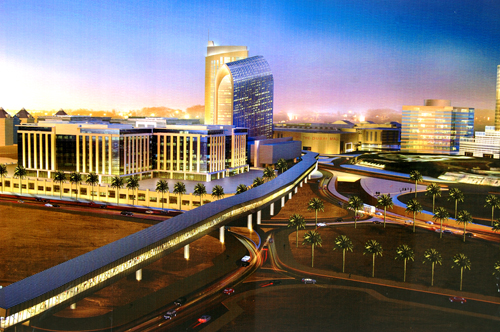
PHOTOS: A New Sky Bridge to the Glitzy Dubai Mall

2

Dubai, pedestrian bridge, urban, architecture, design, Journal Arabia, Land Art Generator Initiative, travel

A new pedestrian bridge nearly 1 km long will link the glitzy Dubai Mall to the nearby metro stop – finally!

I swear Robert Ferry and Elizabeth Monoian from the Land Art Generator Initiative are magicians, because everything they touch turns to gold. (If you haven’t already downloaded their free field guide to the 60 renewable energy generating technologies, here’s another chance.)

Maybe it’s because the American couple have spent so much time in Dubai, where there’s loads of gold, diamonds, and other bling to be found. In any case, the following images come straight from their personal blog, Journal Arabia, and capture the essence of excess better than anything I’ve seen so far. Check out renders of the new pedestrian bridge that will connect the Dubai Mall metro stop with the mall itself (somewhat belatedly). It will be nearly 1km long.

4 Miraculous Eco-designs by Ro-Ad Architecten

0

ro-ad ro&ad architecten moses bridgeThis amazing moat bridge parts waters in the Netherlands like Moses and the Red Sea!

Thanks to theological scholarship (or in my case, thanks to MGM and Charlton Heston) everyone knows how Moses split the Red Sea. Architects have now imitated that miracle with a sunken eco-bridge that allows safe pedestrian passage through far less-daunting waters. Four hundred years ago, a network of fortresses was built across the Netherlands to protect against Spanish and French invaders.

Their moats were interlinked, creating a water-based defense known as a “waterline” that could be manipulated to create islands of safety during turmoil. The moat surrounding 17th Century Fort de Roovere was the simplest of safeguards: a calm and controlled channel too deep to wade across, yet too shallow for arms-laden boats.

A recent reconstruction of the fortress and its regional waterline required new access routes for workers and materials, so last year this noble defense was finally breached. Read on for three more inspiring and miraculous eco-design ideas worth spreading.

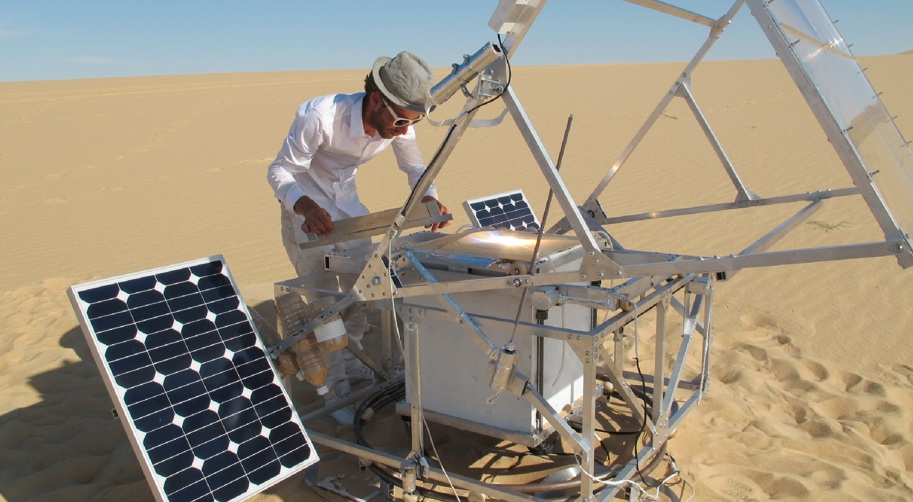
Markus Kayser’s 3D Solar Sinter Prints on Sand – Could Replace Concrete

markus kayser, solar sinter, 3D printing

Sweat and Sahara sand had forced my eyes closed so that, even as I stood in front of one of the seven wonders of the ancient world, I saw nothing. My eyelids were a back-lit sandy-orange in the sun’s glare. I pried them open and squinted up at the shapes the pharaohs and their slaves had conjured out of the desert 4500 years ago. The Great Pyramid of Cheops towered over the camels and tour buses on the outskirts of Cairo.  It was a sight I will never forget and yet in the beginning I saw nothing.

Visitors often see the desert in this way, as an endless stretch of sun and sand and nothing.  But when German-born 3D Designer Markus Kayser first set his eyes upon the Egyptian desert, he saw possibilities. He imagined harnessing the resources which existed in great abundance here, sunlight and sand. And here he talks with Green Prophet about his 3D printer that runs on sun and sand.

Stinging nettles and mallows are free for foraging

4

stinging nettlesEdible wild plants are healthy vegetables that are free for the picking. Here are two of our favorites growing now in the Middle East, with recipes.

Our monthly seasonal produce posts always carry forager’s notes for those who follow the Middle Eastern tradition of eating wild greens. See our latest seasonal post with a list of many wild edibles. With this winter’s relatively abundant rains, wild edibles are growing out of every crack in the sidewalk and filling up neglected gardens and fields.

Take nettles. Take them carefully though, because they sting. A good way to harvest this assertive vegetable is to cut the stems with scissors, then still holding the stem with the scissors, drop it into your collecting bag. Handle the nettles with kitchen gloves to avoid getting stung once you get them into the kitchen. We’ve written about nettles before, and here’s a post with some different tips on cooking them.

Why go through all that trouble? Well, nettles are amazingly high in iron, calcium and vitamin K, among other nutrients. And they taste good, especially cooked with rice. Nettle’s flavor is uniquely dark, a little reminiscent of dried seaweed.

A delicious tonic soup: 2 cups chopped nettles, 1 medium onion, 1 chopped tomato, 1/2 cup raw rice and 2 cups water. Add a bay leaf, 2 cardomom pods, 1/2 teaspoon ground turmeric and salt and pepper to taste. Cook, covered, over medium heat till the rice is very soft – about 1/2 hour. Blend, and before serving, stir a little good butter or cream into the soup.

Collect nettles before their seeds have matured, while the leaves are broad and dark green. I dry them for eating year around, tying small bunches together and hanging them upside down till leaves and stems are dry and crisp.

Herb Drying Tips

When drying herbs, make small bunches so that air will circulate between the leaves, drying the individual leaves and stems entirely. Crowded into big bunches, parts will remain damp and go moldy.

drying stinging nettles for tea and soupA nourishing overnight nettles infusion:  1 tsp. dried or fresh nettles per cup of boiling water, covered and allowed to stand 8 hours. This nourishes kidneys and raises your hemoglobin. Keep it covered while infusing and strain before drinking.

Velvety-soft mallow leaves are a springtime treat in the Middle East, usually stuffed as grape leaves are and presented in neat rolled-up little packages. Tramping around an abandoned lot in search of wild edibles, I recently saw a little old lady with the head kerchief and hennaed braid typical of old-fashioned Moroccan grandmothers.

She was bent over a particularly fine stand of mallows, carefully choosing the broadest, cleanest looking leaves, probably for stuffing. You can easily stuff mallows using our filling for stuffed Jerusalem sage.

image-flowering-mallowsMaybe Middle Eastern grandmas have always known how good for you mallows are, being as rich in Vitamin C as oranges. They’re also full of a soothing demulcent property that’s good for the skin and the digestion. And they’re high in iron as well. I like to  chop big leaves into ribbons and cook them the way I do spinach or Swiss chard. Or saute a good handful with onion and a little red bell pepper and stuff an omelet with them.  Mallows are easy to handle. I dry them for future cooking also.

Here is a plateful of mallows I recently stuffed, along with an extra half bell pepper.
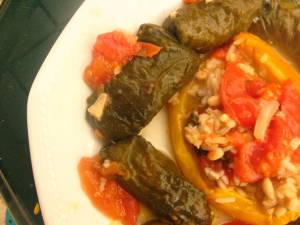
image-stuffed-mallows

Small, tender mallow leaves fit into almost any salad. Their taste is almost neutral, just sort of green. Children have always loved picking the mature seed pods, called “cheeses” in English, for the crunch and for the fun of eating something wild. I throw a handful into my salads too. And finally, the lovely flowers make a soothing tea for coughs, and a good facial rinse for any skin type. Make according to the instructions for nettles tea, above.

image-mallow-flowers-cheesesSo go forth and walk the land. Your wild veggies are waiting for you.

More vegewarian recipes and wild veggie talk:

All photos by Miriam Kresh.

Mine sweepers powered by the wind

7
green design, sustainable design, social design, bamboo, biodegradable plastic, Afghanistan, Design Indaba, Cape Town, Massoud Hassani, land mine, bamboo, wind power
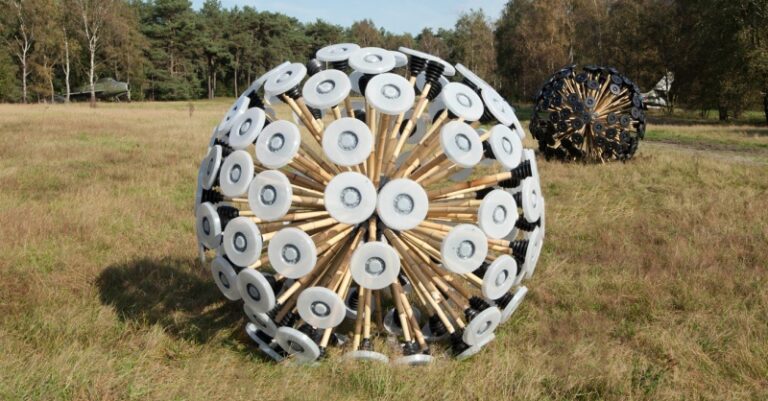
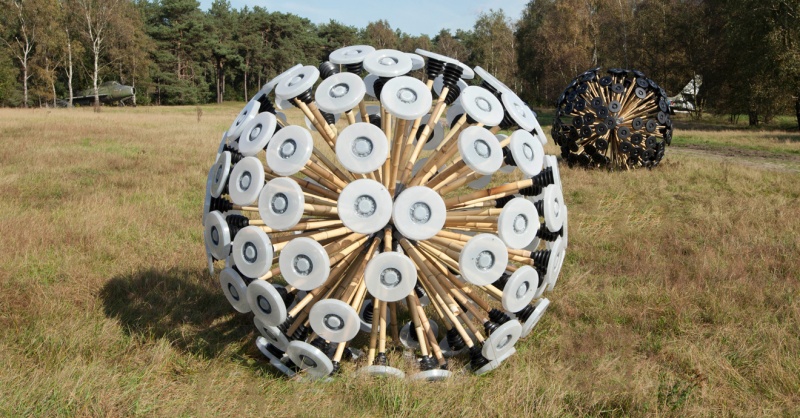
Afghani minesweeper, made from bamboo, powered by the wind

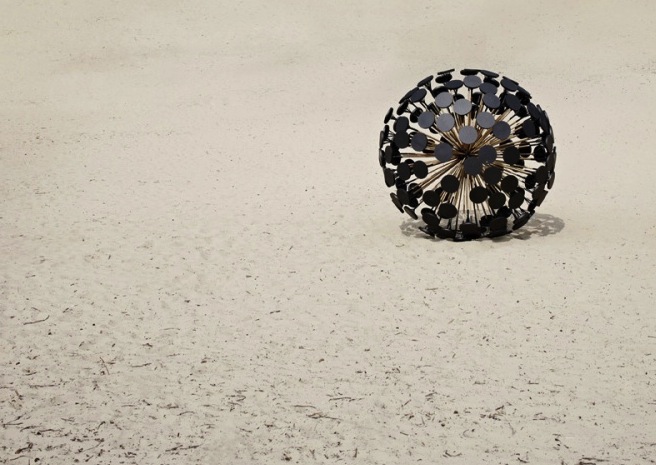
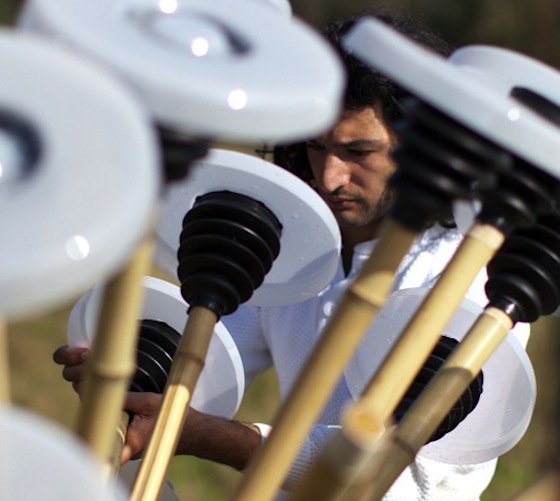
There are more land mines in Afghanistan than there are people, so Massoud Hassani turned a childhood toy into an extraordinary wind-powered bamboo mine sweeper that destroys and tracks them. Made out of bamboo and biodegradable plastic, the rolling Mine Katon’s arms self-destruct when they hit and simultaneously destroy a land mine. Equipped with a GPS chip, this incredible design also maps out which land mines in the country have been wiped out so that local Afghanis know which areas of the country are safe.

green design, sustainable design, social design, bamboo, biodegradable plastic, Afghanistan, Design Indaba, Cape Town, Massoud Hassani, land mine, bamboo, wind power
Afghani designer Massoud Hassani transformed a childhood toy into a giant bamboo minesweeper powered by the wind. 

Toys into tools that save lives

Massoud Hassani recalls on his personal blog childhood memories of making wind-powered toys and chasing after them in areas of Afghanistan that were pocked with destructive land mines.

Many of his friends were killed or seriously injured when they accidentally encountered one of humanity’s most destructive inventions.

Twenty years later, as a student of Design Academy Eindhoven in the Netherlands, Hassani scaled up his childhood toy by twenty times and equipped it with tools that literally save lives.

green design, sustainable design, social design, bamboo, biodegradable plastic, Afghanistan, Design Indaba, Cape Town, Massoud Hassani, land mine, bamboo, wind power
Afghani designer Massoud Hassani transformed a childhood toy into a giant bamboo minesweeper powered by the wind. 

Sniffing out land mines

Although Afghanistan only has 10 million land mines on record, Hassani says there are many more – up to 30 million in a country with a total population of 26 million.

It is uncertain whether government agencies in the country have commissioned the ingenious minesweeper, but Hassani will be available to talk about this and other designs at the upcoming Design Indaba in Cape Town that starts on February 29, 2012.

According to Design Indaba, the talented designer from Afghanistan will also discuss his latest project, “a series of cooking products called “Silk Cooking” inspired by Afghan traditions.”

More Green Designs on Green Prophet:

Hanging Balcony Gardens are a Beautiful Solution for the Urban Farmer

Folded Paper Jewellery That Makes Origami Look Chic

Israeli Artist Transforms Rockets into Roses

Rooftop Hydroponic Farms in Egypt Scrub the Air and Uplift Urban Poor

4

rooftop farming, egypt, maadi, hydroponic farms, soilless farming, agriculture, aquaculture, urban farming, organic farming

Urban farming in Egypt has soared. Read about Schaduf – a soilless solution taking root in Maadi.

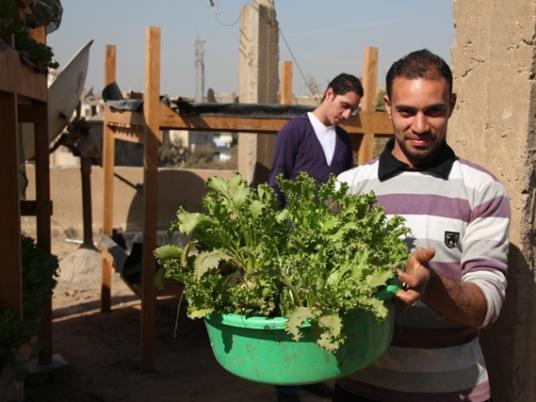
Two Egyptian brothers have received enough donations to set up three rooftop farms in Maadi – a once wealthy suburb of Cairo. Due for full installation by April, these won’t be any old farms. Sherif and Tarek Hosny have developed closed-loop, vertical hydroponic systems that use recycled water and mineral nutrient solutions to grow cheaper, healthier produce.

Designed to become a secondary source of income for poor families living in the less-privileged areas of Maadi, where many expatriates and wealthy Egyptians seek shelter from Cairo’s bustling urban center, Schaduf’s farms have great potential to scrub the neighborhood’s polluted air and give struggling families a much-need fiscal boost.

Dense Israeli City to Get a Breath of Fresh Air with New Park

1

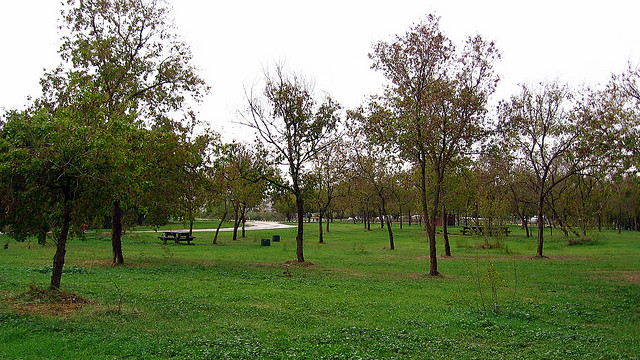
"city park israel"Bnei Barak, one of Israel’s most dense cities, is about to get its first large municipal park.

With 165,000 people living within a 7000 dunam area, Bnei Barak is one of Israel’s densest cities.  And its residents don’t have a green zone to call their own.  Ruth Mozes, an architect in charge of Bnei Barak’s urban planning department, said that “Bnei Barak does not have a single park, and its largest garden spans 20 dunams.”

In order to rectify the situation, a regional planning committee will officially confirm plans within the coming weeks to expand Tel Aviv’s large Yarkon Park into Bnei Barak.  This will grant the city a much needed green lung.

Syrian Farmers Increasingly Vulnerable

1

syria-drought-farmers-aidAs the political conflict rages on, drought-hit farmers in Syria struggle on and the aid trickling in to help is severely inadequate

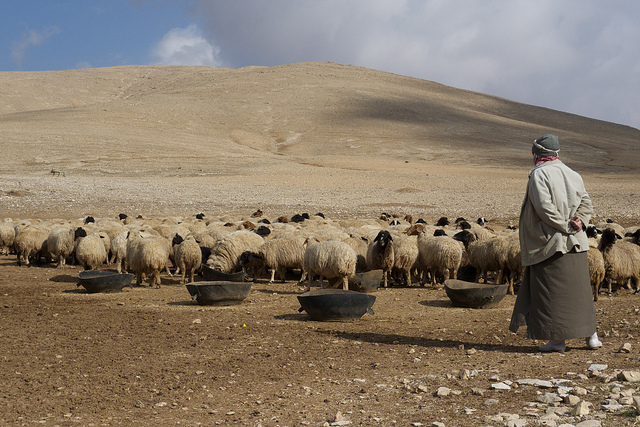
In March 2011, the political situation in Syria began to unravel. Syrians took to the streets in places like Homs and Hama in an uprising against president Bashar al-Assad, who responded with mortar and grenade attacks. The intensity of the conflict only increased in subsequent months and now the political situation appears at breaking point. For example, farmers and herders in Syria are being forced to deal with political instability, recurrent drought and also the lack of funds donated to humanitarian programmes in the country.

Has Israel Become a Petrostate?

6

Why does Israel so lag Arab neighbors like Morocco and Egypt in its renewable energy production?

I do not understand how the nation that invented CSP solar thermal – the solar energy that now powers much of the worlds gigantic utility-scale solar plants – can be just now announcing some tiny 35 MW solar project as its “largest ever!” – and Spain’s Solaer group that is supposedly to build it; doesn’t even have a website – when Morocco is building its first 500 MW plant with international energy giant Siemens.

Can anyone tell me what’s going on? I have never lived in the Middle East region, unlike the rest of the local bloggers here at GreenProphet – perhaps I’m missing something that is rather obvious to the rest of you.

In the US, only our fossil states are as backward in renewable energy development.

Hanging Balcony Gardens a Beautiful Solution for the Urban Farmer

1

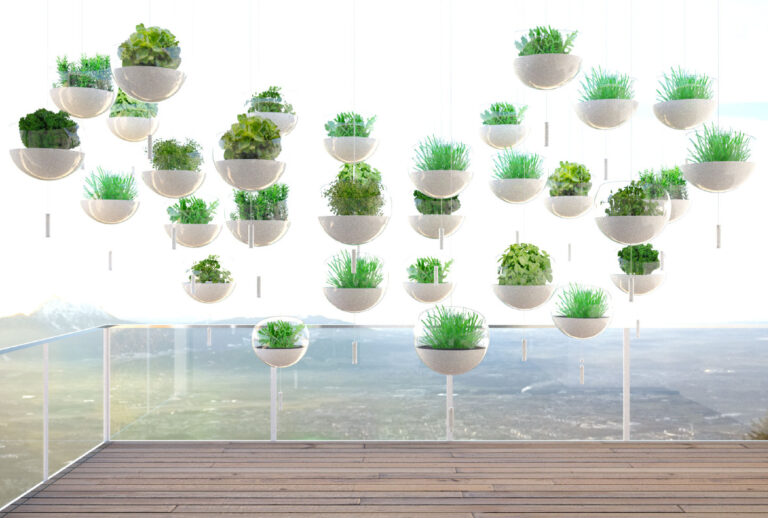
"balcony hanging garden"Urban gardens don’t have to be restricted to rooftops alone – they can flourish on balconies, where everyone can see them.

There’s a bit of a paradox within the guidelines for environmentally friendly living.  It is widely agreed upon that dense urban living is better for the environment, but it is also true that it is eco-friendlier to live closer to your food sources (to reduce the polluting transportation that brings your food to you).  And therein lies the grub: it’s tough to be close to your food sources when you live in a dense, urban environment.

Which is why urban environmentalists have been trying to find ways to bring their food sources closer to home.  Most of these solutions have come in the form of rooftop gardens, which are an excellent choice and even help insulate buildings.  But balconies are also a good way to make cities a little greener, especially in the Middle East where balconies can be used for much of the year.

Malta to Get State-of-the-Art Floating Wind Farm from Hexicon

3

Hexicon-Malta-10percent
Sweden’s Hexicon to supply Malta with 10% of its electricity with a platform-mounting floating wind farm

Despite the fact that the EU is willing to fund renewable energy in its climate laggard states, using cap & trade revenues from the sale of emission allowances, Malta still gets only 1% of its electricity from renewable energy. This is by far the worst performance in the EU. Only Cyprus has done as little.

The EU as a whole averages 20% renewable energy now, led by nations like Germany, Spain and Denmark, as a result of the tough climate legislation that EU members have agreed to, that led to the development of a whole new clean energy industry.

As an EU member Malta is required to produce at least 10% of its energy from renewables by 2020. But it has moved just in time to meet the target.

The Swedish company Hexicon has filed a project description statement (PDS) with Maltese authorities for an intriguing offshore wind farm with 36 turbines set on a hexagon-shaped 460-metre-wide platform.

Jordan’s Green Fairytale- ‘Once Upon A Water’ Campaign

0

Launched by 7iberINC, Once Upon A Water aims to tell the story of Jordan’s vanishing water supply and how they can have a ‘happily ever after’

According to the WHO, Jordan has one of the lowest water resource availability per capita in the world. By the year 2025, if current trends continue, per capita water supply is expected to fall from the current 200 cubic meters per person to only 91 cubic meters, putting Jordan in the category of having an absolute water shortage. The Once Upon A Water In Jordan campaign, launched by the influential 7iber media site, is hoping to raise awareness of this dire water situation and also encourage Jordanians to take positive action now.

Green Roof Architecture in Kuwait

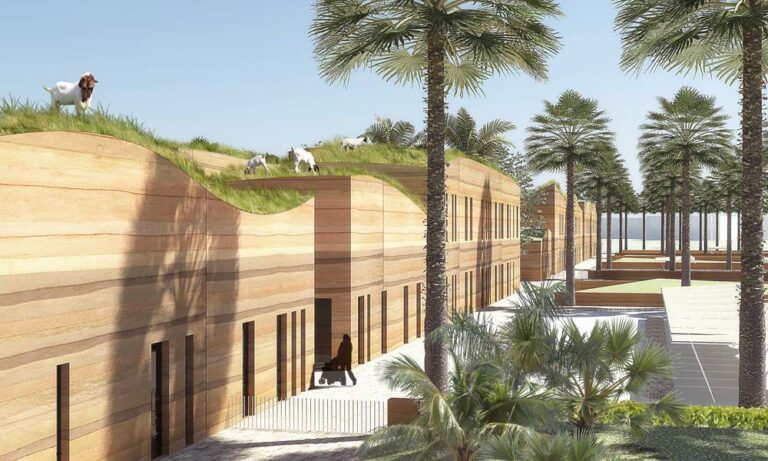
green building, green roof, Kuwait, Perkins + Will, green design, sustainable design, green architecture, eco-architecture, agriculture, fertile crescent, green schoolKuwait used to have a strong agricultural movement, which this new school will hopefully help to revive.

When we think of Kuwait, not only do we have a hard time getting past the young hunter who killed a wolf and then posed for a series of family shots, but we also envision an unforgivable industrial landscape pocked with oil drilling platforms and desalination plants. While not entirely inaccurate, present day Kuwait belies a fertile past. Educators are hoping to reinvigorate “the Cradle of Civilization” with a new green roofed school designed by Perkins + Will that promotes hands-on agricultural learning.

How Obama Can Slow the Rising of the Oceans with World Bank Appointee

0

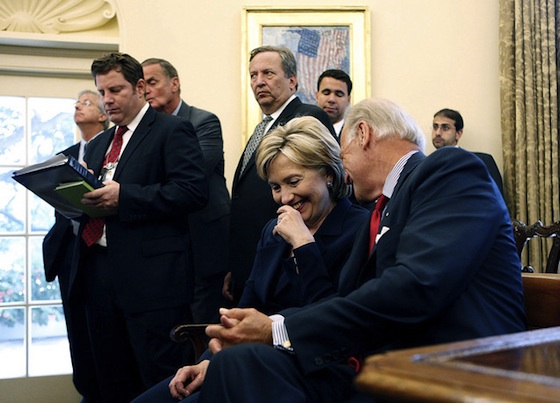
clinton-summers-world-bank-president

Over the next few weeks, President Obama has a fateful personnel decision to make, and one that will influence the world’s climate, in a way that he has been unable to do through the recalcitrant billionaire-funded opposition congress in the US.

World Bank President Robert Zoellick, a Bush-appointee, will step down in June, and President Obama is responsible for proposing the selection of his replacement.

The World Bank made $57 billion in loans in the last fiscal year, and much more in carbon credits that create private financing of renewable energy – and its focus is on the developing world. It can either invest in dirty coal in developing regions in North Africa, or in renewable energy development.

(Some examples I’ve  covered here – World Bank Grants Egypt 1.2 Billion Egyptian Pounds For Wind,World Bank to Fund Massive Grid Expansion To Link Desertec Could Morocco be First to Get 42% Solar? and World Bank to Fill in till Global Climate Deal?)

So the leadership of the World Bank is crucial at a time in world history when decisions about how the last two billion get their energy will decide whether or not “this was the moment when the rise of the oceans began to slow and our planet began to heal” as candidate Obama promised.