PEOPLE Festival returns to Berlin’s Funkhaus this October, bringing 180 musicians together for a week of collaboration, improvisation and more than 200 one-off performances.
Teletherapy can make mental health care easier to access by reducing travel, scheduling and location barriers. Here are six ways virtual therapy can help people connect with professional support more easily.
A coworking space within walking distance can cut commuting time and give you a reliable place to work, but distance alone does not make it useful. Test the internet, noise, privacy, desk setup, environmental claims and real cost before committing to a membership.
PEOPLE Festival returns to Berlin’s Funkhaus this October, bringing 180 musicians together for a week of collaboration, improvisation and more than 200 one-off performances.
Teletherapy can make mental health care easier to access by reducing travel, scheduling and location barriers. Here are six ways virtual therapy can help people connect with professional support more easily.
A coworking space within walking distance can cut commuting time and give you a reliable place to work, but distance alone does not make it useful. Test the internet, noise, privacy, desk setup, environmental claims and real cost before committing to a membership.
PEOPLE Festival returns to Berlin’s Funkhaus this October, bringing 180 musicians together for a week of collaboration, improvisation and more than 200 one-off performances.
Teletherapy can make mental health care easier to access by reducing travel, scheduling and location barriers. Here are six ways virtual therapy can help people connect with professional support more easily.
A coworking space within walking distance can cut commuting time and give you a reliable place to work, but distance alone does not make it useful. Test the internet, noise, privacy, desk setup, environmental claims and real cost before committing to a membership.
PEOPLE Festival returns to Berlin’s Funkhaus this October, bringing 180 musicians together for a week of collaboration, improvisation and more than 200 one-off performances.
Teletherapy can make mental health care easier to access by reducing travel, scheduling and location barriers. Here are six ways virtual therapy can help people connect with professional support more easily.
A coworking space within walking distance can cut commuting time and give you a reliable place to work, but distance alone does not make it useful. Test the internet, noise, privacy, desk setup, environmental claims and real cost before committing to a membership.
PEOPLE Festival returns to Berlin’s Funkhaus this October, bringing 180 musicians together for a week of collaboration, improvisation and more than 200 one-off performances.
Teletherapy can make mental health care easier to access by reducing travel, scheduling and location barriers. Here are six ways virtual therapy can help people connect with professional support more easily.
A coworking space within walking distance can cut commuting time and give you a reliable place to work, but distance alone does not make it useful. Test the internet, noise, privacy, desk setup, environmental claims and real cost before committing to a membership.
PEOPLE Festival returns to Berlin’s Funkhaus this October, bringing 180 musicians together for a week of collaboration, improvisation and more than 200 one-off performances.
Teletherapy can make mental health care easier to access by reducing travel, scheduling and location barriers. Here are six ways virtual therapy can help people connect with professional support more easily.
A coworking space within walking distance can cut commuting time and give you a reliable place to work, but distance alone does not make it useful. Test the internet, noise, privacy, desk setup, environmental claims and real cost before committing to a membership.
PEOPLE Festival returns to Berlin’s Funkhaus this October, bringing 180 musicians together for a week of collaboration, improvisation and more than 200 one-off performances.
Teletherapy can make mental health care easier to access by reducing travel, scheduling and location barriers. Here are six ways virtual therapy can help people connect with professional support more easily.
A coworking space within walking distance can cut commuting time and give you a reliable place to work, but distance alone does not make it useful. Test the internet, noise, privacy, desk setup, environmental claims and real cost before committing to a membership.
PEOPLE Festival returns to Berlin’s Funkhaus this October, bringing 180 musicians together for a week of collaboration, improvisation and more than 200 one-off performances.
Teletherapy can make mental health care easier to access by reducing travel, scheduling and location barriers. Here are six ways virtual therapy can help people connect with professional support more easily.
A coworking space within walking distance can cut commuting time and give you a reliable place to work, but distance alone does not make it useful. Test the internet, noise, privacy, desk setup, environmental claims and real cost before committing to a membership.
A bird-brained theory: Turkish farmers suspect a European bee-eater found in their fields of spying for Israel.
When a farmer in Gaziantep province in southeastern Turkey came across a dead bird in his field several days ago, he thought nothing of it — until he noticed a band around its leg, reading “Israel Tel Aviv”, and that its “nostrils were very different from other birds’, and very wide.”
The local police station was alerted, and a police intelligence force has taken the bird away for inspection, according to Habertürk.
After a full year of planning, O*GE’s hard curatorial work at the Castro street art project in Jaffa has finally paid off. In one of the most surprising marriages of fashion, design and urban art we’ve seen to date, the Israeli-based clothing company invited more than a dozen internationally-acclaimed street artists to work with their fashion designers to create a fascinating summer collection.
But there’s more. In order to provide a showcase of both the street art and clothing, O*GE designed a pop-up shop made of shipping containers, which is currently on show at Hangar 2 at Jaffa Port just south of Tel Aviv, and the graffiti artists are manifesting scaled versions of their work that has been immortalized on t-shirts sold at Castro stores around the world.
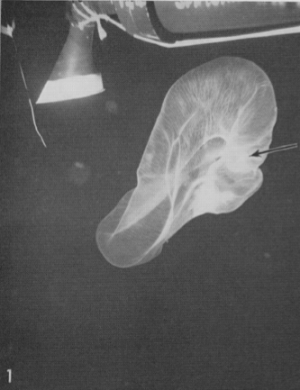
A mysterious strange creature, baptised “cascade creature” has been allegedly filmed during deep-sea drilling 5000 feet below sea level near the United Kingdom on April 25.
Theories about the species of this animal ranged from a jellyfish to an unknown marine version of the Loch Ness monster to a whale placenta. But a new undiscovered species was also a likely conclusion- especially given that ocean depths remain one of the least explored and understood places, in fact we know more about the moon than our own oceans.
Experts like Southern Cross University marine biology lecturer Dr. Daniel Bucher, believed that the creature resembled “a very unusual shape deep sea jellyfish”, the sex organs gave it away he said:
“In last the 30 seconds or so you start to see more of the structure, these pendulous tubes with four or five whitish structures and some branching between them, which look to me like the gonads of a jellyfish”.Others believed that the creature was a Stygiomedusa Gigantea jellyfish which can grow up to six meters in length and has only been spotted 114 times in 110 years.
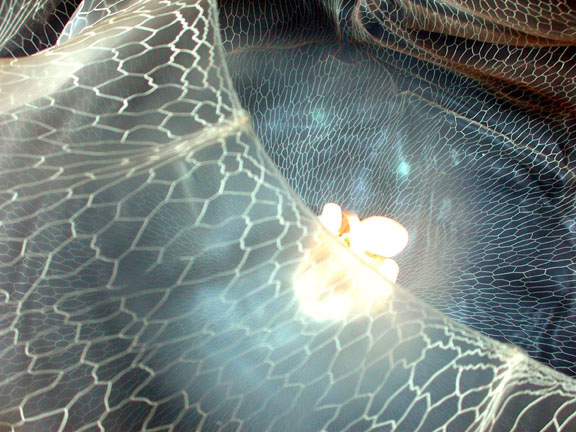
But alas the verdict has been finally reached after a month of internet discussions , the species is in fact a (collapsed ) Deepstaria Enigmatica, a rare jellyfish species that resembles a translucent satin sheet or “lava lamp”.
This species was first captured on camera in 1967 (below) and described similarly to the species caught in the video.
If you’re anything like me, you never memorized the periodic table and probably never will, but understanding what its symbols represent is becoming increasingly important – because many of them are running out. Enter 94 Elements, a global filmmaking project which aims to create beautiful short films that depict the every day, personal uses of each element – from Hydrogen to Plutonium.
Remember Germanium? It is used as lens coating on surgical microscopes, so one film follows an elderly man in India who reminisces about sight, lovers and childhood while waiting to undergo eye surgery. And that’s just one element. Although award-winning filmmakers are behind the project, there will also be opportunities for novices to pitch films about an element that speaks to them.
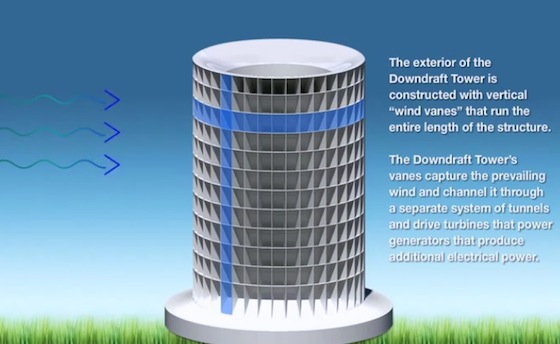
Can the Energy Tower slated for US Mexico border create clean power and mitigate climate change? If Americans put Man on the moon, why not, argues Brian.
Professor Dan Zaslavsky and Dr. Rami Guetta from Technion-Israel Institute of Technology are trying to develop an idea first patented by Phillip R. Carlson in 1975. In what is known as a downdraft energy tower, water is sprayed onto solar heated air at the top of a hollow tower. Now cooled and denser, this air falls rapidly to the bottom of the tower where it drives turbines and generates electricity. Annapolis Maryland – based Clean Wind Energy Tower, Inc (CWET) has plans to build two such towers near the US – Mexican border in San Luis, Arizona. At 3000 feet, the tower’s height will surpass Burj Khalifa, but unlike most skyscrapers, this one is designed to give more than it takes, in the form of clean electricity.
What if industrial building managers could see exactly how much energy their building is using, where in the building that energy is going, and how much it is costing them at every moment to use that energy? How much energy could be saved?
One Israeli company is bringing a new device to market that will make all these things possible: Panaromic Power has developed a self-powered wireless circuit sensor that can collect data on energy usage, integrate it, and relay that information in real-time, through a cloud-based (SaaS) P3E platform, to a single dashboard.
This wood waste may not look like fuel for a solar power plant, but it soon could be in Egypt.
A consortium of European governments, universities and research institutions are funding an innovative solar/biomass hybrid power plant test, coordinated by Italy’s national energy agency, ENEA. The EU is funding the pilot Concentrated Solar Power (CSP) project in Egypt with 11,755,049 Euros, through the EU Seventh Framework Programme.
The project will test units that can produce electricity from two renewable sources. The solar energy is to come from a concentrating solar power technology using molten salts as the heat transfer fluid, the same way that Masdar’s Gemasolar plant in Spain works, in the first 24-hour solar power plant in the world.
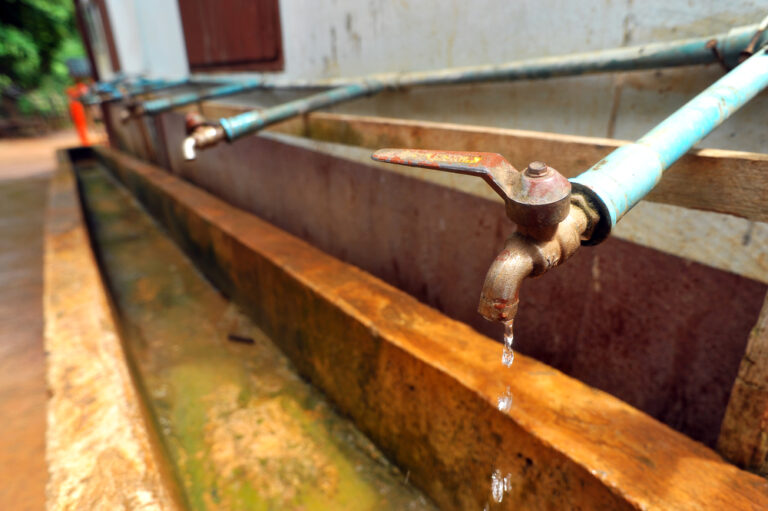
Although water scarcity is unlikely to lead to water waters, it is still devastating for the development and survival of any nation
The latest report by the Arab Forum for Environment and Development (AFED), “The Green Economy in a Changing Arab World”, definitely doesn’t make for happy reading. In fact, it is positively terrifying. According to the report, Arab countries could be facing a severe water crisis as early as 2015, with the region’s estimated annual per capita water share at less than one-tenth of the global average. That would bring it to just 500 cubic metres per capita – anything below 1,000 cubic metres is considered to pose a “significant constraint to economic development, health and well-being”. All these findings point to the fact that we are slowly but surely running out of time.
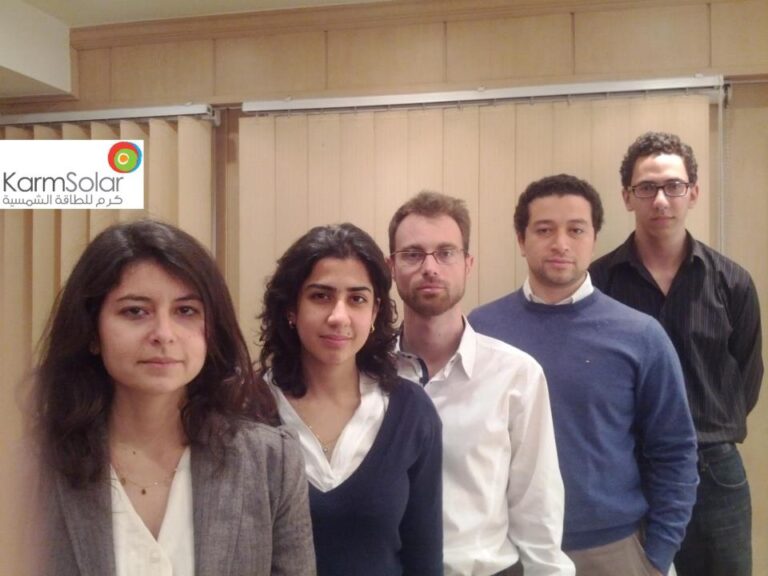
A dynamic young Egyptian firm has won an $11,000 innovation prize for an off-grid, solar-powered water pump. Judges of the first HCT-Wharton Innovation Tournament held last week in Abu Dhabi were impressed by KarmSolar because their design could easily have a high impact on great numbers of people, reduce dependency on diesel, and it would be quick to roll out.
Which is exactly what the firm hopes to do with their prize money: commercialize the pump as soon as possible in order to provide highly efficient off-grid irrigation to agricultural farms in rural Egypt.
Down side of crop dusting is pesticides that cause neurological damage: photo by Alberto Denkberg/Haaretz
Air and water pollution in Israel from insecticides, oil and other petroleum-based residues from older gas stations; and other chemicals are feared to be causing neurological damage to people according to new studies. Various forms of insecticides, especially the use of insecticides containing three types of organophosphate substances will be stopped in two months by the Israel Health Ministry, according to the Israeli newspaper Haaretz.
Emirati malls suffer a blistering review in a 21 minute podcast on green retail.
Radio station Dubai Eye 103.8 FM (which not long ago featured Green Prophet here) recently broadcast an interview with Buro Happold’s expert in sustainability and alternative technologies, Robert Cooke. Cooke, who is also Technical Committee Coordinator of Emirates Green Building Council, begins by saying malls in the United Arab Emirates are getting greener, then serves up a proper tongue-lashing on their environmental shortcomings. Click below to give a listen and to hear some straight talk about un-green retail; and the learn about the newest sustainability rating system coming online.
It has been a year since the HAAZ Design and Art Gallery in a popular shopping district of Istanbul received a sustainable upgrade from renowned designers Global Architectural Development (GAD), but the vibrant space continues to shine. As space and materials become increasingly limited in cities everywhere, it is more important than ever to make do with existing buildings.
But GAD does more than that. Their deft transformation of this double-storey apartment is art in itself – from zigzagging oak floors to graphic wallpaper, their signature light touch both meets and enhances the eclectic vision of gallery owners Özlem Avcıoğlu and Murat Patavi to create an almost otherworldly experience.
[youtube]http://www.youtube.com/watch?v=8Hh0-lxNqoo[/youtube] Earlier this month, Japan ended its love affair with nuclear power. Does Jordan begin where Japan left off?
Environmentalists applaud the shutdown of Japan’s last working reactor, but economists are not as enthused. Before the Fukushima disaster knocked out four of their 54 reactors, atomic energy provided almost 30% of the country’s electricity. All remaining reactors have been taken offline for mandatory maintenance. Severing nuclear ties provides unprecedented opportunity to transform national energy policy: ideally, Japan will tap into renewables and step up efficientcy to fill their energy production gap.
Meanwhile, in Jordan, there’s potential to revise the power strategy before catastrophe demands.
Earlier this year, The Jordan Times reported that energy officials were readying to select a vendor for the country’s first nuclear reactor: a final decision was expected in March, despite growing public resistance.
Green Prophet’s interview with anti-nuke activist Basel Burgan attracted comments from both sides of the debate. Ayoub Abu-Dayyeh, lecturer on Environment and Energy at Zaytouneh University and part of UNESCO’s international committee on clean energy, was especially engaged.
The founder and President of the Environmental Conservation and Sustainable Energy Society (CASE), Dr. Abu-Dayyeh shares his views with Green Prophet.
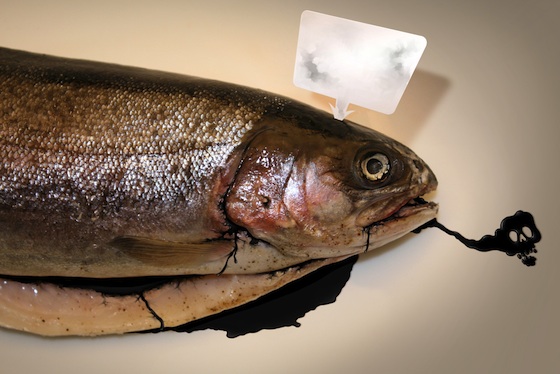
The seventh oil spill in the Red Sea since September, 2011 has gone virtually unnoticed. The most recent spill in Gamsha Bay, which has been attributed to General Petroleum Company, has received no additional press coverage after it was reported last week in Egypt Independent.
Both an onshore and offshore leak, it is particularly hazardous as large quantities of hydrogen sulfide gas are being released.
Director Hassan Abdel Salan said that the company is drilling an additional three wells to stem the leak, which appears to have been continuing over a period of several months, but blames Ministry of Environment researchers sent to evaluate the scene for failing to conduct thorough geophysical surveys.
Green Prophet has been unable to verify these reports but the local newspaper claims that General Petroleum has been fined $300,000 for their role in the spill. Even though Egypt is caught up in major political upheavals given the ongoing presidential race, if there is to be any hope of recovery, somebody ought to start paying serious attention to the country’s vulnerable natural resources.


 A bird-brained theory: Turkish farmers suspect a European bee-eater found in their fields of spying for Israel.


 Shining a light on energy consumption.
 Although water scarcity is unlikely to lead to water waters, it is still devastating for the development and survival of any nation