Home Blog Page 424

Women, Rio+20 and the Green Future of the Middle East

overpopulation, reproductive rights, women's rights, family planning, sustainable development, Middle East, futureOn Tuesday thousands of Turkish women and activists sent government ministries a petition protesting the bill proposed by the conservative Justice and Development Party (AKP) that would ban abortions not taking place between the fourth and sixth week of pregnancy. Turkish law currently allows abortion until the tenth week.

With dwindling environmental resources and rampant poverty exacerbated by rapidly growing populations, family planning is a crucial environmental issue across the Middle East.

According to a recent report by The Jordan Times almost 25 percent of births in Jordan are unplanned because of a lack of available family planning resources.

Iraq and Yemen have especially high fertility rates, with the potential to double their populations by 2100. Qatar and Bahrain also have steadily growing birthrates.

Protect your heart With bananas

1

bananas heart health

What’s sweet, good for you, and comes in completely biodegradable packaging? Bananas, of course.

Don’t let June’s seasonal fruit distract you from picking up a bunch of firm yellow bananas when you’re out shopping. Bananas are in season too, and considering all the easy, no-cook ways to eat them, it’s a pity to pass them by.

Consider, too, what an incredible superfood the familiar banana is. Bananas are rich in potassium, a mineral essential to keep blood pressure stable and your heart beating peacefully. Potassium is an electrolyte, a mineral important for healthy heart function and balance of water in the body. People on diuretics are often advised to eat a banana a day to replace potassium.

Banana’s high fiber content is another heart-health factor, especially combined with cereal fiber and foods high in magnesium. This wonder-fruit’s natural sweetness nourishes beneficial gut bacteria that help metabolize our food and boost calcium absorption. Think of home-made cornflakes with milk and a sliced banana. A breakfast like that helps make strong bones, moves digestion along, and keeps your heart fit. Not to mention that it’s quick to put together and tastes good.

image-home-made-cornflakes

Bananas are an antioxidant powerhouse with their high manganese, vitamin B6 and vitamin C content. A banana a day – together with an eco-conscious, well-rounded diet and exercise – can help keep the body fit to fight off stroke, cardiovascular disease, kidney failure, osteoporosis and macular degeneration. That’s a lot of nutrition in one sweet package.

Buy bananas green to ripen in your kitchen (in summer heat, this might take only a day or two). But don’t store them in the fridge, because they will never ripen again. Ripe bananas may be refrigerated, but make sure to take them out to reach room temperature again before serving.

Here are some ways to get those delicious, life-enhancing bananas into your life:

  • Blend up a morning smoothie with a banana, almond milk, and some honey or several pitted dates. For pizazz, drop two squares of fair-trade, 70% chocolate into the blender jar too.
  • Add sliced bananas, walnuts and honey to any cereal, hot or cold. Or pancakes. Or simple crepes.
  • Banana sandwiches aren’t only for kids. Make one on whole-wheat bread spread with cream cheese and sprinkle cinnamon over the bananas.
  • Try bananas halved horizontally and spread with a good nut butter for a snack.
  • An elegant, 1-minute dessert, good enough for company: a firm, ripe, peeled banana drizzled with date honey or maple syrup, with sliced almonds scattered over it.
  • Green bananas may be boiled in their skins or peeled, sliced and fried, Latin-American style. But they have less antioxidant properties than ripe ones.

More healthy and delicious foods from Green Prophet:

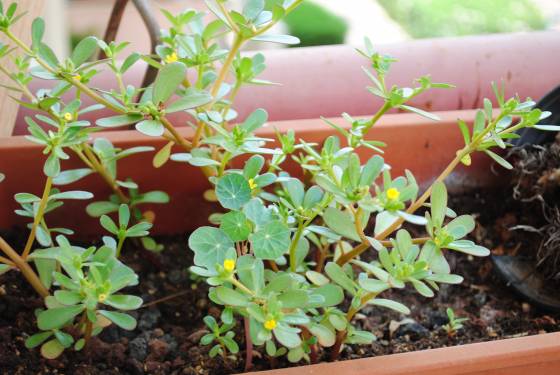
image-purslane

Coke and SodaStream Trash Each Other in Trademark War

9

waste management, trademark law, business, Coke, SodaStream, health, environment

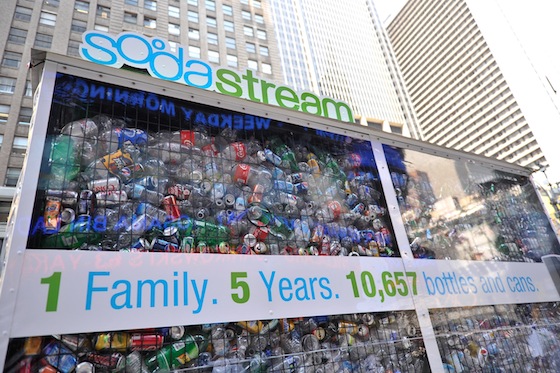
After SodaStream erected a cage full of Coke’s trademark trash in South Africa’s OR Tambo International Airport, the 20th such installation built around the world as part of the Israeli company’s marketing campaign, the powerful soda giant pulled out the big guns and hired litigation lawyers Adams & Adams to demand its removal.

Coke’s lawyers claim that SodaStream, a competitor, is making unauthorized use of their trademark in order to promote their own product and that their potentially damaging advertising campaign exists in contravention of the Authority’s Code of Advertising Practice (ASA) and common law. But SodaStream CEO Daniel Birnbaum refuses to back down. “It will take a lot more than a letter from a lawyer to shut me up,” he said – according to Forbes.

Trashing Coke

The SodaStream slogan depicted on the  airport cage full of coke cans and bottles (in addition to other brands) claims that families who buy their renewable product will spare 5,078 bottles and cans every three years. In five years, one family can save 10,657 cans and bottles, according to a sign attached to a cage full of trash in New York City.

By contrast, one SodaStream carbonator makes 60 or 110 liters, equivalent to 170 or 310 aluminum cans, according to the company’s literature. “When empty, the carbonator is refilled and reused, ready to make more fizzy and tasty soda whenever you want it.”

SodaStream also points out that whereas their product turns ordinary tap water into tasty flavored fizzy drinks (as though such a product is now a god-given right), bottled water companies sold 37 billion bottles in the United States in 2005.  “Bottled water wastes fossil fuels and water in production and transport, and when the water is drunk the bottles become a major source of waste,” the company claims.

Airport traffic and environmental awareness

But the campaign in South Africa has Coke worried, and so they should be. Between 2010 and 2011, nearly 19 million passengers traveled through the Johannesburg airport. That kind of exposure combined with increasing environmental awareness could be a lethal combination for Coke, which has established several waste-reduction campaigns in South Africa.

The lawyer’s letter demands that SodaStream not only remove “the cage,” but that they “undertake in writing to never use the company’s trademarks again or infringe on Coke’s advertising goodwill.

Despite having just 1% of Coke’s wealth and prestige, Birnbaum is staying the course.

“If they (Coke) claim to have rights to their garbage, then they should truly own their garbage, and clean it up. … We find it incredulous that Coke is now re-claiming ownership of the billion of bottles and cans that litter the planet with their trademarks… they should be sued in the World Court for all of the damage their garbage is causing, he said.

How green is SodaStream, really?

Meanwhile, it isn’t so clear that SodaStream’s environmental record is as sound as they would have the world believe. Our own editor-in-chief, Karin Kloosterman, says that “Sodastream has been around for years and is using the environment as a marketing tool. Most people I know buy a Sodastream for a friend’s wedding and the said machine goes out of use after the first canister of gas runs out.”

Daniel Birnbaum, invests in Seedo, Cannbit, was former CEO of Sodastream

It seems very unlikely that SodaStream will win this trademark war, but at the very least, the struggle draws attention to an ongoing debate: should beverage manufacturers be held responsible for reclaiming their waste, or is this up to the consumer?

Let us know what you think in the comments below.

More on Soda and the Environment:

Toxic Kosher Coke Banned During Passover

Heart Attacks in Kids for One or More Cokes a Day?

Vimto’s Moldy Soft Drink Recalled in Dubai

Green Prophet Hasn’t Given up on Egypt

4

Egypt, revolution, architecture, green news, rooftop farming, solar energy, Green Prophet

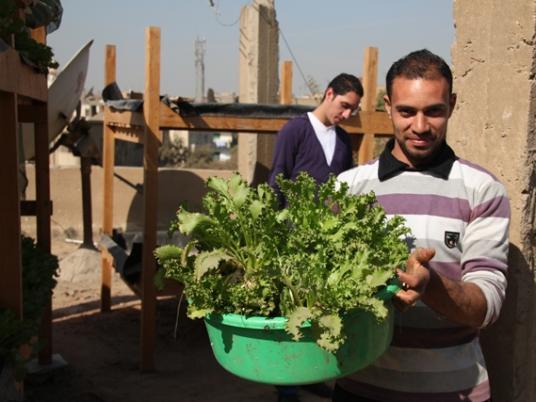
Green Prophet is heading into Egypt and we want to hear about all your growing green projects. Now more than ever environmentalists need to stay the course, to lay the groundwork for a better future so that when the powers-to-be (whoever they will be) finally sort out their mess, we will be ready.

Whether it’s rooftop farming, off-grid solar, fair-trade fashion, or earth-friendly architecture you’re interested in, we’re here for you. Contact me (Tafline Laylin, the Managing Editor) directly at [email protected] and I’ll give your project media coverage. Our international readership, which is growing day by day, wants to know that Egyptians are an eco-force to be reckoned with – even if it doesn’t seem that way now.

If you doubt us, check out the American University of Cairo’s Solar Decathlon team. At the height of last year’s revolution, they managed to push through their groundbreaking SLIDES project, gaining recognition as the first country from Africa or the Middle East to participate in the competition. Or hook up with the Hosny brothers at Schaduf, who are slowly helping low-income folk gain control over their lives again.

Despite the numerous challenges facing Egypt, ordinary citizens are making it easier to live a healthier life and to lighten their carbon footprint. The Sekem organic farm is world-renowned, eco-lodges abound and activists fight tirelessly to make their voices heard above the political din. We’re not going to lie: flying into Cairo at this turbulent time doesn’t sound nearly as awesome as snorkeling in quiet, mostly peaceful Oman, but we believe in Egypt.

And we’re ready to fight for a (much more) sustainable future.

TIGI’s Honeycomb Solar Collector Wins Big Euro Award

0

tigi honeycomb

Last Wednesday in Munich, Germany, Israeli solar energy company TIGI Ltd. was among the three winners in the solar-thermal category at the Intersolar Europe Exhibition, an annual forum promoting solar technologies since 1991.

Despite the fact that it is located in the Middle East, Israel is often included in Europe’s competitions and showcases, as with the annual Eurovision Song Contest and some regional sporting competitions.

TIGI won the Intersolar Europe award thanks to its “Honycomb Collector,” a new type of solar-thermal technology, pictured above, that increases the efficiency of the collector while minimizing heat loss.

According to the Israel Export Institute, this would make solar energy a sustainable resource even in less sunny climates, such as places in northern Europe.

IRENA to Pitch Morocco as Africa’s Renewable Energy Pilot at Rio+20

1

solar energy, desert, MASEN, Rio+20, IRENA, Morocco, AfricaRenewing Africa’s Energy Future is the theme of an International Renewable Energy Agency (IRENA) side-event scheduled to take place today at the Rio +20 conference underway in Brazil. Co-hosted by the government of Mozambique, this high-level meeting aims to spark a renewable energy revolution throughout the African continent, which supports 15% of the world’s population that in turn consumes a mere 5% of its generated energy.

As part of their negotiations with leaders throughout Africa, IRENA is pitching Morocco as the continent’s pilot country. Which makes sense given that MASEN is set to announce the winner of a tender to design, finance, construct, operate and maintain a 160 MW CSP plant near the southern city of Ouarzazate. Although the Solar Impulse journey has stalled, delaying the announcement, Saudi’s ACWA consortium seems set to win.

Morocco solar energy deals led by Saudi Arabia

0

Shams 1

ACWA rumored to win the contract to build a 160 MW CSP project in in the south of Morocco.

“We are going to opt for the offer made by the consortium of ACWA,” a source close to Morocco’s solar energy agency MASEN told Reuters. The source asked not to be named pending an official announcement due later this week.

ACWA Power International also investing in wind energy in the Middle East is the Saudi-based developer, owner and operator of utility-scale water and power projects. Traditionally, the power had been produced by fossil fuels, for example for the oil-powered water desalination that Saudi Arabia is dependent on.

But in a turnaround on fossil energy for the Saudi company, ACWA has become a world leader in bids for CSP projects. Since CSP is a form of solar power that uses the same “back end” – a thermal power plant –  as a coal or gas or oil plant does to make electricity from turbines driven by steam, the expertise a fossil energy company brings is adaptable to this form of renewable energy.  The solar field itself that removes the need to burn fossil energy to make heat, accounts for about half the scope of the project, and can be developed by solar partners.

For this $500 million project ACWA has teamed up with the Spanish engineering firm Aries Ingenieria Y Sistemas and TSK Electronica y Electricidad for the design, finance, construction, operation and maintenance.

The news follows the success last month of the ACWA bid to build the Bokpoort CSP project 600 km west of Johannesburg, South Africa in its selection as a preferred bidder.

Related: Saudi Arabian Solar Chosen by South Africa

ACWA says that it plans to make solar development part of its portfolio, to reach 5 percent, over the next two years. Saudi Arabia itself now plans an extraordinary amount of solar power, with $109 billion slated for the development of enough solar power to power a third of its domestic consumption of electricity, which is growing so fast that it threatens to take down its ability to export oil. The Kingdom says it wants to grow this solar economy domestically, and has taken steps to begin that, with the first ever poly-silicon refining.

More energy news:
Tour One of the Largest Solar Thermal Projects on Earth
Masdar Awards $600 Million Contract for ‘World’s Largest’ Thermal Plant
Low Carbon Economics Aligns With the Sharia Law of Islam


Lebanon’s Finally Looking at Racism and Human Rights Abuses in the Face

abused woman lebanon
Racism in Lebanon has rarely been an openly discussed theme in the media. Now racism and migrant abuse are garnering visibility.

Racial intolerance in Lebanon  and the Middle East,  is indeed a pervasive problem which especially affects migrant domestic workers and refugees. In Lebanon, manifestations of racism and human right abuses are unfortunately prevalent and perpetuated due to the limited legal assistance provided to victims, the weakness and the indifference of civil society factors in dealing with these phenomena, and the absence of a criminalizing and binding law that controls racist practices and human right abuses.

The first step in reforming and creating a system that supports its victims and criminalizes offenders is creating awareness. This is something that has been largely missing in Lebanon. But thankfully racial intolerant practices are now  being unearthed and awareness is being raised through hunger strikes and movements like the Anti-Racism Movement (ARM) which highlight several examples of racist practices such as tourist resorts that place signs banning  “radios, foods and maids” and that deny entry of customers because of their skin color.

SeaOrbiter: Construction to Start on Renewably-Fueled Research Vessel

1

SeaOrbiter, ocean, research, clean tech, renewable energy, solar-power, biofuel, NASA, Jacques Rougerie

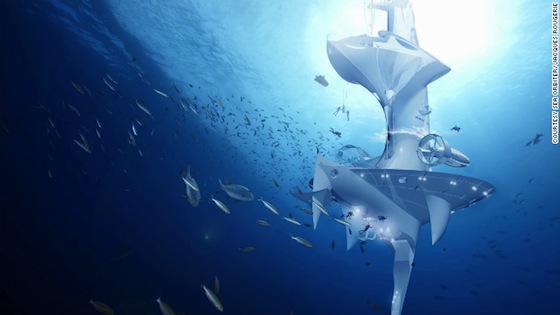
After 12 years of finalizing details and garnering institutional support for his deeply ambitious ocean-going research vessel, Jacques Rougerie has announced that construction on the SeaOrbiter is slated to begin in October. Currently the center of attention at France’s Expo 2012 exhibit in Yeosu, South Korea, the $43 million vessel will also be the world’s tallest ship at 58 meters. Half of it will be submerged underwater to allow scientists to conduct close research of the planet’s most unexplored spaces and the entire project will be powered with renewable energy.

Like Us on Facebook and Win an Organic Cotton Dress

32

Green Prophet, MuMu Organic, Facebook, organic cotton, fair trade, competition

It’s summertime, which means the ladies can finally break out their planet-friendly dresses and strut the streets in style, so we are giving you a chance to win the dress of your dreams from Greece’s very first organic clothing line. MuMu Organic is giving away one beautiful, handmade cotton dress made with the finest fair-trade materials (you get to choose) and a 50% discount on goods purchased from their e-shop to the first five Green Prophet readers who comment on this post.

How does it work?

i. First, tell us in the comment section at the end of this post why you think that buying organic clothing made in accordance with fair-trade principles is so important. 

ii. “Like” us here on Facebook and help us get to 6,000 likes by July 15th

 iii. Sign up here for our newsletter to get the best in environmental news from the Middle East and North Africa.

MuMu Organic was started in the beautiful Cyclades islands in 2009 by designer Athena Bentila and artist Roland Wakker. Their 100% organic cotton dresses are adorned with solid colors, playful patterns, charming colourful dots, and a very fine thread work pattern. They are available for purchase online and can be shipped anywhere in the world. Make sure to sign up for their newsletter for access to stay abreast of their awesome green happenings.

In order to be eligible to win the competition, readers must comment on this post, “like” us on Facebook and sign up for our weekly newsletter. Our judges will pick a name out of a hat and the winner will be announced on July 20, 2012. Although this one is for the ladies, gents are welcome to apply too. If you win, your significant other will thank you for the rest of the year!

To make it as easy as possible for you to enter, we suggest that you click on our Facebook and newsletter links so that they open in a new tab. Thanks for reading and good luck!

Emirati Student Designs a Green-Roofed Mosque Minus a Dome or Minaret

7

green roof, eco-mosque, solar-power, architecture, religion, green design, sustainable design, eco-design

We are at the edge of one of the most important epochs in religious architecture. Architects working on mosque designs are bound by energy and resource constraints in addition to escalating temperatures and the threat of rising seas, but they are also restricted by the expectations of tradition. Which is what makes Suhail Mohammed Suleiman’s graduation project so remarkable.

Although mosques have not always had minarets, it’s uncommon to find a contemporary mosque in the Muslim world that does not bear the familiar spire from which the adhan is called five times a day. But Suleiman eschews the status quo, calling for rooftop gardens and solar panels instead. And he has dedicated his project to Sheikh Mohammed bin Zayed – Crown Prince of Abu Dhabi in the hopes that it will be built on Saadiyat Island.

Does Wasted Groundwater Contribute to Rising Sea Levels?

0

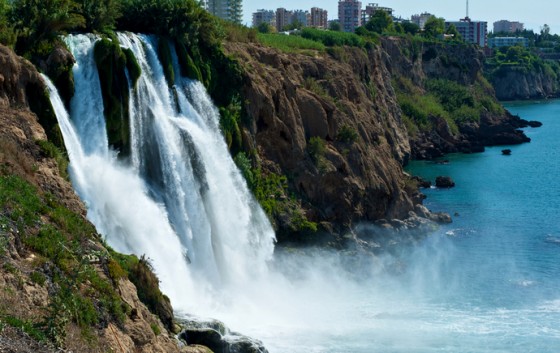
city water fall

Measuring sea levels in the face of global warming isn’t easy, but it’s important to understand on a global scale

Can wasted water contribute to rising sea levels? The answer is a global climate mystery.  Given the known increase in average global temperatures, the thermal expansion coefficient of water and the known loss of polar ice, the sea level should rise should be predictable.  But the actual rise is slightly higher than predicted. I’ll explain how this works. 

Sun-Believable Solar Nanotechnology Paint May Revolutionize Renewables

1

robotic painter nanotech
Paint researchers at University of Notre Dame go green, and not just ‘cause they’re the “Fighting Irish”

A team of scientists and engineers led by Professor Prashant Kamat is generating energy from solar paint.  Building on recent advances in semiconductor nanocrystal research, they’ve developed a one-coat solar paint for designing quantum dot solar cells.

Energy is created when this paste, made of semi-conducting nano-particles of titanium dioxide mixed with cadmium sulfide or cadmium selenide, is applied to a conducting glass surface and annealed at high temperature. Cadmium is a highly toxic metal historically used as a protective coating for steel and as an ingredient in creating red, orange and yellow pigments. This spreadable liquid mimics traditional paint, it’s applied via brushwork or spray painting.

Google Resorts to Going Green With Trash Talk

1

google earth day logo
Gmail offers recycling tips. Apparently, they’ve been doing this for years.

What rock have I been under? I was doing some email spring cleaning during an especially snooze-inducing conference call, and there in my Gmail Trash file, up popped a random recycling tip.  Newspapers can be reused as wrapping paper for gifts. I’ve been painting the New York Times classified for decades in lieu of Hallmark’s pricey wrapping, so this naturally appealed. But I’m fairly immune to advertising pop-ups, so it’s curious that this caught my eye.

Apparently, Google doesn’t monetize space reserved for Web Clips in their Gmail Trash folder. Instead, it offers clever enviro-tips and recycling facts in that folder’s top bar.

All Electric Renault Spotted in Netanya, Israel

israel electric car better place100% electric and driving around Israel: nothing plainer than that!

I’ve seen a Better Place Renault Fluence ZE all electric car in the suburban community of Ramat HaSharon, and more than five months after Better Place put 100 electric cars on Israeli roads I spotted another Renault Fluence ZE car in the city of Netanya. This spotting was in the south Netanya Sapir Industrial Zone, not far from that city’s IKEA furniture and accessory store.