Home Blog Page 404

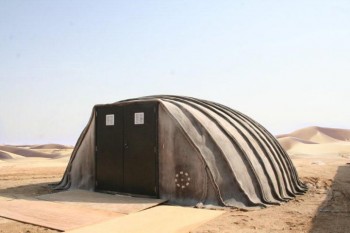
Buildings-in-a-Bag Can Instantly Aid Middle East Refugees

1

concrete in a bag saudi arabia

Groundbreaking “Concrete Cloth” allows ancient building material to be used in a totally new way.

Concrete Cloth is a pioneering “building-in-a-bag” that requires only water and air for construction: it was named material of the year in the 2011 Material ConneXions MEDIUM Awards.

Concrete is one of the world’s most popular building materials.

It follows a simple, ancient recipe: build a mold to form a desired shape; drop in some reinforcing (steel bars as example); mix cement, water, and rock aggregates; pour the mix in the mold and let it set up. It’s a great idea for housing refugees in Syria.

Libya’s Post-Revolution Trash and Traffic Problems

1

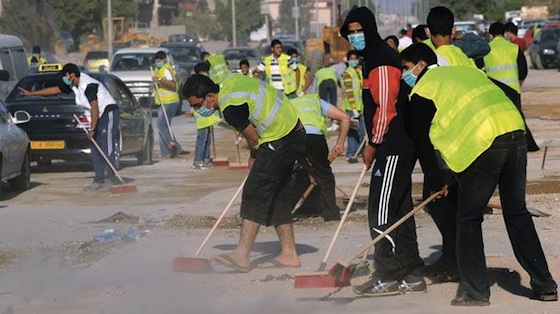
traffic-trash-libya-democracy-revolution-futureClear Libyan streets of trash and traffic for a brighter and more democratic future says expert

Security concerns in Libya may be top of the political agenda, but more goodwill could be earned if socio-economic problems such as traffic and trash are tackled says Rhiannon Smith, who is an economic development expert in Libya. Post-revolution, Libya is struggling with pressing security concerns, disunity and division along religious and ethnic lines. As such, political progress away from a long authoritarian past to a more democratic future has been painfully slow. The solution is tackling problems that all Libyans face and there isn’t more that unites Libyans in despair than the traffic and trash problem.

New Israeli Cemeteries Focus on Dense Burial…and Adding Charm

2

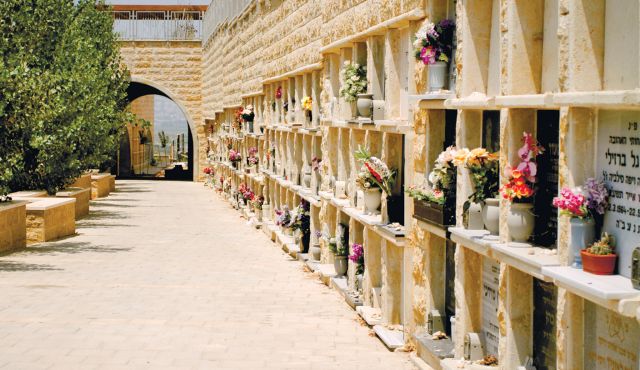
dense burial niche israel flowersHigh-rise necropolises offer a greener way of dense burial and a dignified appearance to comfort mourners.

Having buried two loved ones in Israel myself, I know how wearisome field cemeteries are. Arriving on foot, I trudge along winding interior roads for long minutes, sweating and squinting against the glare in summer or huddling under a dripping umbrella in winter. No matter how often I’ve visited the graves, unfamiliar new roads built to accommodate fresh burial grounds disorientate me and I lose my way. According to Israel’s Central Bureau of Statistics, the current yearly death rate stands at 5.3 per 1000 people, so new roads and burial grounds must be expected.

Camel Meat Catching on in Canada

0

camel meat dried canada torontoToronto eateries now offer camel burgers and kangaroo kebabs.

Emiratis are addicted to Canada’s premier doughnut chain, Tim Horton’s.  So it makes for kharmic culinary balance that Torontonians chomp a North American staple with a crazy MidEast twist: camel burgers. Casbah, a food kiosk in downtown Toronto, serves up camel burgers. “It’s very healthy, and it has no fat,” Casbah owner Dali Chehimi told CBC news.

He sources his camel meat from Whitehouse Meats in St. Lawrence Market, who ship it up from Australia (where camel culling is helping to reduce feral camel populations in the Aussie outback). Whitehouse Meats also offers camel for home consumption. It’s a staple in North Africa, the Middle East and, increasingly, parts of Europe.  But in North America, camel meat has a bit of a hump to get over before going mainstream. The butchers also sell emu, musk ox, caribou and ostrich.

What Can Islam Do For The Environment?

5

islam-environment-climate-change

What can Islam do for the environment? That’s a question I have been asking myself for some years now and, in all honestly, I am nowhere near answering it fully. I have definitely enjoyed looking into the green ethics of Islam in a bid to help Muslims worldwide take up the environmentally-friendly path, but I still have lots of questions.

Like how can we get Muslims to embrace the greener side of Islam?
How do we translate belief into action? How do green Muslims, who are coming at the climate change issue from a different perspective, link up with more mainstream and non-faith green organisations?

Embracing geo-engineering as ‘Plan B’ is not only dangerous as the outcomes of planetary-scale experiments are highly uncertain; it is undemocratic, irresponsible and ignores the fact that we have a perfectly good ‘Plan A’ – to cut our emissions.

We just need better ways of convincing people to do that. One area that is commonly overlooked when exploring ways to encourage greater climate awareness and action is faith and religion. Islam, in particularly, which is perceived as the faith of oil-rich sheikhs is sidelined with sparse academic research highlighting the insights Islam has to offer an environmentally vulnerable planet.

The primary source of all Islamic thought and practice, the Holy Qur’an, is full of exhalation of nature, its beauty and the need to protect it. Nature is portrayed as God’s glory, a gift of sustenance and humanity is divinely ordained responsibilities to care for the natural world and keep the harmony and balance placed within it.[1]

In the Qur’an there are “ample instructions as well as warnings to the faithful not to abuse their power in dealing with the environment. Distortion of the natural order and ill-treatment of God’s creatures, whatever they are, are considered as sins that lead to punishment.”[2] Wastefulness is discouraged and excessive consumption or greed is actively prohibited. Indeed, the Prophet Muhammed warned his followers to not waste precious resources such as water and encouraged them to protect land and improve its fertility.

With this in mind, it is not hard to make the link between Islamic ethics and the need to curb our excessive use of non-renewable resources such as fossil fuels which are poisoning the air and land. As such, Islam has “the capability of helping to solve one of the greatest problems of our time, namely that of ‘the environment’.

Islam need not be a hindrance, but could be a great help, in educating the faithful about good environmental conduct.”[3] Cairo, the Islamic capital with one thousand minarets, is one of the most polluted cities in the world and Bangladesh and the Maldives – which are both Muslim nations – will be the worst affected countries when climate change hits due to flooding and droughts. [4] Indeed, environmental problems plague many Muslims countries whether it be deforestation in Indonesia, desertification and over-development in the Middle East or drought in North Africa.

These nations and many others have everything to gain by tackling climate change and environmental pollution by embracing the green ethics of Islam. Today, the Muslim faith commands influence (to varying degrees) of 18% of the world’s population and covers a very large area where some of the greatest environmental problems exist. [5] As such, highlighting the green tenants of the Islamic faith is hugely beneficial to tackling climate change and may become increasing useful with the predicted doubling of the Muslim population by 2030 to 26.4%.[6]

If Muslims across the world garner greater awareness of their Islamic duties to the environment, it also perceivable that they would be able to pressure their governments into making the right ‘green’ decisions when it comes to water, food, recycling and energy use. It would also mean that rich Gulf Muslim nations such as Saudi Arabia, Kuwait and Bahrain wouldn’t be as obstructive at important climate summits if their populations could rally for the environment based on Islamic tenants. [7]

[1]   Murad M. Islamic Environmental Stewardship: Nature and Science in the Light of Islamic Philosophy in Union Seminary Quarterly Review, (2011) Vol. 63: pg147-8
[2]   Kula, E. (March 2001) Islam and environmental conservation. Environmental Conservation: Vol. 28 (Issue 1), p4.
[3] Kula, E. (March 2001) Islam and environmental conservation. Environmental Conservation: Vol. 28 (Issue 1), p7.
[4] N. Ammar, Islam and Deep Ecology, in D. Landis and R. Gottlieb, Eds., Deep Ecology and World Religions: New Essays on Sacred Grounds (State University of New York Press, 2001), p193.
[5] Ibid, p2.
[6] Jones, H. (January 27 2011) 2.2 Billion: World’s Muslim Population Doubles. TIME. http://newsfeed.time.com/2011/01/27/2-2-billion-worlds-muslim-population-doubles/
[7] Sanchez, R. (November 11 2011) US ‘blocking’ climate change fund ahead of Durban conference. The Telegraph. http://www.telegraph.co.uk/earth/environment/climatechange/8914511/US-blocking-climate-change-fund-ahead-of-Durban-conference.html

Image of sitting bedouin and donkey from Shutterstock.com

For more on Islam and climate change:

Green Iftar Guide – Breaking the Ramadan Fast Sustainably

How Islam Could Help Fight Water Scarcity

Islam’s Environmentally Friendly Architecture – Where Did It Go?

Jordan Puts Gender At Heart of Climate Change Policies

1

gender-climate-change-women-jordanJordan has become the first Arab country to ensure national climate change efforts include gender considerations

Jordan’s environmental record may be patchy but as one of the most climate change-vulnerable nations in the Middle East, it is taking climate change seriously. It has now also become the first Arab nation to include gender considerations as one of the adaptation priorities in the National communication on climate change, which will be submitted to the UNFCC. The significance of this is hard to gauge as it’s all just reports and writings right now, but it does entail the acknowledgment of “women’s effective role and allowing women’s empowerment to provide a vital springboard for addressing climate resilience.”

According to Ahmad Qatarneh, the secretary general of the Ministry of Environment, the department has also engaged the Jordanian National Commission for Women to integrate the environmental sector, with a focus on climate change, in the next Strategic Plan of Jordanian Women for 2011-2015. See the list of proposed actions and also our very own list of female eco-warriors from Jordan after the jump.

5 fresh fig recipes for summer snacking, Middle East style

0

fresh figs recipes

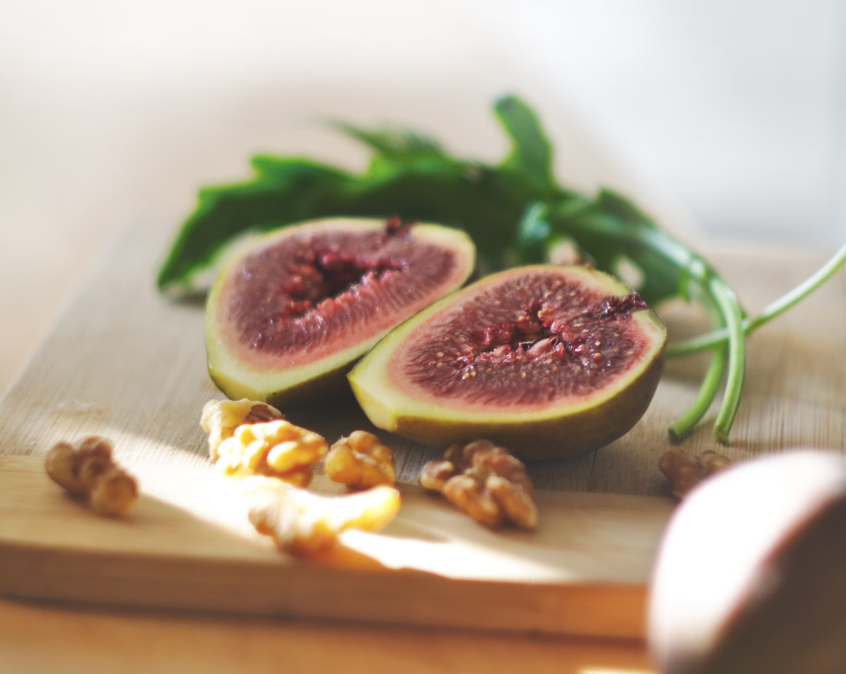
Luscious fresh figs linger in our summer markets. Enjoy these simple ways of eating them while they last.

Figs are fruit so evocative of summer that just looking at a picture of them brings back vacation time – or just a summertime kitchen with the sun streaming through the window. Figs, with their mildly honeyed flavor, are one such fruit. Tomatoes, of course, another: see our Syrian tomato salad and our seasoned, slow-roasted tomatoes.

It’s so easy to dress a dish with fresh figs.

Here are five different ways.

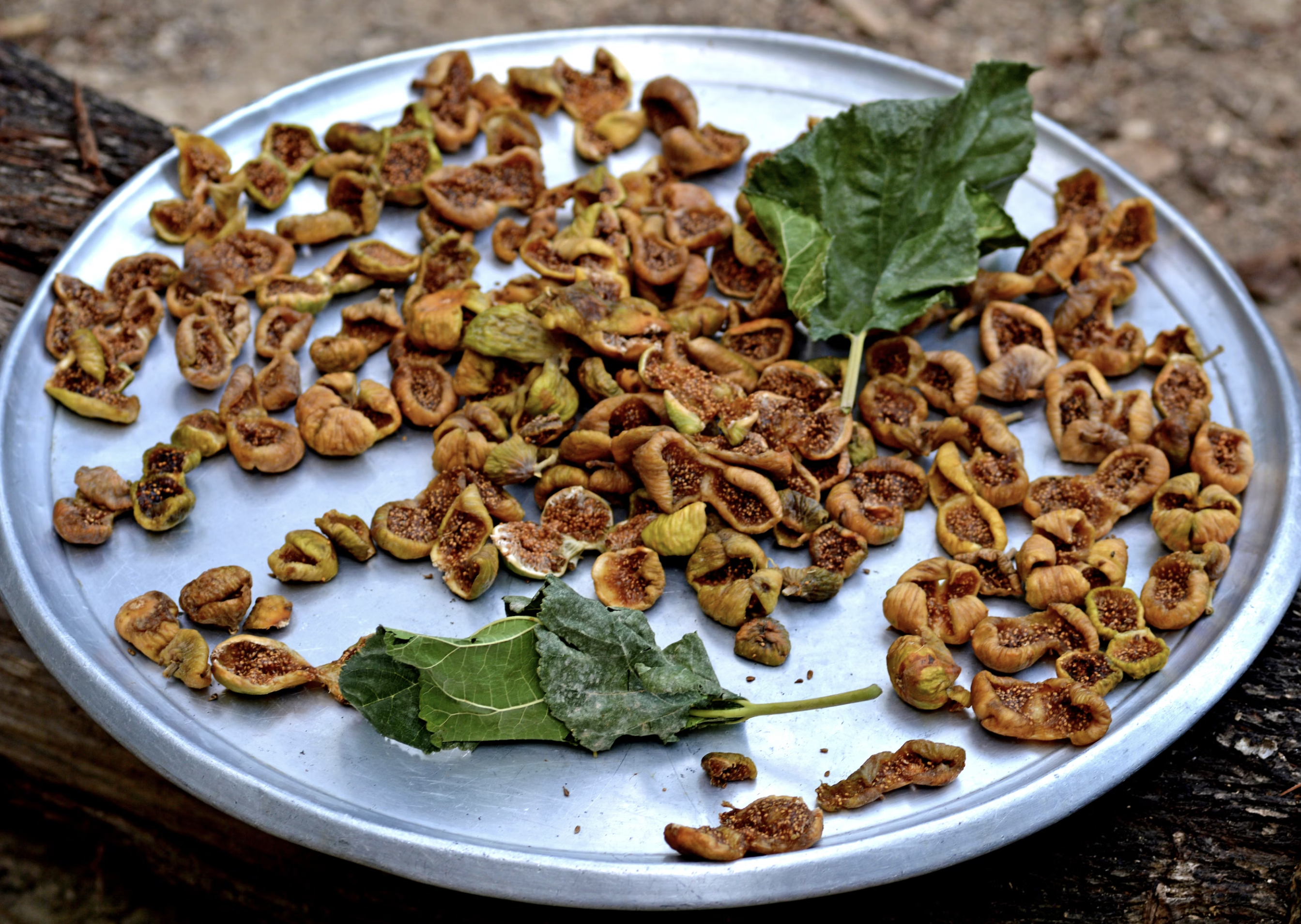
Dry your figs in the sun

1. Try a salad of two or three kinds of lettuce with chunks of feta and quartered fresh figs. Drizzle olive oil and balsamic vinegar over the salad and toss lightly.

The sweet figs will set off the cheese’s saltiness and the mild acidity of the vinegar, making a perfect, and perfectly easy salad.

2. Grilled Figs Stuffed with Feta Cheese

Make a cut about half-way through the side of each fig. Stuff with feta cheese. Brush the figs with a mixture of dark honey and oil. Grill about 10 minutes.

Drink a rosé wine with this.

3. Add sliced figs to your breakfast cereal. Yup.

4. Poach figs in a hot syrup of 50% red wine and 50% sugar.

Simmer for 20 minutes on low heat, turning over once. Serve cold with whipped cream.

5. Make a fresh fig sauce to accompany organic roast chicken or other poultry: blend 1 cup quartered figs with 1 tablespoon balsamic vinegar and 2 tablespoons olive oil.

Add a little salt and black pepper to taste.

Enjoy!

More figgy adventures on Green Prophet:

Date rape straw can taste GHB

8
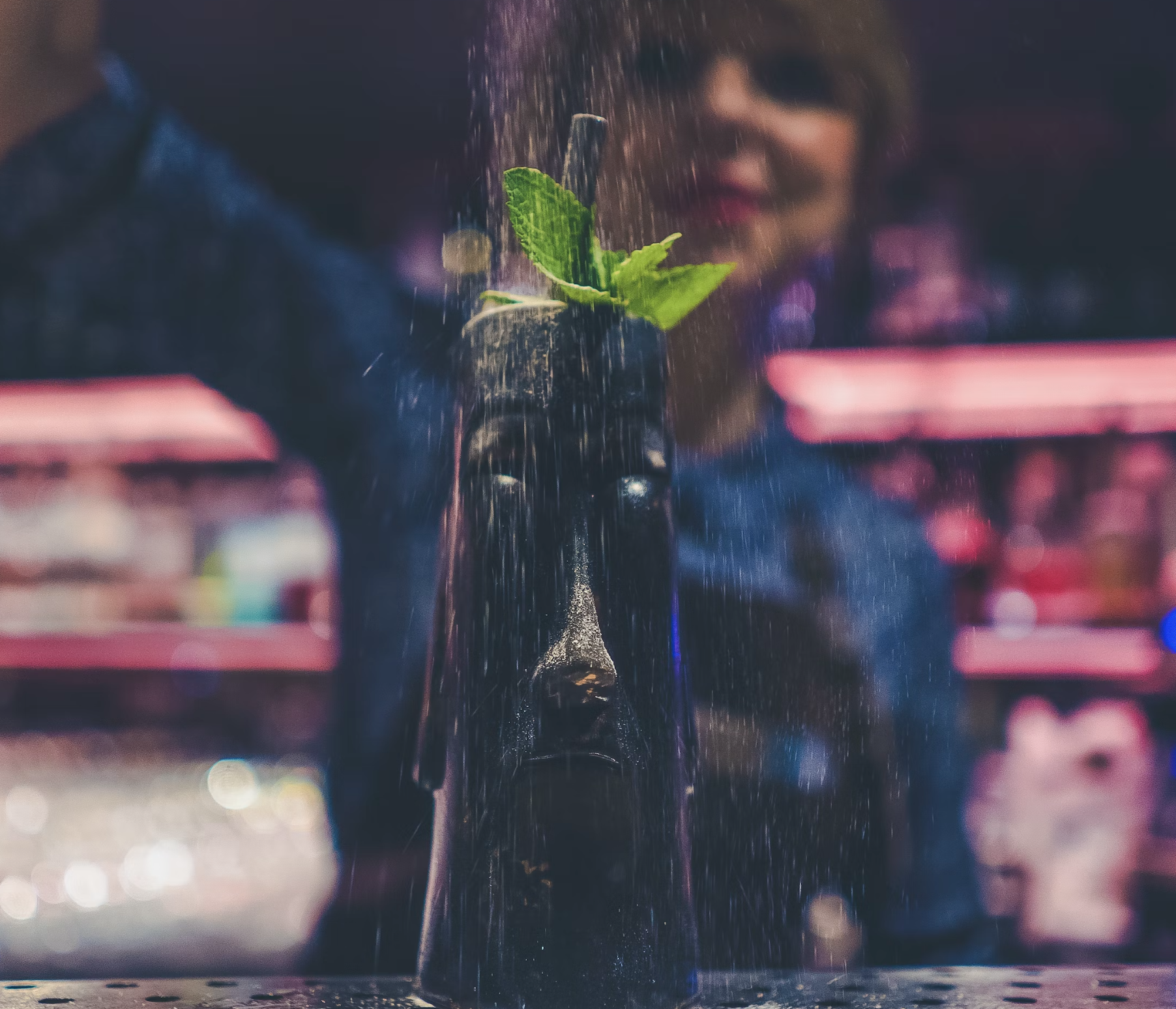
date rape straw, woman with black drink, black straw
A date rape straw can tell if your drink is tampered with

Easy access to odorless, tasteless knock-out drugs makes victimizing women easy. These drugs go by  hip names like Cat Valium, Special K, Bump, Ruffies, and, with horrible humor, Black Hole – referring to the unconsciousness and amnesia that victims experience.

A woman trying to bring her rapist to justice is all too often brushed off with a cold “You asked for it.” And a woman raped while drugged has no way to prove her claim, for the chemicals dissipate in the bloodstream within a few hours.

But soon a woman won’t have to wonder if the cute guy she’s chatting with is really OK. Chemists at the Tel Aviv University have invented a device with a sensor that changes colors instantly when popped into a spiked drink.

The inventors, Prof. Fernando Patolsky and Dr. Michael Ioffe, presented the technology at the Nano Conference 2011 in Israel. They say that the sensor can detect the most commonly used date rape drugs with 100 percent accuracy.

Dr. Ioffe adds, “Currently, the system is geared towards detecting GHB and ketamine. We hope to expand the system so it will identify additional date rape drugs as well.”

Now working on making the device small enough to carry in a purse, perhaps in the shape of a pen or straw, the researchers explain that all it takes to make it work is one tiny sip to draw liquid up. If the drink is drugged, the straw immediately changes colors. The sensor would come in a disposable cartridge that works two or three times, and would be inexpensive to replace.

This sounds cumbersome to casual drinkers and after a few might be hard to use. But we are optimistic.

While looking for added investors, Drs. Patolsky and Ioffe hope to offer the anti-rape date device for sale in the next year.

The state of Middle-Eastern women’s empowerment from Green Prophet:

Learn Efficiently While You Sleep?

0

girls sleeping on books, learning while sleeping
Cram for your exams while taking a cat nap? This Israeli study says you might be able to learn while you are asleep.

Is sleep learning possible? A new Weizmann Institute study appearing today in Nature Neuroscience has found that if certain odors are presented after tones during sleep, people will start sniffing when they hear the tones alone – even when no odor is present – both during sleep and, later, when awake. In other words, people can learn new information while they sleep, and this can unconsciously modify their waking behavior.

Cosmic Love Lantern Festival Will Light Up Jordan’s Wadi Rum

2

lantern festival jordan wadi rum festival
Release some inner and outer light at Jordan’s lantern festival in the desert.

The Cosmic Love Sky Lantern Festival is sure to be a feast for the eyes this fall in Wadi Rum.  As if the dramatic mountain scenery weren’t breathtaking enough, sky lanterns will rise like one thousand moons over the vast expanses of the desert at 9:00pm on the projected date of September 27. Crafted of paper, a sky lantern, also called a sky candle or fire balloon, is typically made by attaching oiled rice paper to a bamboo frame, and the light inside is either a candle or a fuel cell.  After the air inside the lantern is heated, the density is lowered enough to cause the vessel to rise and fly for as long as anywhere from five minutes to half an hour.

Syria’s Cattle Caught in the Crossfire

syria cow, bison, crossfire, targetCash cows in a time of conflict smuggled between Syria and Jordan

As Syria continues to be swept up in violence, Syrian farmers are smuggling their livestock (and themselves) into Jordan to sell the cattle before they can be killed in bombing raids. Traders near Jordan’s border with Syria estimate that tens of thousands of sheep have been smuggled across the border since the fighting began almost 18 months ago. Since Syrian law strictly prohibits shipping the sheep out of Syria, herders are forced to circumvent the law.

Pig Abuse Rampant in Kosher Israel

0

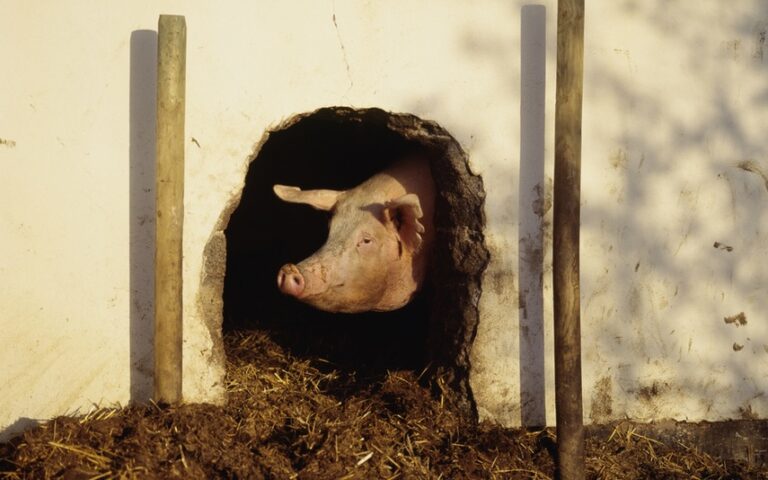
Pig abuse makes the headlines in Israel, a place where pork is strictly off-limits to most people.

A few years ago we covered the rampant Swine Flu that prompted Egypt’s cull of 300,000 pigs to “protect” people there against the virus. But the cull was likely just a matter of politics: The issues surrounding the raising of swine in countries where pork is religiously forbidden, including countries like Israel, raises a big question mark regarding the future of domestic and wild pigs in this region.  Although swine flu. or H1N1, did not become a massive world-wide pandemic in the end, there was still much concern during the 2009 Hajj religious pilgrimage in Saudi Arabia who might have been infected with the H1N1 virus. Now new pig abuse criticism pops up in Israel.

Jordanian Activists Take To The Streets For A Sustainable Future

2

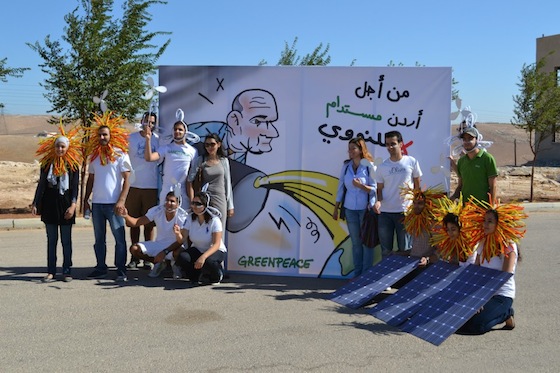
greenpeace-nuclear-jordan-jeacActivists gathered on the streets of Amman today to say ‘No’ to nuclear energy and ‘Yes’ to renewables

Following years of anti-nuclear campaigning and (more recent) controversy surrounding Jordan’s nuclear programme, Greenpeace activists in Jordan are stepping up their protests. They gathered today to launch a public dialogue about the dangers of nuclear energy and to push for a comprehensive national renewable energy strategy outside the headquarters of the Jordan Atomic Energy Commission (JAEC). Activists held a large banner that read “For a Sustainable Jordan: No to Nuclear Power,” while others carried out a street theatre activity demanding the government consider greener energy options such as solar and wind power. 

Lebanon Green Designers Transform Washing Machines Into Beautiful Seats

0

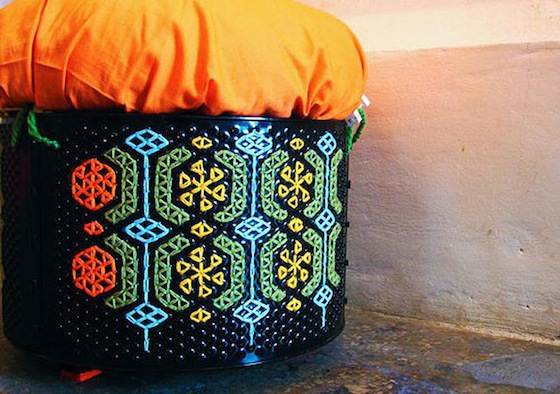
upcycle-green-designers-lebanon-washing-machine-seatWith a bit of creativity and green spirit, old washing machine drums have been transformed into stunning seating by Xavier Baghdadi and Lea Kradokian

From beautifully adorned tyres to trash theatres, Lebanon is really getting creative with its rubbish. Now, two green Lebanese designers have used old washing machine drums to make intricately decorated seats with lots of storage space inside. Which is just as well as Lebanon produces 4,000 tonnes of waste a day and only 10 percent of that is recycled. Whats more, 40 percent of all garbage generated is consigned to over 700 illegal and unsafe dump sites across the tiny nation.

How Climate Change Contributed to The Syrian Uprising

1

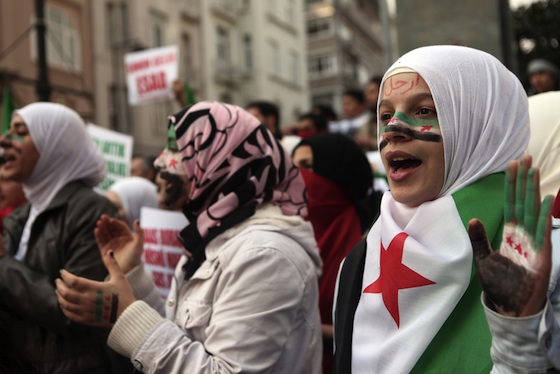
syria-protest-uprising-climate-change-droughtYears of drought and mass displacement in Syria may have been the straw that broke the camel’s back and led to the ongoing uprising

Following the eruption of revolts and riots in 2011 which later became the Arab Spring, the link between food prices and rising political opposition was a difficult one to ignore. The Arab revolutions had been sparked by the actions of a desperate young man who set himself alight in Sidi Bouzid after being forbidden from selling his produce at market. People across the region were also vocally unhappy with the rising price of basic foods and falling wages – in Egypt, loaves of bread were waved in protests to highlight this struggle. The link between climate change related factors and the war in Syria, however, hasn’t been as widely discussed. Yet, drought and ineffective water and agricultural policies are believed to have contributed to the uprisings and should “serve as a warning of the potential impact of climate change on political stability.”