Home Blog Page 395

Drive a Better Place EV for $510 a Month, Including Charge

0

better place shai agassi, electric car, battery swap, israel leasing planThe best news to come from Better Place is an attractive $510 leasing plan per month which includes 1000 km.

Israel’s Better Place, headed by the iconic entrepeneur Shai Agassi has just released news of an attractive leasing deal bound to win over new subscribers: for NIS 1990 a month ($510 USD), for 36 months, Better Place and the leasing company Albar is offering new customers a car, one thousand kilometers of distance and charges and battery replacements, reports the local business newspaper Globes.

With the cost of cost in Israel hovering at around $2 US a liter, this news is a warm welcome to every car owner who drops $150 bucks with every fill up at the tank. If you are puttering between cities, I think this model might even pay for itself considering that the cost of car ownership is so high in Israel, given its 100 percent markup on taxes.

We’ve been skeptical about your progress over in Israel, but this is great news Better Place! If you want to know more about how the cars and their quick battery swap program works, read this overview post by Brian on Better Place.

Could These Egyptian Laser Panels be the Future of Solar Power?

2

laser eye sun, solar panels
Despite attending Egypt’s Bani-Suef University as a student of commerce, 24 year-old Mohamed Gooda’s passion has always been for science. Having pursued his interest in physics in his spare time, he’s come up with a theoretical method of improving upon the efficiency of the photovoltaic solar cells currently in use the world over. He believes that, if widely implemented, his theory for a new method of converting solar radiation into electricity, using lasers, could afford Egypt a high level of energy independence.

Given that Egypt receives over 3,000 hours of sunlight a year in some regions, it’s not unreasonable to think that a revolutionary new form of solar cell could indeed lead to a radical change in the profile of Egypt’s energy consumption. But just how are these new cells supposed to work?

Jebel Hafit stadium in the desert by MZ Architects

0

Rock Stadium, Al Ain, LEAF Awards, Future Building of the Year 2012, MZ Architects, desert, green buildingRock Stadium by Lebanese design firm MZ Architects hasn’t been built yet but it has already won two coveted international design awards, including Best Future Building of the Year at the 2012 LEAF Awards. Marwan Zgheib accepted this year’s award for Al Ain’s sunken Rock Stadium in London on 21 September, sharing a slice of architectural history with previous winners such as Zaha Hadid, SOM, and Steven Holl.

Goat’s Cheese And Dates For Your Succot Holiday, TWO RECIPES

3

image-goats-cheese-dates-succot

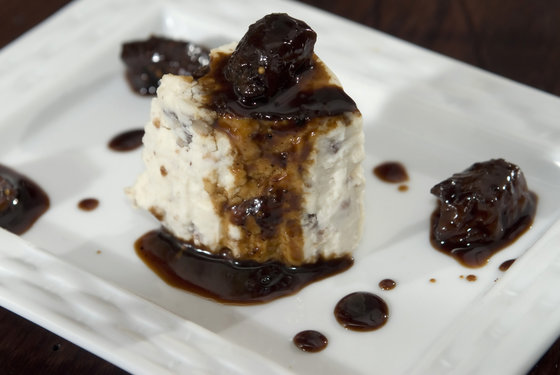
Dates and goat’s cheese, a classic Middle Eastern combination that works as an appetizer, nosh, or dessert.

Stately date palms grace many streets in the Middle East, giving the landscape an unforgettable silhouette.  In Israel,  municipalities prune their date palms and give out the big, rustling leaves gratis to those who like to roof their succot with them. Many families decorate their succah with an entire bunch of fresh yellow dates.

And for easy recipes appropriate to Succot, try the combination of moist Medjool dates with a chunk of salty goats cheese, preferably one with blue veins running though it.

First Solar Succah Goes Up In Kfar Saba, Israel

0

 succah, succa, succoth, sukkah, israel decorating

“We’re one of the most environmentally friendly cities in Israel,” says Kfar Saba mayor Yehuda Ben Hamo.

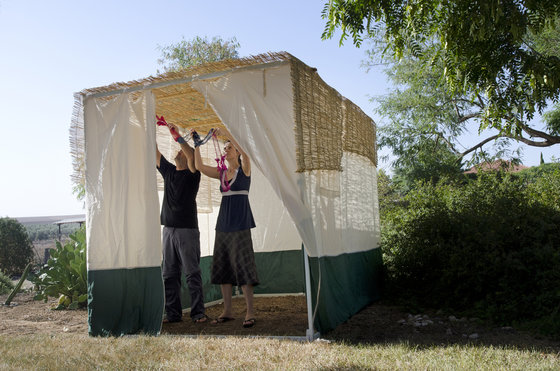
In Israel, each municipality raises a Jewish holiday temporary tent called a succah for the benefit of local workers and visitors. This year, the very first succah illuminated by solar energy will go up in the central-region town of Kfar Saba. This showcase project will hopefully stir popular enthusiasm, especially in view of the government’s lagging investment in solar energy.

Mayor Yehuda Ben Hamo said, “The city of Kfar Saba is a city that was established on a green agenda.  A green and energy-saving succah operating on solar energy is only appropriate.”

Cornell and Israel’s Technion Unveil Net-Zero Energy Tech Hub Plans

5

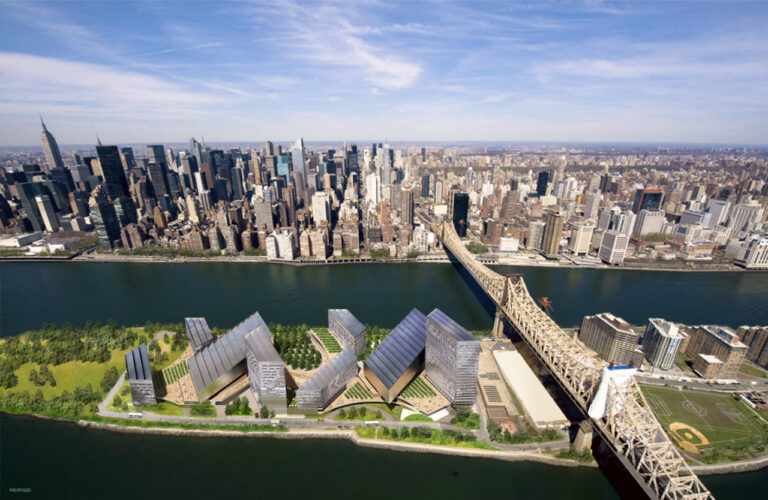
Clean tech, Cornell, Technion, Israel, Roosevelt Island, Tech Hub, Net Zero Energy, solar power, geothermalEarlier this year Cornell and Technion, Israel Institute for Technology won the privilege of developing a new tech campus and incubator on Roosevelt Island in New York City. Starchitects Skidmore, Owings, Merril (SOM) won the design competition and now plans are underway to turn the entire island into an enormous super-green net-zero energy campus complete with four acres of geothermal wells and a solar array that is three times bigger than the current largest system in NYC. Hit the jump to see Cornell’s images and to learn more.

IBM’s Water-Cooled Solar Energy Microchips Also Desalinate H20

0

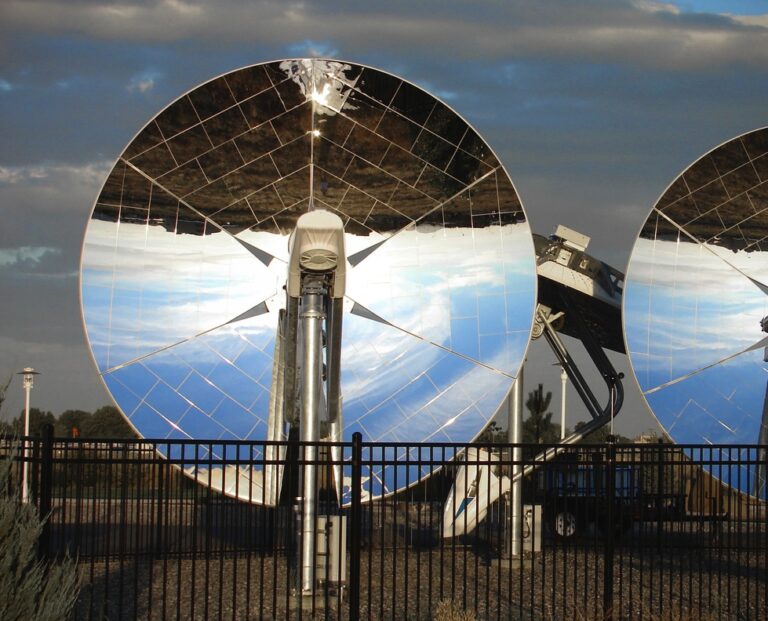
desalination, parabolic solar dish, microchips, IBM, clean tech, solar energyIBM has unveiled a water-cooled microchip that produces solar energy at greater efficiencies than most cells and the waste water can be used to power desalination facilities. Wait, what? Let’s un-strip this sentence. A water-cooled microchip?

IBM invented water-embedded microprocessors quite some time ago and have successfully put them to work in their Zurich-based SuperMUC computer; now they are applying the same technology to Concentrated Photovoltaic (CPV) arrays which normally lose efficiency when they get too hot. Although the technology is still being perfected, they invited what Gizmodo called “begoggled journalists” to check it out. 

Egypt’s Power Cuts Turn Blackouts Into Green Business

0

solar energy, egypt, camels, pyramidsMeet Egypt’s new Solar Energy Association hoping to turn a country’s power crisis into eco-innovation.

It’s dark at an upscale Cairo café. It’s not closed and service continues despite the only light coming from windows along two walls. The cause was an electricity outage. While it only lasted around 15 minutes, it was one of thousands of power cuts this past summer in Egypt as overuse left many without power for large portions of the day.

Across the river from Cairo’s upscale Zamalek neighborhood lies Imbaba, a lower-class neighborhood, and one of the harder hit areas of the Egyptian capital. “We had some days where we didn’t have power for six hours, sometimes longer,” Hassan Ghozlan, a local resident, told Green Prophet. And they still continue, he added. “Still, some days it goes out for a few hours, even during the evening when it is cooler,” he added.

Masdar Looks to Make Good on Solar Power in Saudi Arabia

1

saudi arabia solar energy sun masdar
Saudi Arabia is looking to continue to ensure their promises of bolstering the Gulf Kingdom’s alternative energy is maintained. This month, Masdar CEO Sultan Ahmed al-Jaber said publicly that his United Arab Emirates-based company is discussing potential investments in Saudi, and will likely be focusing on solar energy.

For Masdar, which has boosted its clean energy profile in Abu Dhabi and across the Emirates with clean technology proving both plausible and profitable, the goal is to take solar power a step further into Saudi, with its vast desert and massive amount of sun.While not giving much away in his statement, he did say Masdar hopes to jumpstart clean technology and energy in the Gulf Kingdom.

GreenBo Planters Help Your Patio Garden Grow

0

greenbo garden planter israel
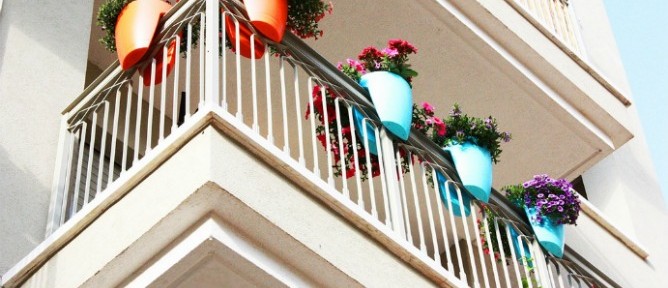
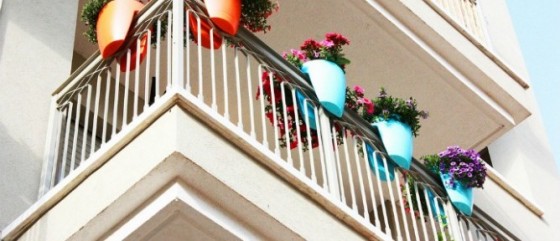
Looking to build a city or vertical garden in a cramped space? These designer planters from Israel grow deep, and are good for carrots and tomatoes. 

Gardens growing on your patio or deck can get a facelift this year with a new planter from Israel that just won a prestigious design award. The Greenbo concept might seem trivial, admits Liron Golan, the company’s marketing and sales consultant, but so did the zipper when it was first invented.

The colorful, strong Greenbo planter can be attached to an array of perimeter areas in your home or apartment, from the white picket fence to the wide patio railing. It can even work in interiors. To date, around 250,000 units have been sold at about $25 apiece.

So excited is the design world by this Israeli invention that on July 2 Greenbo became the second Israeli company ever to win a Red Dot Award, the design industry’s Oscar equivalent (the first was plastics manufacturer Keter). Golan says that other winners included Apple and Mercedes Benz – “not just the big fish; they are the whales,” as he puts it.

Golan’s wife, Maya, is co-founder of the four-year-old company, along with Roy Joulus, his good friend from the high-tech world,. The company is based in Petah Tikvah, and the products are manufactured nearby in Caesarea. Joulus’ father works for the company as well, so it’s more like a “startup family company,” says Golan.

Golan explains how the company idea began: “Roy studied design, and later he and I worked together in the high-tech industry. He had this fantastic idea about putting a planter over a railing to save balcony space. His idea came to him when was living in Tel Aviv in a crowded and urban environment where every bit of floor space matters.”

A nifty space-saving idea for patio gardens.

The GreenBo planters are currently on sale in select locations on three continents. In the United States, Home Depot carries them in its New York-area stores and online, plus a distributor is helping Greenbo reach specialty garden centers on the East Coast. Try here to buy them easily on Amazon. A deal for West Coast retailers should make them available there in the fall. In Europe, the planters can be purchased at Carrefour stores.

The plan is to keep Greenbo a blue-and-white company that will maintain its manufacturing in Israel while exporting abroad. About 75 percent of all planters sold so far have gone to the export market, with the remaining 30% bringing some new color to Tel Aviv, otherwise known as the White City.

Vertical gardens and patio gardens (like this gardener/blogger in Kuwait shows) are becoming especially popular now among environmentally conscious consumers, who are attempting to reduce their food’s travel miles by planting more herbs and vegetables at home.

The Greenbo planter, though not made from recycled materials, provides a pretty and functional alternative to the terracotta or green plastic plant pots that take up valuable space on small patios.

How does your garden Greenbo?

“Window boxes don’t have enough soil and the most problematic part of them is the metal hangers that rust and scratch your railing,” says Golan. “This is what we wanted to create an alternative for. That’s the ‘How come nobody thought of that before?’ idea.”

At 30 centimeters (11.8 inches) deep, the pots can hold longer-rooted vegetables like tomatoes. A gravity-based system holds the planter in place, and an additional fixture can be fastened on to make sure the planter will never fly away.

A special tray locks in the bottom to ensure that excess water and soil won’t leak onto your patio, or your neighbor’s.

For investors keen on funding the next “zipper,” Greenbo is looking for an additional $3 million to $5 million in capital. “We are always looking for investment, especially in the US,” says Golan.

EdenShield’s insect repellent is like nose plug for bugs

0

nose plug bug edenshied israel
This extract-based pesticide from a hardy Holy Land species of bush forms the basis of a new natural insect repellent.

An Israeli company EdenShield has developed a natural, non-toxic bug repellent that masks the smell of plants and flowers –– and possibly even people. It’s like putting a nose plug on bugs so they can’t smell or detect a potential host.

Founded by Yaniv Kitron, EdenShield is developing the product into a spray coating for greenhouse covers and as an extra layer of protection on the nets meant to keep out disease-carrying insects such as the kissing bug and the mosquito. EdenShield’s natural extract –– which comes from a bush that grows in Israel, the Sinai desert and Jordan –– is already being tested in Israeli greenhouses.

Fourteen Percent of Tel Aviv is Biking to Work or School

7

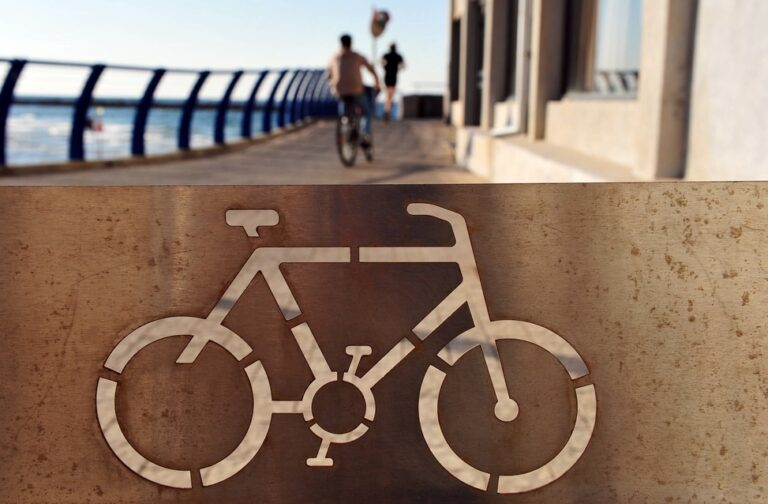
cycling tel aviv bikes city sea promenade corniche boardwalk israelThere’s been a huge jump in Tel Avivians riding on two wheels in the last decade.

When I first visited Tel Aviv about 12 or 13 years ago I was one of the only cyclists on the road, along with a few other nuts, and the African immigrant workers hauling around skeins of fabric in South Tel Aviv. It was regarded as dirty (because it’s so hot you sweat like a beast), and an activity for people who couldn’t afford a car. I couldn’t understand public transport, and getting around by bike in flat cities is always the best, despite the crazy traffic in Tel Aviv. But much has changed over the last decade. Haaretz reports that about fourteen percent of all Tel Avivians are riding their bikes as the main form of transport to work or school.

SARS-like Mystery Virus Appears in Saudi Arabia, Alerting Haj Pilgrims

0

A new SARS-like mystery illness has health authorities alert ahead of the millions-strong Haj pilgrammage to Mecca.

There have been two recent cases of a mysterious SARS-like virus linked to Saudi Arabia. It killed one of its victims from Saudi Arabia. The second who is still alive travelled through the country.

The unknown mystery virus which is not Severe Acute Respiratory Syndrome (or SARS) which killed 800 people worldwide in 2003, is similar to SARS and is raising concern ahead of the Muslim Haj pilgrimage to Mecca. The new virus can cause rapid kidney failure and with the upcoming Muslim Hajj pilgrimage planned for next month in Saudi Arabia, the World Health Organization (WHO) is warning Saudi organizers to be vigilant.

Recycling Yourself When Green Projects Go Bust

0

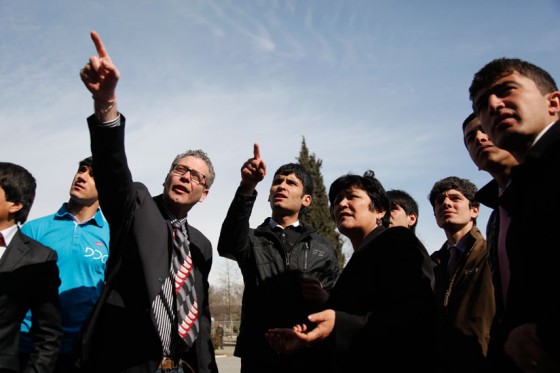
Theo van de Laar, Middle East tour guide
Live long enough and we all know heartbreak, but what happens when a well-loved sustainable project walks away?

Looking for day trips to explore modern Middle East architecture, I stumbled across Jordan’s The Aqaba House (TAH). This ambitious little house was the first modern home fully based on green building principles specific to its Aqaba location.  Oriented to capitalize on sun exposure, with purposeful shading, its terraces offered fantastic views overlooking Aqaba and Eilat across the Red Sea.  Recycled graywater irrigated the local flora filling its gardens.  Solar thermal heated its water and air conditioning ran on solar electricity. A decent alternative to Aqaba’s swanky resorts, I was ready to pack my toothbrush.  The only catch was it closed two years ago.

I learned the sad news after a friendly Dutch guy named Theo answered my emails to their website, explaining some of the backstory. It got me wondering about the people behind these sensitive, small eco-projects.  What happens when their hard work and dedication is dashed by economic or political hiccups?

Oxygen Villa is One Giant Prefabricated Mashrabiya Home

5

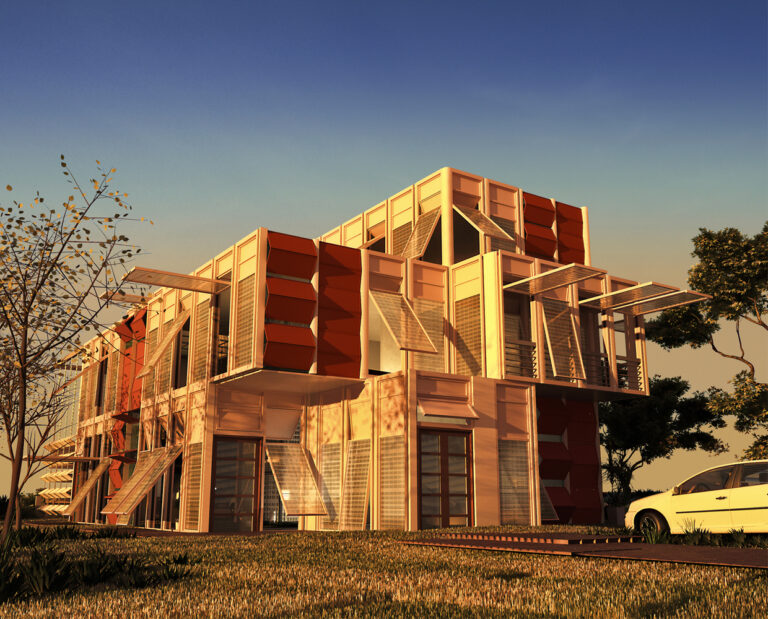
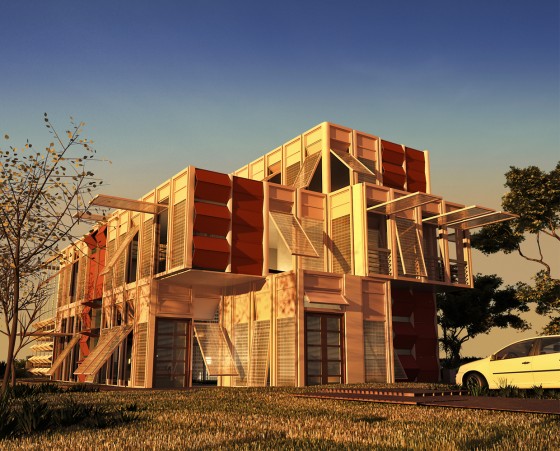
green design, Oxygen Villa, prefabricated house, eco-design, House, Egypt, mashrabiyaEgyptian studio House designed a beautiful prefabricated Mashrabiya home called Oxygen Villa. Comprised of modular boxes with both vertical and horizontal screens, this solar-powered gem provides all of the natural lighting, ventilation and privacy the average Arab family needs. Combining cutting-edge technology such as photovoltaic (PV) glazing modules and decentralized wastewater treatment system with ancient passive design techniques, this young team has conquered the challenge of providing responsible modern housing in today’s resource-scarce context.