Health insurance is a regulated financial product. Insurers operate under binding contracts, overseen by state insurance commissioners, that legally obligate them to pay claims meeting policy terms. Policyholders who believe a covered claim was wrongfully denied have legal recourse through state regulatory channels.
The New Zealand Merino Company, now rebranded as Zentera, has quietly removed the phrase “world’s leading ethical wool brand” from its website, a notable change that comes after a disturbing investigation by PETA Asia-Pacific into the company’s ZQ-certified wool supply chain, PETA reports to Green Prophet.
Somehow vegetables with short seasons excite the imagination and appetite more sharply than produce that’s available all year around. Good Middle Eastern cooks have many recipes for delicate fava beans, and this turmeric-fragrant soup is one.
Health insurance is a regulated financial product. Insurers operate under binding contracts, overseen by state insurance commissioners, that legally obligate them to pay claims meeting policy terms. Policyholders who believe a covered claim was wrongfully denied have legal recourse through state regulatory channels.
The New Zealand Merino Company, now rebranded as Zentera, has quietly removed the phrase “world’s leading ethical wool brand” from its website, a notable change that comes after a disturbing investigation by PETA Asia-Pacific into the company’s ZQ-certified wool supply chain, PETA reports to Green Prophet.
Somehow vegetables with short seasons excite the imagination and appetite more sharply than produce that’s available all year around. Good Middle Eastern cooks have many recipes for delicate fava beans, and this turmeric-fragrant soup is one.
Health insurance is a regulated financial product. Insurers operate under binding contracts, overseen by state insurance commissioners, that legally obligate them to pay claims meeting policy terms. Policyholders who believe a covered claim was wrongfully denied have legal recourse through state regulatory channels.
The New Zealand Merino Company, now rebranded as Zentera, has quietly removed the phrase “world’s leading ethical wool brand” from its website, a notable change that comes after a disturbing investigation by PETA Asia-Pacific into the company’s ZQ-certified wool supply chain, PETA reports to Green Prophet.
Somehow vegetables with short seasons excite the imagination and appetite more sharply than produce that’s available all year around. Good Middle Eastern cooks have many recipes for delicate fava beans, and this turmeric-fragrant soup is one.
Health insurance is a regulated financial product. Insurers operate under binding contracts, overseen by state insurance commissioners, that legally obligate them to pay claims meeting policy terms. Policyholders who believe a covered claim was wrongfully denied have legal recourse through state regulatory channels.
The New Zealand Merino Company, now rebranded as Zentera, has quietly removed the phrase “world’s leading ethical wool brand” from its website, a notable change that comes after a disturbing investigation by PETA Asia-Pacific into the company’s ZQ-certified wool supply chain, PETA reports to Green Prophet.
Somehow vegetables with short seasons excite the imagination and appetite more sharply than produce that’s available all year around. Good Middle Eastern cooks have many recipes for delicate fava beans, and this turmeric-fragrant soup is one.
Health insurance is a regulated financial product. Insurers operate under binding contracts, overseen by state insurance commissioners, that legally obligate them to pay claims meeting policy terms. Policyholders who believe a covered claim was wrongfully denied have legal recourse through state regulatory channels.
The New Zealand Merino Company, now rebranded as Zentera, has quietly removed the phrase “world’s leading ethical wool brand” from its website, a notable change that comes after a disturbing investigation by PETA Asia-Pacific into the company’s ZQ-certified wool supply chain, PETA reports to Green Prophet.
Somehow vegetables with short seasons excite the imagination and appetite more sharply than produce that’s available all year around. Good Middle Eastern cooks have many recipes for delicate fava beans, and this turmeric-fragrant soup is one.
Health insurance is a regulated financial product. Insurers operate under binding contracts, overseen by state insurance commissioners, that legally obligate them to pay claims meeting policy terms. Policyholders who believe a covered claim was wrongfully denied have legal recourse through state regulatory channels.
The New Zealand Merino Company, now rebranded as Zentera, has quietly removed the phrase “world’s leading ethical wool brand” from its website, a notable change that comes after a disturbing investigation by PETA Asia-Pacific into the company’s ZQ-certified wool supply chain, PETA reports to Green Prophet.
Somehow vegetables with short seasons excite the imagination and appetite more sharply than produce that’s available all year around. Good Middle Eastern cooks have many recipes for delicate fava beans, and this turmeric-fragrant soup is one.
Health insurance is a regulated financial product. Insurers operate under binding contracts, overseen by state insurance commissioners, that legally obligate them to pay claims meeting policy terms. Policyholders who believe a covered claim was wrongfully denied have legal recourse through state regulatory channels.
The New Zealand Merino Company, now rebranded as Zentera, has quietly removed the phrase “world’s leading ethical wool brand” from its website, a notable change that comes after a disturbing investigation by PETA Asia-Pacific into the company’s ZQ-certified wool supply chain, PETA reports to Green Prophet.
Somehow vegetables with short seasons excite the imagination and appetite more sharply than produce that’s available all year around. Good Middle Eastern cooks have many recipes for delicate fava beans, and this turmeric-fragrant soup is one.
Health insurance is a regulated financial product. Insurers operate under binding contracts, overseen by state insurance commissioners, that legally obligate them to pay claims meeting policy terms. Policyholders who believe a covered claim was wrongfully denied have legal recourse through state regulatory channels.
The New Zealand Merino Company, now rebranded as Zentera, has quietly removed the phrase “world’s leading ethical wool brand” from its website, a notable change that comes after a disturbing investigation by PETA Asia-Pacific into the company’s ZQ-certified wool supply chain, PETA reports to Green Prophet.
Somehow vegetables with short seasons excite the imagination and appetite more sharply than produce that’s available all year around. Good Middle Eastern cooks have many recipes for delicate fava beans, and this turmeric-fragrant soup is one.
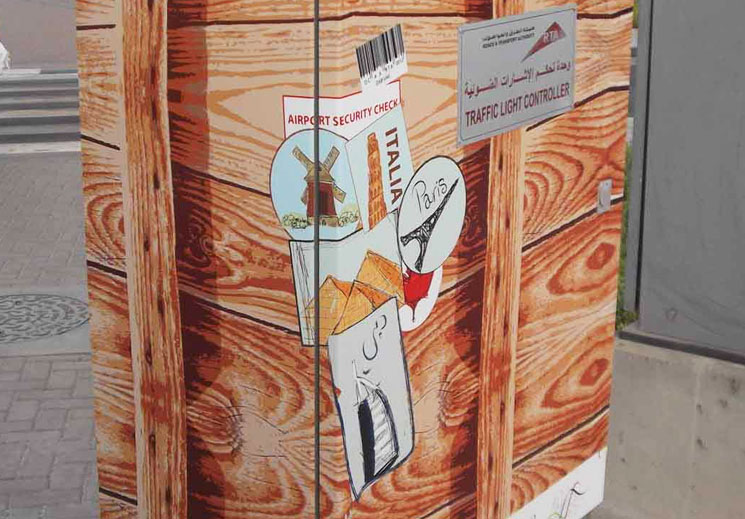
Dubai is known for many things, but its beauty is no longer one of them. In the last few decades the once barren desert landscape has evolved into a hurried metropolis where row upon row of often unoccupied skyscrapers, hotels, and malls clutter the waterfront and stifle colorful minds.
Perhaps cognizant that buying stuff only provides so much satisfaction and eager to contribute to the Arab world’s creative renaissance, Dubai Culture has commissioned small works of outdoor art that might transform at least small pockets of one of the world’s most materialistic cities into something a little more… interesting.
Trade unionists have used the COP18 discussions in Qatar to bring the silent but disturbing plight of migrant workers to light. While the emirate boasts about its plans to build a bevy of solar-powered stadiums in advance of the 2022 World Cup in addition to a host of other eco-boosting projects, very little has been said about who is going to do the work. Like Abu Dhabi, Dubai and Saudi Arabia, Qatar relies very heavily on migrant workers, who do all the dirty work but receive few of the benefits of their hard, miserable labor.
The chemists from Sultan Qaboos University (SQU) claim that wasted date palm leaves treated with sulphuric acid at incredibly high temperatures can purify highly polluted water so effectively that it can thereafter be used to irrigate crops. A pilot plant will be inaugurated in Oman early 2013, but skeptics worry that the status quo will interrupt any kind of widespread implementation of this new technology.
Inside a Better Place batter switching station: an idea born too soon?
The fortunes of the Better Place electric car and service network company, which began going downhill when founder Shai Agassi was fired from being international CEO in October, have not improved much despite receiving a $100 million investment boost by the Israel Corporation, its main shareholder last month. The start up company created a large amount of media buzz with its unique concept of opening networks of EV car battery switching stations in Israel and elsewhere to give the car’s lithium battery packs more driving range.
Activists have gathered at the global COP18 climate event in Doha, Qatar to press negotiators to put aside money from a ‘Robin Hood tax” to boost the climate change fund. Evoking the legend of England’s Robin Hood, who either stole from or persuaded the rich to help the poor depending on which story one believes, a group of youth and environmental activists from around the globe propose that a tiny tax on financial transactions could be used to help the countries that are most vulnerable to climate change.
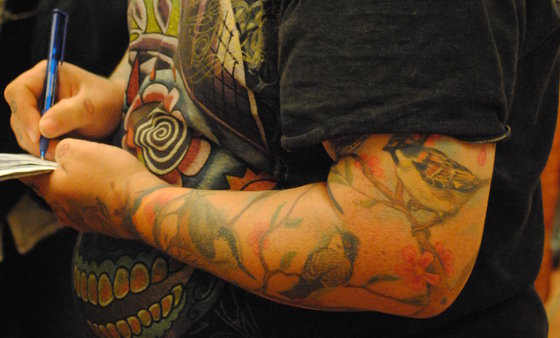
One man’s efforts to prevent ecological disaster and to save Turkey’s birds is permanent ink tats on his arms.
It was the close of the day for us birdwatchers at the Hula Valley Bird Festival in Israel. Our guides dropped us off where we were to dine, and while we waited, we talked to the “birders” – passionate bird and wildlife observers – who travel the world to watch bird immigration and give talks on wildlife. One man stood out among the conservatively-dressed birders. The pudgy guy with a Mohawk haircut and earring had his arms covered with colorful tattoos. Not your usual conservation activist. He calls himself The Inked Naturalist.
Fun seems to be the one truly unlimited source of free energy. You can find it in the mountain villages of Turkey, the narrow streets of Jerusalem and the dusty villages of Jordan. Somewhere in Tehran or Cairo or Istanbul even as you read this, this energy is being generated and released as young people practice for the 2014 World Cup. Have you ever wondered at the possibilities of capturing this energy? No I don’t mean harnessing child labor as in some sort of Dickensian dystopia, I mean– what if we could harness some of the boundless energy released when people play, capture it while they are enjoying themselves?
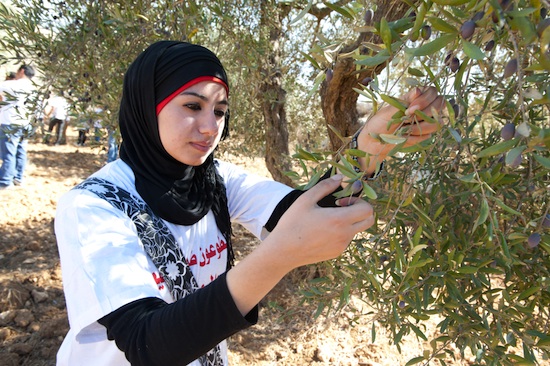
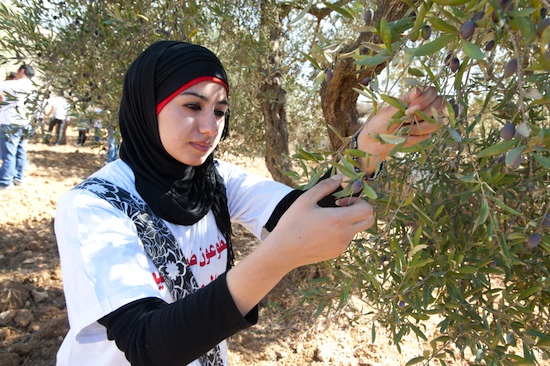
A back-to-the-land movement is blossoming in the Palestinian Authority. “The Palestinian future is in the land.” Farmer Khader Khader said, standing in his organic olive grove in the northern West Bank village of Nus Jubail.
Many Palestinian farmers are switching to organic farming methods, and selling their oil to high-end grocers in the US and Europe.
According to the aid group Oxfam, an estimated 17,000 tons of olive oil is produced annually in the West Bank by thousands of farmers, some of whom are producing fair trade olive products. Olive oil has unique traditional and cultural significance in the region. Most Palestinian olive oil is produced for local consumption. But this product is becoming increasingly important for Palestinians’ connection to the global economy.
The business of organic farming, for international markets, was first introduced to the West Bank in 2004. According to Nasser Abu Farha of the Canaan Fair Trade Association (who we’ve covered here), one of the companies selling organic Palestinian olive oil to distributors abroad, today at least $5 million worth of organic olive oil is exported from the territories every year.
Israeli women learn how to raise bees using the biodynamic method. Via Yossi
“About half of all Palestinian commercial oil exports,” he said. “The future of Palestinian exports is in added value, through environmental and social accountability. People want to know: Where is this oil coming from? Whose life is it changing?”
Around 930 Palestinian farmers have fair-trade and organic certification. Another 140 are in the process of “converting” their land, which takes two-to three-years of testing and monitoring the soil until it is officially certified as free from pesticides and chemicals.
Lack of rain and Israeli trade restrictions are among the many challenges these farmers face. But new digital technology and the rising demand for organic produce are giving Palestinian farmers new ways to compete in global markets.
In Whole Foods supermarkets in New York and New Jersey, organic Palestinian olive oil is sold under the “Alter Eco” brand, Farha said.
“I don’t throw rocks,” said Khader, in reference to young men who hurl stones at Israeli soldiers. The proud farmer, Khader, gestured towards the rock terraces he built in his organic olive grove. “I use them to build our future.”
“The engine captures thermal waste energy that is utilized to generate electric energy to run hydrogen fuel cells using the potable water as a source for the gas,” GORD announced in a press release. Initial studies show that this technology emits 50% less carbon monoxide (CO) & nitrous oxide (NOX) than conventional oil or natural gas-powered vehicles.
The Arab Gulf emirates celebrates National Day at the zoo until Dec 3. Come for a picnic and see the animals.
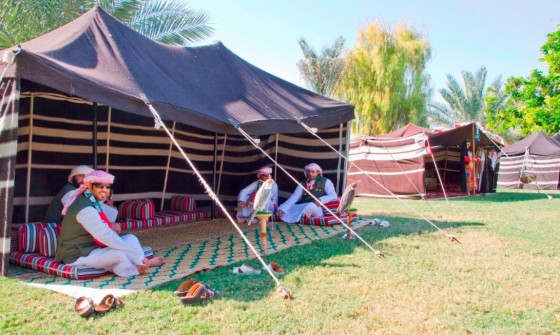
Al Ain Zoo presents visitors with an exciting programme of events and activities in celebration of the 41st United Arab Emirates National Day. Visitors can also learn about the core of the UAE’s heritage with Arabian wildlife and traditional cultural proceedings at the zoo’s heritage village during the festivities from Thursday 29 November until Monday 3 December.
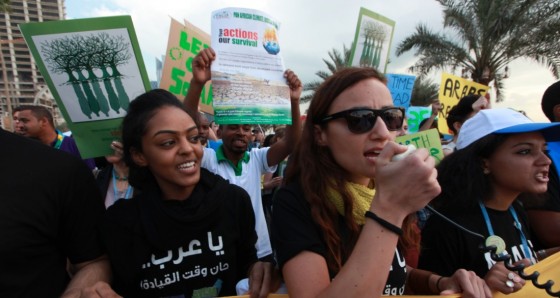
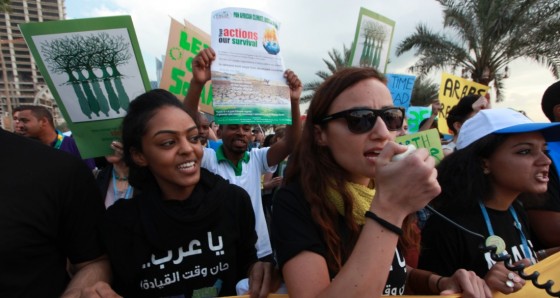
Young Arabs in Doha are telling the Arab world it’s time to take a lead on climate change during the first climate change talks to be held in the Middle East.
With more than a billion Muslims in the world, Arab activists claim that Muslim leaders are pretty much silent about global warming and environmental issues. AP is reporting this as world leaders gather in Doha, Qatar for the UN-mediated COP18 climate change talks this week. Arab activists from Lebanon sent Green Prophet the same message today in a press release asking for Arabs, not necessarily Muslims, to step up to the plate to be part of the solution.
The Better Place electric transportation company was founded in California’s silicon valley, not far from where the Tesla electric car company began. But while Tesla and Chevy’s Volt electric cars have been sold in the United States, Better Place didn’t enter the fickle US electric car market. Instead they teamed with French automaker Renault and pioneered their subscription model electric cars in Denmark and Israel where border to border coverage didn’t require many battery swap stations. Now Better Place has partnered with California-based Coda Automotive electric car company and engineering company FEV with plans for electric taxis and two battery swap stations in Los Angeles California, eventually expanding to six. This is enough to service 60 electric taxis.
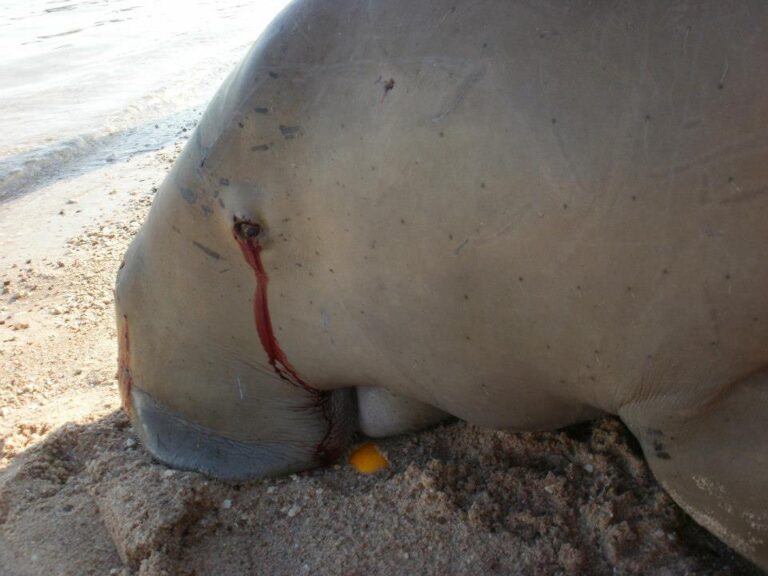
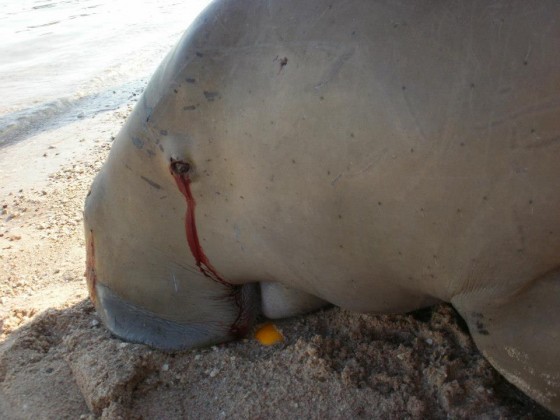
Divers found a dead dugong in the Red Sea off the coast of Egypt early this week, according to the environmental advocacy group HEPCA. Immediately after Colona Dive Center alerted HEPCA about the dead marine mammal discovered between Magwaish Island and Gotaa Magawish, the latter sent a patrol boat out to investigate, according to a post on the group’s Facebook page.
When they arrived, rangers working for the Egyptian Ministry of State for Environmental Affairs were towing the 500kg female dugong to shore and Professor Adel Sehem gave them permission to do further analysis in order to determine the cause of death. While it is too soon to know for sure, activists suspect that the increased development and tourism traffic in Hurghada might be partially responsible.
Greenpeace tapped into some serious people power with their recent “Detox” campaign and the world’s largest fast fashion retailer had no choice but to give in. After nine days of intense public pressure led by the environmental activist group, fashion giant Zara has agreed to phase out the use of toxic chemicals in its supply chain and products.
Greenpeace amped up their campaign against Zara over the last week following the company’s failure to respond to the GP report “Toxic Threads: The Big Fashion Stitch-Up” released on Nov. 20, which outlines how textile manufacturers release hormone-disrupting chemicals and other hazardous materials into China’s waterways.

 Dubai is known for many things, but its beauty is no longer one of them. In the last few decades the once barren desert landscape has evolved into a hurried metropolis where row upon row of often unoccupied skyscrapers, hotels, and malls clutter the waterfront and stifle colorful minds.