“In the midst of uncertain time, renewable energy remains consistent and steadfast in its expansion,” said Francesco La Camera, IRENA’s Director-General. “A more decentralised energy system, with a growing share of renewables and more market players, is structurally more resilient.”
Health insurance is a regulated financial product. Insurers operate under binding contracts, overseen by state insurance commissioners, that legally obligate them to pay claims meeting policy terms. Policyholders who believe a covered claim was wrongfully denied have legal recourse through state regulatory channels.
The New Zealand Merino Company, now rebranded as Zentera, has quietly removed the phrase “world’s leading ethical wool brand” from its website, a notable change that comes after a disturbing investigation by PETA Asia-Pacific into the company’s ZQ-certified wool supply chain, PETA reports to Green Prophet.
Somehow vegetables with short seasons excite the imagination and appetite more sharply than produce that’s available all year around. Good Middle Eastern cooks have many recipes for delicate fava beans, and this turmeric-fragrant soup is one.
“In the midst of uncertain time, renewable energy remains consistent and steadfast in its expansion,” said Francesco La Camera, IRENA’s Director-General. “A more decentralised energy system, with a growing share of renewables and more market players, is structurally more resilient.”
Health insurance is a regulated financial product. Insurers operate under binding contracts, overseen by state insurance commissioners, that legally obligate them to pay claims meeting policy terms. Policyholders who believe a covered claim was wrongfully denied have legal recourse through state regulatory channels.
The New Zealand Merino Company, now rebranded as Zentera, has quietly removed the phrase “world’s leading ethical wool brand” from its website, a notable change that comes after a disturbing investigation by PETA Asia-Pacific into the company’s ZQ-certified wool supply chain, PETA reports to Green Prophet.
Somehow vegetables with short seasons excite the imagination and appetite more sharply than produce that’s available all year around. Good Middle Eastern cooks have many recipes for delicate fava beans, and this turmeric-fragrant soup is one.
“In the midst of uncertain time, renewable energy remains consistent and steadfast in its expansion,” said Francesco La Camera, IRENA’s Director-General. “A more decentralised energy system, with a growing share of renewables and more market players, is structurally more resilient.”
Health insurance is a regulated financial product. Insurers operate under binding contracts, overseen by state insurance commissioners, that legally obligate them to pay claims meeting policy terms. Policyholders who believe a covered claim was wrongfully denied have legal recourse through state regulatory channels.
The New Zealand Merino Company, now rebranded as Zentera, has quietly removed the phrase “world’s leading ethical wool brand” from its website, a notable change that comes after a disturbing investigation by PETA Asia-Pacific into the company’s ZQ-certified wool supply chain, PETA reports to Green Prophet.
Somehow vegetables with short seasons excite the imagination and appetite more sharply than produce that’s available all year around. Good Middle Eastern cooks have many recipes for delicate fava beans, and this turmeric-fragrant soup is one.
“In the midst of uncertain time, renewable energy remains consistent and steadfast in its expansion,” said Francesco La Camera, IRENA’s Director-General. “A more decentralised energy system, with a growing share of renewables and more market players, is structurally more resilient.”
Health insurance is a regulated financial product. Insurers operate under binding contracts, overseen by state insurance commissioners, that legally obligate them to pay claims meeting policy terms. Policyholders who believe a covered claim was wrongfully denied have legal recourse through state regulatory channels.
The New Zealand Merino Company, now rebranded as Zentera, has quietly removed the phrase “world’s leading ethical wool brand” from its website, a notable change that comes after a disturbing investigation by PETA Asia-Pacific into the company’s ZQ-certified wool supply chain, PETA reports to Green Prophet.
Somehow vegetables with short seasons excite the imagination and appetite more sharply than produce that’s available all year around. Good Middle Eastern cooks have many recipes for delicate fava beans, and this turmeric-fragrant soup is one.
“In the midst of uncertain time, renewable energy remains consistent and steadfast in its expansion,” said Francesco La Camera, IRENA’s Director-General. “A more decentralised energy system, with a growing share of renewables and more market players, is structurally more resilient.”
Health insurance is a regulated financial product. Insurers operate under binding contracts, overseen by state insurance commissioners, that legally obligate them to pay claims meeting policy terms. Policyholders who believe a covered claim was wrongfully denied have legal recourse through state regulatory channels.
The New Zealand Merino Company, now rebranded as Zentera, has quietly removed the phrase “world’s leading ethical wool brand” from its website, a notable change that comes after a disturbing investigation by PETA Asia-Pacific into the company’s ZQ-certified wool supply chain, PETA reports to Green Prophet.
Somehow vegetables with short seasons excite the imagination and appetite more sharply than produce that’s available all year around. Good Middle Eastern cooks have many recipes for delicate fava beans, and this turmeric-fragrant soup is one.
“In the midst of uncertain time, renewable energy remains consistent and steadfast in its expansion,” said Francesco La Camera, IRENA’s Director-General. “A more decentralised energy system, with a growing share of renewables and more market players, is structurally more resilient.”
Health insurance is a regulated financial product. Insurers operate under binding contracts, overseen by state insurance commissioners, that legally obligate them to pay claims meeting policy terms. Policyholders who believe a covered claim was wrongfully denied have legal recourse through state regulatory channels.
The New Zealand Merino Company, now rebranded as Zentera, has quietly removed the phrase “world’s leading ethical wool brand” from its website, a notable change that comes after a disturbing investigation by PETA Asia-Pacific into the company’s ZQ-certified wool supply chain, PETA reports to Green Prophet.
Somehow vegetables with short seasons excite the imagination and appetite more sharply than produce that’s available all year around. Good Middle Eastern cooks have many recipes for delicate fava beans, and this turmeric-fragrant soup is one.
“In the midst of uncertain time, renewable energy remains consistent and steadfast in its expansion,” said Francesco La Camera, IRENA’s Director-General. “A more decentralised energy system, with a growing share of renewables and more market players, is structurally more resilient.”
Health insurance is a regulated financial product. Insurers operate under binding contracts, overseen by state insurance commissioners, that legally obligate them to pay claims meeting policy terms. Policyholders who believe a covered claim was wrongfully denied have legal recourse through state regulatory channels.
The New Zealand Merino Company, now rebranded as Zentera, has quietly removed the phrase “world’s leading ethical wool brand” from its website, a notable change that comes after a disturbing investigation by PETA Asia-Pacific into the company’s ZQ-certified wool supply chain, PETA reports to Green Prophet.
Somehow vegetables with short seasons excite the imagination and appetite more sharply than produce that’s available all year around. Good Middle Eastern cooks have many recipes for delicate fava beans, and this turmeric-fragrant soup is one.
“In the midst of uncertain time, renewable energy remains consistent and steadfast in its expansion,” said Francesco La Camera, IRENA’s Director-General. “A more decentralised energy system, with a growing share of renewables and more market players, is structurally more resilient.”
Health insurance is a regulated financial product. Insurers operate under binding contracts, overseen by state insurance commissioners, that legally obligate them to pay claims meeting policy terms. Policyholders who believe a covered claim was wrongfully denied have legal recourse through state regulatory channels.
The New Zealand Merino Company, now rebranded as Zentera, has quietly removed the phrase “world’s leading ethical wool brand” from its website, a notable change that comes after a disturbing investigation by PETA Asia-Pacific into the company’s ZQ-certified wool supply chain, PETA reports to Green Prophet.
Somehow vegetables with short seasons excite the imagination and appetite more sharply than produce that’s available all year around. Good Middle Eastern cooks have many recipes for delicate fava beans, and this turmeric-fragrant soup is one.
Professor of public and environmental affairs at the University of Wisconsin in the United States, Dallas Blaney took a novel approach to the water-energy debate. Instead of telling us what we already know – that we’re running out of water and scurrying to generate more energy to meet rising demand – Blaney says we need to demystify the relationship between the two.
Amid some of the worst flooding seen in the Middle East in decades and increasingly dire reports about climate change, Masdar will host the sixth annual World Future Energy Summit (WFES) in Abu Dhabi next week. We’ll be joining 30,000 other delegates at Abu Dhabi Sustainability Week, which includes the International Water Summit (IWS) from January 13-17th.
Our goal is to tap into the minds of public and private stakeholders who face a temperature rise of at least three degrees celsius by 2050, energy and water shortages coupled with soaring demand, and destabilization caused by climate change. The 6th WFES may be the most important yet.
The Speed Sisters, the Palestinian women’s motor racing team, are a Middle Eastern first: Independent and passionate, they’ve charted their own roadmap through a male-dominated sport, steering around family expectations, social pressures, community politics and an active military occupation.
Zoom out and the nuances deepen – women in nearby Saudi aren’t permitted to drive. Racing is a sport and a brilliant form of protest allowing drivers to demonstrate traits not typically valued in Arab females. It illustrates what may be possible in a rapidly changing Middle East. The team has a changing roster of Muslims and Christians, headed by Maysoon Jayyusi, whose love of fast cars emerged during frustrating hours at Israeli checkpoints.
Veteran Speed Sister Mona Ennab told The National, “When I drive, I understand freedom. We’re used to being stopped at checkpoints, but on days we have races, we fly through. One day, a woman from Palestine will win an international Formula race.”
Mona was the first women spotted by Khaled Khadoura, founder of the Palestinian Motorsport & Motorcycle Federation, while she raced boys in Ramallah’s streets. She started driving at a kiddie karting arcade in Amman’s Mecca Mall. “It’s a slow process,” she says. “The men made fun of us at the beginning, but we won their respect and now our fellow male racers are our biggest supporters.”
Mexican-born Betty Sa’adeh started racing in 2010; by 2011 she was the Palestinian women’s champion. She says, “I want to show the world that Palestinian women are more than their media image.”
Team captain Suna Aweida was one of the first women to race in Palestine, placing in the top 10. Retired from racing in 2010, the inspirational mentor acknowledges that her family wasn’t happy for her to participate.
Diaspora-baby Noor Daoud was born in Texas, raised in Jerusalem, and schooled in Switzerland. An Olympic swimmer and player on the Palestinian national soccer team, she’s now focused on racing Formula 3. The first Palestinian to participate in (and win) an Israeli race, she loves to “drift” her car and ride dirt bikes.
Last December, Noor nailed first place for women in Israel’s first legal car race, a two-day event in Eilat that featured Formula cars in a traditional grand prix format. The win brings her one step closer to her dreams of racing internationally. “Some people may judge Noor for racing with Israelis. If I were in her place, I would do the same,” says Speed Sister Mona. “She has a Jerusalem ID which allows her to participate, and she’s made us proud.”
The newest Sister, Sahar, is the first member to wear the hijab. Some Muslim clerics have condemned motor sport for being frivolous and haram. But as we’ve seen during the 2012 Olympics, Islamic law is subject to varied interpretation.
Ranked in the top 10 of 67 racers, the team stands poised to break onto the international arena, presenting an inspiring image of Palestine and of Arab women. But the Speed Sisters are keenly conscious of the limited professional options: sponsorship money is scarce (the British Consulate in Jerusalem funds their race car).
In many ways, the women represent Palestine’s diversity: fragmented West Bank cities divided by checkpoints, settlements and class differences. They are unified by intense love of racing, a Palestinian identity and an appetite to compete in a male-dominated sport.
Green Prophet’s reported on solid gold Mercedes, but we don’t support car racing. We’re gobsmacked by the Middle East pasttime of dangerous drifting and no fans of frivolous fossil fuel use. So why cover this story?
There’s a Jordanian saying that translates, “Sometimes you slaughter a camel to feed a fox”. Maybe burning a few barrels of fuel is small change compared to the large positive change these emergent celebrities and role models will incite. Debaters, start your engines.
Afghanistan, Iraq, North Korea, Myanmar and Yemen are still using leaded gasoline and many others have lead contaminated plumbing, soil, paint and household products.
How can we reduce the world’s crime rate, particularly the rate of violent crime? When the crime rate rises or a horrific crime takes place, people are quick to find blame in everything from violent movies to video games. Some believe crime can be reduced only with more prisons, more police, higher fences, more cameras and more guns. Others believe crime can be reduced with better education, fairer income distribution, lower unemployment, fewer drugs and fewer guns. But there is increasing evidence that the real culprit is the world’s oldest known environmental poison – lead.
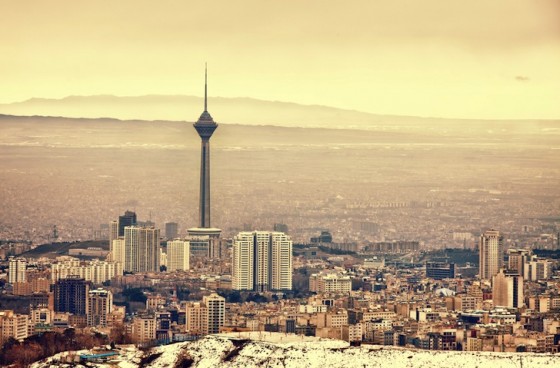
Iran is gagging – on sanctions and deadly pollution. Finally, after months of denial, the country’s oil minister Rostam Qasemi acknowledged that petroleum sales are down by 40 percent after western sanctions that prohibit certain international transactions have stunted trade.
In February, all energy, shipping and shipbuilding enterprises will be blacklisted as well, the New York Times reports – all to curb the country’s nuclear ambitions. Meanwhile, the government ordered all official buildings, schools and universities to shut down for five days recently in order to dissipate pollution. They are open now, but a cloud of lead, sulfur dioxins and benzene remains aloft.
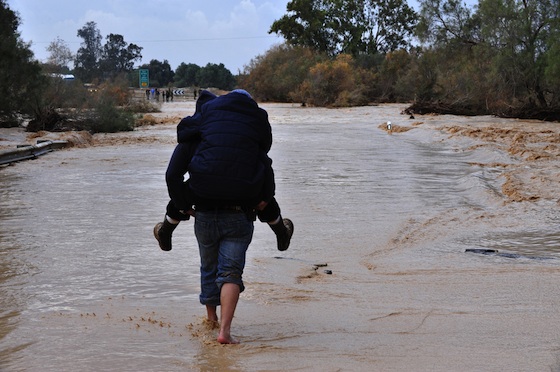
Historic rains filled the once dry Ayalon River bed that runs through Tel Aviv, flooding highways, homes, and public buildings. Overnight, the Sea of Galilee or Lake Kinneret rose 22 centimeters and water reservoirs near the Golan Heights filled to capacity, prompting Israel’s Park and Nature Authority to peg the storm a “water celebration.”
But urban dwellers aren’t celebrating at all. Sections of the central arteries of Tel Aviv, Ayalon Highway and Highway 1, were closed to traffic in both directions and all four of the city’s railway stations are closed, reports Haaretz. Areas north of the Mediterranean city have been swamped as well and authorities are bracing for the real possibility that both the Ayalon and Yarkon rivers will burst their banks.
Dubai International Airport (DXB) will overtake Heathrow as the world’s biggest international airport by 2015.
What’s the environmental impact of the United Arab Emirates’ (UAE) decade of relentless aviation growth? In 2000, Dubai didn’t warrant mention on a register of the world’s Top 100 airports. By 2010, it had soared to 13th place, reaching 4th place a year later. At this rate, Dubai will overtake Heathrow as the world’s biggest international airport within the next three years, according to Willie Walsh, the Head of International Airlines Group, in a speech to London’s House of Commons Transport Committee.
How will airport expansion incorporate – at a minimum – environmental stewardship – and, ideally – environmental leadership? Originally built on a sparsely developed plateau, located about a 10 minute drive from downtown Dubai, the near 9,000-acre facility is now surrounded by dense residential and commercial development.
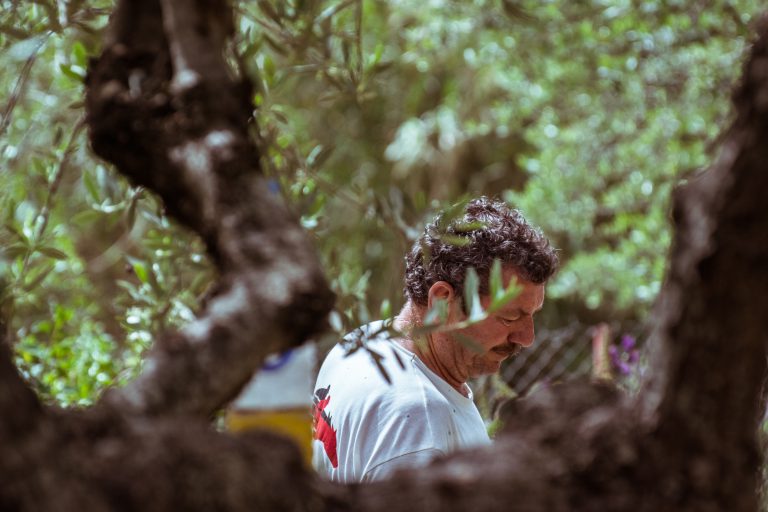
Sisters or the the Olive trees of Noah, are the 16 oldest olive trees in the world found in the community of Bechealeh, Lebanon. Some 6,000 years old, folklorists say these have Biblical origins.
Tucked away in the sleepy village of Bechealeh, Lebanon, 16 olive trees have witnessed 6000 years of political unrest, plagues, diseases, varying climatic conditions and changing civilizations.
In fact these “trees of Noah” are considered by locals to be a living miracle because nature, as we all know, is often silent and passive in the face of hardship, greed and violence so the fact that these arcane olive trees have managed to skirt 6000 years of climatic shifts, hacking axes and diseases makes me believe that, as improbable as this may sound, that there has been some mystical or divine providence watching over and protecting those trees for Bechealeh, for Lebanon and – who knows – maybe even for all the rest of us.
World’s oldest olive trees are in Lebanon
More endangered than Bengal tigers or wild pandas, “the Sisters” olive trees, as locals call them, should be regarded as a precious national asset.
And although the ministry of tourism and culture have recognized the sister olive trees as a site of national importance and the olive trees have earned a spot on Lebanese stamps, and are on their way to be commemorated on the currency notes of the Lebanese Lira; governmental support to actively protect the trees and the heritage of Bechealeh has been shy at best.
Local populations have worked very hard together to maintain the trees and historical structures, yet financial support is greatly needed to ensure that the sites are being preserved fully and correctly and to valorize the area through different projects such as; creating a wildlife preserve, enforcing hunting bans, connecting the historical sites with the modern trails, christening the olive oil open air museum mill as well as creating Bechealeh’s first cultural and library center.
“The Sisters” olive trees of Noah (as of Feb. 2020 the site was down, and we suspect the NGO too) is a non- profit organization, which has been set up in Bechaleh in order to safeguard its rare ecological and historic gift for generations to come.
Currently the organization is producing and selling top of the line olive oil from its ancient trees to ensure a sustainable source of revenue for the community owned groves and to establish a stable financial inflow to develop the above mentioned projects.
When interviewing George Billing, CEO of The Sisters Olive Trees of Noah, he described to me an olive oil that has been lovingly produced through cold crushing, 4 hours after picking the olives.
The result is unfiltered liquid gold with very low acidity of 0.18°- 0.24°, very high in polyphenols and a unique taste which include notes of pepper, Herbes de Provence and almonds: the goal for the organization is to produce the best olive oil in the Mediterranean Basin.
“The Sisters” olive trees remain one of the great unresolved and virtually unexplored pre-Biblical mysteries; common folklore and a few Biblical Scholars believe that these are the trees from which the dove took the branch back to Noah when the deluge subsided.
This is a plausible theory if you consider that during that great flood when the whole of the Middle East was underwater, “The Sisters” perched at 1300 meters in altitude made them the de facto highest ever planted olive trees from antiquity till our modern day era.
But what we really want to know is…
Are olives a fruit?
Olives are, indeed, small fruits that grow on olive trees (Olea europaea). They belong to a group of fruit called drupes, or stone fruits, and olives are related to mangoes, cherries, peaches, almonds, and pistachios.
Olives are very high in vitamin E and other powerful antioxidants. We started eating them only after discovering their oil. Olives are a key component of the human diet, culinary culture, and economy of the Mediterranean region. Archeological findings and written testimony shows that olive oil was used extensively for consumption, lighting, worship, hygiene, and cosmetic purposes in ancient times. However, the date when olives began to be eaten has remained a mystery. But this story suggests it has the answers.
They took their pilot run from Europe to Morocco, now the Swiss solar plane will fly across America.
Sometime next summer, an airplane with the wingspan of an Airbus A340 but weighing not much more than a Toyota will fly from San Francisco to Washington, D.C., and on to New York. The history-making cross-country trip will be achieved without burning a single ounce of jet fuel — or any other fuel for that matter.
If the two Swiss pilots behind Solar Impulse can pull that off, their next goal will be even more ambitious: a round-the-world flight in 2015 lasting 20 to 25 days.
It’s an attractive recipe. This all-natural sugar wax is most popular in Egypt and Lebanon. There are plenty of videos which present efficient instructions on how to proceed with the depilatory “cooking.” But we like the video better below.
Sugar wax sugaring recipe
Sugar, white or brown (1 cup)
Water (2 Tbsp)
Lemon juice (1.5 Tbsp)
Salt, optional (1 tsp)
Sugaring Wax Method
Combine these above natural ingredients in a saucepan and simmer on low heat. Allow the mixture to thicken and turn golden-brown. (Just like freshly baked cookies you know it’s good when it’s golden-brown.)
Stir the mixture with a spoon, making sure the sugar crystals dissolve. Within roughly eight minutes, it will thicken considerably and take on a syrupy consistency. Be careful not to let it burn.
Watch as the mixture turns a darker brown, turn off the heat, and let the forming wax cool for a couple of minutes.
And voilà (as this is also called Persian waxing), there you have your wax. Apply where desired and pull in the opposite direction of hair growth.
The wax is totally reusable so stick the leftover portion in plastic and put it in the fridge. 10 seconds in the microwave will be enough when you want to use it later.
The sweetness of this sugar wax cannot be denied: it’s sticky, like toffee, and the color of caramel.
It’s also effective, cheap, and non-harmful.
Great for sexy legs. So try it at home. I know I will!
Every year when farmers start harvesting their sugar cane, maize and other crops, Cairenes brace themselves for what is ominously known as “The Black Cloud.” Caused when seasonal meteorological conditions meet the smoke released by burning agricultural waste, the heavy black pollution settles over an already smoggy Cairo, and respiratory diseases flourish.
Now a new team of ambitious young Egyptians aims not only to scrub the skies clean of its soot, but to make a pile of money doing so. Founded by Yahia Mohamed Reda, who devoted his graduation project at Banha University to finding a way to convert agricultural waste into activated carbon, RecycloEgy must first raise the funds that will see this lofty ambition through.
Why and how have migrant domestic worker’s rights been violated in Lebanon?
Five decades after the development of the kefala (sponsorship) system, Lebanon’s two-hundred thousand migrant domestic workers continue to be denied central human rights like the right to self-realization which is interlinked with the right to freedom of movement, just conditions of work and the right to legal recognition.
The issue of domestic violence and the rights of migrant workers in Lebanon has already been covered by Green Prophet, but the origin of such human rights issues has never been fully deconstructed before. Here, for the very first time, the details of how the sponsorship system has brought about such abuses is revealed through a detailed infographic story board designed and researched by AltCity (Dima Saber), the Migrant Worker Task Force (Jeremy Menchik) and graphic designer Joumana Ibrahim.
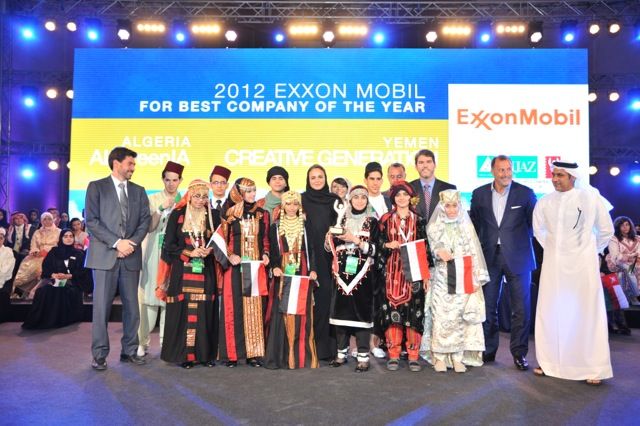
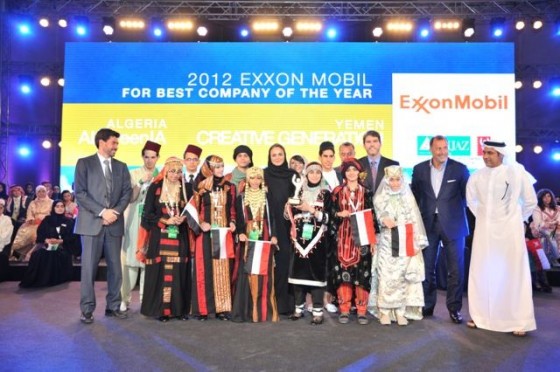
A group of Yemeni high school girls have created a suite of solar-powered gadgets to help illuminate their country’s post-revolution darkness. When the first revolutions began to sweep through the Arab world, we were all so hopeful about the changes to follow. So hopeful, we called this time the “Arab Spring.” But for people living in Yemen, hope was almost completely extinguished with the lights.
Wafi Al-Rimi told Al Monitor that there were times when the capital, Sanaa, only had electricity for one hour a day, which made studying for exams tricky. So she and her all-girl posse developed low cost solar-powered solutions with help from an entrepreneurship program offered through their school by the non profit INJAZ Yemen, an offshoot of the Colorado-based business education program Junior Achievement Worldwide. They even started a company!
Ecolon, a silicon based coating ingredient, is not only used in the cookware industry, but also has many uses in other products as well, including automobile parts and accessories.
The issue of whether ecolon and other coating substances (including teflon) are dangerous to human health is still not entirely settled; and one company, Neoflam, which was singled by Kolbotek even filed a lawsuit against against the television program for giving what that company says is a false report on the dangers of its ceramic cookware products. A few years before the Kolbotek program was aired, back in 2007, Neoflam sent samples of its products to America’s FDA laboratories for testing. The test findings determined that there were 0.5 mg per kilogram of cadmium, 5 mg per kilogram of lead and 2 mg per kilogram of mercury present in the ecolon coating . The findings at that time were “non-determinable” as to any harm caused to consumers as a result of the use of these coatings.
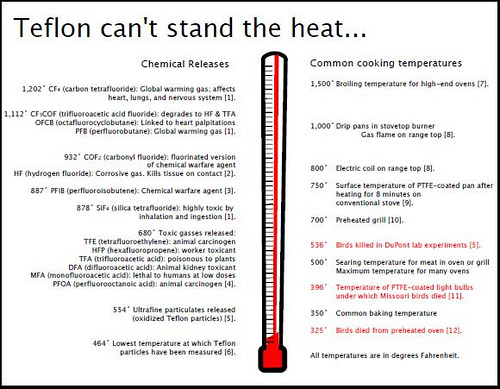
Chart showing effects of high cooking temperatures on PTFE coated utensils
One interesting recent finding that people might be interested in learning, however, is the effect that cooking fumes from polytetrafluoroethylene (PTFE) or teflon coatings on many cooking utensils have on both humans and animals; especially pet birds like parrots. Studies on this substance . which is also used in bags containing microwave popcorn, have found that not only is prolonged use of these utensils causing low birth weights in humans but may also be responsible for the deaths of pet birds, especially parrots.
The bird deaths are said to be attributed to the fumes emitted by the non-stick coatings when the cookware is submitted to high temperatures during cooking. The emitted fumes are then said to cause the birds to quickly produce high amounts of fluids in their lungs as a protective measure measure against the fumes. The increased fluids then literally choke the birds to death. These bird death from teflon fumes have been noted in various studies going back to 2003 and earlier . No findings on bird deaths from fumes coming from the use of ceramic coated cookware have been noted, however.
As the jury is still out on the dangers on using ceramic coated cookware, consumers who use these products should only use the higher quality ones that have been certified as “green” cooking utensils. Following the manufacturer’s usage instructions, including not cooking on extremely hot fires or burners and using a bit of oil like olive oil in the pan, are good ideas as well.
More articles on issues surrounding ceramic and PTFE coated cookware:
Can computer generated Bengal tigers help save the 1850 real ones which remain in the wild?
The Life of Pi is a novel by Yann Martel, first published in 2001. It told the story of a boy whose family is shipwrecked while moving their private zoo’s animals from French India to Canada. It was thought to be unfilmable. In Ang Lee’s film adaptation, Piscine Molitor (aka Pi) , played by the delightful young Suraj Sharma, is the only human survivor of the shipwreck. No, I haven’t given the story away. The Life of Pi is open in Turkey, Jordan and other cinemas throughout the Mideast. It faces stiff competition from Peter Jackson’s The Hobbit and Les Misérables, but if you’re looking for a beautiful movie with a thought-provoking environmental connection, consider the Life of Pi.
“We’re dying Richard Parker. I’m sorry.”A tearful Pi says this to a surviving castaway aboard his lifeboat. His companion is a Bengal tiger who was dubbed Richard Parker after a name mix up between a tiger its hunter. Like the novel it was based on, The Life of Pi takes us on a philosophical adventure. It explores the nature of reality, truth, religion and storytelling. Like the book it also contains some fascinating ecological metaphors. We can imagine his lifeboat as Noah’s ark or as a microcosm of our world. As a boy, Pi studied many religions and several of these hold that humans are stewards over our planet.

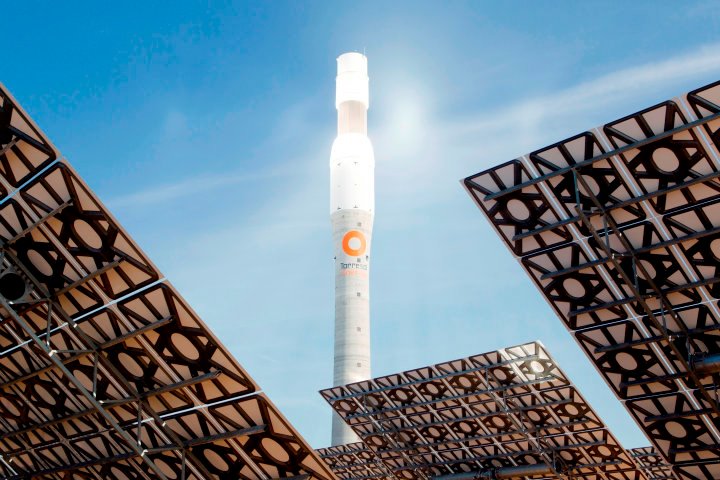
 If you are among the 70 or more bloggers who submitted an entry to Masdar’s blogging competition, or simply want to know what it takes to impress the jury of one of the leading promoters of sustainable technology and renewable energy, then this post might appeal to you.



 Sisters or the the Olive trees of Noah, are the 16 oldest olive trees in the world found in the community of Bechealeh, Lebanon. Some 6,000 years old, folklorists say these have Biblical origins.









 Can computer generated Bengal tigers help save the 1850 real ones which remain in the wild?