
 Abu Dhabi has been a leader in harnessing the power of the sun, clean technology and alternative sources of energy in the past few years. A new report form the Environment Agency – Abu Dhabi (EAD) has shown that efforts are progressing quite positively for the Arab Gulf country.
Another Sustainable Development Report from Abu Dhabi

Long Public Bus Converted into $300,000 Un-green Luxury Home
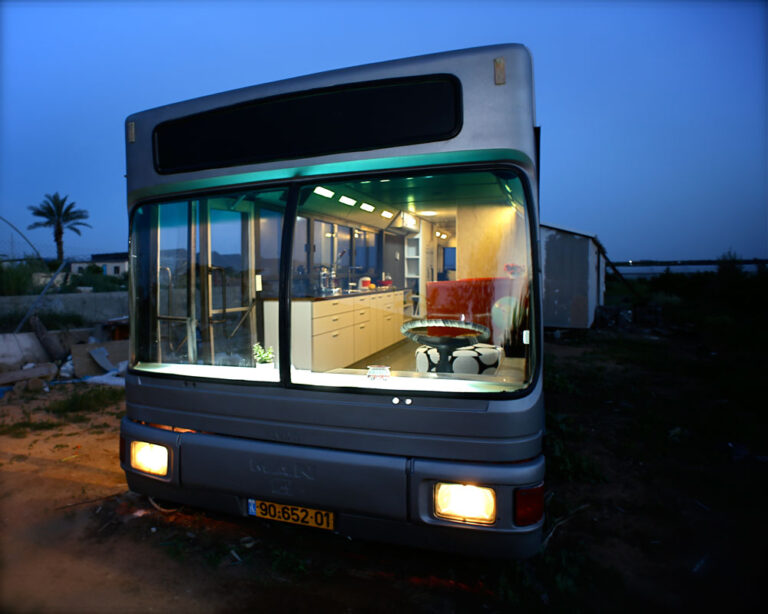
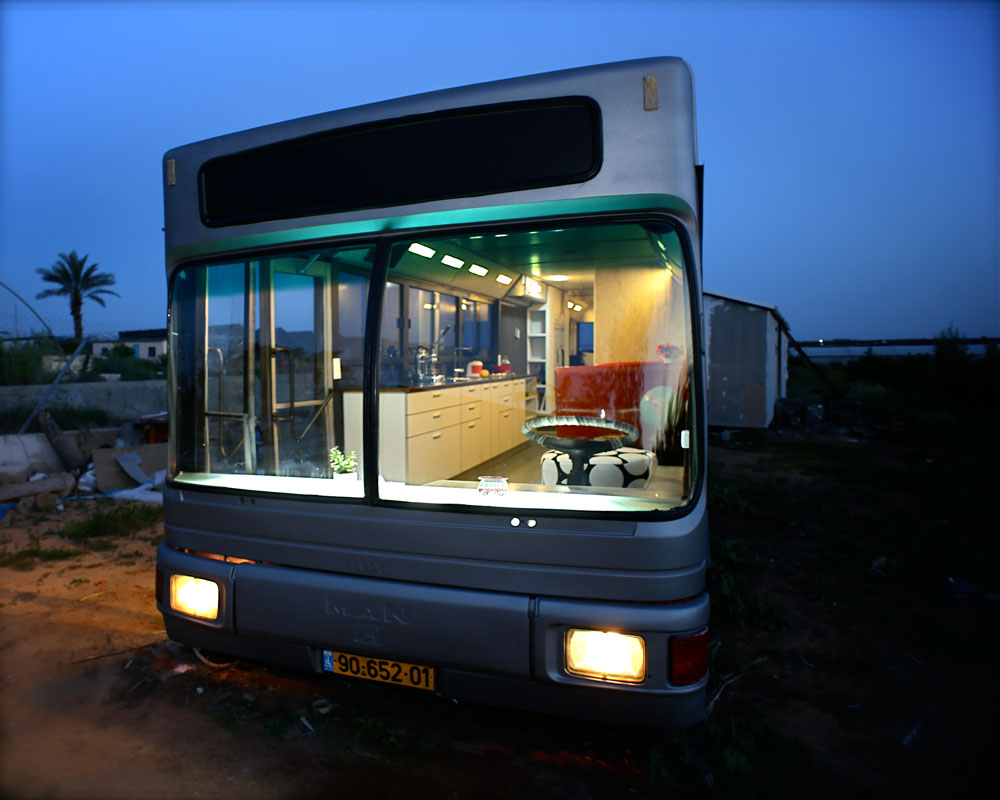 We were so excited to learn that an Israeli pair transformed an old bus into an attractive luxury home, until we saw what materials they used. Looking for an opportunity to make some money, Tally Saul and Hagit Morevski used such carbon-intensive and toxic materials as cement, concrete and formica to complete their ungreen conversion.

Neither Saul nor Morevski are untrained fly-by-nighters looking for a get rich quick scheme.
Saul is a psychotherapist , according to Xnet, as well as a former marketing executive, while Morevski is an ecological pond water treatment specialist and a CEO partner of Goglass.
They decided to do the bus conversion after Saul read about alternative housing, and soon found themselves with a junked up Dan bus that measures 2.5 by 12 feet. See below.


After staring at the thing for several days uncertain how to proceed, the duo decided to stick as close to the original spirit of the bus as possible.
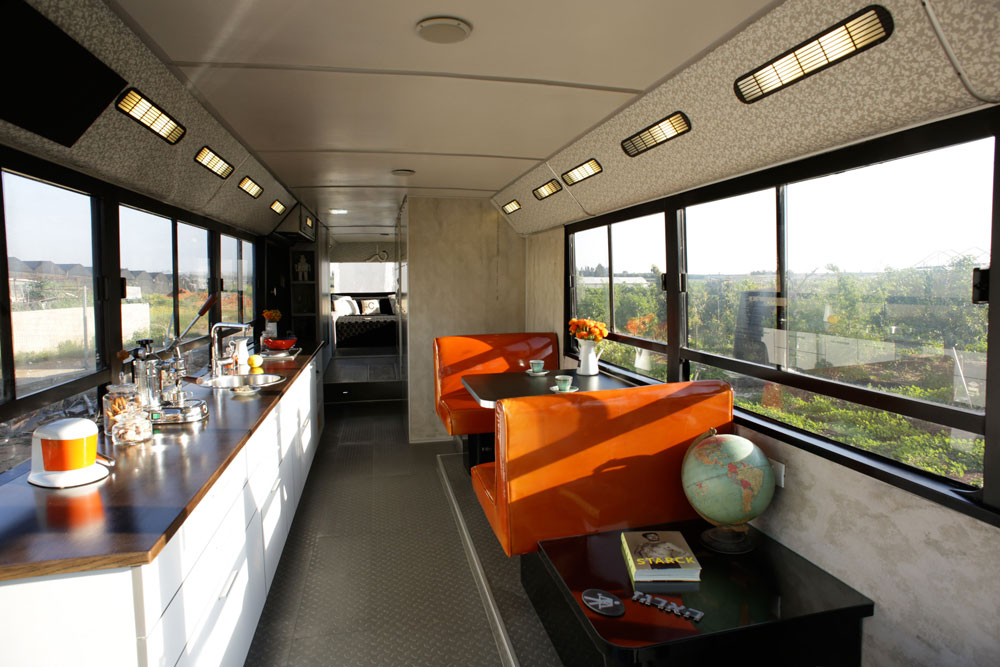
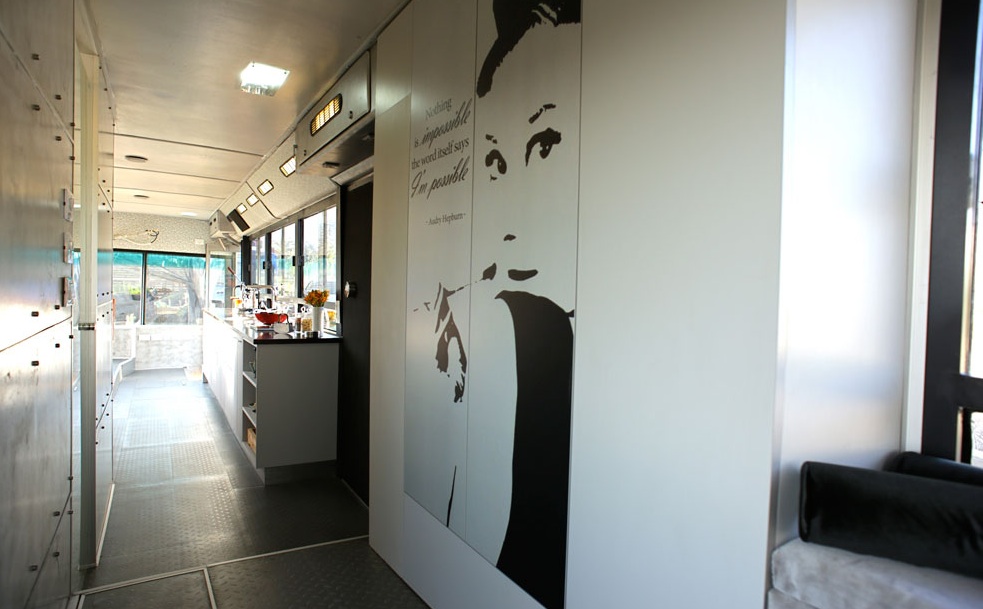
With help from Ward Design, they sunk into their interior plan, which was largely dictated by the awkward dimensions; they eventually decided to keep the windows, wheels and handles and fill up the vast spaces between with luxury furnishings.
The new floor resembles the old somewhat, and they had to level out the slope with some carpentry, and they even managed to preserve and restore pieces of the old to furnish the new – including a suite of aluminum frames and the original doors.

But then the project takes somewhat of a kitsch turn.

Instead of breathable natural materials befitting to such an enclosed space, like bamboo, for example, the design team added orange vinyl diner-styled seating, formica finishings in both the bathroom and kitchen, a velvet-covered couch and other such weirdness.
Their intentions were pure – if you can call a $300,000 price tag lobbed on the final result pure, but we wouldn’t want to be trapped inside with all those materials off-gassing.
:: Xnet
Images via Lior Danzig
World Sees Scary Transition to Seas Full of Jellyfish, Not Fish


Every summer the surge of jellyfish seems to be getting worse and worse in the Mediterranean Sea. A new UN report says that may start seeing a future where jellyfish overtake fish in our great big seas. Ready for a jellyfish stirfry?

North Africa Coast Will Rise 60 Percent More than Previous Projection: New Study
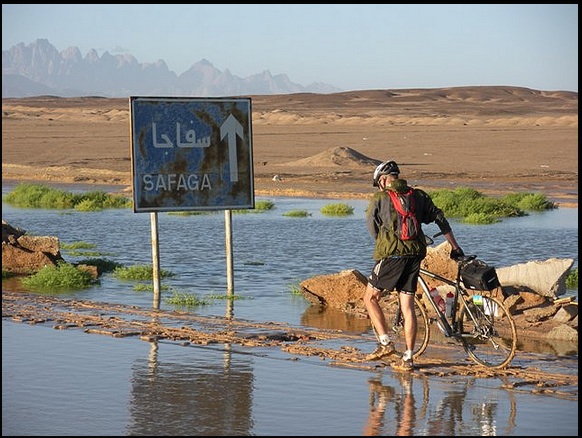
New scientific reports suggests that coastal flooding for Middle East and North African countries will be much worse than estimated six years ago. What countries are bracing for the severe effects of climate change? Egypt sets the stage.
No Bake Date Squares Recipe
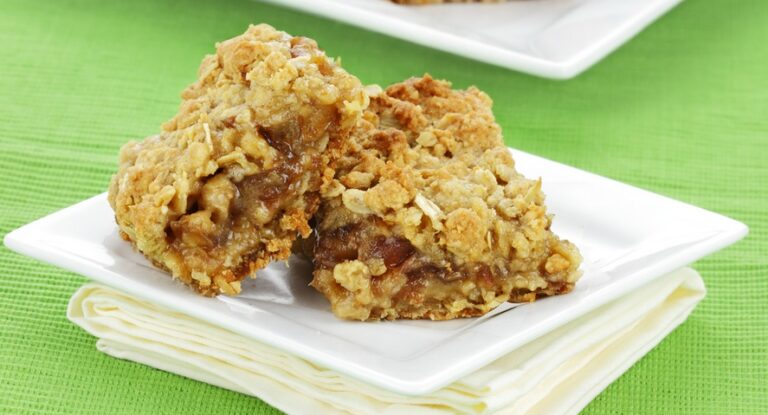
Wouldn’t it be great if recipes for high-energy, healthy snacks required no cooking or baking? Well, I’ll let you in on a little secret: date squares are made with neither a stove nor an oven. The lesson I’ve learned after watching the video demo: Never underestimate the power of a food processor.
And what’s more, these squares (triangles or stars…really, whatever your cutting preference) are the product of just two ingredients: dates and oats, both of which can readily be found in organic form.
Dates are probably the sweetest staple food of the Middle East, but that doesn’t mean they’re not healthy. Dates are rich in such minerals as iron, potassium, calcium, and manganese. They’re also an excellent source of dietary fiber and antioxidants. Suffice it to say that, combined with oats, they’re a great choice for breakfast, snack time, or pre-exercise routines, especially for endurance sports like running and biking.
Date trees are also under threat, as a newly introduced beetle from Far East Asia, the red palm weevil is decimating date trees around the Middle East.
So eating dates may be able to support the industry which may need to fight to survive.Making these date squares is a no-fuss ordeal.
Here’s how to to make no bake date squares:
- Medjool dates are the best kind, in my opinion. Take the pits out of the dates, if the dates aren’t already pitted.
- Soak the dates overnight.
- The next day, transfer the dates into your food processor, along with the water they were soaking in.
- Turn the food processor on, and add raw oats through the chute. Add as many as desired, until they seem blended with the dates in a thick consistency. A couple fistfuls of oats for one cup of dates is a loosely suggested proportion.
- Turn off the food processor, and use a spatula to empty the contents into a baking dish or pan. Smooth over the top. You may want to add some more oats here for aesthetic value. Refrigerate.
- This part will be difficult: Wait several hours to let your creation harden. (But of course, if you’re like me, you will have tried some of the “batter” right out of the food processor, before refrigerating!) Then cut the sheet to your liking.
No offense to Chewy bars, but these date-oat bars are hard to beat for the health factor, convenience, and “homemade” label. The pseudo-cooking or -baking process is short, and so sweet.
MENA Will Need 120 Gigawatts of Energy by 2017, Masdar Expert Warns

The Middle East and North Africa region is going to need 120 gigawatts of energy by 2017, according to a leading figure at the Masdar Institute of Science and Technology (MIST) and board member of the Emirates Solar Industry Association (ESIA).
Running in Dubai: Sadomasochism for the Rich?
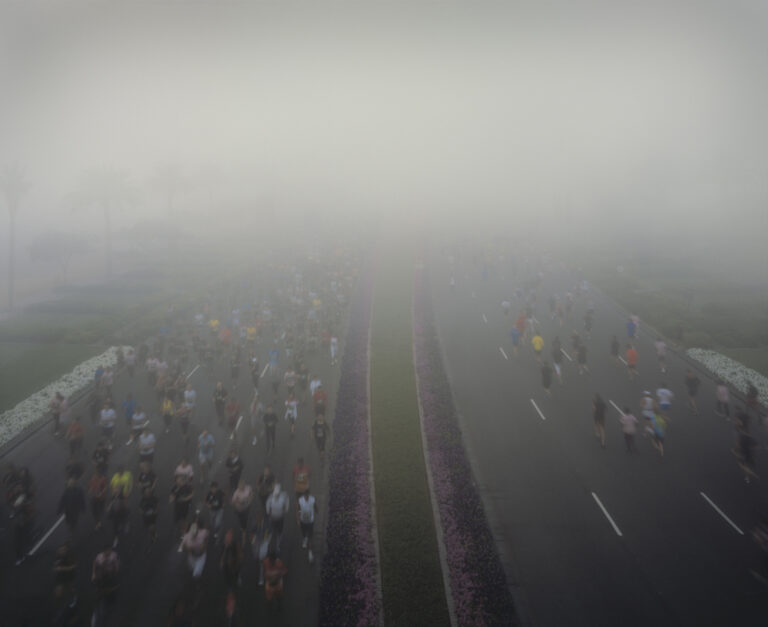
 Earlier this year I got up before dawn one morning to photograph the Dubai marathon and 10k race. It was a foggy morning which added to the surreal spectacle of thousands of people putting themselves, voluntarily, through the trials of the long distance run.
50-year-old terrarium breaks records, and it’s not from Dubai
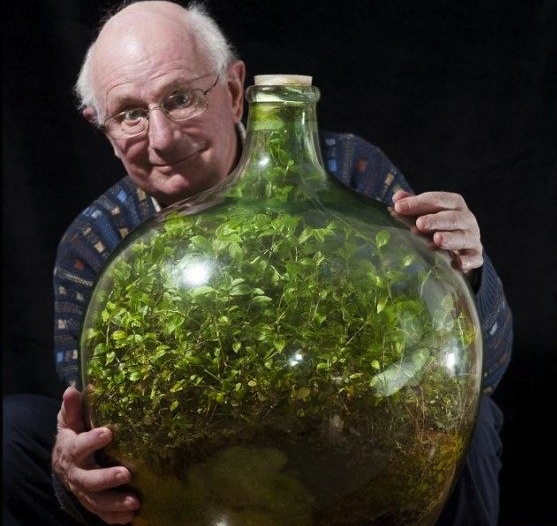
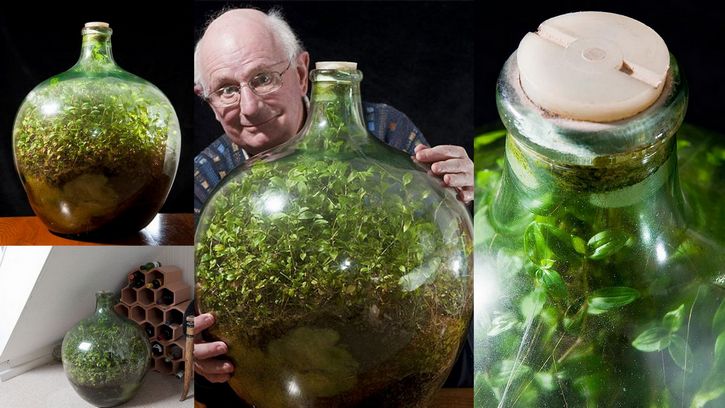
Plants sealed inside a large glass jug a half century ago are self-sustained inside a perfect ecosystem. Is there a message in this bottle for the parched Middle East?
In 1960, a heyday for macramé, bell bottoms and terrariums, amateur gardener David Latimer planted four seedlings in a 10 gallon carboy – an enormous glass jug from the pre-plastics era used in chemical manufacturing. He couldn’t imagine that 50 years later the plants would still be growing, with zero input from the outside world except sun and a small water in 1972.
“Bottle gardens were a bit of a craze and I wanted to see what happened if you bunged (corked) the thing up,” he told The Daily Mail.
He popped plants into a soil base, added a splash of water, and tightly closed the top with a greased stopper. Then he waited a dozen years before giving it another drink. The last time Latimer watered the garden was in 1972: Nixon was in the White House and Elvis was still recording.
His garden created its own miniature ecosystem, but only one of the original four species survived.
The spiderworts seedling, or tradescantia, filled the jar with foliage despite being cut off from fresh air and added moisture. Because the plant absorbs light, it can photosynthesize, recycling nutrients and converting sunlight into all the energy needed for growth.
Photosynthesis creates oxygen and water. It’s the opposite of cellular respiration that occurs in other organisms, including humans, where energy-containing carbohydrates react with oxygen to produce carbon dioxide and water and release chemical energy.
This ecosystem uses cellular respiration too. Bacteria in the soil breaks down dead leaves and absorbs the plant’s waste oxygen, releasing carbon dioxide which the growing plant can reuse. Water absorbed by roots is released into the air during transpiration. It condenses – effectively “raining” down into the potting mixture, and the cycle begins again.
The bottle stands beneath the stairs in his front hallway.
“It’s 6 feet from a window so gets a bit of sunlight. It grows towards the light and gets turned round every so often so it grows evenly,” the 80-year old Englishman said, “It’s the definition of low-maintenance. I’ve never pruned it; it just seems to have grown to the limits of the bottle.”
Latimer sent a photo in to a gardening program inquiring if his special garden held “scientific or horticultural interest”. Are there lessons to learn, specific to growing in water-starved regions? Perhaps some insight to advance xeriscaping for decorative planting or crops?
You can’t smell, touch or eat this garden, but it fascinates.
The new Wardian Case?
The New York Botanical Garden blogged a bit of history behind this story:

“Latimer’s amazing bottle garden is phenomenal, and it has a rich heritage. The Wardian case, precursor to today’s terrarium, was invented in 1829 by Dr. Nathaniel Ward. Originally created to provide a habitat for moths, the Wardian case became a worldwide phenomenon and one of the keys to bringing new plant species home from explorations in far off lands.

Wardian cases, bottle gardens, and terrariums are very easy to create, and even easier to care for. Need some tips? We have those. They make a lovely alternative to flower bouquets for your plant-loving sweetie.”
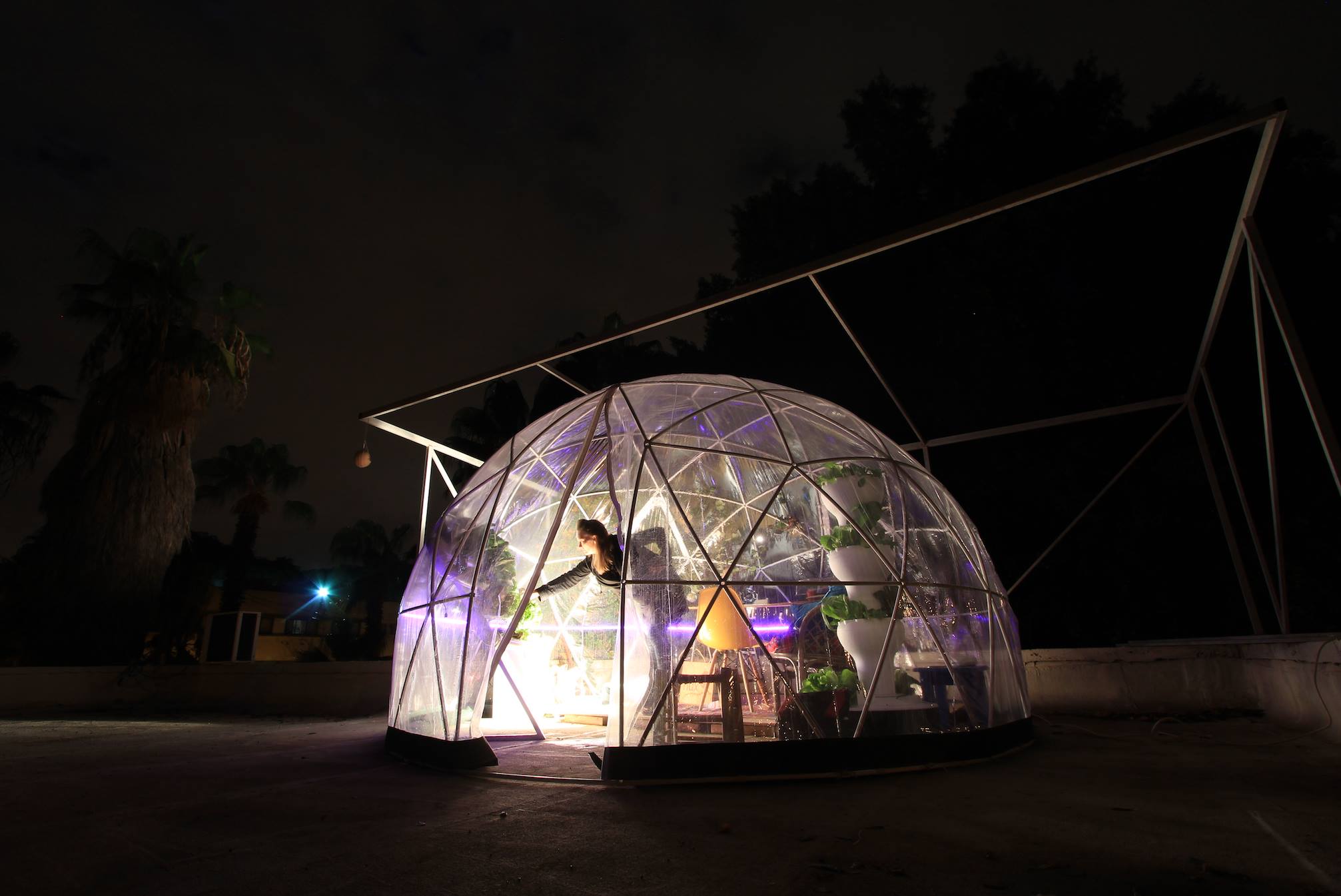
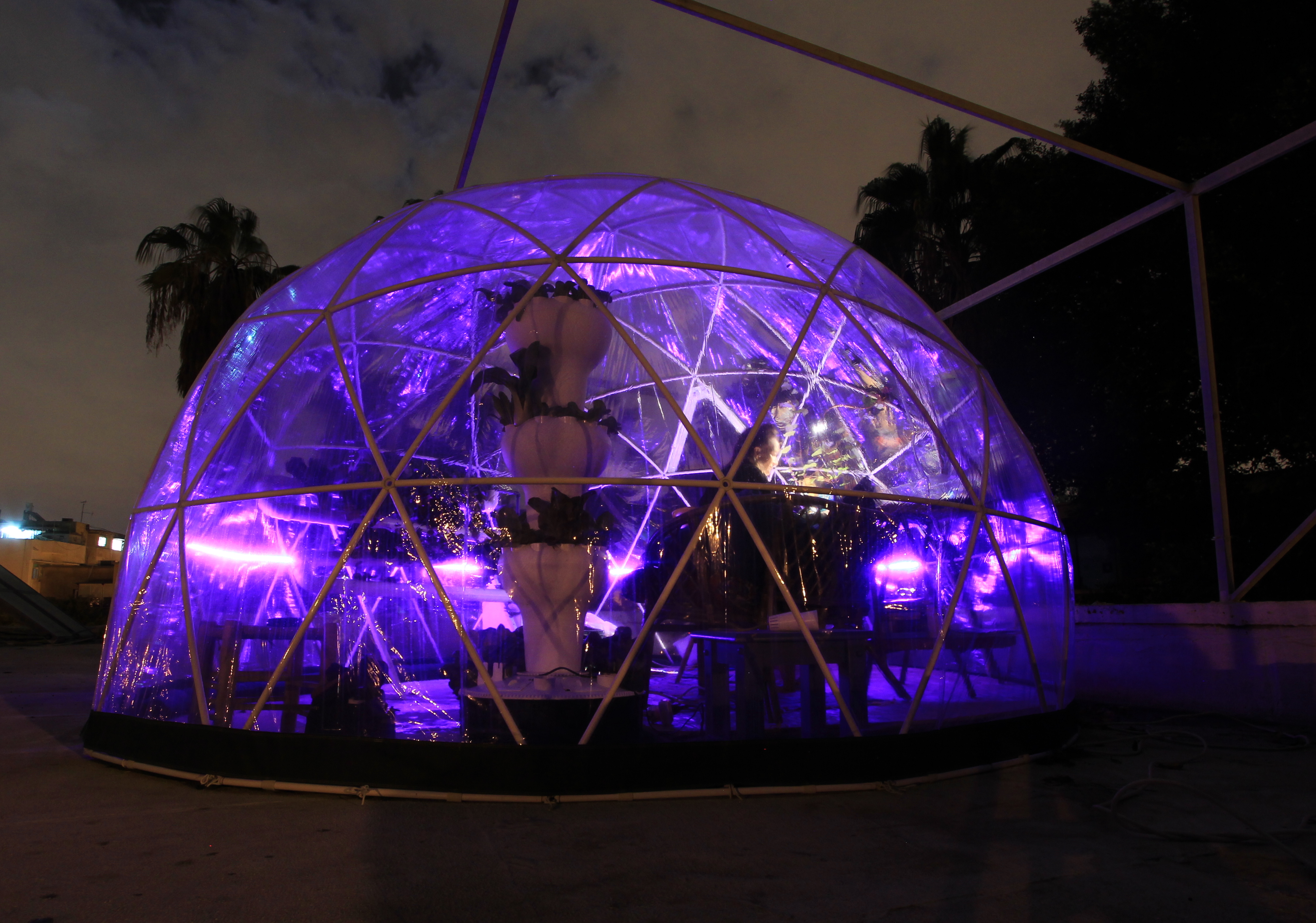
Doubt I could score a carboy here in Jaffa, where I live today but there are plastic bottles everywhere I turn. I’m tempted to try growing one in an old juice bottle. But because I was in love with the idea of a vivarium, I created one on my rooftop, then my backyard on a bigger scale, using hydroponic tools. I desired to live inside my own terrarium, to be the life inside my terrarium, and then I had to find out I was working inside a vivarium. See the pictures below. But I guess you could also call it a greenhouse.
Terrarium and vivarium, what’s the difference?
Both words use the Latin arium meaning “container”, but the different prefixes tell us what they’re designed to contain; terra contains “earth” and vivere means “life”.
In my vivarium I was the life that my biodome contained, along with my hydroponically grown plants. Normal people make mini-tropical rainforests in their vivariums and add spiders and lizards. I had spiders in mine, along with me.
Electronic Cigarette Kills Toddler in Israel
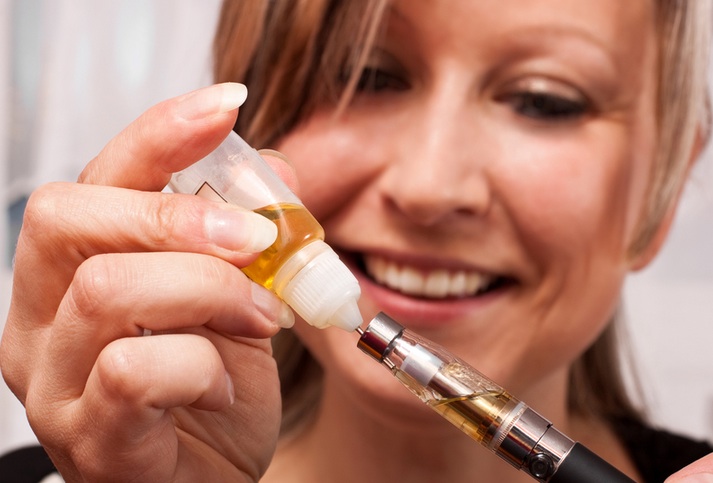
The Israeli ministries are urging people to give up smoking and a recent government report has found that both the heavy smokers in the Jewish and Muslim populations in Israel are cutting down, if only by a few percentages. But methods for quitting can be fatal for some.
Interview With A Better Place EV Car Owner – Not Stranded Yet
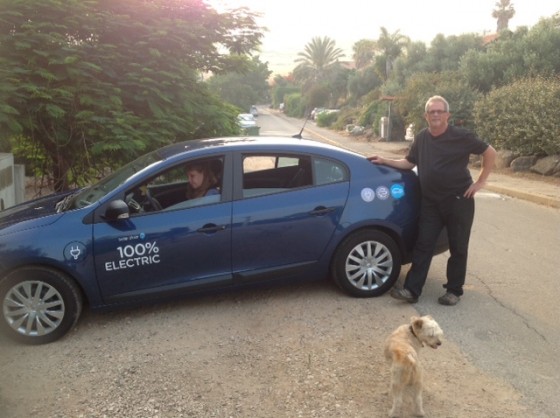

Following Sunday’s news that Israel’s Better Place has declared bankruptcy we have to ask: what is going to happen to the 900+ car owners who signed on for the electric deal, one that promised switchable batteries at 37 stations throughout Israel? We speak to one car owner to find out.
Qatar’s Oryx Island to Offer Five Floating Hotels for 2022 World Cup
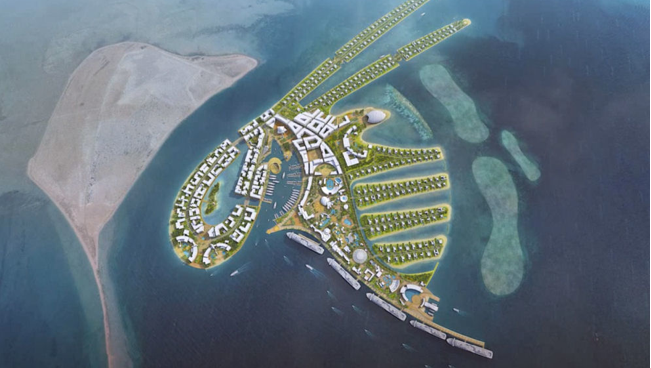
When football enthusiasts flock to a World Cup venue, they expect more than a tent out in the desert to rest their weary heads, but that’s about all Qatar has to offer right now. In preparation for 2022, Barwa Real Estate plans to scrape together a massive artificial island to offer a luxurious temporary solution for up to 25,000 visitors.
3500 year-old Egyptian Relief Vandalized by Chinese Youth, Restored
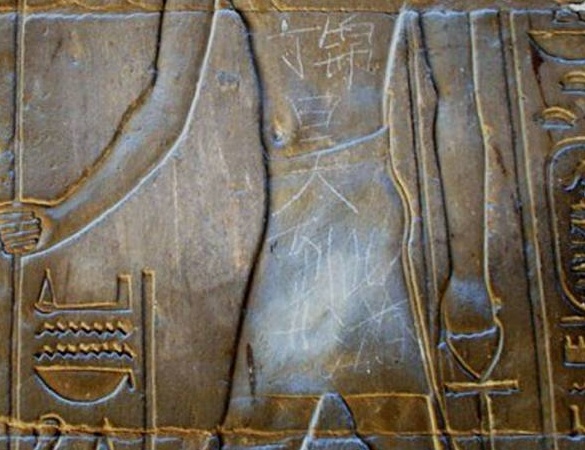
A young tourist from Nanjing, China scrawled his name Ding Jinhao onto a 3500 year-old relief in a Luxor, Egypt temple. Big mistake.
Visit the Round Freedom Farm House in the Siwa Oasis, Egypt

The round Freedom Farm house in Egypt reminds us why a world without AirBnB’s (mostly) affordable nightly rentals around the globe would be so much less wonderful. And who will be the next administrative target? Couchsurfing? Will it be illegal to let a gal crash in your cave for less than 29 days?
Eco Guide to Israeli Products Launched


Hail hail to the genius who decided it was time to cut the greenwash from the eco marketplace in Israel. Every product and its neighbor on the supermarket shelf is calling itself green. A new Israeli-made guide is calling out cheats.